Sourcing injection molding China is not a question of whether capacity exists — it is a question of whether the partner behind that capacity can prove what it does. A buyer placing a tool order across an ocean cannot walk the floor on a Tuesday afternoon, so the evidence has to live in published tolerances, documented mold classes, stated lead times, a named process chain and a management system that survives an audit.
This guide works through those dimensions one at a time: mold precision and tooling quality, speed from quotation to delivery, project coordination from design through assembly, the workforce and machine base behind the lines, and the certifications that govern documentation. Throughout, NOBLE’s own published capability figures serve as the worked example, so you can see what a verifiable answer to each question looks like. The article closes with a direct case for NOBLE as a partner for programs that run from prototype through mass production, followed by the questions buyers most often ask before committing.
What “Injection Molding China” Means for a Buyer
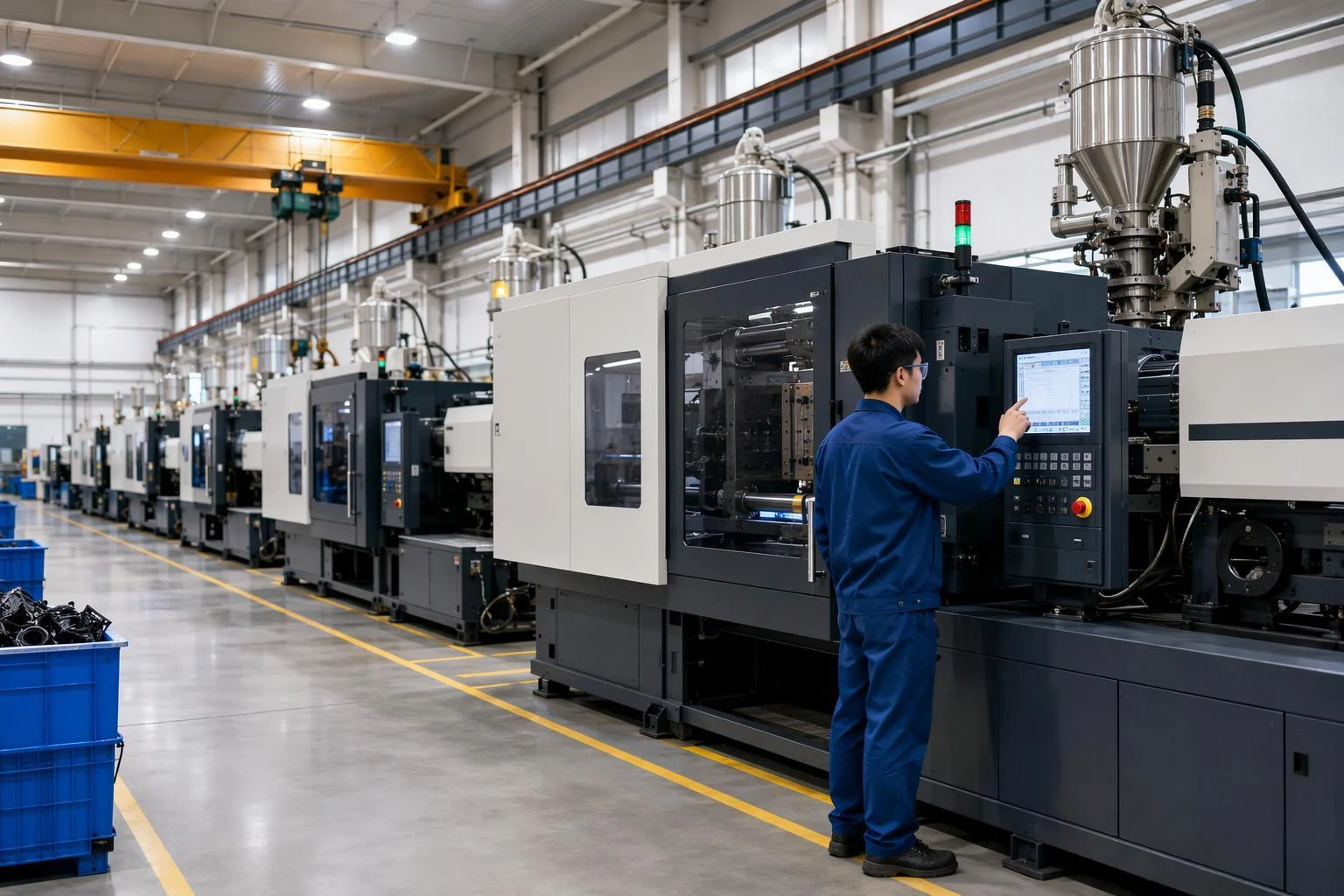
“Injection molding China” describes a sourcing decision: you contract a China-based manufacturer to design and build the tool, mold the parts, and often finish and assemble them. The phrase is about where the work happens, not what standard it meets. That distinction matters, because the evaluation criteria shift once the supplier is not within driving distance.
With a local molder, much of the verification is informal. You visit during a trial, look at the tool, watch a shot, and settle questions in the room. Sourcing from China replaces those visits with documentation and remote approval. Three things change as a result:
- Communication loops lengthen. Every clarification costs a day rather than an hour, so the partner’s engineering feedback has to be complete the first time — a DFM report that catches wall thickness and draft problems before tooling is worth more than a fast reply that misses them.
- Tooling is approved remotely. You will sign off a mold design, a trial result and first-article samples from a distance. That requires a supplier who sends structured evidence: dimensional reports, trial video, physical samples.
- Quality must be documented, not observed. If you cannot stand at the press, the inspection record becomes your eyes. In-process inspection and a defined IQC/IPQC/FQC-OQC sequence are not paperwork extras; they are the substitute for proximity.
None of this means geography determines quality. A poorly controlled shop is a poorly controlled shop anywhere. The point is that a China-based partner has to demonstrate capability through published specifications and auditable process, and the rest of this article applies that test using NOBLE’s published figures.
Mold Precision and Tooling Quality at NOBLE
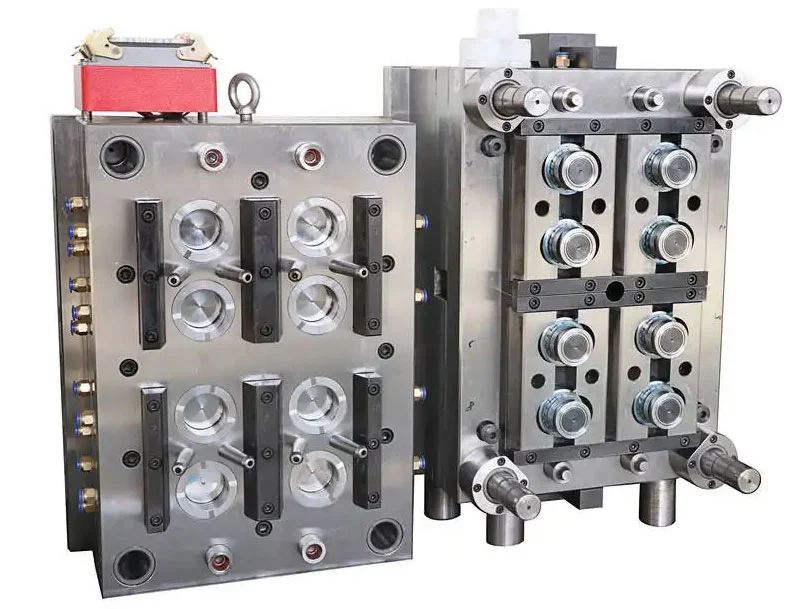
Precision in injection molding is not one number. It is at least three different numbers describing three different things, and buyers who conflate them either over-specify their tooling budget or under-specify their acceptance criteria. NOBLE publishes figures for each, and they should be read at their stated scope.
Tolerances NOBLE Publishes for Molds and Molded Parts
NOBLE'S injection molding capability table uvádí mold cavity tolerance of ±0.05 mm a part-to-part repeatability of ±0.1 mm. These govern different things. Cavity tolerance describes how accurately the tool itself is cut — the steel or aluminum is machined so the molded geometry lands within ±0.05 mm of nominal. Repeatability describes shot-to-shot consistency: once the tool is right, successive parts stay within ±0.1 mm of each other. A tool can hold a tight cavity tolerance and still show wider part-to-part variation if process parameters drift, which is why both figures belong in a specification conversation.
Separately, NOBLE’s injection mold tooling page Cituje ±0.001 mm precision for its precision machining equipment used in toolmaking. That is a machine-tool positioning figure, not a promise about molded parts. It tells you the equipment can cut mold components to a very fine level; it does not mean every molded feature arrives within a micron.
The size envelope is equally practical: NOBLE lists a minimum part size of 1×1×1 mm a maximum of 1200×1000×500 mm. Check your part against that range before inquiring — a part outside it is a different conversation, not a tolerance question.
Mold Classes and Shot Life: Matching Tooling to Volume
NOBLE publishes a five-class mold table on its tooling page, each class tied to a purpose, a shot life, a ±0.02 mm tolerance and a lead time:
| Třída plísní | Účel | Výstřel života | Tolerance | Dodací lhůta |
| Class 105 | Testování prototypů | Méně než 800 000 cyklů | ± 0.02 mm | 7–10 dny |
| Class 104 | Malosériová výroba | Méně než 800 000 cyklů | ± 0.02 mm | 10–15 dny |
| Class 103 | Malosériová výroba | Méně než 800 000 cyklů | ± 0.02 mm | 10–15 dny |
| Class 102 | Středně sériová výroba | Střední až vysoká produkce | ± 0.02 mm | 10–15 dny |
| Class 101 | Velkoobjemová výroba | Více než 1,000,000 XNUMX cyklů | ± 0.02 mm | 10–18 dny |
The trade-off logic is straightforward once the table is read as intended. A Class 105 tool is built to prove a design, not to carry a production program — under 500 cycles will not survive a launch volume, and treating prototype tooling as a shortcut to production is how programs end up re-tooling mid-run. At the other end, a Class 101 tool built for over a million cycles is wasted spend if the design is still under test and likely to change. The right class is the one whose shot life matches your realistic total volume plus a margin for trials and rejects.
Steel, Aluminum and Cavitation Choices
NOBLE offers steel and aluminum tooling, and its production-grade options are stated as under 1,000 cycles, under 5,000 cycles, under 30,000 cycles and over 100,000 cycles. It also runs single-cavity, multi-cavity and family molds on Lisovací tuna 50 až 500.
These choices interact. Aluminum tools cut faster and cost less, which suits bridge tooling and low volumes, but they wear sooner than steel. Cavitation drives unit economics: a multi-cavity tool spreads the tooling investment across more parts per cycle and lowers unit cost, but it raises the tool’s own cost and complexity, and it only pays back if your volume justifies it. A family mold — multiple different parts in one tool — is efficient when several components share material and volume, and awkward when one part in the family changes.
NOBLE also states familiarity with HASCO, DME and LKM mold standards. If your drawings reference one of those systems, that means the mold base, components and interfaces can be specified in the standard you already design to, rather than requiring you to translate your documentation into a different convention.
Machining Speed and Lead Time from Quote to Delivery
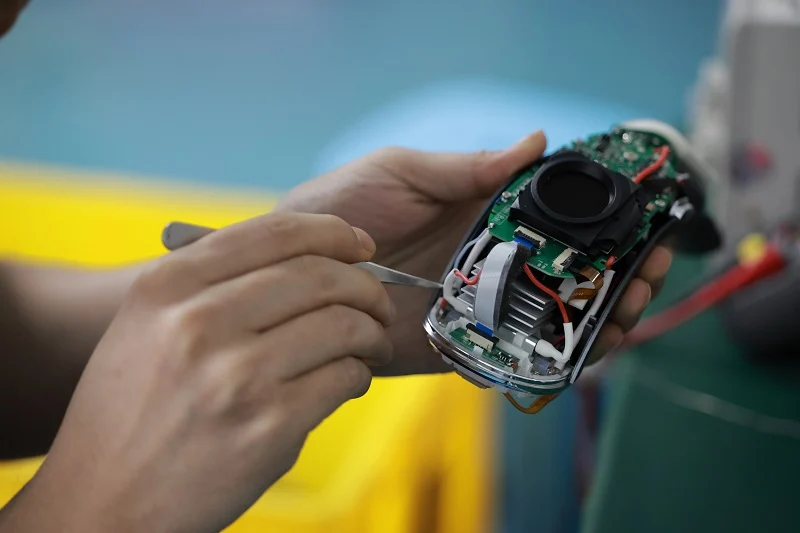
Lead time is often quoted as a single number, which hides the fact that a buyer waits through three separate clocks: the quotation clock, the tooling clock and the parts clock. NOBLE publishes figures for each, and they should be kept apart.
Quotation and DFM Response
NOBLE states a 24hodinová doba vypracování cenové nabídky a free DFM report within 12 hours. The DFM review is the more valuable of the two, because it is where engineering input arrives before money is committed. NOBLE’s stránka s možnostmi lists what its engineers examine in a design review: wall thickness, stress, aesthetics, cost, shrinkage, functionality and dimensional stability.
Each of those is a manufacturing consequence, not a checkbox. Wall thickness governs fill and cooling time; uneven walls create sink and warp. Shrinkage determines whether the cavity is cut oversize so the part lands on nominal after cooling. Draft angle decides whether the part releases without dragging. Dimensional stability ties all of it to whether the part still meets tolerance after it leaves the tool. A DFM report that flags these before the tool is cut is the cheapest correction you will ever make; the same issues found at trial cost weeks.
Tooling and Molding Lead Times
NOBLE’s published tooling lead times follow the mold classes: 7–10 days for Class 105 prototype tooling, 10–15 days for Classes 104, 103 and 102, a 10–18 days for Class 101 high-volume tooling. For molding itself, NOBLE states 15 business days or less for most orders, with 24/7 quotation response.
Read those as typical figures for most orders, not guarantees for every geometry. A tool with complex slides, fine detail or an unusual material will take longer than a simple one in the same class, and the published range is the honest way to express that. Use the figures to plan, and confirm the specific schedule against your part at quotation.
Where Speed Comes From: In-House Process Flow
The timelines above are achievable because the stages sit under one roof. Tooling, molding, secondary operations and assembly are handled within NOBLE’s own process chain, so a project does not sit in a queue waiting for a handoff between separate shops — the classic source of unexplained delay in outsourced programs.
Inspection runs through the same flow rather than as a separate gate at the end. NOBLE describes a complete IQC, IPQC, FQC/OQC sequence: incoming material inspection, in-process inspection during production, and final and outgoing inspection before shipment. When a dimension drifts at the press, in-house metrology catches it during the run rather than after the parts have shipped, which shortens the correction loop from weeks to hours.
Project Coordination: One Partner from Design to Assembly
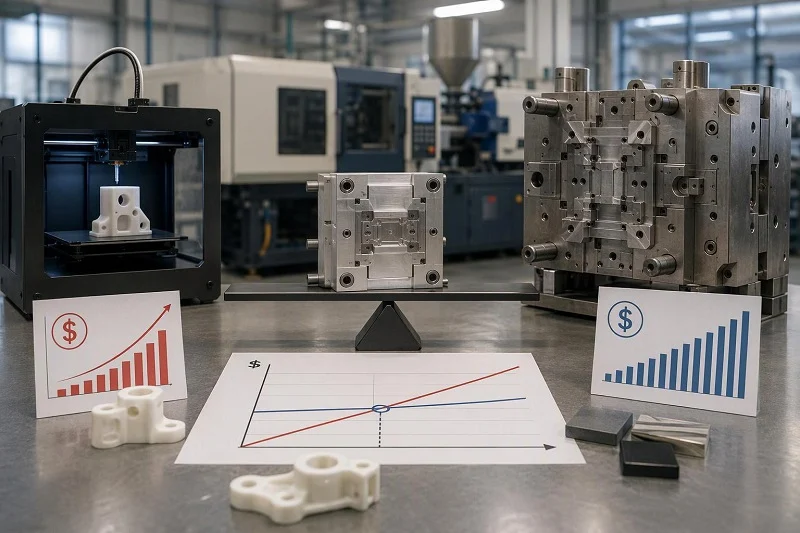
“Project coordination” can mean almost anything until it is defined. At NOBLE it maps to a published sequence of stages, and the value of that sequence is that one accountable owner carries your project across all of them.
The Nine-Stage Projects Supporting Process
NOBLE'S projects supporting page lays out nine stages: engineering and optimization, tooling design, parts package plan, tooling machining and fitting, accessories purchasing, injection and modification, inspection, packaging, and loading and delivery.
Run that list as a buyer and count the handoffs you would otherwise manage yourself. Each stage is a place where a multi-vendor program loses time: the toolmaker finishes and the molder waits; the molder finishes and the finisher waits; the finisher finishes and someone else arranges packing and freight. With a single owner across the chain, those transitions happen inside one schedule rather than across purchase orders. You approve at the decision points and receive a coherent status, instead of chasing five suppliers who each believe the delay is someone else’s.
Engineering and DFM Input Before Metal Is Cut
NOBLE’s engineers review designs for manufacturability before tooling begins, and its mold design team works on optimization, process selection, mold life and cycle time. This is where cost is actually set. Once steel is cut, the geometry is largely fixed and changes become tool modifications. Before that point, a draft angle added, a wall thickened or a gate relocated costs nothing but a conversation.
The same logic applies to mold life and cycle time. A design review that anticipates the production volume lets the tool class, material and cooling layout be chosen together, rather than discovering at scale-up that the tool was built for a fraction of the required cycles.
Secondary Operations, Assembly and Packaging
NOBLE lists secondary operations including mold texturing, pad printing, laser engraving, threaded inserts and basic assembly. Jeho montážní služby zahrnují a 1,000 m² dust-free workshop for projects that need a controlled environment.
Just as importantly, NOBLE handles packaging and delivery scheduling. Parts arrive packed for transport and scheduled to your region, ready for the next step in your build rather than waiting on you to arrange finishing, packing and freight as separate contracts. For a program with several molded components, consolidating those steps under one supplier removes a whole layer of coordination from your side.
Workforce and Machine Capacity Behind NOBLE’s Molding Lines
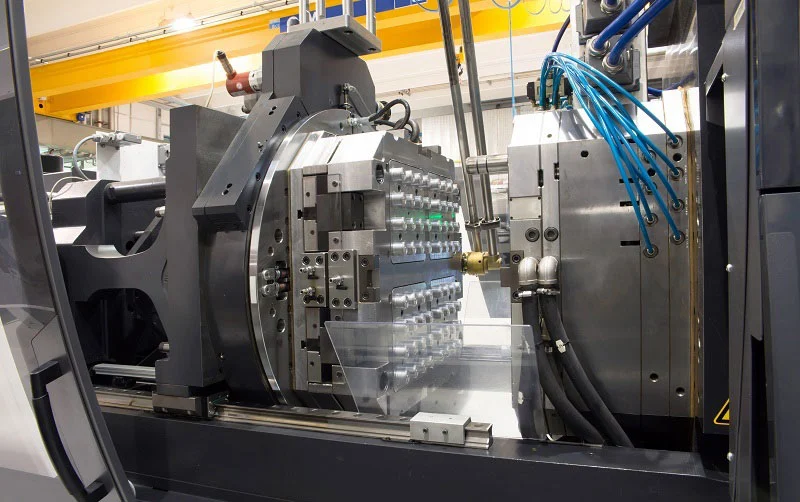
Scale tells you whether a supplier can absorb your program alongside its existing work. NOBLE publishes its headcount and equipment figures, and it is worth being precise about what those figures are: NOBLE’s own published capability statements, not an independently audited asset register.
Team Size and Functional Breakdown
NOBLE'S profil společnosti uvádí 150–180 zaměstnanců, rozděleno jako 10–15 in management, 10–15 in marketing, 15–20 in technology, 10–15 in quality and 50–80 in production.
The functional split is the useful part. A dedicated quality team of 10–15 people means inspection is staffed by inspectors, not by production operators checking their own work between cycles. A technology team of 15–20 means engineering review and mold design are a standing function rather than a borrowed resource. For a buyer, that structure is what makes the DFM feedback and the IQC/IPQC/FQC-OQC sequence credible as ongoing practice.
Equipment Scale and Press Tonnage
NOBLE’s molding capability spans Lisovací tuna 50 až 500, which covers small precision components through large housings within the part-size envelope described earlier. Its tooling page Cituje more than 200 advanced precision machining machines, and its low-volume manufacturing offering references 500+ production equipment.
These are NOBLE’s published statements about its own facilities. They indicate breadth — enough machining capacity to build tooling in-house and enough production equipment to run jobs across volume bands — but they are not a third-party audit of individual machines. Treat them as the supplier’s declared capability and confirm the specific equipment for your part at quotation.
Inspection and Metrology Resources
NOBLE names profile projectors, CMM and 3D scanners among its testing equipment, applied within the IQC/IPQC/FQC-OQC sequence. In-house metrology changes the economics of a problem. If a critical dimension drifts mid-run, the CMM catches it during production, the cause is investigated while the tool is still on the press, and the correction is made before a nonconforming batch accumulates. When metrology is outsourced, the same drift is discovered after shipment, and the correction loop runs across an ocean.
NOBLE also states that it can provide comprehensive quality reports from its in-house quality team or from third-party labs where a program requires independent verification.
Materials, Surface Finishes and Secondary Capability
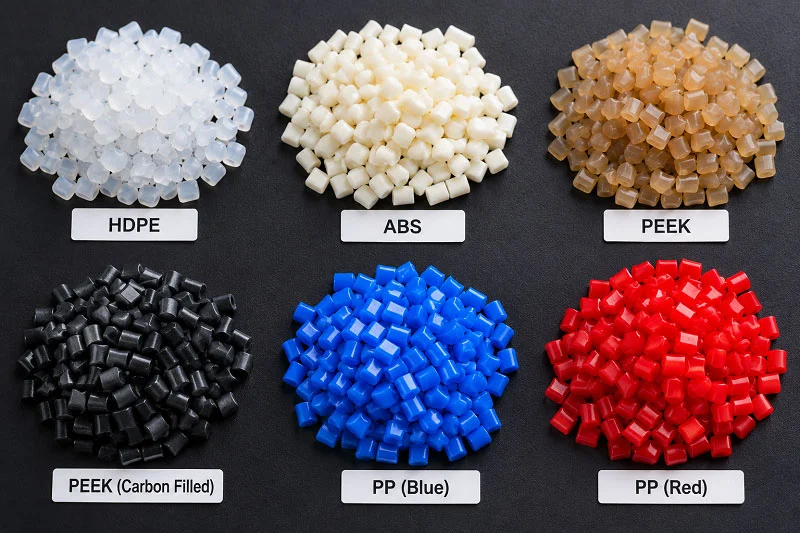
NOBLE publishes a material range covering the common engineering thermoplastics: ABS, nylon, PEEK, PMMA, polycarbonate, polyethylene, polypropylene and POM. Each carries its own trade-offs — PEEK for high strength and thermal and chemical resistance, polycarbonate for impact resistance and transparency, POM for low friction and stiffness, polypropylene in food-safe grades, and so on. The materials page links to a dedicated page for each, which is the right place to check a specific grade against your application rather than working from a summary.
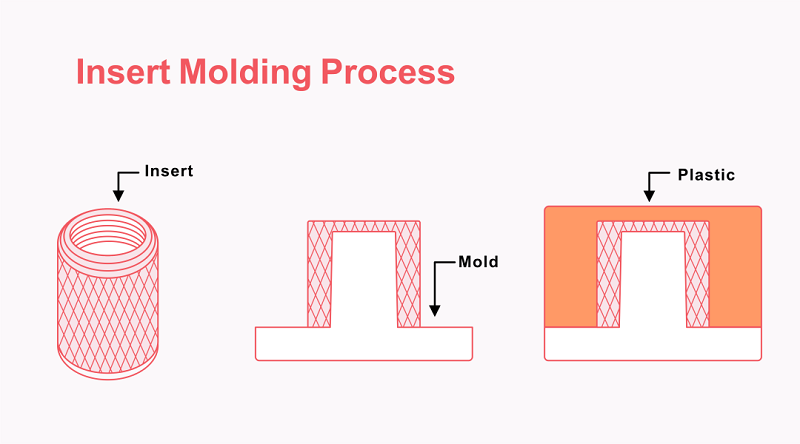
On finishing, NOBLE offers mold texturing for in-tool surface effects, plus pad printing and laser engraving for marking, and secondary machining where a molded part needs a feature cut after the fact. Surface finishing services extend to polishing, powder coating and painting for parts that need them. If your program involves multiple materials bonded together, overmolding and insert molding are also within the published service range.
This section is deliberately brief: material selection is a specification exercise, and the detail belongs in the datasheet and the DFM conversation, not in a capability overview.
Quality Certification: What ISO 9001:2015 and ISO 13485:2016 Signal
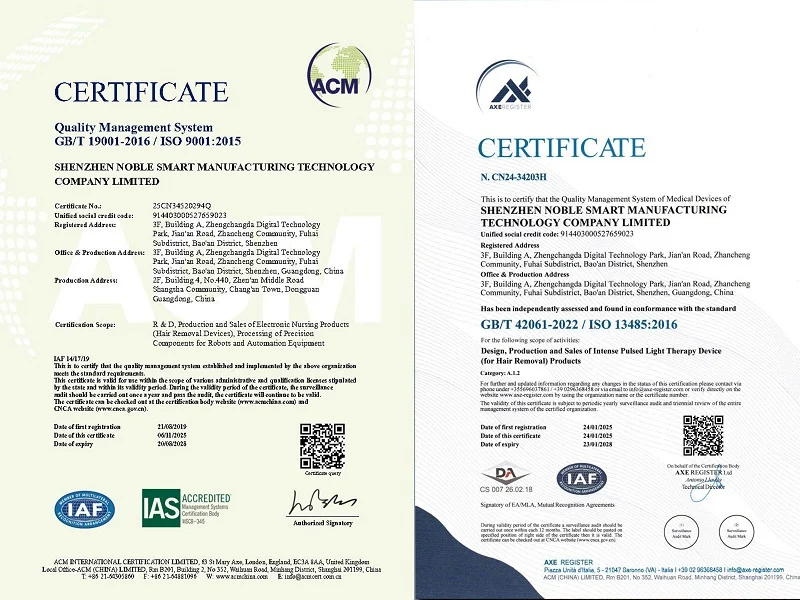
NOBLE holds ISO 9001: 2015 a ISO 13485: 2016 certification, and states that it has obtained Production Permits for Medical Devices. Each certification says something specific, and it is worth being clear about what that is.
ISO 9001: 2015 is the international standard for quality management systems. Certification means an accredited body has assessed how the organization plans, controls and improves its processes — document control, traceability, corrective action, management review. For a buyer, it is evidence that quality is managed by system rather than by individual diligence, and that records exist to check.
ISO 13485: 2016 is the quality management standard specific to medical devices. It goes further on risk management, design control, traceability and process validation, reflecting the regulatory expectations of the medical device sector. For a program with medical device classification, it indicates the supplier’s management system is built around those requirements.
What neither certificate does is guarantee a specific part outcome. They describe the management system, not the product. A certified supplier can still produce a nonconforming part; the difference is that the system is designed to detect it, document it and correct it. Read the certificates as evidence of how the work is controlled, and pair them with the dimensional and inspection evidence for your actual part.
Preparing an RFQ That Gets a Fast, Accurate Quote
NOBLE’s 24-hour quotation turnaround depends on receiving enough information to quote accurately. An RFQ that arrives complete gets a price and a tooling recommendation; one that arrives partial gets a question back, and the clock restarts.
Co zahrnout:
- 3D CAD in a supported format. NOBLE accepts STEP, STP, IGES, PRT, SLDPRT, SAT, Xₜ, IPT, CATPART and PDF. The native or neutral solid model is what allows the DFM review to run properly.
- 2D výkresy s kritickými rozměry a tolerancemi. The model defines geometry; the drawing defines what must be inspected. Mark which dimensions are critical rather than leaving every dimension at default tolerance.
- Target volumes and expected annual quantities. This is the single biggest driver of the tooling recommendation. It determines the mold class, the cavitation and the material choice, and therefore the price.
- Material and finish requirements. Specify the grade where it matters, and the surface finish or marking requirements, since these affect both tooling and secondary operations.
- Regulatory or application context. Medical device classification, for example, changes the documentation and validation expectations, and it is better known at quotation than discovered at shipment.
Each item changes the answer. Volume moves the mold class; material moves the tool steel and the process window; finish moves the secondary operations and the lead time. Supplying all of it up front is what makes the 24-hour figure realistic.
Choose NOBLE for Your Injection Molding China Project
NOBLE is a leading machining manufacturer in China, and its service depth and processing capability are built to carry a program from prototype through mass production without the buyer having to reassemble the supply chain at each stage. The certifications are stated plainly: ISO 9001:2015 a ISO 13485:2016. The service scope runs from design through assembly — not production alone.
That case rests on the evidence already set out above rather than on assertion. On precision, NOBLE publishes a ±0.05 mm mold cavity tolerance, ±0.1 mm part-to-part repeatability and a part envelope from 1×1×1 mm to 1200×1000×500 mm. On tooling, it publishes five mold classes from prototype tooling under 500 cycles to high-volume tooling over 1,000,000 cycles, each with a stated tolerance and lead time. On speed, it states 24-hour quotations, DFM reports within 12 hours, tooling lead times from 7 to 18 days by class and molding in 15 business days or less for most orders. On coordination, it publishes a nine-stage process chain from engineering through loading and delivery, with secondary operations, a 1,000 m² dust-free assembly workshop and packaging handled in-house. On scale, it states 150–180 employees with dedicated technology and quality teams, 50 to 500 press tonnage and more than 200 precision machining machines.
Taken together, those are the dimensions a buyer evaluates when sourcing injection molding in China, answered with published figures rather than assurances. The next step is a concrete one: submit an RFQ with your CAD files and target volumes, and NOBLE will return a quotation and DFM feedback so the engineering conversation starts before any tooling commitment.
FAQs of Injection Molding China
Why do buyers choose injection molding China, and what should they weigh?
Buyers source from China for manufacturing depth — tooling, molding, finishing and assembly available in one industrial base — and for cost efficiency at volume. What to weigh is verification: since you cannot visit routinely, judge a supplier on published tolerances, stated mold classes and lead times, a documented inspection sequence and a certified quality management system. Geography does not determine quality; documentation and process control do.
How can I judge mold precision before committing?
Ask for the specific figures and check what each one governs. NOBLE publishes ±0.05 mm mold cavity tolerance (the tool), ±0.1 mm part-to-part repeatability (shot-to-shot output) and ±0.001 mm precision for its toolmaking equipment (machine positioning, not molded parts). Confirm your part sits within the 1×1×1 mm to 1200×1000×500 mm envelope, and ask for the inspection method that will verify your critical dimensions.
How do lead time, tooling class and volume interact?
They are chosen together. A Class 105 prototype tool (under 500 cycles, 7–10 days) proves a design but will not carry production volume. Classes 104, 103 and 102 cover low and medium volume at 10–15 days, and Class 101 (over 1,000,000 cycles, 10–18 days) suits high-volume programs. Matching the class to your realistic total volume avoids both premature re-tooling and overspending on a tool for a design still under test.
What does project coordination include when one partner handles tooling through assembly?
At NOBLE it follows a nine-stage chain: engineering and optimization, tooling design, parts package plan, tooling machining and fitting, accessories purchasing, injection and modification, inspection, packaging, and loading and delivery. One accountable owner carries the project across those stages, so the handoffs that would otherwise sit between separate shops happen inside a single schedule.
What do ISO 9001:2015 and ISO 13485:2016 mean for documentation?
ISO 9001:2015 certifies a quality management system — document control, traceability, corrective action and process improvement. ISO 13485:2016 certifies a quality management system built to medical device expectations, with additional emphasis on risk management, design control and process validation. Both describe how the work is controlled and recorded; neither guarantees a specific part outcome, so pair them with dimensional and inspection evidence for your part.
What should I include in an RFQ for a fast quote?
A 3D CAD model in a supported format (STEP, STP, IGES, PRT, SLDPRT, SAT, Xₜ, IPT, CATPART or PDF), 2D drawings marking critical dimensions and tolerances, target volumes and expected annual quantities, material and finish requirements, and any regulatory context such as medical device classification. Volume drives the tooling recommendation, material drives the process window, and finish drives the secondary operations — supplying all three is what makes a 24-hour quote achievable.
How large are NOBLE’s workforce and machine fleet?
NOBLE publishes 150–180 employees, with 10–15 in management, 10–15 in marketing, 15–20 in technology, 10–15 in quality and 50–80 in production. Molding runs on 50 to 500 press tonnage, and NOBLE cites more than 200 advanced precision machining machines on its tooling page and 500+ production equipment for low-volume manufacturing. These are NOBLE’s own published capability statements; where a program needs a specific machine count or asset list beyond these figures, that should be confirmed directly at quotation rather than estimated.