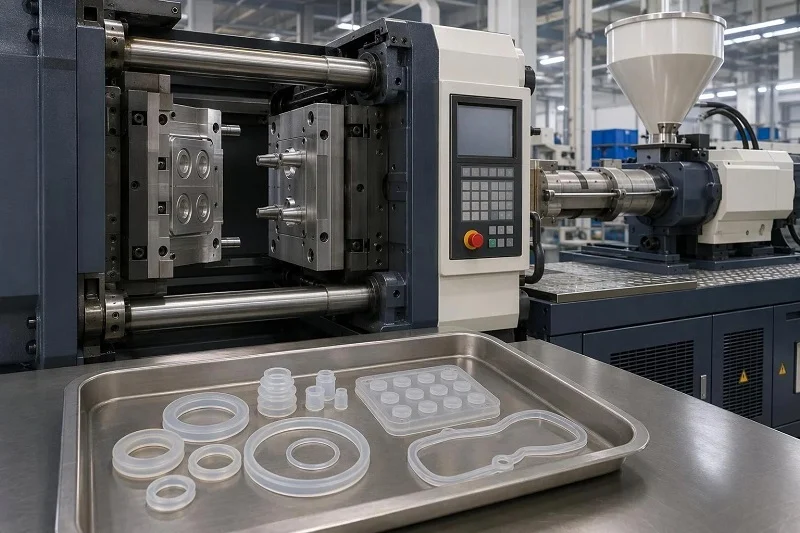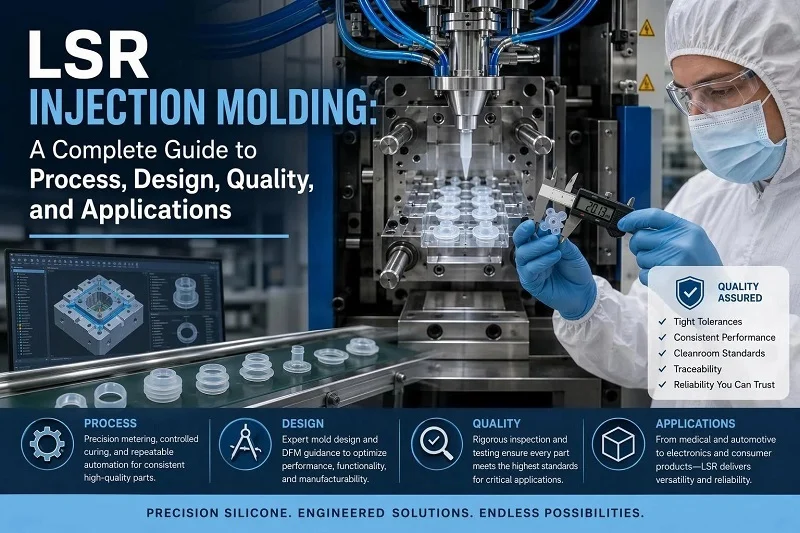
LSR injection molding is not simply rubber molding with a different feedstock. It is a distinct thermoset process: a two-component platinum-cured liquid silicone rubber is metered, mixed, injected into a heated mold, and cured into a shape that can never be melted back. LSR’s elasticity, thermal range and biocompatibility make it a fit for precision seals, medical components, thin membranes and micro parts, and LSR injection molding has become the preferred process over HCR for its processing, part design and performance advantages.
This guide is written for product developers and engineers who are evaluating, specifying or scaling LSR injection molding. It covers the process mechanics stage by stage, the design rules that decide whether a tool produces clean parts or a flash-trimming problem, quality control and testing, material grade selection, applications by sector, and how LSR injection molding compares with HCR injection, compression molding, transfer molding and thermoplastic or TPE overmolding. The closing sections address the path from prototype tooling to mass production and what to look for in a manufacturing partner.
What Is LSR Injection Molding and How Does the Process Work?
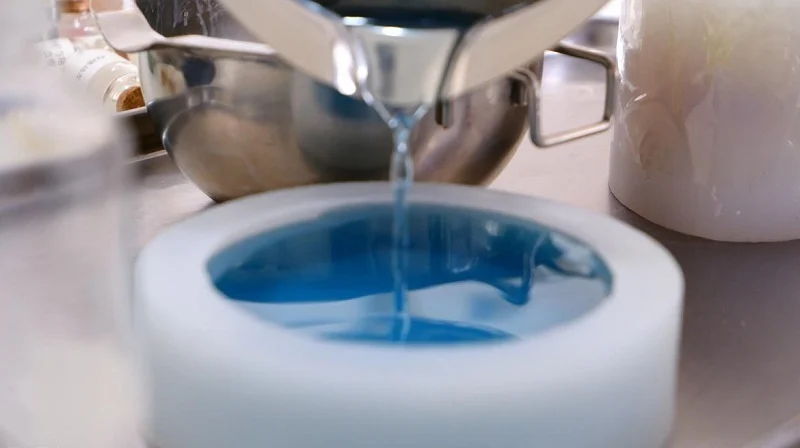
Liquid silicone rubber is a two-part, platinum-cured thermoset supplied as a flowable liquid rather than a solid compound. In LSR injection molding the material is kept chilled and metered as a liquid, then injected into a mold preheated to roughly 130–200 °C, where vulcanization takes place. The defining contrast with thermoplastic molding is that the mold, not the barrel, supplies the heat, and the cured state is permanent — a set LSR part cannot be remelted and reprocessed.
The Two-Component Metering and Mixing Stage
Metering units draw Part A (base polymer) and Part B (catalyst) from pails or drums and pump them in predetermined ratios into a static mixer, where mechanical mixing triggers vulcanization; a third stream can add color pigment. Ratio accuracy and mix homogeneity govern cure consistency and part-to-part repeatability, which is why this metered mechanical mixing — rather than the pressurized impingement mixing used in reaction injection molding — is the foundation of a stable LSR injection molding process.
Injection, Cure, and Demolding
The mixed compound travels through a screw in a barrel and a nozzle fitted with an automatic shut-off valve, which prevents leakage and overfilling, into the heated cavity, where it cures rapidly — the source of the process’s short cycles. LSR injection molding operates at far lower injection pressure than thermoplastic molding, under about 1,000 psi against pressures several thousand times higher for thermoplastics. Demolding is a real constraint: silicone’s elasticity makes ejector pins risky because ejection force can cause hot tearing, so multi-plate and stripper molds, robotic take-off with grippers, brushes or air, and designed-in undercuts support clean removal.
Design Rules for LSR Injection Molding Parts
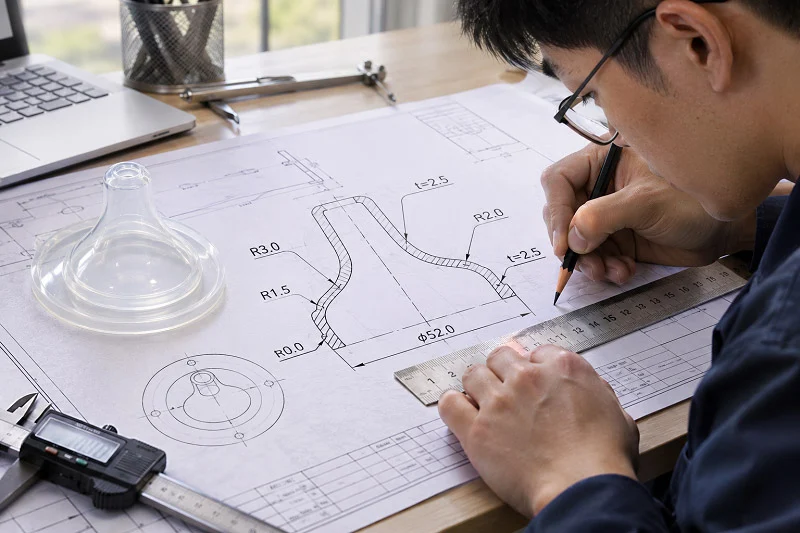
Most LSR problems are prevented or locked in at the design stage. Two material characteristics drive the rules — a high but consistent shrink rate and extreme sensitivity to flash — while the process itself grants freedoms that conventional injection molding does not, including thin membranes, thick-to-thin transitions and tiny micro parts.
Wall Thickness, Ribs, and Shrinkage
LSR fills thin walls with relatively little difficulty: walls as thin as 0.012 in. are possible over small areas and down to 0.015 in. over larger areas, depending on the wall size and adjacent thicker sections. Ribs should run about 0.5 to 1.0 times the adjoining wall thickness, and sink is almost nonexistent. Shrinkage is high but consistent throughout the part, with an expected tolerance around 0.025 in./in., so tool dimensions must be built around a known shrink rate rather than corrected after the fact.
Parting Lines, Flash, and Tooling Countermeasures
LSR flashes through gaps as small as 0.0002 in., which makes parting-line placement and count a first-order tooling decision rather than a finishing detail. Minimizing parting lines produces cleaner parts and saves cycle time. Mold designers suppress flash by planning correct tolerances and building extra features into the mold; flash control is therefore a design-and-tooling problem, not something trimming can economically fix after molding.
Undercuts, Inserts, and Overmolding
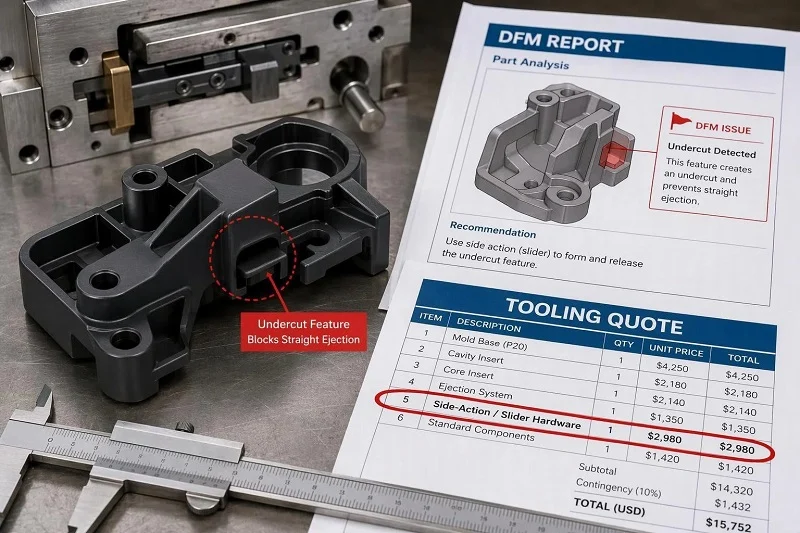
Undercuts are a design option in LSR, most removed manually with minimal effort and some released by selective mechanical actions; because LSR tears easily at sharp edges, fillets and radii are important wherever an undercut is manually removed. Insert molding adds strength with metal bearings, threaded inserts, or high-temperature plastics such as PEEK or PEI that survive cure temperatures. LSR generally does not chemically bond without self-adhesive grades or mechanical interlocks, and any primer or surface treatment is a process decision to settle before tooling.
Advantages and Limitations of LSR Injection Molding
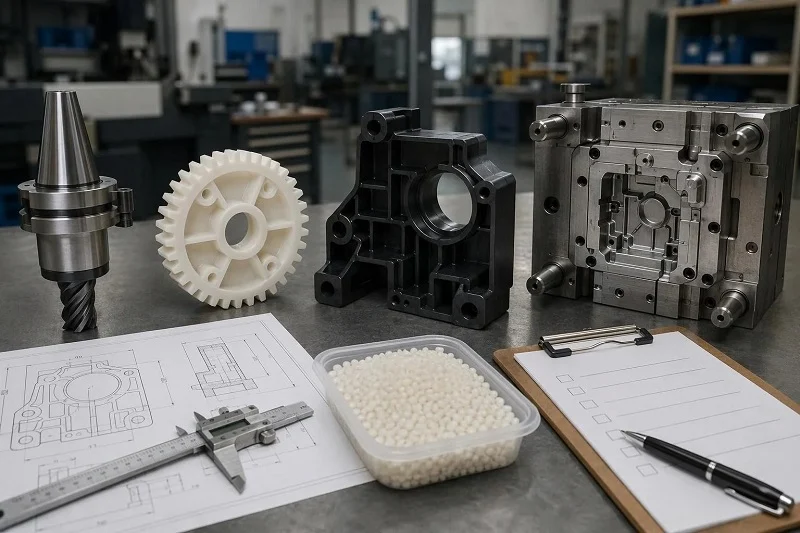
The case for LSR injection molding rests on properties that few other materials combine and on a manufacturing model that rewards volume and complexity. The case against it is mostly capital and handling: specialized equipment, tight tooling, and parts that must be removed gently. Each advantage below holds under a condition, and each limitation has a design or process response.
Performance and Manufacturing Advantages
LSR withstands extreme temperatures — typically cited around -50 °C to +250 °C — and resists UV, ozone, moisture and chemicals. Its compression set lets a part return to shape after repeated compression even at temperature extremes, which is what separates it from many other elastomers. It is inherently insulative with strong heat and flame resistance, naturally biocompatible and hypoallergenic for skin contact, and tolerant of sterilization. As a process, LSR injection molding is accurate, clean and highly automatable, permits thin membranes and micro parts, supports high-cavitation tooling, and generally carries lower tooling cost than thermoplastic tooling, though that varies with part size and complexity.
Costs, Cycle Constraints, and When LSR Is the Wrong Choice
The offsetting costs are real: injection molding machines are significantly more expensive than transfer presses, setup is more involved, and the process depends on specialized metering and mixing equipment. Flash and gentle demolding add labor or automation, shrinkage demands careful tooling, and overmolding adhesion requires the right grade and substrate discipline. LSR injection molding is also a poor fit for very large, simple parts, for low volumes where tooling cannot be amortized, or for geometries that compression molding handles at lower cost — compression suits simple designs and low-to-medium batches, and transfer molding suits high-precision complex parts with competitively priced tooling.
Quality Control and Testing for LSR Injection Molding
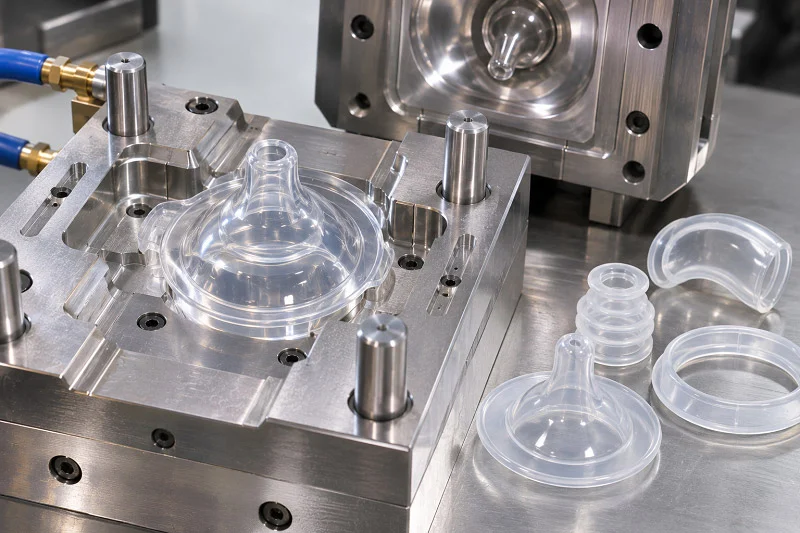
Because LSR is a thermoset, a cure defect cannot be reworked by remelting. Quality in LSR injection molding therefore depends on a controlled process first and layered verification second: incoming material, in-process monitoring, then inspection and functional test on finished parts.
Process Control and In-Process Monitoring
The parameters that must be held in control are the metering ratio, mix homogeneity, injection pressure and fill, mold temperature and cure time. A documented quality plan, a stable and controlled molding process, and quality tools and best practices are the recognized foundation, and pilot production data carried into full-scale production shortens the route to a stable process. Where medical or contamination-sensitive parts are involved, clean-room manufacturing is a relevant additional control.
Inspection and Functional Test Methods
Visual inspection targets flash, tears and short shots; dimensional verification checks parts against tolerances, often with optical CMM equipment. Functional testing evaluates what the part must actually do: compression, tensile and elongation tests for mechanical properties, leak and pressure testing for sealing components, and X-ray or CT scanning for internal defects in complex geometries. For medical parts, biocompatibility and sterilization validation are separate qualification tracks, and ISO-certified practice is the framework many buyers require.
Material Selection for LSR Injection Molding
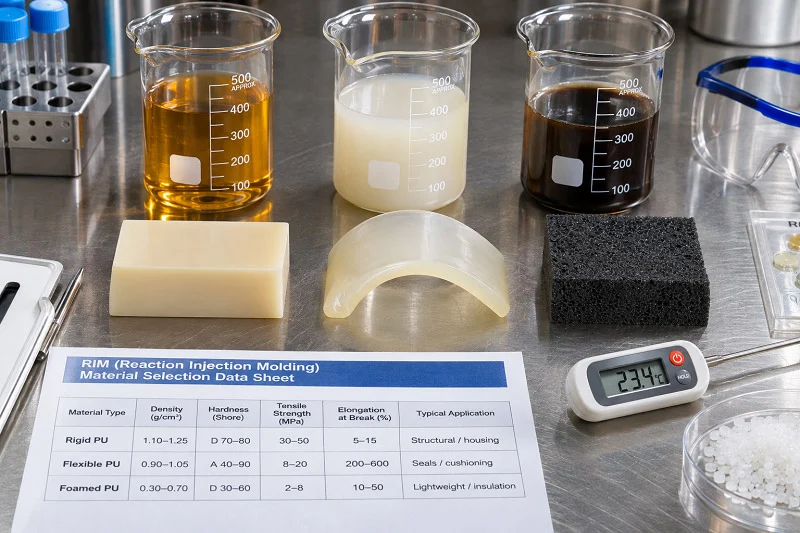
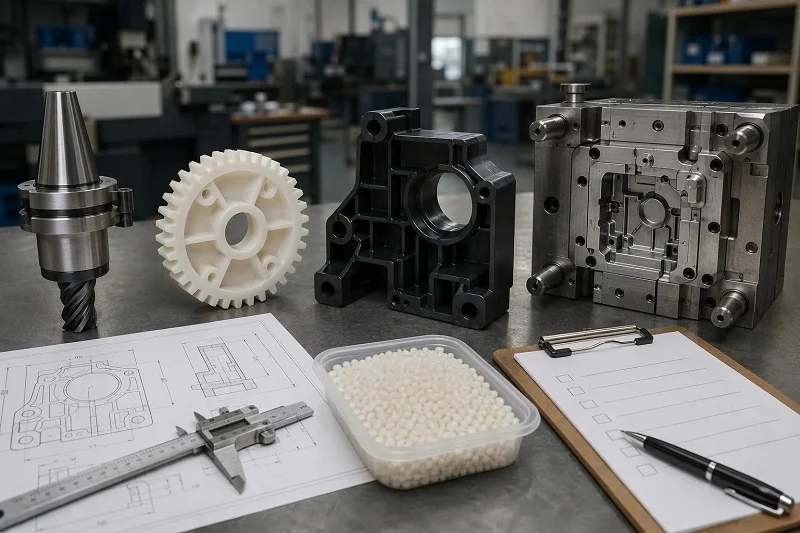
LSR is a family of formulated grades, not a single material. A workable selection sequence starts with the application’s regulatory and contact requirements, moves to thermal and chemical exposure, then to mechanical and optical needs, and finishes with processing considerations such as cure package and adhesion. Where the answer is not obvious from data sheets, a supplier’s formulation expertise and representative sample testing should be brought in before a grade is committed to tooling.
Standard, Specialty, and Regulated Grades
The main grade families are general purpose, food-contact, medical, self-adhesive, low-volatile and optically clear, alongside numerous other specialty grades, each available across a durometer range from very firm to very soft. The application requirement drives the choice: medical and healthcare parts prioritize sterilization tolerance and implantability considerations, food-contact parts prioritize the relevant food-grade compliance, self-adhesive grades exist to bond with thermoplastics without a separate primer, and optically clear grades serve light-transmitting components.
Durometer, Compression Set, and Application Fit
Durometer is the hardness of the silicone, and it corresponds to other properties such as elongation and modulus, so hardness selection is really a selection of the whole property set. Softer grades give easier sealing at low closure force and a softer feel; firmer grades resist deformation better. Compression set matters wherever a gasket or valve must return to shape after repeated compression, and LSR’s ability to hold its original form through many cycles, including at extreme high and low temperatures, is one of the properties that separates it from other elastomeric polymers. Thermal and chemical exposure then narrows the list. Before committing a grade to tooling, request representative sample testing.
Applications of LSR Injection Molding
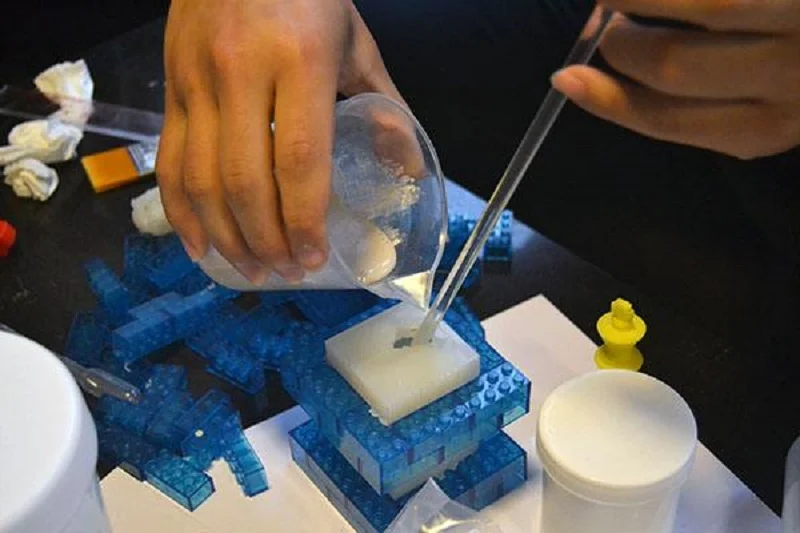
LSR injection molding earns its place where a requirement is hard to meet any other way: sterilizability, thermal cycling, reliable sealing, prolonged skin contact, or optical clarity. The sectors below are organized around those drivers rather than around industry names, so you can match your own requirement to the part types it typically produces.
Medical and Healthcare Components
Seals, gaskets, valves, masks, and device components rely on LSR’s biocompatibility, its tolerance of sterilization, and its dry, non-tacky surface where topical devices must stay comfortable in use. Medical LSR injection molding also carries a qualification context: biocompatibility is demonstrated through testing and a biological evaluation rather than assumed from the material family, and contamination-sensitive parts are typically molded under clean-room controls.
Automotive, Electronics, and Industrial Parts
Under-hood o-rings, gaskets, and connectors for engines, transmissions, and electrical systems draw on LSR’s thermal stability, weather resistance, and durability under prolonged heat. Because LSR is inherently insulative with strong heat and flame resistance, it also suits electrical, automotive, and industrial sealing and damping parts, including grommets that protect wiring and cables.
Consumer, Food-Contact, and Optical Parts
Food-grade kitchen and appliance parts use food-contact grades, hand-contact consumer products use biocompatible and hypoallergenic grades, and optically clear components use clear grades. In each case the grade family, not the base polymer alone, is what makes the application viable, which is why grade selection belongs at the start of the project rather than after tooling is cut.
LSR Injection Molding Compared with Other Molding Processes
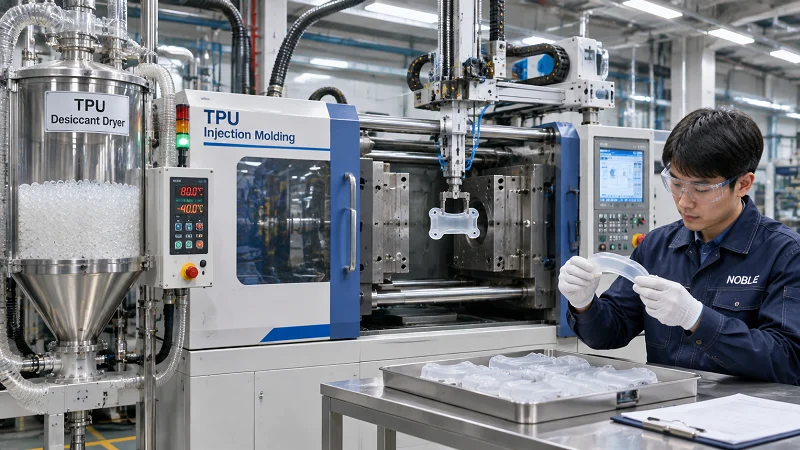
Process choice should follow the part, the volume, and the property requirement rather than habit. The comparison below sets LSR injection molding against the alternatives on the dimensions that decide projects: material format, tooling cost, cycle time, labor, part complexity, volume fit, and waste.
LSR Injection Molding vs. HCR Injection Molding
HCR arrives as a single pre-mixed compound of very high molecular weight, is vulcanized at higher temperatures than LSR, and generally uses peroxide curing. Demolding is manual or automated but is followed by trimming to correct shape distortion, and acid powder deposits known as blooming require post-curing in a separate oven. HCR raw materials and processing equipment cost less, but the process is less productive and needs more labor; LSR trades that material and equipment saving for higher productivity and lower labor.
LSR Injection Molding vs. Compression and Transfer Molding
Compression molding places a pre-vulcanized, doughy preform between two heated plates and suits simple designs, larger parts, and low-to-medium volumes. Transfer molding uses a closed mold and a transfer pot, needs higher pressure to fill, and is excellent for high-precision, geometrically complex parts with competitively priced tooling. Injection molding wins on cycle time, waste, and automation, since transfer molding produces much more waste from a wider sprue, air holes, and overflow grooves, but it carries higher machine and setup cost.
LSR vs. Thermoplastic and TPE Overmolding
The mechanics differ fundamentally: thermoplastics are heated to stay viscous and need pressures several thousand times higher than LSR, which operates under about 1,000 psi, and the LSR mold is heated while the thermoplastic mold is cooled. Cycle times are about the same, and LSR tooling is generally less costly, though this varies with size and complexity. LSR offers heat resistance, extreme low-temperature flexibility, chemical resistance, and inherent lubricity; TPE bonds more easily to rigid substrates, and self-adhesive LSR grades have narrowed that gap, but substrate cleanliness, temperature, and additive compatibility still govern bond success.
From Prototype to Mass Production in LSR Injection Molding
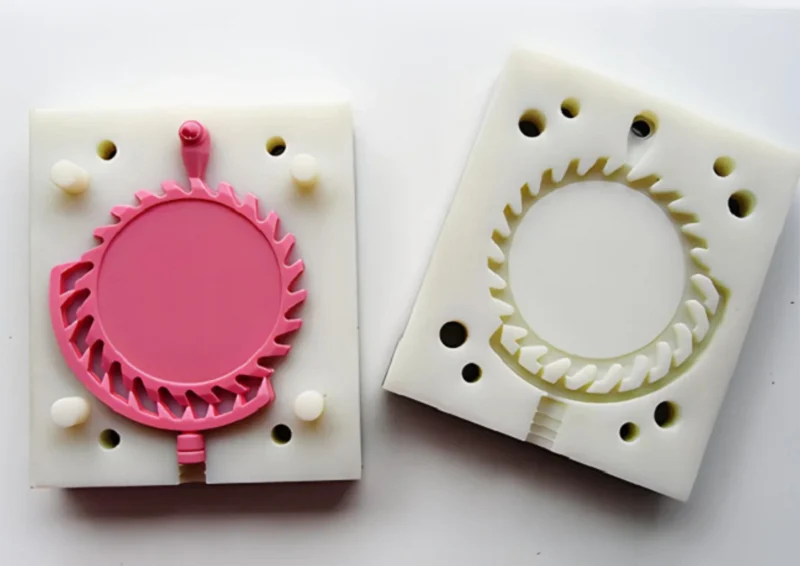
A part does not move from prototype to mass production in one step. It passes through prototype tooling, a pilot production stage, and then full-scale production, and what changes at each stage is the confidence behind the tool and the process rather than the design intent.
Prototype tooling settles the fundamentals. Because LSR shrinks substantially, shrinkage values are established by testing the actual material and by prototyping, which yields the guideline used in the design stage. Parting-line placement, gate location into the thickest section, and the extra mold features that suppress flash are design and tooling decisions addressed during tooling, and correcting them later is expensive. A prototype run is the cheapest place to discover that a wall is too thin for the adjacent section or that an undercut tears on removal.
Pilot production is where the process window is developed. The parameters that will be held in production — metering ratio, mix homogeneity, injection pressure and fill, mold temperature, and cure time — are optimized and digitally established for a stable process, and the pilot run generates the production data that carries forward. Because LSR is a thermoset, a part that cures incorrectly cannot be remelted and reworked, so the pilot stage is where cure consistency is proven rather than assumed.
Once tooling and process are refined, material and color changes become straightforward. The attention given to the official pilot production stage has a direct impact on the efficiency and effectiveness of the manufacturing process: applying the lessons and production data from pilot runs speeds the establishment of a stable process and full-scale production, reducing both manufacturing costs and time, shortening time-to-market, and delivering the best product possible. Treat the pilot run as a decision point with its own deliverables, not as a formality between tooling and volume.
Choosing NOBLE to Support Your LSR Injection Molding Project
NOBLE is a Chinese contract manufacturer that supports customers through both prototyping and mass production for LSR injection molding projects. Our service capability and processing expertise are structured to help you complete a project efficiently, from the first design question to the finished parts.
We are certified to ISO 9001:2015 and ISO 13485:2016. Those certifications sit behind a complete quality control system and a full set of inspection equipment, with IQC, IPQC, and FQC/OQC inspection stages in production, so quality control can be configured to your requirements rather than applied uniformly.
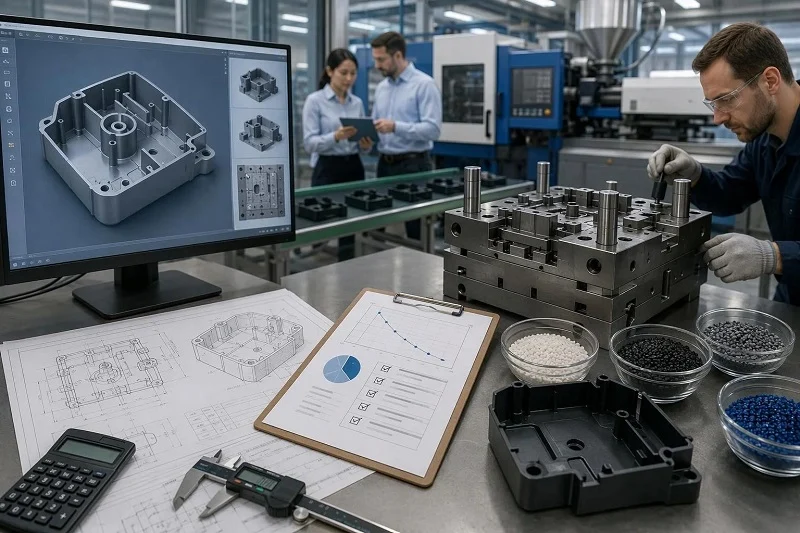
Our scope is full-service from design to assembly, not production alone. That means design-for-manufacturability input while the part is still changeable, tooling and molding, and the secondary and assembly steps that turn molded components into a finished product. Keeping those stages with one manufacturer removes the handoffs where tolerances, documentation, and schedule tend to drift.
For LSR work specifically, the practical benefit is early involvement. Shrinkage planning, parting-line and flash strategy, undercut release, and grade selection are decisions that are cheap before tooling and expensive after it. Our engineers work through those with you at the design stage, and our prototyping and production capacity lets the same part move from validation samples into volume without restarting the relationship.
If you are evaluating an LSR injection molding project, bring us the application requirements, the CAD model, and the expected volumes. We can respond with manufacturability feedback and pricing so you can judge the path from prototype to production on real information.
FAQs About LSR Injection Molding
These are the questions that most often remain after the technical sections. Each answer is self-contained, with a pointer to the section that covers the detail.
What is LSR injection molding and how does a typical cycle work?
LSR injection molding is a thermoset process in which a two-component platinum-cured liquid silicone is metered and mechanically mixed, injected into a preheated mold at roughly 130–200 °C, cured, and demolded. Injection pressure stays under about 1,000 psi, far below thermoplastic molding. See the process section for each stage.
When should a project use LSR injection molding rather than compression, transfer, or thermoplastic overmolding?
Choose LSR injection molding for complex, high-precision parts at volume where heat resistance, sealing, biocompatibility, or thin-wall design freedom matter. Compression suits simple, larger, low-to-medium volume parts; transfer suits complex precision parts with lower tooling cost; thermoplastic or TPE overmolding wins when easy adhesion to a rigid substrate is the priority.
Which design rules matter most for LSR parts, especially around flash and parting lines?
Plan shrinkage around a known rate rather than correcting after tooling, minimize the number and complexity of parting lines, and let the mold designer build in features and tolerances that suppress flash, which can occur in gaps as small as 0.0002 in. Keep ribs at 0.5–1.0 times the adjoining wall and add fillets wherever an undercut is manually removed.
How is quality controlled and what tests are typically performed on LSR parts?
Quality rests on a sound quality plan and a stable, controlled molding process, verified by visual inspection for flash, tears, and short shots, dimensional checks against tolerances, and functional testing such as compression, tensile, and elongation tests, leak or pressure testing for seals, and X-ray or CT scanning for internal defects. Medical parts add biocompatibility and sterilization validation.
How should a material grade be selected for a given application?
Work from requirements inward: first the regulatory and contact conditions, then thermal and chemical exposure, then durometer and compression set, and finally processing and adhesion needs. Validate the shortlisted grade with representative sample testing before committing it to tooling.
How do prototyping and mass production differ in LSR injection molding?
Prototyping establishes the tool, the validated shrink rate and a workable process window. Mass production depends on pilot-run data that stabilizes those parameters, so the pilot stage is where cost, efficiency and time to market are largely decided.