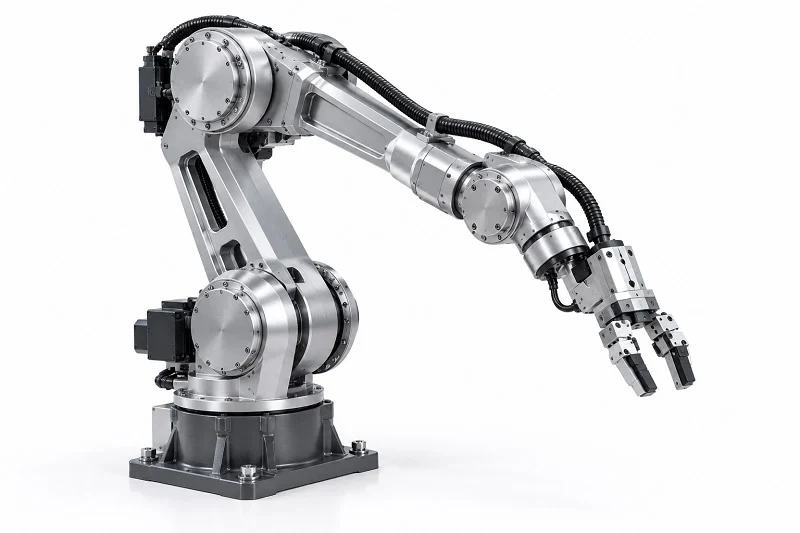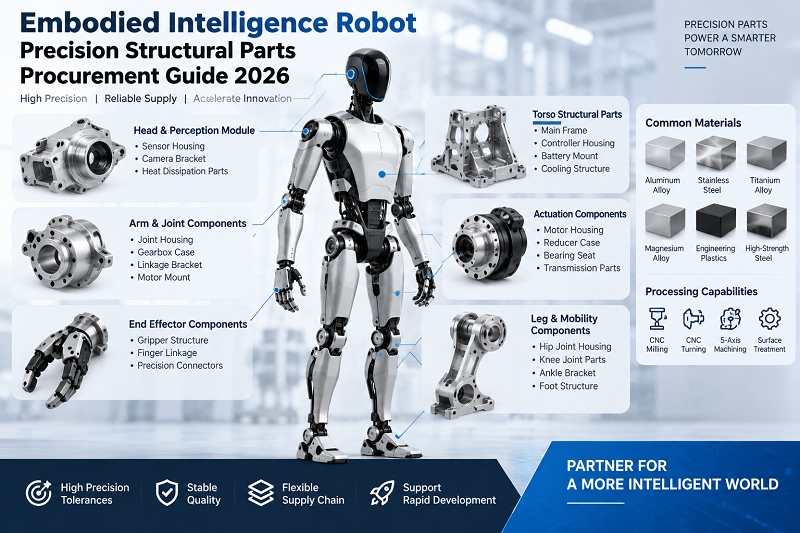
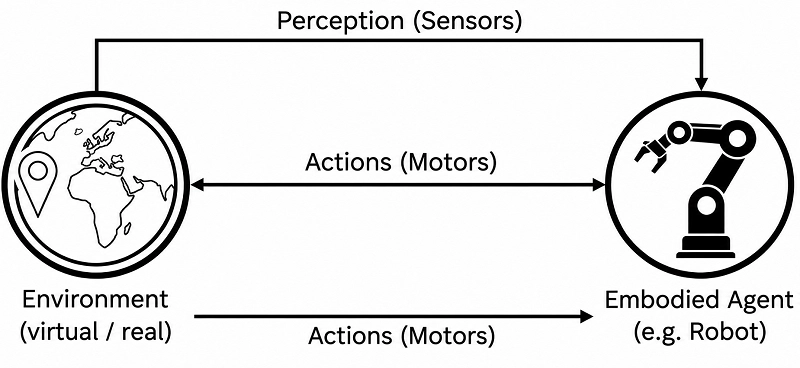
In recent years, with breakthroughs in AI technologies such as large language models, a new form of intelligence has gradually entered our view: embodied intelligence robots. Unlike virtual intelligence like ChatGPT and DeepSeek, these are tangible, touchable, and perceivable entities. They can not only hold daily conversations but also grasp objects to improve factory efficiency. However, this also means that the parts required for embodied intelligence robots need very high standards in both material selection and processing technology. This has caused many doubts and concerns for engineers and procurement staff. This guide will comprehensively answer all your questions.

1. What are the application Scenarios of Embodied Intelligence Robots?
As large language models continue to iterate and upgrade, the application boundaries of embodied intelligence robots are constantly expanding. From dark factories to smart offices and intelligent customer service, breakthroughs are being made in segmented fields. In the medical field, besides the assistance of da Vinci surgical robots, many patient transfer robots and exoskeleton rehabilitation robots have also joined in. In high-tech fields, they are also present, such as robots sending commands in aerospace and intelligent driving in the automotive field. The scope of application continues to expand.

2. What are the Core Challenges in the procurement of Embodied Intelligence Robot Structural Parts?
The machining of precision structural parts for embodied intelligence robots faces several unique challenges that directly affect procurement decisions and supplier screening.
2.1 Fast R&D Iteration and Frequent Drawing Version Changes.
The industry is still in a rapid iteration stage. Frame revisions and actuator optimizations are almost the norm. Suppliers must have the ability to deliver small batches with multiple versions in parallel.
2.2 Complex Assembly Relationships and Extremely Low Tolerance for Critical Dimensions.
A single body frame may simultaneously have mounting holes, locating holes, bearing seats, mating surfaces, and sensor mounting surfaces. Any hole position deviation can cause assembly difficulties for the entire machine.
2.3 Difficult Deformation Control for Thin-Wall Parts.
To reduce weight, actuator housings and dexterous hand structural parts often have wall thicknesses of only 1-3mm. They are prone to warping during cutting. As industry feedback shows, under the premise of limited equipment weight, hardware performance indicators being difficult to meet is one of the practical obstacles to scenario implementation.
2.4 Lack of Unified Industry Standards.
As stated by Jiao Jichao of UBTECH, large-scale mass production of robots lacks unified process and inspection standards. This means whether a supplier’s quality control system is complete directly determines the consistency of delivered parts.
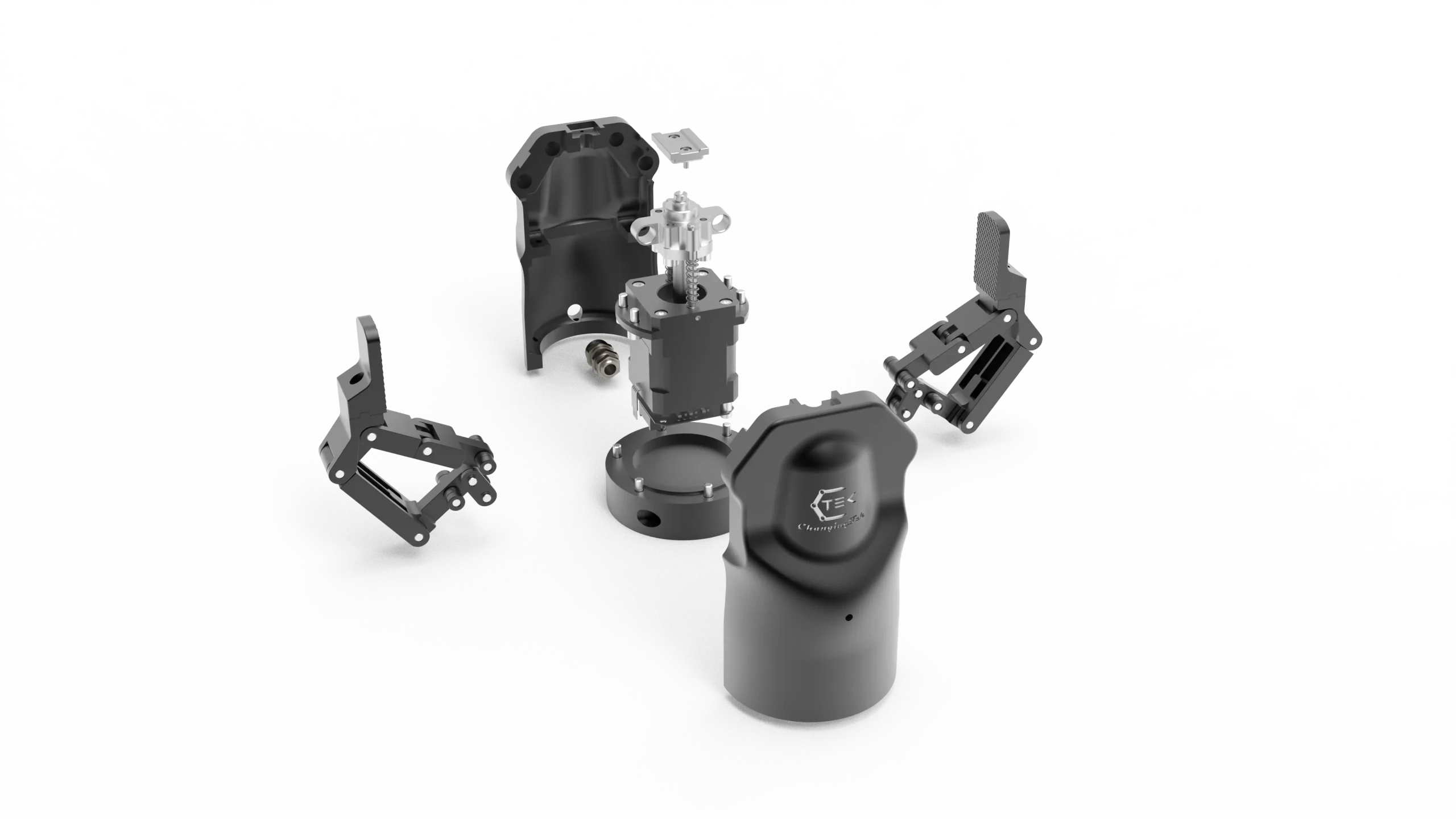
3. What are the Commonly Used Materials for Embodied Intelligence Robot Precision Structural Parts?
Material selection directly determines the mechanical properties, weight, machining difficulty, and cost of structural parts. Commonly used materials for embodied intelligence robot structural parts cover four major categories: light alloys, high-strength steels, engineering plastics, and composite materials. The table below compares the core characteristics and applicable scenarios of each material.
| Material Category | Typical Grades | Density (g/cm³) | Tensile Strength (MPa) | Core Advantages | Typical Applications |
| 6-Series Aluminum Alloy | 6061-T6, 6063-T5 | 2.7 | 310 | Lightweight, easy to machine, anodizable, moderate cost | Body frames, joint housings, motor housings |
| 7-Series Aluminum Alloy | 7075-T6, 7050-T7451 | 2.81 | 570 | High strength, high hardness, fatigue resistant | Load-bearing brackets, joint connectors, reducer housings |
| High-Strength Tough Aluminum Alloy | New custom alloys | ~2.75 | ≥380 | Balanced strength and toughness, high fatigue strength | Joint brackets, side swing frames, and other critical load-bearing parts |
| Titanium Alloy | TC4 (Ti-6Al-4V) | 4.43 | 950 | Extremely high specific strength, corrosion resistant, biocompatible | Medical robots, joint connectors, high-end dexterous hands |
| Stainless Steel | 304/316, 17-4PH | 7.93 | 520-1100 | High strength, corrosion resistant, wear resistant, easy to weld | Shaft parts, fasteners, sensor brackets |
| Copper Alloy | Brass H62, Beryllium Copper C17200 | 8.5-8.9 | 240-1200 | Good electrical and thermal conductivity, wear resistant, non-magnetic | Motor components, conductive slip rings, heat sinks |
| Engineering Plastics | PEEK, POM, PA66+GF | 1.3-1.4 | 90-150 | Lightweight, self-lubricating, insulating, shock-absorbing | Dexterous hand fingertips, gears, housing decorative parts |
| Carbon Fiber Composite | CFRP (T700/T800) | 1.5-1.6 | ≥1500 | Extremely high specific strength, fatigue resistant, good damping | Robotic arm links, leg links |
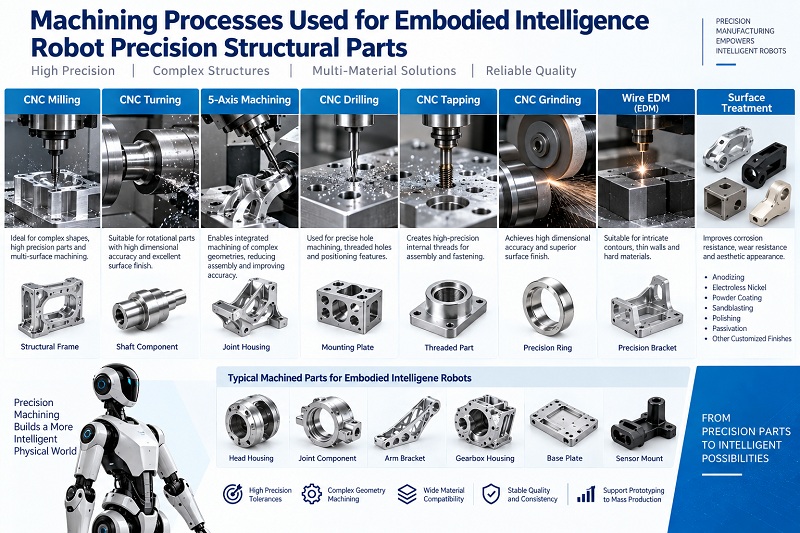
4. How to select the Machining Processes Used for Embodied Intelligence Robot Precision Structural Parts?
The choice of machining process directly affects the precision, surface quality, cost, and delivery cycle of parts. The processes involved in embodied intelligence robot precision structural parts are diverse. They need to be comprehensively selected based on part complexity, batch size, precision requirements, and material properties.
4.1 Comparison of Core Machining Processes
| Process Type | Process Characteristics | Precision Range | Suitable Batch Size | Typical Application Parts |
| 3-Axis CNC Milling | Versatile, lower cost, suitable for flat surfaces and simple cavities | ±0.02~0.05mm | 1-500 pcs | Simple brackets, plates, flanges |
| 5-Axis CNC Milling | Multi-surface machining in one setup, high geometric accuracy, suitable for complex surfaces | ±0.005~0.02mm | 1-1000 pcs | Joint housings, irregular curved parts, impellers |
| CNC Turning | Efficient machining of rotational parts, high internal/external concentricity | ±0.005~0.02mm | 10-5000 pcs | Shafts, sleeves, flanges, threaded parts |
| Mill-Turn Composite | Turning + milling in one step, reduced setup errors, high efficiency | ±0.005~0.01mm | 50-5000 pcs | Complex shafts, valve bodies, connectors |
| Vacuum Die Casting + CNC Finishing | Complex structures formed in one piece, high material utilization (85%+), mechanical properties close to forgings | Casting ±0.05mm, finishing ±0.01mm | 100-10000 pcs | Body frames, leg structural parts, joint housings |
| Precision Grinding | Ultra-high precision and surface quality; Ra can reach below 0.02μm | ±0.001~0.005mm | As needed | Bearing seats, mating surfaces, sealing surfaces |
| EDM/Wire Cutting | Can machine super hard materials, complex cavities, and narrow slots; no cutting force | ±0.005~0.01mm | 1-100 pcs | Molds, carbide parts, irregular holes |
| 3D Printing | No mold needed, rapid validation, high geometric freedom | ±0.1~0.3mm | 1-10 pcs (for validation) | Concept validation prototypes, functional prototypes, fixtures |
4.2 Decision Framework for Process Selection
When determining the process plan with suppliers, procurement parties are advised to evaluate according to the following logic:
Step 1: Clarify the key characteristics of the part: precision requirements, material, complexity, batch size, and appearance requirements.
Step 2: List 2-3 feasible process options. Ask suppliers to provide quotes, lead times, and expected yields for each.
Step 3: Comprehensively evaluate life-cycle costs. Not only look at the per-piece machining fee, but also consider mold cost amortization, post-processing costs, yield loss, rework costs, and version changeover costs. For small batches, CNC is usually better. For medium batches, die casting + finishing offers better value. For large batches, injection molding or forging + machining can be considered.
Step 4: Confirm the supplier’s process completeness. Structural parts often require multiple process combinations, such as turning + milling + grinding + surface treatment. Whether the supplier can complete these in one stop directly affects delivery cycles and quality management efficiency.
NOBLE Smart Manufacturing uses CNC as its core in-house process, including CNC drilling and tapping, mill-turn, precision engraving, and cutting. It also integrates complete upstream and downstream manufacturing resources, such as various rapid and production molds, SLA and SLS 3D printing, and various surface treatment processes. This provides customers with one-stop service.
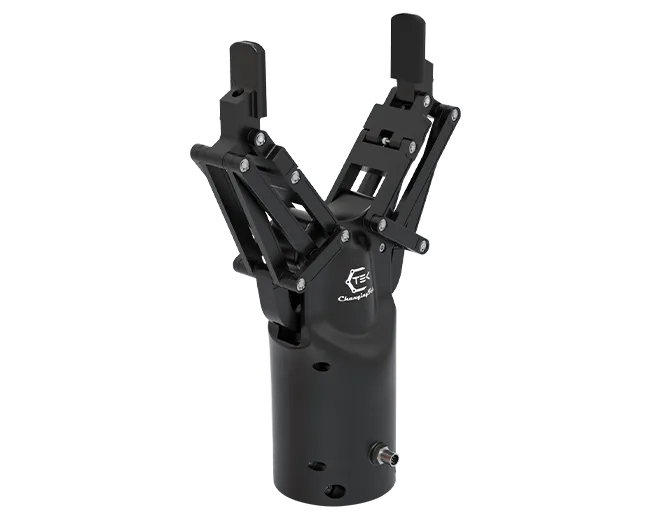
5. What kind of Surface Treatment is Used for Embodied Intelligence Robot Precision Structural Parts?
Surface treatment directly affects wear resistance, corrosion resistance, and fit precision. Different functional areas require zoned treatment.
5.1 Anodizing
The most common for aluminum alloys. Film thickness 5-15μm, hardness 200-300HV. Suitable for appearance surfaces and general assembly surfaces. About 50% of the oxide film grows outward. Precision holes need 0.01- 0.03 mm compensation.
5.2 Hard Anodizing
Film thickness 50-100μm, hardness 300-500HV. Wear resistance improved 10-20 times. Suitable for locating surfaces, bearing fits, and high-frequency friction areas. Need 0.02- 0.05 mm allowance.
5.3 Sandblasted Anodizing
Adds sandblasting before anodizing to create a matte texture. Suitable for appearance surfaces. Sandblasting grit is typically 120-220 mesh.
5.4 Passivation
Mainly for stainless steel. Removes free iron from the surface. Film thickness is only a few nanometers. Does not change dimensions. Suitable for precision assembly surfaces and disinfection-resistant areas.
5.5 Nickel Plating
Electroless nickel plating has good uniformity. Film thickness 5-25μm. After heat treatment, hardness can reach above HV1000. Suitable for pins, micro gears, and high-frequency motion joints. Need to reserve plating thickness.
5.6 Blackening
Chemical oxidation for steel surfaces. Film thickness 1-3μm. Suitable for internal structural parts and non-appearance surfaces. Limited corrosion resistance.
5.7 Zoned Treatment Principles:
- Appearance surfaces: Sandblasting or standard anodizing
- Assembly surfaces: Standard anodizing or passivation; avoid excessive film thickness
- Locating surfaces: Hard anodizing or nickel plating
- Insulating surfaces: Maintain insulation, local masking protection
Core Principles: Function first, dimensional compensation, zoned management, re-measure critical dimensions after treatment.
6. What are the key Critical Dimensions of Embodied Intelligence Robot Precision Structural Parts?
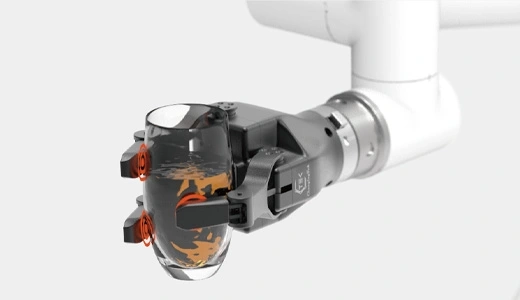
Key dimensions directly determine the results of functional testing and assembly. They mainly include: the positional accuracy and hole diameter tolerance of the installation holes and positioning holes, the coaxiality and roundness of the bearing position, the flatness and perpendicularity of the sensor installation surface, the flatness of the contact surface, the spatial dimensions of the wire harness avoidance position, the uniformity of the wall thickness of the lightweight groove, as well as the qualification of the hole spacing and the thread go and stop gauge.
In the precision machining of medical devices, the outer diameter tolerance can be controlled within ±0.005mm, the coaxiality error is < 0.01 mm, and the surface roughness Ra is < 0.4 μm. The precision requirements for robot structural components vary by part, but the tolerances of key mating surfaces usually need to be controlled within ±0.01mm.
7. What are the Inspection and Delivery Standards Required for Embodied Intelligence Robot Precision Structural Parts?
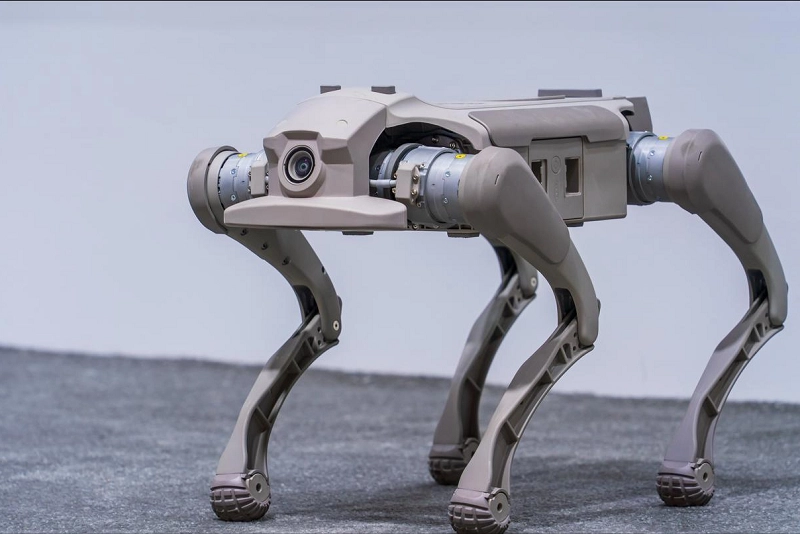
Establishing clear inspection and delivery standards is not only necessary for quality assurance but also the foundation for reducing disputes between supply and demand sides and improving communication efficiency.
7.1 Inspection Equipment and Capability Requirements
The core inspection equipment and capabilities a supplier should have include:
| Inspection Item | Main Equipment | Precision Requirements | Description |
| Full Dimension Inspection | Coordinate Measuring Machine (CMM) | Measurement uncertainty ≤0.002mm | First article must have full dimension inspection; batch sampling ratio ≥5% |
| Geometric Tolerance Inspection | CMM, roundness tester, cylindricity tester | Roundness ≤0.0005mm | Concentricity, roundness, cylindricity, flatness, etc. |
| Surface Roughness | Roughness tester, white light interferometer | Ra resolution 0.001μm | Critical mating surfaces and appearance surfaces must be inspected |
| Hardness Testing | Rockwell/Vickers hardness tester | Meets GB/T 230 standard | Verifies heat treatment effect and material condition |
| Appearance Inspection | Visual, stereo microscope | Per-limit samples | Cracks, scratches, deformation, discoloration, etc. |
| Material Composition Analysis | Spectrometer (PMI) | Meets material grade standards | Material certificates for every raw material batch; critical parts can be sampled |
| Thread Inspection | Thread go/no-go gauges, thread measuring instrument | 6H/6g grade precision | Plug gauges for internal threads, ring gauges for external threads |
8. What are the Machining Capabilities Required for an Embodied Intelligence Robot Precision Structural Part?
5-axis CNC machining capability:
Possessing experience in processing complex curved surfaces, multi-hole positions, and thin-walled parts, capable of completing multi-face cutting in a single clamping.
Rapid response capability:
It can adapt to changes in drawing versions during the R&D stage and maintain the delivery rhythm under the conditions of small batches and multiple versions running in parallel.
Quality system and traceability capability:
Each part can be traced back to the batch of raw materials, processing equipment, and process parameters.
For robot parts involved in medical applications, the ISO 13485 system is a necessary threshold.
The ability to unify assembly standards:
It can process the body frame parts, joint modules, sensor brackets, and end effector parts in a coordinated manner, unify the assembly standards, and reduce the accumulation of tolerances among different suppliers.

9. How can you find suitable spare parts for your robot?
The first step: Clarify the specifications of the parts. Determine the material, precision requirements, quantity, and surface treatment method. Prepare the 3D model and 2D drawings.
Step 2: Assess the supplier’s capabilities. The key points to look at are four: whether it has core equipment such as five-axis CNC; Is there any processing experience in the robotics or medical industry. Whether it has passed quality system certifications such as ISO 13485; Can a one-stop service from processing to surface treatment be provided?
Step 3: Confirm delivery and traceability. Request the supplier to provide a test report to confirm that the key dimensions are qualified. Each part should be traceable to the batch of raw materials and process parameters.
Step 4: Sample production first, then mass production. Verify the assembly relationship and accuracy through small-batch trial production. Only place bulk orders after confirming that there are no errors.

10. Why Choose NOBLE As Your Supplier?
Noble is a Sino-British joint venture with 14 years of development history. We are fully equipped with complete machining and inspection facilities, and have rich experience in overseas markets to quickly respond to various customer requirements.
We own multiple 5-axis CNC machines to process high-precision and complex parts in mass production. Our experienced engineering team can optimize drawings for better manufacturability. We are certified with ISO9001 and ISO13485 quality management systems. All parts are manufactured in a safe and clean workshop with full traceability.
We adopt CMM, automatic 2.5D vision measuring machines, height gauges, and other precision inspection equipment to guarantee every delivered part meets quality requirements. Our mature after-sales team is familiar with import and export customs policies of different countries, helping you receive goods as soon as possible and speed up your project progress.
FAQs of Embodied Intelligence Robot
1. What materials are commonly used for embodied intelligence robot structural parts?
Mainly 6061/7075 aluminum alloy, 304 /17-4PH stainless steel, PEEK, PI, and other engineering plastics. We can select the material according to your requirements for weight, strength, corrosion resistance, and biocompatibility.
2. What quality certifications does your factory hold for robot precision parts?
We have ISO9001 general quality management system and ISO13485 medical quality system certifications. All parts can achieve full production traceability, suitable for rehabilitation robot and medical embodied robot projects.
3. Can you process complex high-precision components for embodied robots? What equipment do you have?
Yes. We have multiple 5-axis CNC machines. Our QC lab is equipped with a CMM, an automatic 2.5D vision measuring machine, a roughness tester, and other inspection equipment to guarantee tight GD&T tolerances.
4. What support can your engineering team provide during the drawing stage?
Our experienced engineers will review your drawings and offer DFM (Design for Manufacturability) suggestions. We help optimize the design to reduce manufacturing cost and improve production yield.
5. How about delivery and customs support for overseas orders?
We have rich overseas project experience. Our mature team is familiar with customs policies of different countries. We can assist with documents to shorten lead time and accelerate your project progress.