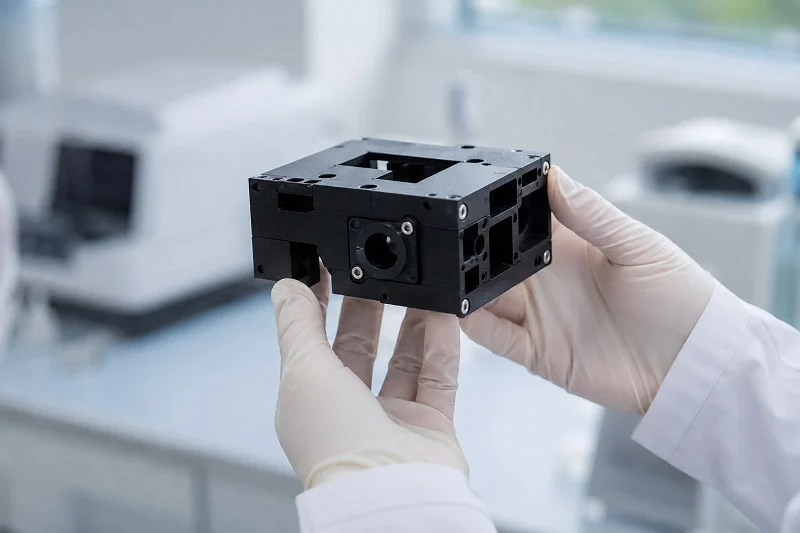
The PCR equipment enclosure of a PCR instrument protects sensitive optical and thermal components. What is a CNC PCR housing? Many developers prefer CNC machining for its precision, material versatility, and speed during production. This CNC process works for both prototyping and production. The PCR equipment enclosure needs high accuracy. Our guide covers material selection, design rules, cost factors, quality control, and picking a partner. The enclosure of a PCR machine must be dependable. CNC manufacturing gives consistent quality for the enclosure. CNC machining process requires skill. The equipment must be strong. CNC technology ensures accuracy. The enclosure must withstand the cycling. High-quality equipment is essential.
Key Requirements for CNC PCR Housing
EMC and Shielding Considerations
A PCR machine works in a busy lab. It must not pick up or send out interference. The PCR equipment enclosure is the first line of defense. A good enclosure needs tight joints for shielding. It blocks electromagnetic fields. CNC machining creates those tight joints. A metal enclosure acts like a Faraday cage. Small gaps can ruin shielding. CNC gives you the precision to close those gaps. The device also needs proper grounding. Machining ensures parts touch evenly. This creates a reliable shield. Without precision machining, gaps show up. Those gaps let interference pass through. The result is unreliable test data. For a CNC PCR housing, machining quality directly affects how well the shield works.
Biocompatibility (ISO 10993) and Electrical Safety
PCR equipment touches biological samples. The housing may touch skin. Materials must meet ISO 10993. That standard covers several tests. Cytotoxicity checks if materials harm cells. Sensitization checks for allergic reactions. Irritation checks for skin contact reactions. These safety rules are required. Medical devices must follow regulations. The enclosure protects users from electric shock. It must stop current leakage. CNC machining controls wall thickness. That matters for insulation. Electrical safety adds another layer. The design puts operator safety first. Machining creates smooth surfaces. Smooth surfaces are easier to clean. They lower the risk of contamination. The device must prevent contamination. Contamination can ruin test results. The pharmaceutical industry needs this level of cleanliness.
Heat Dissipation and Thermal Cycling Resistance
This is where PCR gets tough. The machine cycles from 4°C to 95°C. The housing must not warp. It must not break down over thousands of cycles. Chemical resistance matters too. Labs use ethanol and bleach. The material must resist those chemicals. Heat dissipation is a big challenge. The thermal block must transfer heat quickly. This affects PCR cycle times. Different options perform differently:
| Material | Thermal Conductivity (W/mK) | Notes on Performance |
| Silver (Ag) | 429 | Highest thermal conductivity; enables heating rates up to 8 °C/s and cooling rates up to 5.5 °C/s. |
| Copper (Cu) | 401 | High thermal conductivity, a viable alternative to silver. |
| Gold (Au) | 315 | High thermal conductivity but less common due to cost. |
| Aluminum (Al) | ~205 | Lower than silver but has similar volumetric heat capacity, leading to similar heating behavior below 100 °C. |
| Chromium (Cr) | 94 | Lower thermal conductivity, resulting in slower thermal response. |
| Al₂O₃ (Ceramic) | 35 | Low thermal diffusivity leads to slow heating rates and slow decay of temperature gradients. |
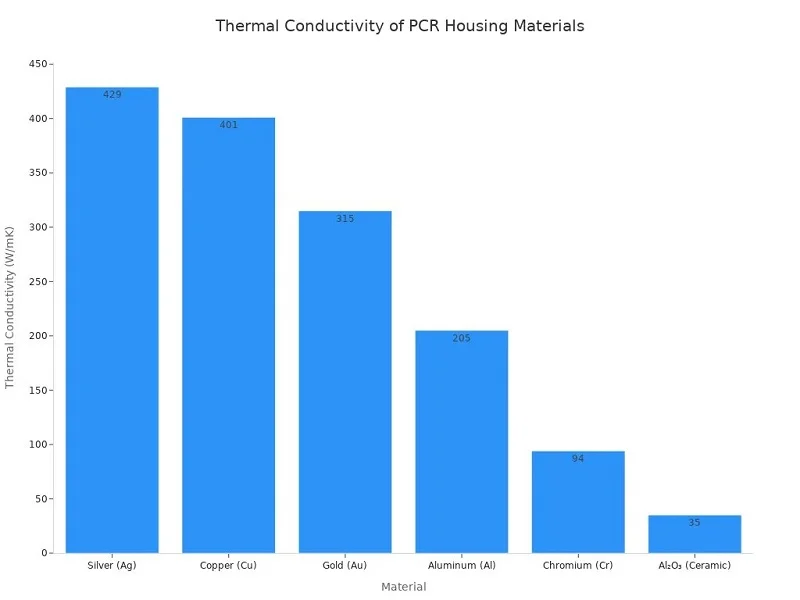
Manufacturers use silver blocks because their significantly higher thermal conductivity compared to aluminum enables faster heating (up to 8 °C/s) and cooling (up to 5.5 °C/s) rates, directly reducing PCR cycle times.
The material choice for the thermal block directly affects performance. Silver has the best thermal conductivity. But it costs a lot. Aluminum offers a good balance. It costs less and works well below 100°C. The housing must also handle heat. It should not pass heat to the user. CNC allows for precise heat sink designs. Fins and channels can be machined right into the part. This improves heat dissipation. The enclosure must pull heat away from sensitive parts. It must resist thermal shock. Temperature swings cause expansion and contraction. The process can create features that manage stress. Proper testing of the part ensures compliance. The device must handle harsh conditions. The pharmaceutical industry relies on this testing for validation.
CNC Machining for PCR Housing
Advantages of Using CNC
High Precision and Tight Tolerances
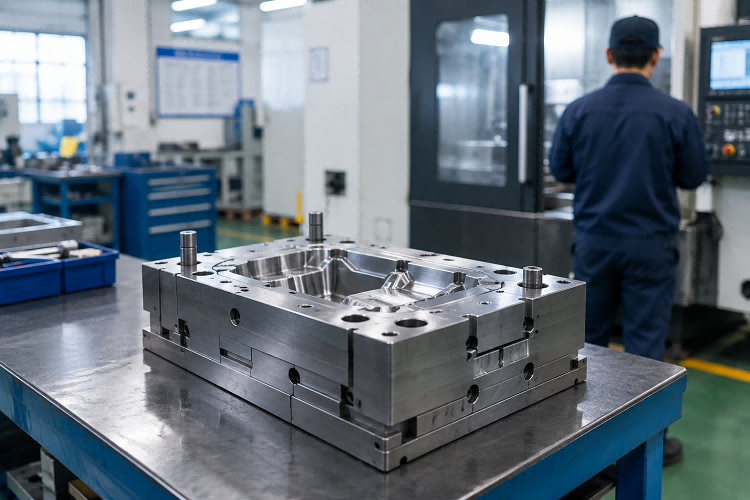
A PCR machine needs exact alignment. The optical path must stay in position. The thermal block must sit flat against samples. CNC machining gives that level of control. A 3-axis machine handles simple shapes well. It moves the tool along X, Y, and Z axes. That works for basic enclosures. A 4-axis machine adds rotation. It can cut angled features without moving the part. A 5-axis machine offers more freedom. It tilts the tool to reach complex angles. Each axis adds capability. Each axis also adds cost. For a CNC PCR housing, you rarely need full 5-axis work. Most designs use 3-axis or 4-axis setups. The precision from CNC manufacturing is repeatable. Every part matches the last one. That consistency matters for medical equipment. The enclosure must fit perfectly every time.
Complex Geometries and Rapid Prototyping
CNC machining works great during development. You can test a design, find a flaw, and fix it fast. No expensive molds needed. That speed is a big advantage. You can try several versions in a week. Each version improves the design. The process handles complex features well. You can machine heat sink fins right into the enclosure. You can create mounting bosses and standoffs. You can cut precise openings for ports and displays. This flexibility makes CNC ideal for prototyping. It also works for low-to-mid volume production. You can start with 10 units, test them, then scale to 500. The same process works at both levels. That flexibility reduces risk during product development.
Limitations and Mitigation Strategies
Cost Considerations for High Volumes
CNC machining gets costly at scale. Each part needs machine time. That time adds up. The numbers tell the story clearly. Ordering 1 unit costs £134. That price includes full setup on one part. Ordering 10 units drops the price to £38 per unit. That is a 70% reduction. Ordering 100 units brings it down to £13 per unit. That is a 90% reduction. The trend continues as volume grows. At 10,000 units, the cost per part is much lower. But it still costs more than injection molding at that volume. The main cost drivers change as volume grows. At the prototype stage, setup and programming dominate. At high volume, cycle time and material costs take over. You can reduce costs with smart design. Use commercial-off-the-shelf (COTS) components where possible. Gears, bushings, bearings, shafts, and fasteners cost less than custom-machined parts. They benefit from economies of scale. This reduces the number of custom features. That lowers cycle time and per-unit cost.
Design parts at least 3 mm smaller than the nearest standard blank size. This reduces material waste and cost. For example, a 30x30x30 mm part requires a 35 mm blank, but a 27x27x27 mm part can use a 30 mm sheet, saving material and reducing per-unit cost.
Several design strategies cut costs further. Simplify geometry to planes, cylinders, and cones. This reduces toolpath density and cycle time. Avoid deep holes that require peck cycles and special tools. Apply tight tolerances only where function demands them. Open non-critical areas to standard process capabilities. Redesign long slender parts to avoid deflection. Eliminate hard-to-reach features like deep cavities and thin webs. Each strategy reduces machining time. Each one lowers the final price.
Design Constraints vs. Injection Molding
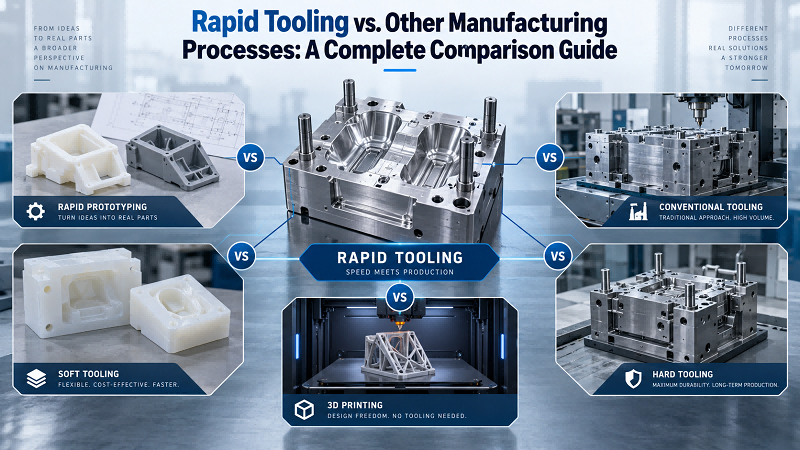
CNC machining has design limits. You cannot create certain shapes easily. Internal corners must have a radius. The cutting tool is round. Sharp corners require special techniques. Wall thickness must stay uniform. Thin walls can flex during machining. Deep pockets are difficult to cut. The tool must reach the bottom. Tool length limits depth. Injection molding handles some of these constraints better. It can create complex internal features. It can produce thin walls consistently. It can replicate intricate textures. But injection molding requires a mold. That mold costs thousands of dollars. It takes weeks to manufacture. CNC has no such upfront cost. For low volumes, CNC wins. For high volumes, injection molding becomes more economical. The crossover point depends on part complexity and quantity.
CNC vs. Alternative Manufacturing Methods
Comparing with 3D Printing and Sheet Metal Fabrication
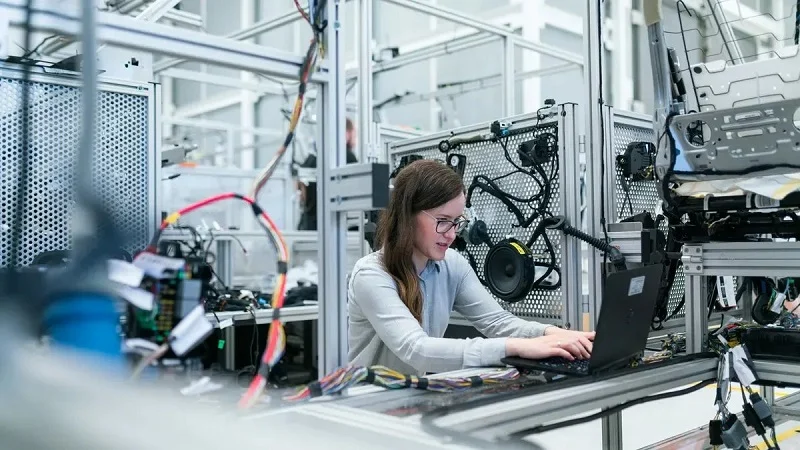
3D printing offers design freedom. It can create internal channels and lattice structures. It requires no tooling. But it lacks precision. Layer lines create surface roughness. Dimensional accuracy suffers compared to CNC. Materials are limited. Many 3D-printed parts lack the strength of machined parts. Sheet metal fabrication works for simple enclosures. It is fast and cheap for basic boxes. But it cannot create complex features. You cannot machine heat sink fins into sheet metal. You cannot achieve tight tolerances. Sheet metal also requires welding or fasteners for assembly. These joints can leak electromagnetic interference. CNC manufacturing offers the best balance. It provides precision, material variety, and structural integrity. For a PCR equipment enclosure, that combination is essential.
When to Transition to Injection Molding
The transition point varies by project. A simple enclosure might switch at 1,000 units. A complex part might stay with CNC up to 10,000 units. The table below shows how cost drivers change:
| Volume Band | Primary Cost Driver | Cost Behavior |
| Prototype (<10) | Setup & programming | Highest per-unit cost; fixed costs dominate |
| Low (10–100) | Setup spread + process stabilization | Cost drops quickly as setup is amortized |
| Mid (100–1,000) | Cycle time & tool wear | Cost flattens; fixtures become justifiable |
| High (1,000+) | Cycle time, material, tooling life | Lower per-unit cost; batching and fixture ROI become critical |
Watch for the crossover point. When injection molding quotes beat CNC quotes, it is time to switch. The mold cost spreads across more units. The per-unit price drops significantly. But do not rush the transition. CNC allows design changes. Injection molding locks the design. Make sure your design is final before committing to a mold. A partner like NOBLE, a manufacturing company in China, can help you evaluate this decision. They offer both CNC and injection molding services. Their team can guide you through the transition. They understand the trade-offs. They can help you choose the right method for your production volume. Their expertise spans prototyping and mass production. That makes them a valuable partner for medical device development.
Materials for CNC PCR Housing
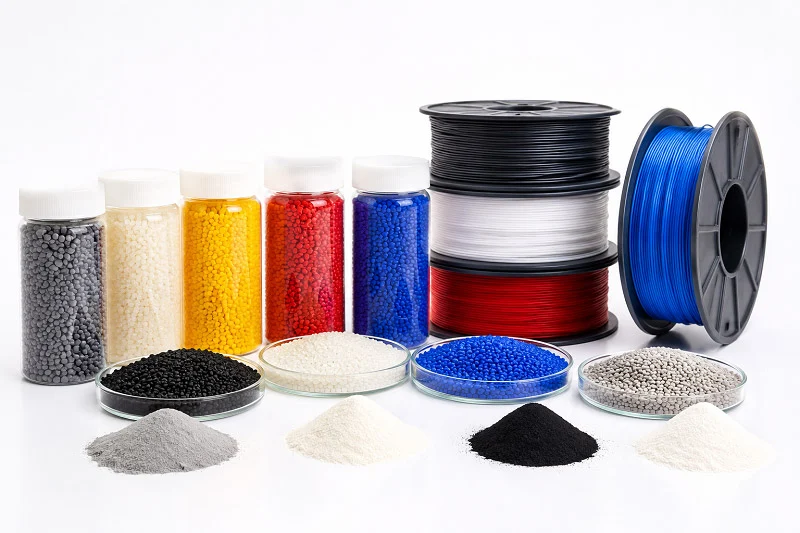
Picking the right material for your CNC PCR housing is a balancing act. You need something that survives thermal cycling, resists harsh chemicals, and meets safety standards. The choice affects performance, cost, and how long the equipment lasts. Let’s break down the options.
Engineering Plastics for Housings
Plastics offer electrical insulation and design flexibility. They won’t conduct electricity, which adds a layer of safety. They also weigh less than metals. But not all plastics handle heat the same way.
Polycarbonate (PC) for Clarity and Impact Resistance
Polycarbonate stands out for its toughness. It resists impacts well. That matters in a busy lab where things get bumped. PC also offers optical clarity. You can see inside the equipment without opening it. That helps with visual checks during operation. But PC has limits with heat. Its thermal conductivity sits between 0.19 and 0.22 W/m·K. That’s quite low. It won’t help dissipate heat from the thermal block. PC works best for outer panels and covers. It protects internal components without conducting heat. It also resists many common lab chemicals. Ethanol and mild cleaners won’t damage it easily. For a pcr equipment enclosure, PC provides a solid outer shell. It keeps the inside safe while staying lightweight.
PPS and PEEK for High-Temperature Stability
PPS and PEEK handle heat much better. These engineering plastics maintain their shape at high temperatures. They resist creep and deformation. That makes them ideal for internal components near the thermal block. PEEK offers exceptional chemical resistance too. It survives exposure to aggressive solvents. Its thermal conductivity is about 0.25 W/m·K. That’s still low compared to metals. But PEEK’s strength lies in stability, not heat transfer. It won’t warp or degrade over thousands of thermal cycles. PPS offers similar benefits at a lower cost. Both materials machine well with the right tooling. They produce clean cuts and tight tolerances. For parts that must hold precise dimensions under heat, these plastics deliver. They also meet biocompatibility requirements when needed. That makes them suitable for medical device applications.
Metals for Structural and Thermal Components
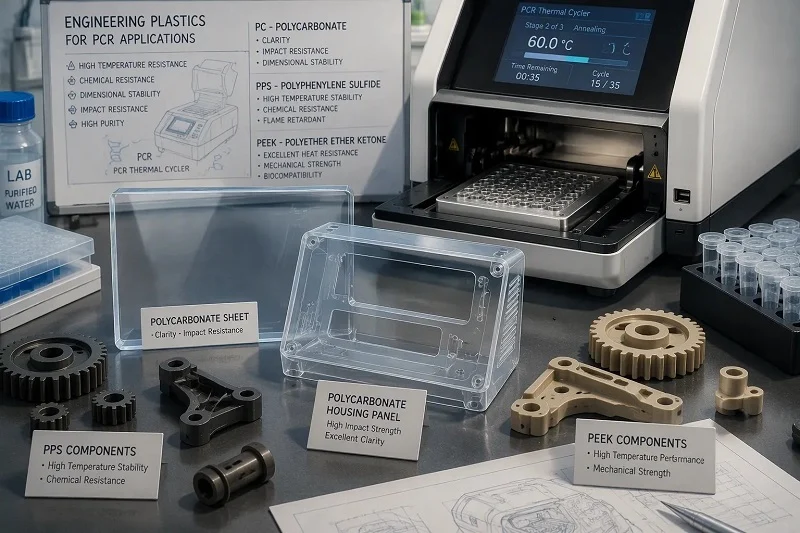
Metals bring strength and thermal performance to the table. They conduct heat effectively. They also provide structural rigidity. For a cnc pcr housing, metals handle the heavy lifting.
Aluminum 6061 for Heat Sinks and Chassis
Aluminum 6061 is the workhorse of CNC machining. It offers excellent thermal conductivity at about 167 W/m·K. That’s roughly 668 times more conductive than PEEK. This makes aluminum the only practical choice for heat dissipation. You can machine heat sink fins directly into the chassis. Those fins pull heat away from the thermal block. That keeps the PCR process stable and efficient. Aluminum also machines beautifully. It cuts cleanly and holds tight tolerances. It’s lightweight yet strong. It resists corrosion well, especially with proper finishing. Anodizing adds extra protection and improves wear resistance. For the main chassis and heat sinks, aluminum 6061 is the go-to material. It balances performance, cost, and machinability.
Stainless Steel for Corrosion Resistance and Durability
Stainless steel brings durability to the table. It resists corrosion from harsh chemicals. Bleach and strong disinfectants won’t damage it. That’s crucial for cleaning protocols in labs. Stainless steel also offers high strength. It maintains its shape under stress. It won’t bend or deform easily. This makes it ideal for structural brackets and mounting plates. It also works well for components that see repeated handling. The downside is weight and cost. Stainless steel weighs more than aluminum. It also costs more to machine. But for parts that need maximum durability, it’s worth the investment. Stainless steel also meets pharmaceutical and food-grade packaging standards. That makes it suitable for applications requiring strict cleanliness.
Material Selection Criteria
Choosing between plastics and metals depends on your specific needs. Each material brings different strengths. The right choice balances several factors.
Balancing Machinability, Cost, and Performance
Start with the functional requirements. Does the part need to conduct heat? If yes, aluminum is your best bet. Does it need electrical insulation? Then a plastic like PC or PEEK makes sense. Consider the operating environment. Will the part see harsh chemicals? Stainless steel resists them best. Think about production volume too. Plastics cost less per part at high volumes. Metals cost more but offer better performance. Machining complexity also affects cost. Simple shapes machine faster and cost less. Complex features add time and expense. Work with your manufacturing partner to find the sweet spot. They can suggest design changes that reduce cost without sacrificing performance.
Surface Finish and Post-Processing Options
Surface finish affects both function and appearance. A smooth finish reduces friction and wear. It also makes cleaning easier. That’s important for preventing contamination. Rough surfaces can trap particles and bacteria. For medical equipment, smooth surfaces are essential. Post-processing options vary by material. Aluminum can be anodized for corrosion resistance. It can also be powder-coated for a durable finish. Plastics can be polished or textured. Textured finishes hide fingerprints and scratches. They also improve grip. Consider the aesthetic requirements too. A clean, professional look builds trust in the equipment. Your manufacturing partner can recommend the right finish for each material. They can also handle secondary operations like tapping and threading. This streamlines the production process and ensures quality.
The material you choose shapes the entire PCR equipment enclosure. It affects thermal performance, safety, and longevity. Take time to evaluate your options. Test materials under real conditions. That validation ensures your equipment performs reliably. The right material, combined with precision cnc manufacturing, creates a housing that lasts.
Design Rules for CNC PCR Housing
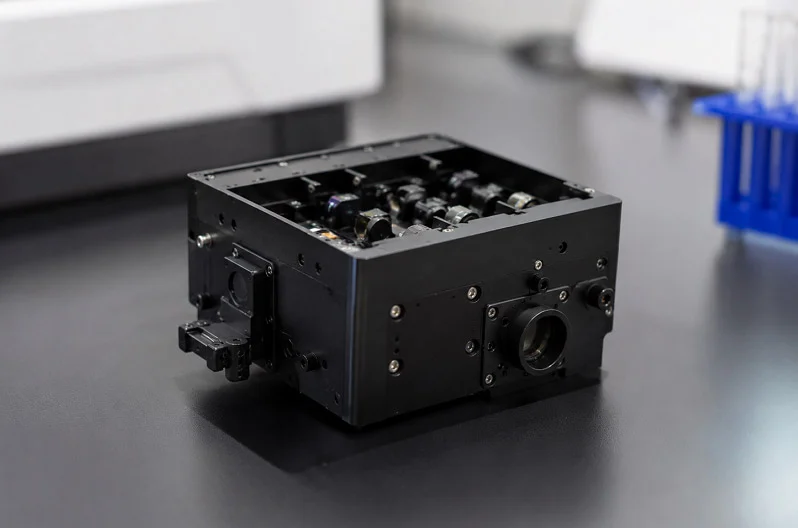
Good design is the difference between smooth production and costly problems. The rules below help you build a pcr equipment enclosure that machines well, assembles easily, and works reliably.
Avoiding Deep Pockets and Sharp Internal Corners
Deep pockets cause trouble in cnc machining. Cutting tools can only reach so far. A deep cavity needs a long tool, which bends while cutting. That bending causes shaking and a rough surface. It also makes the process slower. Keep pocket depth under four times the tool diameter. This rule keeps the tool stiff and the cut clean.
Sharp internal corners create another issue. Every cutting tool is round. A square corner needs a tool with a square edge, which does not exist. You must design rounded corners instead. The round size should match a standard tool size. Common choices are 0.5mm, 1mm, and 2mm rounds. Using standard sizes means the machinist picks a normal tool from the shelf. No special orders, no extra cost. A larger round also makes the corner stronger. Stress builds up at sharp points. A round spreads that stress over a bigger area. That matters for a PCR equipment enclosure that goes through thermal cycling.
Optimizing Wall Thickness and Draft Angles
Wall thickness affects both strength and cost. Thin walls bend during machining. They also may break when handled. Thick walls waste material and add weight. Aim for a minimum wall thickness of 1.5mm for plastics and 1mm for metals. These numbers work well for most enclosure designs. Keep wall thickness the same throughout the part. Even thickness stops warping during cooling and lowers stress points.
Draft angles matter less for cnc machining than for injection molding. Machining tools can cut straight walls easily. But adding a slight draft angle, around 1 to 2 degrees, still helps. It makes removing parts from fixtures easier. It also improves surface finish quality. The angle costs nothing in machining time. It saves time during assembly and finishing.
Specifying GD&T for Functional Fit
Geometric Dimensioning and Tolerancing, or GD&T, shows design intent clearly. It tells the machinist exactly which surfaces matter and how they relate to each other. For a CNC PCR housing, focus on critical contact points. The mounting surface for the thermal block needs tight flatness. The alignment features for the optical path need exact position tolerances. Everything else can stay loose.
Avoid the urge to tighten every dimension. Each tight tolerance adds machining time and inspection cost. A standard machining tolerance of ±0.1mm works for most features. Tighten to ±0.05mm only where function needs it. Save ±0.01mm for truly critical surfaces. This method keeps costs down without losing quality. Your manufacturing partner can review the drawing and suggest changes.
Surface Roughness for Sealing and Aesthetics
Surface finish affects both sealing performance and visual appeal. A rough surface creates leak paths in gasketed joints. It also traps dirt, which causes cleaning problems in a lab. Specify a surface roughness of Ra 1.6μm for sealing surfaces. That finish gives a good seal without extra polishing cost.
For visible exterior surfaces, think about looks. A Ra 0.8μm finish appears smooth and professional. It also resists fingerprints and smudges. Interior surfaces can stay rougher, around Ra 3.2μm. That saves machining time and cost. Post-processing options like bead blasting or anodizing can improve appearance further. These treatments also add corrosion resistance.
In-Process Inspection and CMM Verification
Quality control starts during machining, not after. Good shops check parts at key steps. They measure critical dimensions while the part is still on the machine. This catches problems early, before wasting material and time. After machining, a Coordinate Measuring Machine, or CMM, checks the final shape. The CMM probes many points on the part and compares them to the CAD model. This gives exact measurement data for critical features.
Ask your manufacturing partner about their inspection process. A trusted shop records every check. They provide inspection reports with each batch. This paperwork matters for medical device validation. It proves the parts meet specifications.
Material Certifications and Traceability
Medical devices need traceability. Every material batch must be recorded. The manufacturer should provide material certifications, or mill certificates, with each shipment. These certificates confirm the material grade and composition. They also show the heat number for metals. This traceability chain matters for regulatory compliance. If a problem appears later, you can trace it back to the source material.
Choose a partner who keeps these records automatically. They should store certificates digitally and provide them on request. This paperwork supports your quality management system. It also makes audits and regulatory submissions easier. For a PCR equipment enclosure, complete traceability is not optional. It is a must for medical device manufacturing.
Partnering with NOBLE for Your CNC PCR Housing
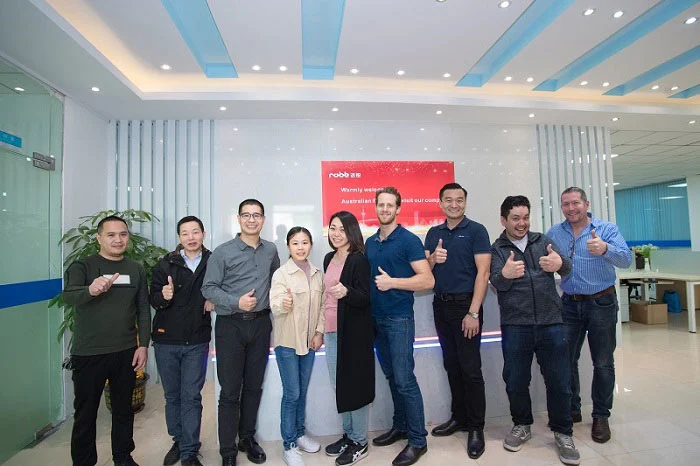
Our Manufacturing Capabilities
From Design Assistance to Final Assembly
NOBLE does more than just cut parts. We help you from the first drawing to the final product. Our engineers look at your design early. We find possible machining problems before they cost you money. We suggest changes that make your PCR equipment enclosure easier to build. That saves time and cuts down waste. Once the design is ready, we start production. Our shop handles the whole build. We machine, finish, and put together your enclosure. You get a complete unit, not a box of separate parts. This method makes your supply chain simpler. One partner takes care of everything. You avoid the trouble of working with many vendors. That means fewer delays and less confusion. For a complex product like a PCR machine, this is important. Every part must fit together just right. We make sure it does.
Expertise in Both Metal and Plastic Machining
We work with all the materials your design needs. Aluminum 6061 for heat sinks and chassis. Stainless steel for parts that resist rust. Polycarbonate, PPS, and PEEK for plastic parts. Our machinists know how each material behaves. They change cutting speeds and tools based on that. This skill shows in the final product. Tolerances stay tight. Surfaces come out smooth. We also handle extra steps in-house. Anodizing, powder coating, and bead blasting are all available. This means your CNC PCR housing arrives ready to put together. You do not need to send parts to another shop for finishing. That shortens your lead time and lowers shipping costs. Our team treats every project with care. We understand what medical equipment needs. Precision is not a choice. It is the rule.
Quality Certifications and Assurance
ISO 9001:2015 and ISO 13485:2016 Certified Processes
Certifications show we take quality seriously. NOBLE holds both ISO 9001:2015 and ISO 13485:2016 certifications. These are not just plaques on the wall. They shape how we work every day. ISO 9001 covers general quality management. ISO 13485 goes further for medical devices. It adds specific requirements that matter for your pcr equipment enclosure. The differences are significant:
| Area | ISO 9001:2015 | ISO 13485:2016 Additional Requirements |
| QMS Documentation | Generic, applicable to any organization | Requires inclusion of regulatory documents, device master record, specific data retention standards based on product lifetime |
| Management Responsibility | Allows assignment without defining roles | Requires designated management member for each QMS aspect, commitment to regulatory compliance, review of new regulations |
| Resource Management | Focus on equipment, buildings, IT | Requires documented maintenance, personnel health/cleanliness, contamination control, risk management records |
| Product Realization | Customer-driven, process-oriented | Requires traceability, labeling/packaging SOPs, batch records, cleanliness for sterilized devices, installation/verification records, handling of returned products |
| Measurement, Analysis, Improvement | Process-driven continual improvement | Requires feedback system for early warning, review of nonconformances, monitoring product quality, documentation of rework, advisory notices, CAPA justification, regulatory notification |
This standard demands risk-based decisions throughout the process. We write down everything. We track every batch. We keep records for the life of your product. That gives you confidence during audits and when you submit to regulators.
Rigorous Quality Control and Traceability
Our quality control goes beyond just checking at the end. We inspect parts while they are being machined. We measure important features while the part is still on the machine. This catches problems early. After machining, we check sizes with a coordinate measuring machine. Every part gets compared to the CAD model. We give you material certifications with each shipment. You can trace every part back to its source material. This traceability is essential for making medical devices. If a problem shows up later, we can find the exact batch. That protects your patients and your reputation. Our quality control process is thorough. It gives you peace of mind.
Why Choose NOBLE as Your Partner
A Single Source for Complex Projects
Working with one partner makes everything simpler. You avoid the six-month delays that come from dealing with many vendors. Our team handles design feedback, machining, finishing, and assembly. This smooth process gets your product to market faster. One medical device customer told us we help them bring life-changing products to market more efficiently and with high quality. We aim to deliver on time 99% of the time. We give you a quote in 24 to 48 hours, while the industry average is one to two weeks. We deliver parts in about half the usual lead time. These numbers show our commitment to your schedule.
Dedicated Support for Medical Device Innovation
We understand the medical device world. We know the safety rules and the regulatory landscape. Our team stays current on standards like iso 13485 compliance. We help you work through the challenges of bringing a new PCR machine to market. From the prototype to full production, we are with you. We offer both cnc machining and injection molding services. That means we can support you as your volume grows. Start with machined parts for testing. Move to injection molding when demand justifies it. We guide that transition smoothly. Our expertise covers the whole product life. That makes us more than a supplier. We are a partner in your success.
Your CNC PCR housing needs the right equipment and production approach. This PCR enclosure uses CNC equipment with computer numerical control machining for precision. The CNC enclosure production process demands careful material selection for your PCR enclosure. Following design rules keeps costs down. For high-volume manufacturing, injection molding works well. The injection molding method uses molds and needs careful design. Injection molding produces consistent parts. At scale, injection molding saves money. After CNC prototyping, injection molding works reliably. When volume grows, injection molding takes over. Quality control is essential for injection molding. Injection molding pairs with CNC production. Contact NOBLE for your PCR equipment enclosure needs. We handle both CNC production and injection molding enclosure production for your PCR equipment enclosure.
FAQs of CNC PCR Housing
What is the main job of the PCR enclosure?
The PCR enclosure protects sensitive parts and stops contamination. It must block interference and handle temperature changes. CNC machining makes a precise fit for reliable performance.
Why is ISO 13485 important for making PCR equipment?
ISO 13485 certification ensures strict quality standards for PCR equipment testing and the enclosure. It guarantees traceability and that the product follows rules. This is important for pharmaceutical labs.
How does material choice affect PCR testing and following rules for drug labs?
The material you choose affects PCR testing results. ISO 13485 requires that the material is proven to work. Aluminum 6061 conducts heat well. Plastics like PEEK resist chemicals. This makes sure the enclosure works well.
What design features lower contamination in drug lab PCR enclosures?
Design features such as rounded corners lower the risk of contamination in the PCR enclosure. This is important for drug lab use. Good design also helps follow rules.
How does CNC machining help meet rules for the enclosure?
CNC machining provides tight tolerances for the PCR equipment enclosure. It helps meet regulatory requirements for medical devices. ISO 13485 requires this precision.
Why is quality control very important for PCR parts?
Quality control is very important for PCR equipment parts. ISO 13485 demands strict control. This prevents failures in important testing. The drug industry needs this quality.
How does the enclosure handle temperature changes in drug lab settings?
The PCR enclosure must handle temperature changes in drug lab settings. It resists warping and breaking down. Choosing the right material and design ensures long-term reliability for PCR equipment.