It all starts with a 3D model—a CAD file. At this stage, the part exists only on the screen. Turning this file into a physical, fully functional ABS part requires a series of decisions and steps.
ABS rapid prototyping is the bridge between the digital design and a tangible, testable part. This process covers the entire workflow: design optimization, material selection, choice of manufacturing method, post-processing, inspection, and validation. Each step influences the subsequent ones. Choices made early on will determine the final part’s quality, cost, and lead time.
ABS rapid prototyping is not a single method but a set of tools. The right choice depends on the part’s geometry, quantity, surface requirements, and timeline. NOBLE’s engineers will help you make the appropriate selection.
CAD Design and Engineering Review for ABS Rapid Prototyping
The CAD file is the starting point. Everything else follows from it.
ABS rapid prototyping begins with a 3D model. That model defines geometry, dimensions, tolerances, and surface requirements. A poor model gives a poor prototype. The reverse is not true.
Geometry and Manufacturability
The design gets reviewed before manufacturing. Engineers evaluate complex features, thin walls, holes, ribs, and moving components. Potential issues get identified before production starts.
A thin wall that is too thin will warp. A hole that is too deep will be difficult to machine or print. A rib that is poorly placed will not add stiffness. These are the problems caught in the review. This is part of ABS prototype design—optimizing the model for the process.
Wall Thickness and Structural Requirements
Wall thickness is a critical parameter. It affects strength, durability, printing quality, and machining performance.
Too thick, and the part cools unevenly. Sink marks appear. Internal stress builds up. Too thin, and the part lacks stiffness. It deflects under load. It may not even print or machine successfully.
The right thickness depends on the process and the part function. ABS part design guidelines typically recommend 1.5 mm to 3 mm for most features. The review confirms the values.
Tolerance and Assembly Requirements
The prototype must fit. That requires defined tolerances.
Critical dimensions get specified. Fit requirements—clearance, interference, transition—get defined. Functional interfaces between mating parts get dimensioned and toleranced.
ABS rapid prototyping can achieve different tolerance levels depending on the method. CNC machining holds tighter tolerances than 3D printing. The review matches the tolerance requirements to the manufacturing capability. The engineer ensures the design is achievable before production starts.
Selecting the Right ABS Rapid Prototyping Method
Not all ABS rapid prototyping is the same. The method determines the outcome. Speed, cost, accuracy, surface finish, and material properties all depend on the technology chosen. Three major processes cover most applications.
FDM 3D Printing for ABS Rapid Prototyping
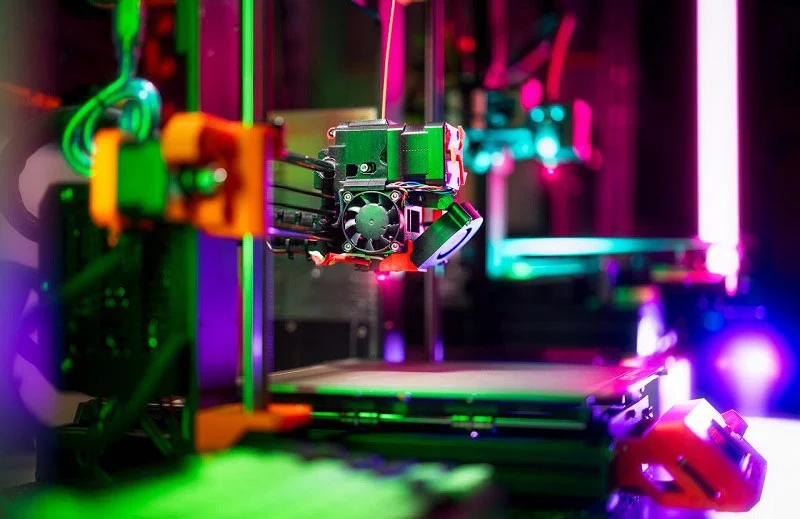
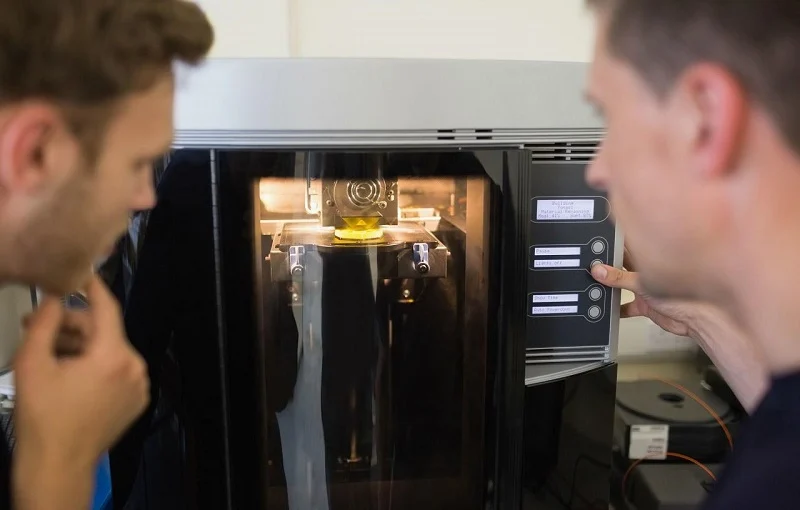
Fused Deposition Modeling (FDM) technology manufactures parts by stacking layers one at a time. A heated nozzle extrudes molten ABS filament, which solidifies as it cools, gradually forming the part from the bottom up.
ABS 3D printing offers distinct advantages. The primary advantage is fast turnaround time; parts can be completed within hours or days. Low cost is another major benefit, as no molds are required. Machining complex geometries is also straightforward, and internal channels, undercuts, and organic shapes can all be easily achieved. Design iterations are very simple—simply modify the CAD file and reprint.
However, this technology does have some limitations. Layer lines are clearly visible. Compared to machining, the surface finish is rougher. There is a risk of warping, especially for large, flat parts. While heated beds and enclosed print chambers can mitigate this issue, the risk remains.
The best applications for FDM ABS prototyping include: concept models, assembly testing, and early-stage functional prototypes where surface finish is not a critical requirement.
CNC Machining for ABS Prototype Parts
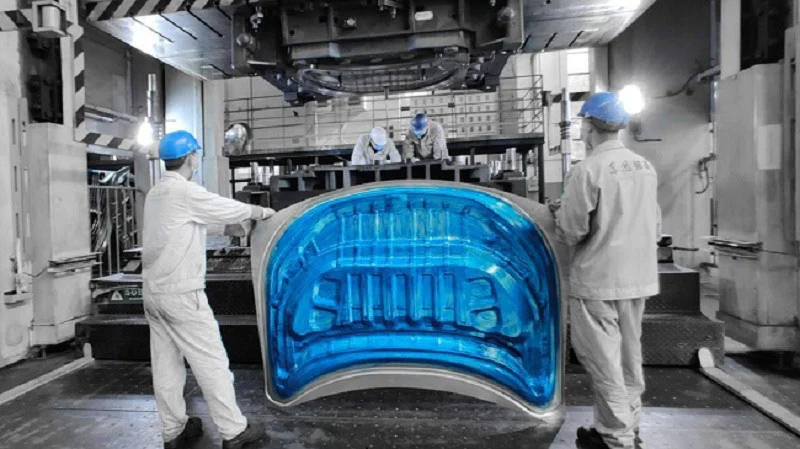
CNC machining uses a subtractive manufacturing method. A solid ABS sheet or rod is clamped into the machine tool, and material is removed by rotating cutting tools to form the final shape.
Machined ABS prototypes offer higher dimensional accuracy, with a typical tolerance of ±0.05 millimeters. They also feature better surface finish—smoother than 3D-printed parts—and greater material strength. The machining process does not alter the polymer’s structure.
The drawbacks lie in the machining of certain geometries. Internal structures are difficult to machine. Complex shapes require multiple setups. Material waste is relatively high.
The best applications for CNC machining of ABS plastic include: functional testing, mechanical components, and precision assemblies that require high fit accuracy and strength.
Vacuum Casting for ABS-Like Prototype Production
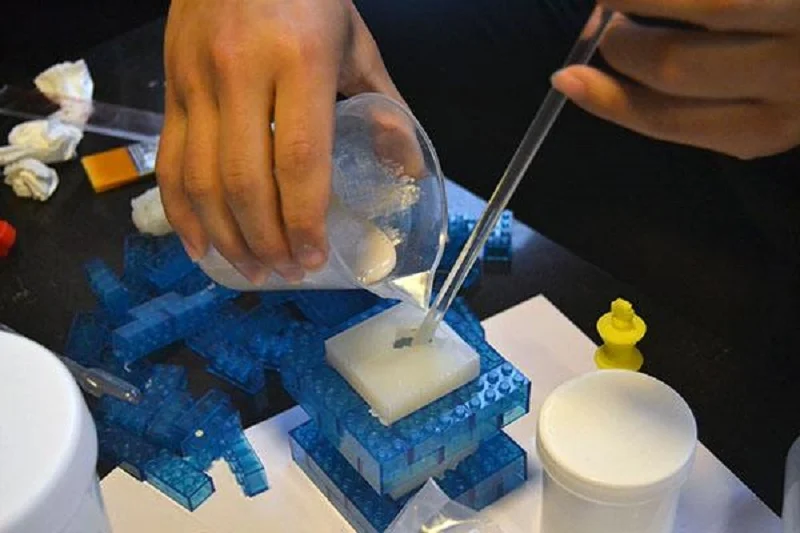
Vacuum casting creates multiple copies from a silicone mold. A master pattern—usually printed or machined—is used to create the mold. Liquid resin is poured into the mold under vacuum. The part cures and is demolded.
ABS vacuum casting produces parts that are not exactly ABS, but are ABS-like in properties. The advantage is multiple identical prototypes from one mold. Up to 20 parts are typical. Surface finish is smooth—close to injection molding.
Best applications for ABS-like prototype parts: low-volume production, customer samples, and pre-production validation where multiple identical parts are needed.
The choice of ABS rapid prototyping methods depends on the application. Speed and cost favor 3D printing. Accuracy and strength favor CNC machining. Multiple identical parts favor vacuum casting. The right ABS prototype production process matches the requirements of the project.
ABS Prototype Manufacturing and Quality Control
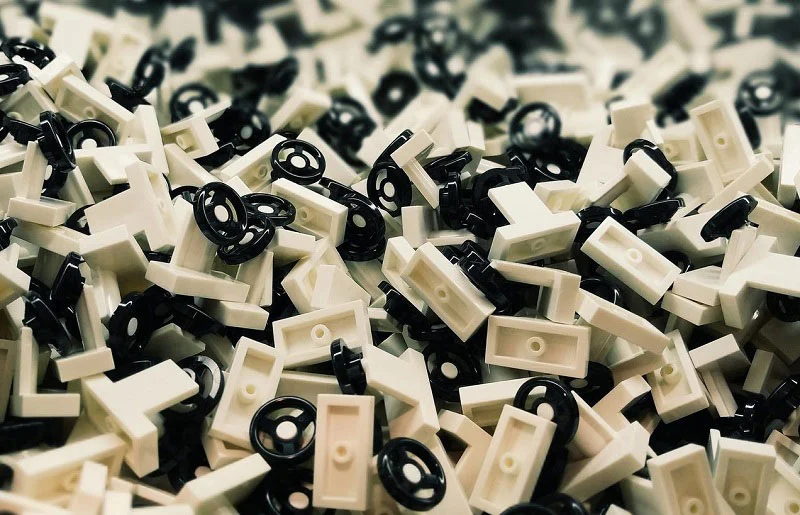
Once you have selected the manufacturing process and the model is ready, it’s finally time to begin manufacturing the parts. This stage includes material preparation, process control, and inspection.
Material Preparation
There is a wide variety of ABS materials available, and the material grade is critical.
The selection depends on specific requirements. Strength requirements determine impact resistance; heat resistance determines the maximum operating temperature; and chemical exposure determines resistance to oils, solvents, or cleaning agents. The application environment takes all these factors into account—whether indoor, outdoor, high-load, or aesthetic requirements.
Common ABS grades include general-purpose, high-impact, heat-resistant, and flame-retardant. Before beginning production, you must select the appropriate grade for your ABS prototype manufacturing.
Manufacturing Parameters
In FDM 3D printing, nozzle temperature, build plate temperature, layer height, and print speed all affect quality. Layer height determines surface finish and build time. Temperature affects interlayer adhesion and the risk of warping.
In CNC machining, cutting speed, feed rate, cutting depth, and tool selection determine the machining results. Higher cutting speeds can shorten cycle times but may cause material melting or reduced surface finish. Tool condition is critical; a dull tool will leave burn marks.
For vacuum casting, the resin mixing ratio, vacuum level, curing temperature, and demolding time determine part quality. The ABS prototype production process requires precise control of these parameters to ensure consistency.
Quality Inspection
After parts are removed from the machine tool, workers inspect them according to established procedures.
Dimensional measurements are used to verify critical dimensions. Calipers, micrometers, and coordinate measuring machines (CMMs) are used to check the position and dimensions of features and confirm tolerances.
Visual inspections are used to check for surface defects—such as striations, machining marks, porosity, or discoloration. Surface quality inspections are used to measure surface roughness or verify surface texture requirements.
Functional validation testing involves placing the part in its intended assembly environment for testing. This verifies its fit, function, and movement, ensuring that the part operates properly.
Quality control is integrated into the ABS prototyping workflow. An inspection plan is established before production begins. All inspection results are documented. Parts must pass validation before proceeding to the next stage.
Surface Finishing Options for ABS Rapid Prototypes
The initial prototype is now fully functional. Although its appearance may not yet be perfect, post-processing will enhance its appearance, feel, and performance. Surface treatment of ABS prototype finishing turns a rough part into a presentable one.
Sanding and Polishing
Sanding removes visible marks left behind during the manufacturing process. For example, layer lines from 3D printing and tool marks from CNC machining. By sanding progressively from coarse to fine grit, the surface gradually becomes smoother.
Sanding is followed by polishing. Using a polishing wheel or a fine-grit polishing compound can give the surface a glossy finish. The part will look as if it has been machined and feel smooth to the touch.
This is the most common ABS plastic surface finishing method for prototypes. It is simple and effective, but it is time-consuming.
Vapor Smoothing
Vapor smoothing uses acetone vapor. The vapor partially dissolves the surface layer of ABS, causing the material to flow slightly, which eliminates layer lines and results in a glossy, smooth surface.
This method is specifically designed for ABS 3D-printed parts. It is quick to perform and can significantly improve the visual quality, making the parts look as if they were injection-molded.
However, a drawback is that it can cause dimensional changes. Due to the slight dissolution of the surface, critical dimensions may shift. Be sure to conduct tests before applying this method to production parts.
Painting and Coating
Paint adds color, conceals surface imperfections, and allows for evaluation of a product’s appearance before the production mold is created.
Color matching ensures that the prototype matches the final product. Paint finishes include matte, satin, gloss, and textured effects. Protective coatings can enhance scratch resistance or chemical resistance.
This typically requires the application of a primer. ABS material has good paint adhesion, but solvent-based paints may corrode the surface. Test for compatibility before applying a full coat.
Texturing
Texturing can replicate the tactile feel of injection-molded parts. Textured surfaces can mask surface defects, enhance grip, and provide a realistic appearance.
Textures can be created during printing, machining, or post-processing. Sandblasting produces a uniform matte finish; chemical etching creates specific patterns; and mold textures can be replicated for evaluation.
ABS prototype finishing is not cosmetic only. It also affects functionality. Smooth surfaces reduce friction; textured surfaces enhance grip; and painted surfaces provide corrosion resistance. The specific surface treatment method chosen depends on the intended use of the prototype.
Transitioning from ABS Rapid Prototyping to Production
Design Validation
Before proceeding with mold manufacturing, prototypes can be used to validate product functionality. The design has been validated. The cost of making modifications at this stage is relatively low. Once mold manufacturing begins, the cost of subsequent modifications will increase significantly.
Manufacturing Preparation
Production planning begins. The product structure is optimized to meet manufacturing requirements, and the material selection is finalized—confirming that the same material grade used in prototyping will be used for mass production. Assembly processes are defined, and work instructions are prepared.
Manage the transition from ABS prototyping to mass production, applying the lessons learned during prototyping to the production process.
Low-Volume and Mass Production Options
Production volume determines the manufacturing method.
Vacuum casting is suitable for small-batch production of 10 to 50 units. Mold costs are low, and lead times are short. It is ideal for market testing, pilot production, and initial shipments to customers.
Injection molding is suitable for producing large quantities of ABS parts. Mold costs are higher, but the cost per unit is lower. Once the design is finalized, it is suitable for mass production.
ABS low volume production bridges the gap between prototyping and mass production. The same material and design are used. The transition is smooth.
ABS Rapid Prototyping Services at NOBLE

NOBLE is a manufacturing partner. The focus is plastic and metal prototype development and production. Prototyping is not an isolated service. It is the first step of a longer relationship.
ABS rapid prototyping fits into the full workflow. The service covers the entire project. Initial design review catches issues early. Material selection matches the grade to the application. Prototype manufacturing uses the right process for the requirement. Surface finishing improves appearance and function. Assembly integrates components. Final delivery completes the cycle.
ABS Prototype Manufacturing Capabilities
Plastic prototype manufacturing includes multiple technologies. ABS plastic prototyping is supported by FDM 3D printing, CNC machining of ABS parts, vacuum casting for ABS-like copies, and injection molding for production transition.
Metal manufacturing capabilities are available when prototypes require hybrid assemblies. CNC machining produces precision metal parts. Low-volume production is supported.
Supporting Prototypes, Small Batches, and Production Parts
The support structure matches the project stage.
| Development Stage | NOBLE Support |
| Concept validation | ABS prototypes and appearance models |
| Functional testing | Engineering prototypes |
| Product verification | Multiple prototype iterations |
| Pre-production | Low-volume manufacturing |
| Production | Final plastic and metal components |
ABS prototype manufacturing is not a single event. It is a process that evolves as the design matures. NOBLE supports the entire development lifecycle.
ABS prototype production process varies by stage. Early prototypes are fast and inexpensive. Later prototypes are accurate and durable. Production parts are cost-effective at volume. The same engineering team manages the transition.
FAQs About ABS Rapid Prototyping
What Processes Are Used for ABS Rapid Prototyping?
| Process | Best For |
| FDM 3D printing | Fast and affordable prototypes |
| CNC machining | High accuracy functional parts |
| Vacuum casting | Multiple production-like prototypes |
How Accurate Are ABS Rapid Prototypes?
Accuracy depends on the process, part geometry, material behavior, and tolerance requirements.
FDM 3D printing typically holds ±0.2 mm for well-calibrated machines. Larger parts have more variation. CNC machining holds ±0.05 mm or better. Surface finish is smoother. Vacuum casting falls between the two—accuracy is limited by the master pattern and mold shrinkage.
Material behavior matters. ABS warps. It shrinks. Thin sections distort. The design must account for these factors. Tolerance requirements determine whether a printed part is sufficient or a machined part is required.
Can ABS Rapid Prototyping Be Used for Low-Volume Production?
AYes! Prototypes can transition into production. Rapid prototyping of ABS parts is often the first step toward bridge production, small-batch manufacturing, or injection molding preparation.
Vacuum casting produces 10 to 50 parts per mold—suitable for pilot runs and market testing. CNC machining handles higher quantities of precision parts—up to hundreds of units. Injection molding is the destination for high-volume production—tooling cost is high, but per-part cost is low.
How Do I Choose the Right ABS Rapid Prototyping Method?
The decision guide is straightforward. Need fast concept models? Choose FDM 3D printing. Need high precision? Choose CNC machining. Need multiple identical prototypes for testing or samples? Choose vacuum casting. Need production parts? Choose injection molding.
ABS prototype manufacturing is not one-size-fits-all. The method is selected based on the stage of development and the requirements of the project. The right choice saves time and money. The wrong choice delays the project.