Making a few sample parts proves nothing about real mass production. A prototype can run smoothly on the bench. That does not mean the factory line will behave.
Here is the hard truth. Most projects do not fail because the prototype failed. They fail because people confuse two different things. Being able to produce a part is not the same as being able to produce it reliably. Then mass production starts. Dimensions drift. Assemblies jam. Performance fluctuates. Suddenly, the production line is full of headaches.
That pattern is a classic sign. Process validation was not done thoroughly enough.
People often misunderstand what validation is for. It is not about making a few good parts this one time. A single prototype run proves nothing about tomorrow. The real question is much more critical. Under actual mass production conditions—with all the variation, shift changes, material lot differences, and machine wear—can the process consistently, stably, and repeatedly turn out conforming parts?
Moving from a small-scale prototype to full-scale manufacturing requires one thing above all else. Validating that the process is truly production-ready. Not once. Not most of the time. But every single cycle, at full scale.
What Process Validation Really Validates
Many people hear the term “process validation.” Their first reaction is equipment checks. Parameter verification. Product performance confirmation. Yes, those are part of the picture. But they are not the core of it.
Here is what validation actually does. It verifies the stable capability of the manufacturing process. Not whether a single prototype looked good. Not whether one batch passed inspection. Whether the system works repeatedly under real conditions.
Four key questions need answers.
1. Is the process route feasible?
Look at the sequence of operations. Equipment configuration. Tooling setup. Inspection layout. Can this combination actually support target quality? Without a sound route, nothing else matters. A prototype can succeed by accident. Mass production cannot.
2. Are critical quality attributes defined?
Which product characteristics affect function? Assembly, service life, safety, consistency. These are the ones that need tight control. Not every feature. Just the ones that truly matter. Many people often skip this step. They try to control everything. That approach fails at scale.
3. Are critical process parameters understood?
Which variables influence results? What is the acceptable control range? What happens beyond that range? Knowing the “why” behind each parameter separates real validation from box-checking. A prototype run hides variation. Mass production exposes it.
4. Can the process replicate consistently?
This is the real test. Can the process deliver good results without an engineer hovering over it? Under normal cycle times, regular shifts, routine variation. The goal is robustness, not heroics. If a process only works when a specialist watches it, the process is not validated.
Process validation is not about validating one batch of samples. It is about validating the entire process system. The combined effect of Man, Machine, Material, Method, Environment, and Measurement. The classic 6M elements.
If someone only checks whether results are acceptable, but never examines whether the process is stable, that validation is hollow. And in mass production, hollow validation always comes back to haunt the team. The prototype worked. The validation said pass. The line still failed. That sequence happens more often than people admit.
Prototype Production vs. Mass Production: They’re Not the Same
On the surface, the only difference between a prototype and mass production seems to be quantity. But in reality, they represent two completely different states of control.
During the prototype phase, there are usually many protective conditions in place: engineers are standing by, equipment is relatively new, material comes from limited batches, cycle times are slower, operators are more cautious, and anomalies can be corrected quickly with manual intervention. Many issues that should be resolved by the process itself are, at this stage, essentially being “held in check” by close human attention. A prototype can succeed under these conditions. That does not mean the process works.
Once mass production starts, the conditions change dramatically:
- Cycle times speed up
- Equipment runs continuously for much longer periods
- Thermal effects on machinery become more pronounced
- Batch-to-batch variation in materials starts to accumulate
- Shift changes, differences in operator skill, tool changes, and fixture wear gradually reveal themselves
What is possible during pilot production must become controllable during mass production. That is the dividing line.
Prototype production demonstrates feasibility. It answers one question: “Can we make it?” A single prototype or a small pilot batch is enough to say yes.
Process validation answers a different question: “Can we make it reliably, over and over again?” That requires evidence. Documented, repeatable, statistical evidence.
Confusing these two things is the single biggest reason projects stumble right at the start of mass production. People assume that because a prototype worked, the full run will work. That assumption is wrong more often than many care to admit.
People do not just need a process that works once. They need a process that works consistently, shift after shift, batch after batch. That is exactly what process validation is designed to prove. Not feasible. Stability.
Core of Validation: Building a Process Rationale
Many people think process validation is simple. Run a few trials. Measure a few characteristics. Issue a pass or fail report. That is not validation. That is paperwork.
At a minimum, validation should produce clear conclusions on the following:
- Which quality characteristics are critical and must be closely monitored
- Which process parameters are critical and must have defined control limits
- What the acceptable variation range is for each key parameter, and whether the process capability meets requirements
- Where the process is sensitive to changes in equipment condition, material variation, operator actions, or environmental factors
- Which types of variation are normal, and which signal the need for immediate revalidation or corrective action
The final deliverable of process validation should never be just a stamp that says “validation passed.” That stamp means nothing without supporting logic. Instead, validation should produce a complete, documented process control logic. A set of rules and boundaries that can support stable mass production.
Without this logic, the shop floor will inevitably fall back on experience-based, inconsistent operation. One operator runs the line one way. Another runs it differently. The prototype worked under controlled conditions. But the mass production line drifts.
When that happens, the success achieved during prototypes fails to translate into stable performance at scale. Validation is not about proving a team got it right once. It is about building the evidence and guidelines that let people keep getting it right, every cycle.
One more thing. Do not rely only on final inspection results. Inspection tells people what happened after the fact. Process data tells people what is happening right now. Both must be reviewed together. Inspection without process data is just counting defects. That is not control. That is accounting.
Key Validation Focus Areas for Prototype-to-Mass Production
1. Define CTQs & CPPs first—keep validation focused
The biggest risk in process validation is not a lack of data. It is a lack of focus.
A product may have dozens of dimensions. Performance specs. Appearance requirements. Process variables. But not all of them deserve the same level of validation effort. A prototype can look fine on all of them. That does not mean each one matters.
We must first define the CTQs. Critical-to-Quality characteristics. These are the product attributes that directly affect function, fit, safety, or reliability. Miss one of these, and the part fails in the field.
Then, identify the CPPs. Critical Process Parameters. These are the process variables that directly influence those CTQs. If a parameter does not affect a CTQ, it does not belong in the validation protocol.
For example:
- In injection molding: melt temperature, mold temperature, holding pressure, and time
- In welding: current, voltage, time, pressure
- In pressing/assembly: press force, displacement, speed
- In mechanical assembly: torque, sequence, seating confirmation
- In coating/ painting: film thickness, baking temperature, and dwell time
These are typically where validation should focus. If you haven’t accurately identified your CTQs and CPPs, no amount of data will save you. You’ll just be measuring a lot—without validating what truly matters.
2. Confirm prerequisites before starting
Many process validations fail not because the process itself is inadequate, but because the basic prerequisites for validation were never met.
Before running any validation trials, ensure the following are in place:
- Equipment and tooling are in a qualified state
- Measuring instruments and inspection methods are reliable
- Work instructions are under document control
- Operators have been properly trained
- Key materials and consumables are well-defined and consistent
If these conditions aren’t met first, your validation data will likely be contaminated by measurement error, equipment drift, tooling issues, or operator variation. And a conclusion drawn from contaminated data is never trustworthy.
A mature validation approach doesn’t start by running the product. It starts by locking down four prerequisites: equipment ready, measurement trustworthy, documentation clear, and people qualified. Only then can you run trials that yield meaningful, defensible results.
3. Review process data alongside final inspection results
This is one of the most common pitfalls on the shop floor. If you only check whether final dimensions, performance, and functionality are within spec, the most you can say is that this particular batch passed. But process validation is not about a single batch—it’s about understanding whether the process has margin, how much variation exists, and whether control boundaries are clear.
In addition to final results, validation should include a close look at:
- Trends in critical process parameters
- Part-to-part variation during continuous runs
- How the process behaves as the equipment heats up over time
- Differences between first-piece and steady-state production
- Recovery behavior after stops and restarts
- Where applicable, process capability indices (such as Cpk or Ppk)
Many processes appear “acceptable” on paper but are actually running right at the edge of the specification limits. In a mass production environment, even a small increase in normal variation can push them into failure. Without process data, this risk often remains invisible—until it’s too late.
4. Match validation conditions to real mass production
The biggest mistake you can make in validation is running under ideal conditions, getting a beautiful result, and then using that result to claim the process is production-ready.
If every validation run uses the most skilled operator, slower cycle times, the best batch of material, and an engineer watching every step—then the only question you’ve answered is: Can the process work under perfect conditions? But that’s not the question mass production asks. Mass production asks: Can the process work reliably under normal conditions?
Effective validation should cover the kinds of real-world conditions the process will face in full production:
- Normal cycle times (not slowed down)
- Typical shifts (not hand-picked operators)
- Continuous operation over time
- Normal material lot changes
- Routine process variation
- Realistic changeovers, tooling adjustments, and stop-restart scenarios
The closer your validation conditions are to actual production conditions, the more credible your conclusions will be. Validate for reality—not for the ideal
5. Look beyond first-piece inspections
Many process issues don’t show up on the first piece. Instead, they emerge gradually during sustained production. Thermal equilibrium changes in equipment, tool wear, fixture wear, variation in material moisture content, viscosity drift in adhesives, operator fatigue, and differences between shifts—all of these can cause a process that started perfectly to slowly drift out of control.
For this reason, process validation cannot rely on just a few first-article measurements and call it done. At a minimum, validation must include evaluation of continuous run performance. For high-risk processes, it should also examine stability during:
- Material lot changes
- Shift changes
- The machine stops and restarts
- Changeovers or setup changes
In short, if your validation only covers the smoothest, most controlled part of the run, the problems you’ll face in mass production will almost always appear in the second half of the shift—or the second half of the batch.
6. Translate validation conclusions into shop-floor controls
The hardest part of process validation isn’t running the trials or analyzing the data. It’s turning the conclusions into actionable rules that the production floor can and will follow.
That means clearly defining:
- Which parameters must be locked and not changed
- What the upper and lower control limits are for each critical parameter
- Which items require regular checkpoints
- What conditions must be reverified before production continues
- What types of anomalies trigger a stop
- Which changes require full revalidation
These rules must be embedded directly into the tools the shop floor uses every day:
- Process control cards
- Standard operating procedures (SOPs)
- Control plans
- PFMEA documents
- First-piece inspection checklists
- Daily checkpoint sheets
- Abnormal reaction plans
If validation is completed, but the report sits in a file and production parameters are still passed down verbally from experienced operators or adjusted by “feel” and guesswork, then validation is only half done. The other half—and the more important half—is integration into daily production discipline.
Implementation Path: From Prototype to Mass Production
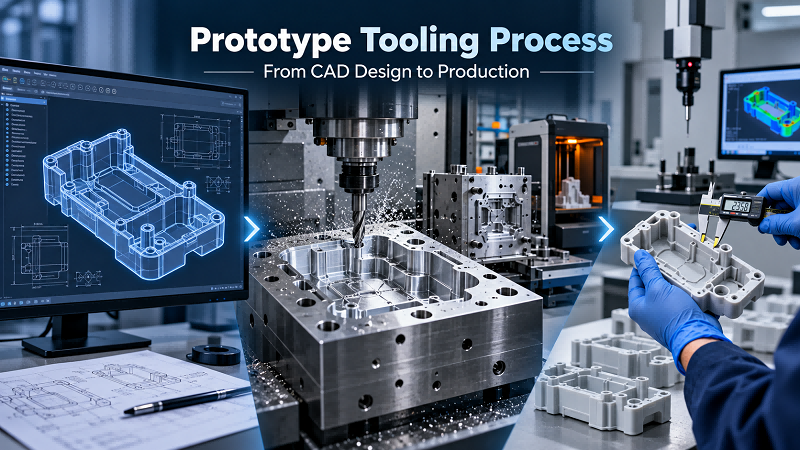
Translating all of the above into actionable steps on the shop floor typically follows the sequence below.
Step 1 – Define product requirements & CTQs
Determine which product characteristics absolutely must not go out of control. These are your Critical-to-Quality (CTQ) attributes.
Step 2 – Identify CPPs & high-risk processes
Using process flow diagrams, prototype issues, historical non-conformances, and PFMEA, identify Critical Process Parameters (CPPs) and the steps in the process that carry the highest risk.
Step 3 – Confirm validation prerequisites
Verify the status of equipment, tooling, measurement instruments, documentation, personnel training, and materials. Nothing moves forward until these are confirmed.
Step 4 – Create a validation plan
Clearly define operating conditions, sample size, number of lots, shifts to be covered, inspection items, acceptance criteria, and rules for handling anomalies.
Step 5 – Execute validation under production-like conditions
Run validation trials under conditions that closely resemble real mass production. Evaluate not only whether results meet specifications, but also whether the process remains stable over time.
Step 6 – Analyze process data
Go beyond simple pass/fail judgments. Assess whether the process is stable, whether control boundaries are clearly defined, and whether a sufficient margin exists between normal operation and specification limits.
Step 7 – Lock conclusions into process controls
Embed validation findings into process documentation and control requirements. Perform enhanced confirmation during early mass production, and establish a revalidation trigger mechanism for any future changes.
The true measure of this path is not whether you complete all seven steps on paper. It is whether, at every step, you keep asking the same fundamental question:
When this process runs under real mass production conditions—with all their variation, pressure, and unpredictability—will it still hold up?
Common Misconceptions in Mass Production Validation
Treating prototype sample approval as validation passed
Just because a few prototype-run parts passed inspection does not mean the process is validated for mass production. Prototype success is feasibility, not stability.
Ignoring process parameters & variation, focusing only on final inspection
Final results tell you what happened. Process data tells you why—and whether it will keep happening. Ignoring trends, drift, and variation leaves you blind to future failures.
Using overly ideal conditions that don’t reflect real production
If validation conditions are perfect, the results are meaningless for real production. Validation must reflect normal variation, not best-case scenarios.
Failing to turn validation conclusions into documented shop-floor actions
A validation report that sits on a shelf is wasted work. If conclusions aren’t embedded into work instructions, control plans, and checklists, they won’t influence daily production.
Stopping validation after initial qualification—no early production follow-up
Validation isn’t a one-time thing. When you start producing something on a large scale, you often find problems that you didn’t spot during validation. If you don’t keep an eye on things and check they’re still valid, even a solid validation can become out of date as conditions change.
These misconceptions might seem small on their own. But when you look at the bigger picture, these are exactly the things that most companies mess up when they’re moving from prototypes to full-scale production.
At the end of the day, process validation isn’t about running more trials or writing longer reports. It’s about creating a working, documented, and defensible system that clearly defines:
- Critical-to-Quality characteristics (CTQs)
- Critical Process Parameters (CPPs)
- The acceptable process window (boundaries and margins)
- Sensitive conditions that require special attention
- Anomaly response mechanisms that trigger action when things go wrong
If you can do that, then validation is more than just a task — it’s the foundation for reliable mass production.

Trust NOBLE for Best Prototype and Mass Production
Here at NOBLE, we’re a precision CNC machining factory. We specialise in bridging the gap between pilot production and stable, high-volume manufacturing. We’re not just about making parts; we’re also into building processes that are repeatable, controllable, and scalable in real-world production situations.
Our Core Capabilities:
- Multi-axis CNC milling and turning (3-axis, 4-axis, 5-axis)
- Prototyping, pilot runs, and mass production
- Tight tolerance machining (precision down to ±0.005 mm)
- In-process inspection and SPC-based quality control
- Support for complex geometries and engineered materials
Certifications That Matter:
- ISO 9001:2015– Our quality management system ensures consistency, traceability, and continuous improvement across every project.
- ISO 13485:2016– We meet the rigorous requirements for medical device manufacturing, including risk management, regulatory compliance, and process validation—exactly the discipline this article has described.
If you’re moving a new product from development into production or having stability issues with an existing process, we can help. We’ve got validated CNC processes that cover all bases, not just machine time.
FAQ
Does process validation apply only to highly regulated industries like medical or automotive?
Not at all. Regulations may mandate validation in medical devices under ISO 13485. Or automotive under IATF 16949. That is true. But the logic of validation applies to any manufacturing process where stability and repeatability matter.
Can we skip validation if the process seems simple?
I wouldn’t recommend doing that. Even simple manufacturing processes can introduce deviations. As we all know, threading, deburring, press-fitting, and manual assembly can all lead to deviations. The key to validation isn’t complexity, it’s confidence. If the cost of failure is too high, you can’t skip the validation step.
What types of parts do you typically machine?
NOBLE makes all kinds of precision parts on the machine: medical device parts (like surgical instruments, implants, instrument cases), industrial automation components, electronic housings, optical mounts, and custom-engineered parts. We work with lots of different materials, like aluminum, stainless steel, titanium, brass, engineering plastics, and more.
Can you help us validate an existing process that is currently unstable?
Absolutely. We often work with customers to audit, analyse, and re-validate existing CNC processes, and identify the root causes of variation. Then, we make sure the control logic that the shop floor can actually follow is locked down.