Insert molding is a manufacturing process that is used in many high-precision industries. Many products in the aerospace, medical, and automotive industries rely on the combination of metal and plastic components. Traditionally, combining these materials required many steps and extra assembly work. This was slow and labor-intensive. Insert molding does everything in one step. It joins different materials into one part. This greatly improves efficiency and lowers the defect rate.
This guide gives you a complete overview of insert molding. It covers the process, advantages, design tips, and cost factors. It answers all your questions in one place.
1. What Is Insert Molding
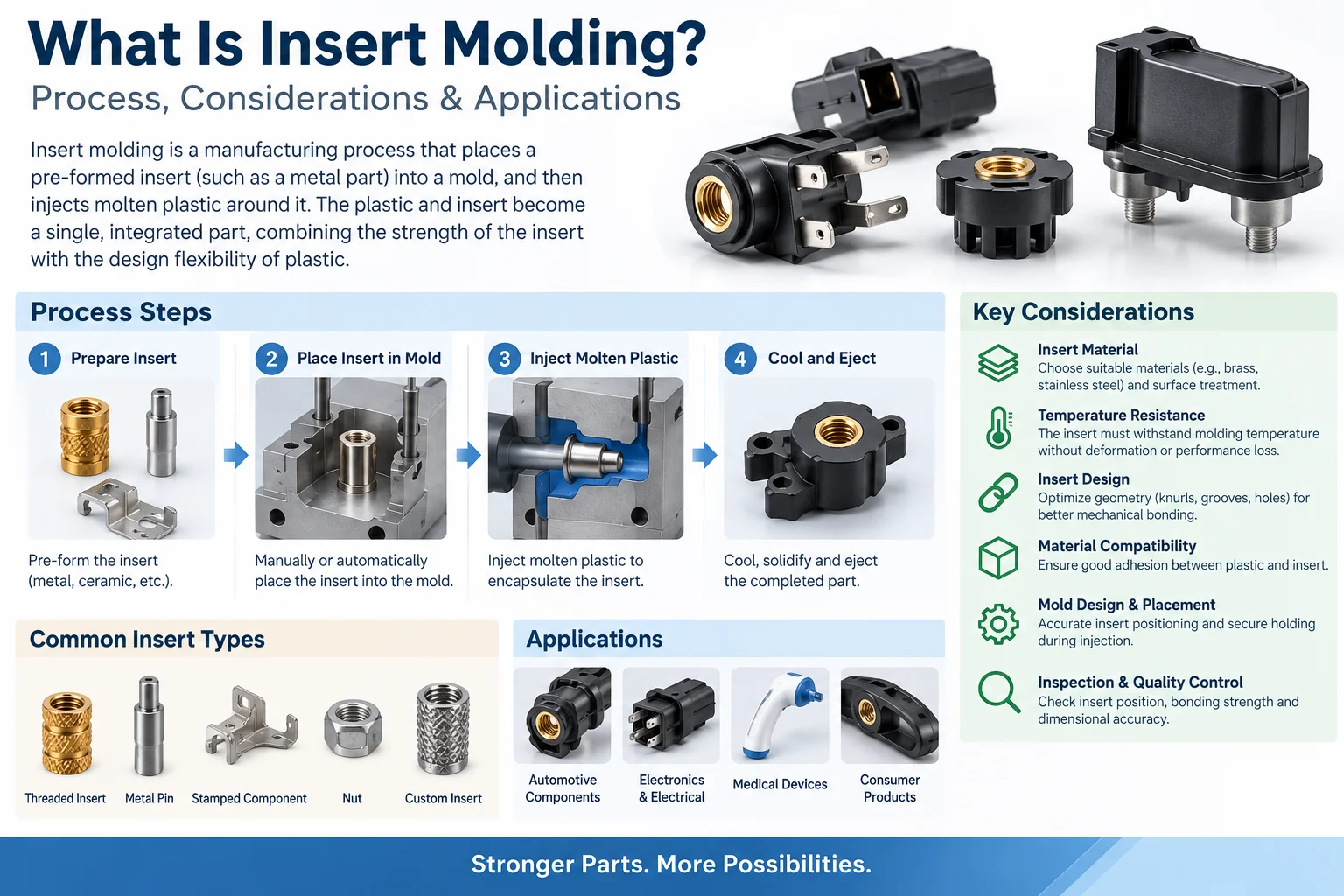
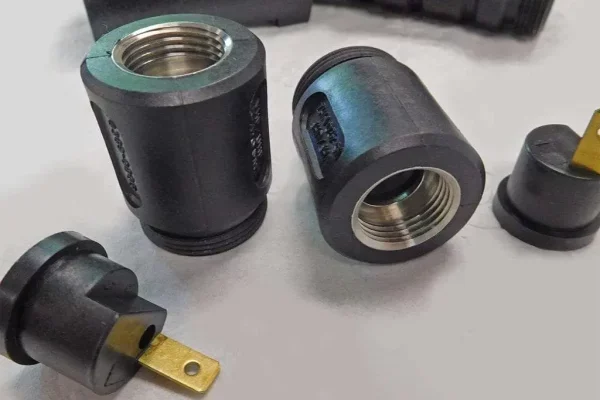
Insert molding is an injection molding process. It bonds plastic and non-plastic inserts together in one production cycle. The insert is placed into the mold before the melted plastic is injected. After the plastic cools and hardens, the two materials form a very strong mechanical bond. This creates a single complete part without extra fastening steps.
Common examples include metal threads or plastic pins that are molded directly into the plastic. The plastic that wraps around these inserts forms a strong, complete part in just one molding cycle. This removes the need for secondary assembly. It improves efficiency and part durability.
2. What Are the Advantages of Insert Molding
2.1. Simplified Production and Higher Efficiency
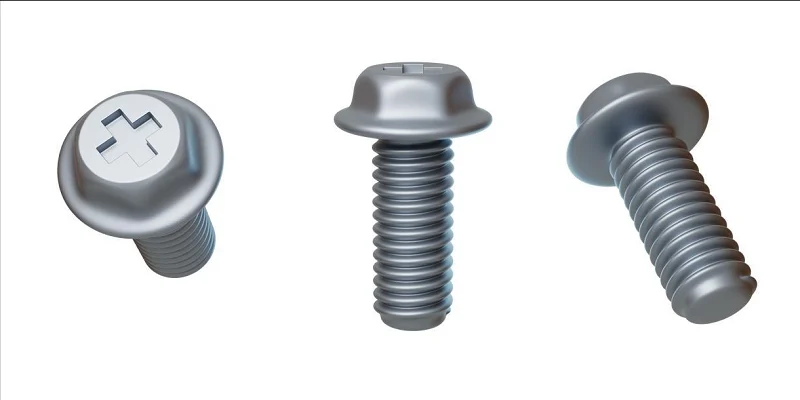
Insert molding combines “part manufacturing” and “part assembly” into one. Compared with post-assembly methods such as welding, riveting, hot pressing, or gluing, it reduces the independent secondary assembly process and significantly shortens the production cycle.
2.2. Higher Connection Reliability
The plastic wraps around the insert and shrinks as it cools. This forms a tight physical bond. The insert is not easy to loosen, rotate, or pull out. Its pull-out strength and torque resistance are much better than parts that are pressed in after molding.
2.3. Better Positioning Accuracy
The insert is held in place by locating pins in the mold. It is not affected by assembly errors later. All parts made from the same mold have consistent insert positions. This is suitable for precision parts with strict hole position and spacing requirements.
2.4. Enables Miniaturization and Light Weighting
In one part, the design combines the strength and conductivity of metal; the plastic is resistance of insulation and corrosion. This reduces the need for extra components like screws and washers. It is helpful for products with limited space.
2.5. Good Sealing Performance
Plastic flows under high temperature and high pressure and closely adheres to the surface of the insert. After cooling, it can form an airtight structure, which is suitable for applications that require moisture-proofing, dust-proofing, or leak-proofing.
2.6. Lower Overall Cost
Although insert forming requires high-precision molds and automated insertion equipment, in mass production, the overall cost is usually lower than that of traditional processes by saving labor, reducing waste, and shortening the total working hours.
3. What Are the Process Steps of Insert Molding
| Step | Process | Result |
| 1 | Insert Preparation | Cleaned inserts are placed into the mold cavity, either manually or automatically. |
| 2 | Mold Closing | The steel or aluminum mold, machined to part specifications, closes around the positioned insert. |
| 3 | Injection Molding | The chosen thermoplastic material is heated, melted, and injected into the mold cavity under pressure. |
| 4 | Cooling and Solidification | The plastic cools and bonds tightly with the insert, forming a single part without secondary connections. |
| 5 | Ejection | Ejector pins push the finished part out of the mold. The part is complete, bonded, and ready for use or assembly. |
4. What Are the Applications of Insert Molding
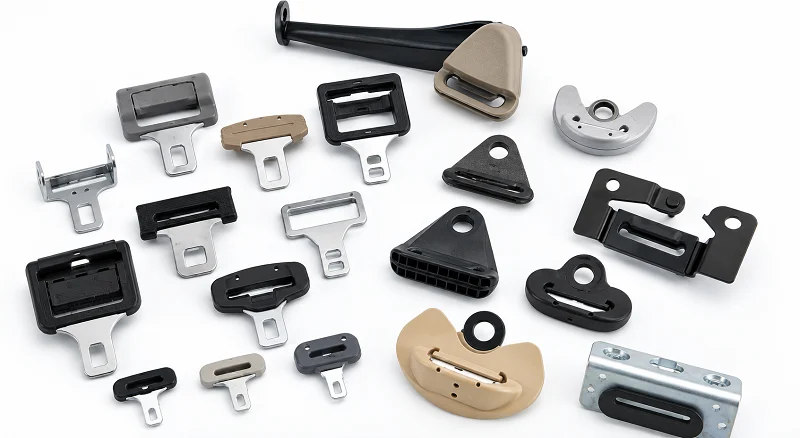
Insert forming technology integrates different materials into durable integrated components, thereby reducing assembly time and achieving compact designs in major manufacturing fields.
Automobile
Automobile manufacturers use insert forming processes to manufacture high-performance components to withstand high temperatures, vibrations, and stresses. For instance, the threaded brass inserts in the engine hood and under-the-hood components ensure a firm connection. The one-piece molded parts from Tier 1 suppliers have replaced the bolt connections, thereby reducing costs by 20% and enhancing vibration resistance. The electrical housing and sensor assembly are equipped with built-in metal contacts to ensure reliable operation in harsh environments, while the internal fasteners save space and shorten assembly time.
Medical devices
The syringe holder integrates the plastic body with the stainless steel needle rod to form a sterile disposable component. A medical device company embedded stainless steel sensors in plastic housings, reducing production time by 35% and eliminating alignment errors. The sensor housing with ceramic injection-molded inserts provides chemical-resistant support for electronic components, and the reinforced handle ensures its durability during the sterilization process.
Consumer electronic products
Injection molding technology can produce compact and reliable electronic components. USB, HDMI, and power connectors use injection-molded metal inserts into plastic housings to achieve electrical contact and stress relief. The equipment casing integrates grounding and shielding functions and complies with relevant regulations and standards. The tactile buttons and switches adopt a design that combines flexible plastic with inserts, ensuring sensitive input response, durability, and simplifying the production process.
Industrial equipment
In harsh industrial environments, injection-molded components can withstand high loads and wear. The housing with embedded metal bushings ensures stable mechanical movement, while heavy-duty switches integrate electrical and structural components through injection molding processes. The control knobs and panel mounting parts with inserts can resist vibration and remain aligned, thus ensuring a reliable mechanical interface.
5. Common Insert Types and Their Cost Impact
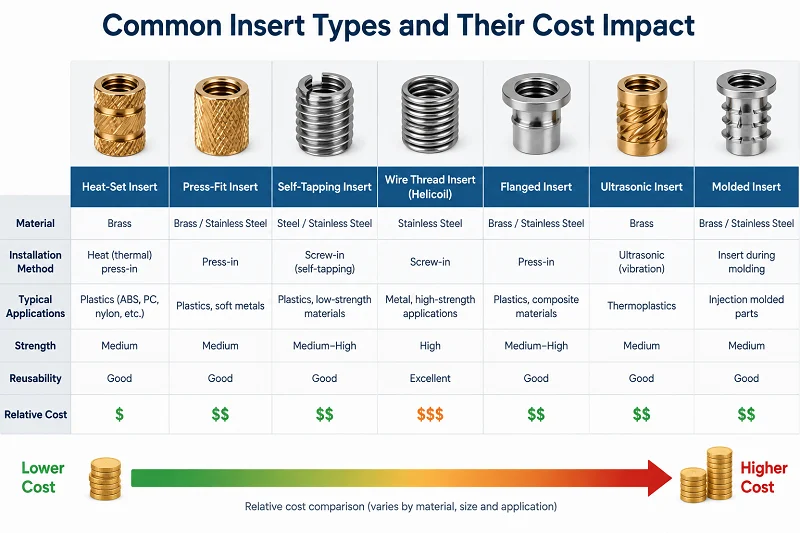
Insert molding supports a variety of injection molded inserts, and the selection of each insert is designed to meet the functional and environmental requirements of the final product.
5.1. Common Insert Types
Metal Inserts
Metal inserts are widely used in metal insert injection molding for mechanical reinforcement or electrical conduction. Common metals include brass inserts (which can achieve precise threaded connections and ensure tightness), stainless steel inserts (with excellent corrosion resistance and high strength), and aluminum inserts (with high strength-to-weight ratio and efficient thermal conductivity).
Plastic Inserts
When the base material lacks certain properties, such as chemical resistance or heat stability, the molding process uses high-performance engineering plastics. For example, a nylon base may need a PEEK insert to improve its high-temperature performance. Common plastic inserts include glass fiber reinforced composite inserts (which improve dimensional stability and mechanical strength while keeping electrical insulation), and PEEK or PPS inserts (which can withstand extreme temperatures and chemical attack).
Special Inserts
Besides metal and plastic, insert molding can also include parts made of other special materials. These include ceramic inserts (with excellent heat and electrical insulation), magnetic components (which can be embedded in plastic housings to create integrated sensing or actuation mechanisms), and electronic modules such as sensors, circuit boards, and RFID tags. These can be encapsulated to create smart, connected products with protected electronics.
5.2. Cost Impact
5.2.1. Insert Material and Machining Cost
- Standard parts (like copper nuts): Available off the shelf. Low cost. Small cost impact.
- Custom-shaped parts (like stamped terminals, precision shafts): Need custom tooling. High unit cost. May involve secondary steps like heat treatment or plating.
- Precious metals or special materials (like beryllium copper, titanium, magnets): Material cost is much higher than common brass or stainless steel.
5.2.2. Placement Method (Manual vs. Automated)
- Manual placement: Suitable for small batches or inserts with complex shapes that are hard to orient. Flexible, but slow. High labor cost. There is a risk of missing or misplacing inserts, which can damage the mold.
- Automated vibratory bowl or tape feeding: Suitable for high-volume standard parts. High equipment investment. But over the long term, the labor cost per part is very low. Consistency is good, and scrap rate is greatly reduced.
5.2.3. Mold Design and Complexity
- Inserts need precise locating pins or slider mechanisms in the mold. This increases mold machining difficulty and cost.
- Multiple inserts or inserts in different directions may need slide cores or complex parting surfaces. This can multiply the mold cost.
5.2.4. Cycle Time
- Automated placement is fast. Cycle time is short. Manual placement takes time. The molding machine waits longer, reducing equipment utilization.
- Preheating inserts or mold cooling requirements may extend the molding cycle, lowering output efficiency.
5.2.5. Defect Rate and Quality Control
- Insert shifting, missing inserts, or poor plastic bonding can cause part scrap. These are hard to rework.
- Visual inspection or X-ray inspection equipment may be needed to verify insert position. This adds extra quality control cost.
6. Key Design Guidelines for Insert Molding
Through meticulous design and upfront consideration of the interaction between injection-molded inserts and encapsulation plastics during manufacturing, you can achieve the best results in insert molding. Some key best practices for designing successful insert-forming parts include:
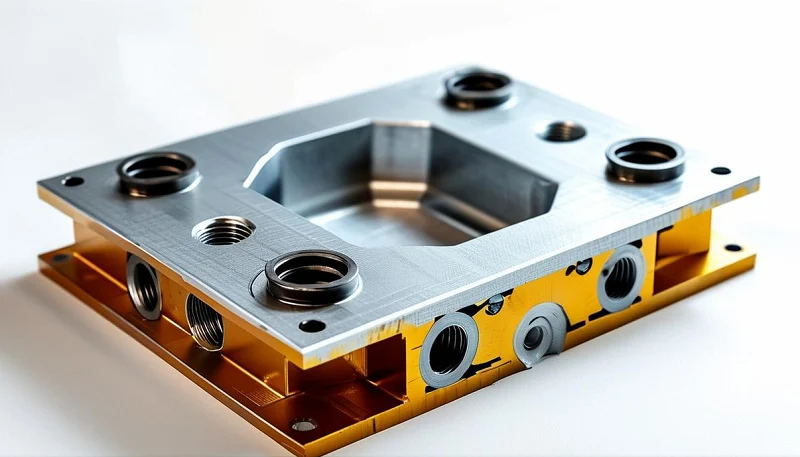
- Retention function: Add buckles, kimmings, grooves, holes, or ribs to the inserts to mechanically lock them into the encapsulation plastic after molding, preventing displacement under injection pressure or during use.
- Wall thickness: Ensure that the wall thickness of the encapsulation plastic around the insert is uniform to avoid warping, shrinkage marks, internal voids, or weak points.
- Plastic flow path: Reasonably arrange the gate and runner to ensure that the molten plastic can smoothly flow around the insert, preventing turbulence or air retention, thereby avoiding incomplete filling, poor bonding, or appearance defects. Make sure there is enough space around the insert for the material to flow.
- Demolding precautions: When designing the mold, the ejector pins should be placed away from the inserts to prevent the inserts from falling off the encapsulation plastic during demolding, thereby avoiding part damage.
- Tolerance planning: Consider the thermal expansion and contraction of the encapsulation plastic and inserts to ensure a tight fit for bonding, while leaving a slight gap to prevent plastic cracking or misalignment, using simulation software such as Moldflow or SolidWorks Plastics.
- Mold accuracy: High-precision molds, such as CNC-machined molds with tolerances less than 0.01 millimeters, are adopted to precisely align the inserts with the mold cavity, thereby minimizing performance issues, appearance defects, or mold wear to the greatest extent.
- Mold placement: Consider the features that may be used to fix the inserts in place during the forming process, such as brackets or pins for threaded inserts, and place them accordingly in the design.
7. Insert Molding vs. Overmolding: How to Make the Right Engineering Choice
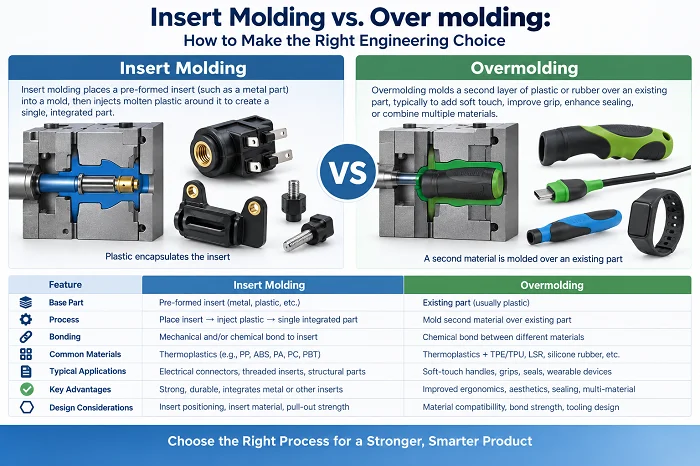
Insert molding and overmolding are two related processes that are often confused. Both involve injection molding around a substrate. But the substrate and the final purpose are quite different.
Overmolding is a two-step process. First, a plastic base is made by injection molding. Then this base is used as an insert for a second injection molding step. A thin outer layer (usually rubber-like material) is molded around it. Overmolding is used to add grip texture, shock absorption, or moisture protection to an existing part, such as the handle of a power tool or an electric toothbrush.
Insert Molding is a single-step process. A pre-formed insert (usually metal) is loaded into the mold. Then plastic is injected. The final part bonds metal and plastic firmly together. It combines the structural properties of both materials in one part, without needing a second mold or second molding cycle.
It is important to distinguish these processes during the design phase. Overmolding usually needs two molds and two molding cycles. Insert molding needs only one cycle. Understanding which process fits your design is a key decision for projects where molding cycle time, mold investment, and part complexity matter.
8. What Are the Current Challenges and Limitations of Insert Molding
Although insert molding has many advantages, it also has some limitations. Inserts must be able to withstand high temperatures. Otherwise, they may deform or be damaged during molding. Mold design is complex. Locating pins and slider structures increase manufacturing cost. The level of automation affects yield. Manual placement is prone to misalignment or missing inserts, which can damage the mold. Cycle time is relatively long. Preheating inserts or cooling the mold affects efficiency. Defective parts are hard to rework. The insert and plastic cannot be separated after bonding. Insert size is limited. Large or oddly shaped inserts are hard to fit into the mold cavity.
9. Why Choose Advanced Insert Molding Technology
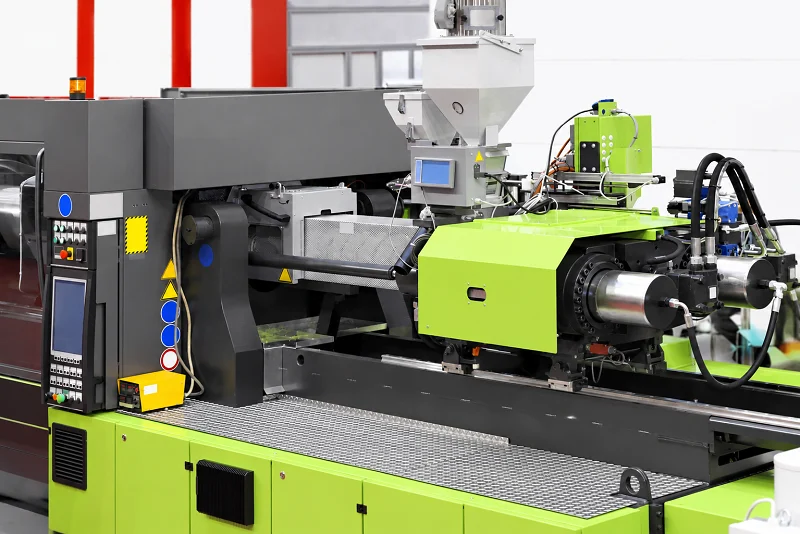
Advanced insert molding technology uses new methods such as automated insert placement, in-line vision inspection, and in-mold hot cutting. These break through the limits of traditional processes. It can monitor insert shifting in real time to ensure position accuracy. It uses dynamic mold temperature control to reduce the risk of thermal deformation. It supports multi-material integration, allowing metal, ceramic, and plastic functional parts to be molded in one step.
Its core value lies in shorter cycle times (automation replaces manual work), lower scrap rates (real-time inspection prevents defects), and support for complex geometries (multi-slider mold design). It is especially suitable for medical devices, automotive electronics, and smart wearables where high reliability, small size, and light weight are needed. It is an important direction for upgrading precision manufacturing.
10. How NOBLE Supports Insert Molding Projects
NOBLE provides full support for insert molding projects. We help with design review and material selection. We give DFM feedback to improve part design. We build precision molds for insert placement. We offer both manual and automated insert loading. We also provide in-line vision inspection to check insert position. Our team handles small batches and mass production. We keep full process records for traceability. This meets ISO 13485 requirements for medical projects. From prototype to production, we support the whole process.
FAQs of Insert Molding :
1. What is the difference between overmolding and insert molding?
Insert molding places a pre-made insert into the mold, then injects plastic around it. Overmolding first makes a plastic base, then molds a second layer over it. Insert molding needs one cycle. Overmolding needs two.
2. Does your part require overmolding or inserts?
Choose inserts for metal threads, strength, or electrical contacts. Choose overmolding for soft grips, sealing, or better feel.
3. What are the types of injection molding?
Insert molding, overmolding, two-shot molding, micro molding, thin-wall molding, and liquid silicone rubber (LSR) molding.
4. What are the four stages of injection molding?
The four stages are clamping, injection, cooling, and ejection. First, the mold closes. Then plastic is injected. Next, it cools and hardens. Finally, the part is ejected.
5. Can you injection mold stainless steel?
No. Injection molding is for plastics. You can’t injection mold stainless steel. It is made by casting, forging, or CNC machining. But stainless steel can be used as an insert in injection molding.