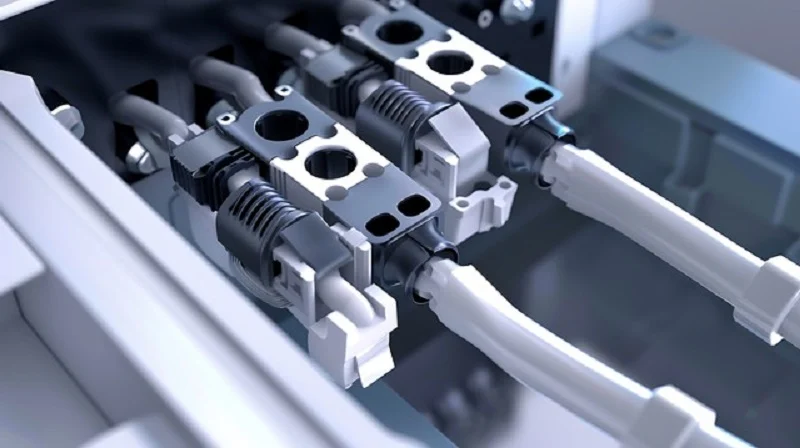
The main exoskeleton structural parts include rigid frames, joints, actuators, linkages, and attachment points. Whether you build passive spring-assisted units or active motor-driven systems, these components carry every load. The global exoskeleton market is expected to reach USD 1.82 billion in 2026. Active systems make up 66.0% of the technology segment. That growth means more engineers and hobbyists are working on the design and manufacturing of wearable robotic structures. This guide explains how these exoskeleton structural parts are made and what to watch for during production. You’ll find practical guidance for exoskeleton robots used in medical, industrial, and aerospace applications.
Common Exoskeleton Structural Parts
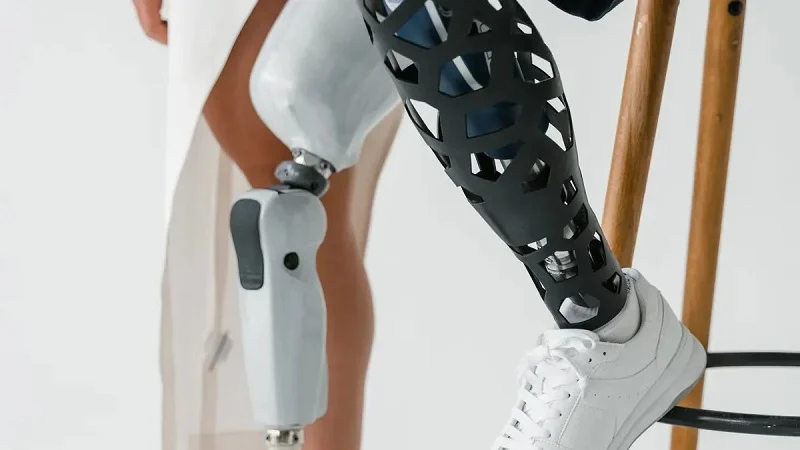
Every exoskeleton uses the same basic exoskeleton structural parts. The rigid frame carries the weight. Joints let the parts move. Actuators create the force. Attachment points connect to the human body. Both passive and active exoskeletons use these parts. The difference is how each type gives support.
Passive exoskeletons use mechanical springs, gas springs, or elastic bands. They take in loads and turn them into usable energy. These systems improve posture and give light support to certain body parts. They work as preventive tools. Their main job is to protect workers from bad loading during tasks. Active exoskeletons work differently. They give support through electrical impulses or pneumatic drives. You can change the impulse strength to fit the task. Many models use sensors that detect muscle tension and control support in real time. These systems often need battery power for a full work shift.
Industrial uses for these devices cover many fields. You’ll find exoskeleton robots in metal processing, mechanical engineering, automotive, electrical work, and wood processing. They also appear in pharmaceuticals, food production, commercial kitchens, and tire processing. These exoskeleton structural parts must handle tough conditions every day.
Rigid Frame and Load-Bearing Structure
Function and Geometry
The rigid frame is the backbone of any exoskeleton. It moves loads from actuators to the body. Frame geometry shapes how forces travel through the system. A well-planned design keeps loads on strong body parts and stays away from soft tissue.
Most frames match the shape of the body part they help. A back-support unit runs along the spine and hips. A shoulder-support device has arms going from the torso to the upper arms. The geometry must fit human anatomy. A bad fit causes discomfort and lowers effectiveness.
Materials and Weight Trade-Offs
Balance strength against weight. A heavy frame tires the user. A weak frame breaks under load. Designers pick materials with high strength-to-weight ratios. Aluminum is common for its good balance. Titanium works when you need more strength in a thin section. Composites like carbon fiber give the best ratio but cost more. The choice of materials affects weight and overall performance.
Joints, Linkages, and Motion Components
Rotary and Linear Joints
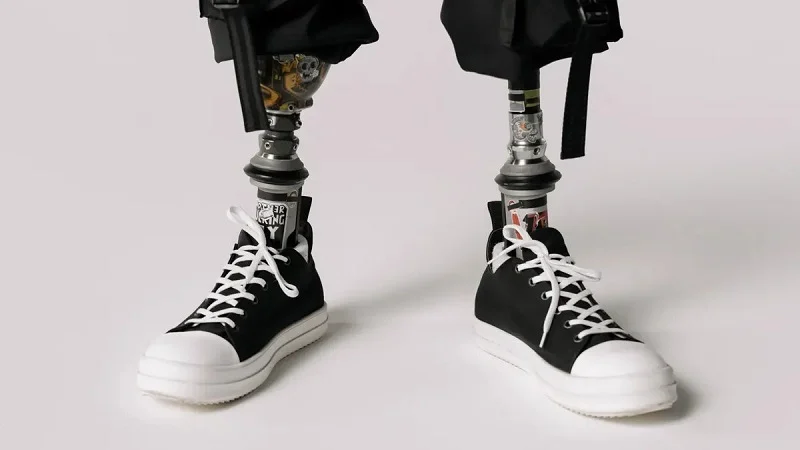
These exoskeleton structural parts let the device move with the user. Rotary parts work like human elbows or knees. They spin around a single axis. Linear parts let motion slide, like a piston in a cylinder. The right type depends on the body motion you want to help.
A hip part in an exoskeleton robot must handle large forces during lifting. Bearings must be durable and smooth. Any looseness in the connection lowers support accuracy. Good design aims for zero free play without adding friction.
Linkage Design for Range of Motion
Linkages connect these points together. They set how far the system can move. Too much restriction limits natural movement. Too much freedom drops support where needed.
Biomechanics plays a big role in linkage design. The human body moves in complex ways. Simple hinges don’t capture that complexity well. Some exoskeleton robots use multi-bar linkages to follow natural motion. This approach needs careful biomechanical analysis. Engineers study movement patterns first. Then they design linkages that follow those patterns.
Actuators and Attachment Points
Actuator Mounting and Load Paths
Actuators create forces that help the user move. Each actuator must sit close to the part it helps. This keeps the load path short and direct. Long load paths add weight and reduce efficiency. The mounting bracket must be stiff. Flexible brackets waste energy and delay response. For active units, the mounting point handles dynamic loads that change direction quickly.
Straps, Cuffs, and Human Interface Points
The points where the device touches the body are critical. Straps and cuffs move force from the frame to the user. Poorly designed points cause pain and pressure. They can shift during use and lower effectiveness.
Cuffs should be wide enough to spread the load. Padding helps spread pressure. The interface material must be safe for the skin. Medical exoskeletons are tested against skin contact standards. Even industrial units must not cause skin irritation over long shifts.
Human augmentation through careful interface design is critical. Uncomfortable systems won’t be worn. That defeats the purpose. Good planning of these points is as important as strong frames and powerful actuators. Medical applications also need extra care because users may have sensitive skin.
Commonly Used Materials for Exoskeleton Structural Parts
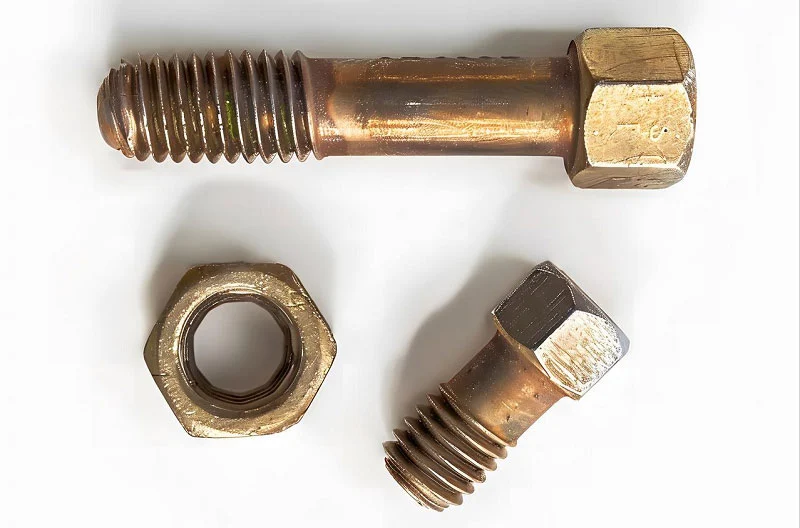
The material you choose affects every part of an exoskeleton. It decides weight, strength, cost, and how long it lasts. Different uses need different materials. Medical exoskeletons for rehab have one set of needs. An industrial unit for a factory floor has another. Here’s what works and why.
Mga Metal at Alloys
Aluminum and Titanium
Aluminum is the top choice for exoskeleton frames. It’s light, strong, and easy to machine. Two grades are most common. 6061-T6 has a yield strength of 276 MPa. It resists corrosion very well. You use it for thigh and shank linkages. 7075-T6 is even stronger. Its tensile yield strength reaches 503 MPa. That’s close to some steels. But 7075 has a problem. It contains copper. That copper forms tiny galvanic cells in humid air. The metal can pit and crack. A hard anodized coating solves that.
| Ari-arian | 6061-T6 | 7075-T6 / 7075-T651 |
| Lakas ng Pag-ani ng Malakas | 276 MPa | 503 MPa |
| Lakas ng Pagkapagod | 96 MPa | 160 MPa |
| Nababanat Modulus | 71.0 GPA | 71.7 GPA |
| Kaagnasan paglaban | Stable self-passivating Al₂O₃ oxide film | Contains 1.2–2.0% copper; needs coating |
| Kinakailangan ng Patong | None required for harsh environments | Must be passivated or coated |
When you switch from 6061 to 7075, you cut the cross-sectional area by about 45 percent for the same tensile load. But stiffness stays almost the same. If buckling limits your design, 7075 won’t help you. Titanium is above both alloys. It’s lighter than steel and stronger than most aluminum. The trade-off is cost and machining time.
Advanced thermoset/anodized multi-layer coating systems seal micro-porosities on 7075-T6 substrates. This prevents moisture from starting stress corrosion cracking under high-frequency cyclic loading beyond 10 million gait cycles. Sealed hard-anodized surfaces withstand over 2,000 hours of salt spray testing without pitting.
Steel and Specialty Alloys
Steel shows up in high-wear parts. Bearing housings, joint pins, and pivot points often use steel. It’s heavy but tough and cheap. Some passive exoskeleton designs use spring steel for elastic energy storage. Specialty alloys appear in aerospace-grade units. They handle extreme cyclic loads without problems.
Mga Plastic at Composite ng Engineering
Carbon Fiber and Glass Fiber
Composite materials give the best strength-to-weight ratio in exoskeleton manufacturing. Carbon fiber leads for high-end frames. It’s stiff, light, and resists fatigue better than metal, which improves long-term performance. Glass fiber costs less. It works for less critical parts like covers and brackets. Both need careful layup during manufacturing. Air bubbles or misaligned fibers weaken the final part badly.
Mga Plastic na Mataas ang Pagganap
Plastics like PEEK and Ultem go into joint bushings and bearing surfaces. They resist wear without grease. Glass-filled nylon works for cuffs and straps. These materials cut weight and cost. They also let you mold shapes that would cost a fortune to machine from aluminum.
Pamantayan sa Pagpili ng Materyal
Strength, Stiffness, and Fatigue
Your material must handle the loads, cycle after cycle. An exoskeleton goes through thousands of gait steps. Each cycle stresses the frame. 6061-T6 has a fatigue strength of 96 MPa. 7075-T6 reaches 160 MPa. If you build for high-cycle use, pick 7075 or carbon fiber. Stiffness matters too. A flexing frame wastes energy and feels loose to the user. Match your material to the load path.
Cost, Availability, and Biocompatibility
For medical applications, materials must be safe on skin. Medical exoskeletons follow strict biocompatibility standards. Industrial units skip that requirement. Cost also drives the choice. Aluminum 6061 is cheap and easy to get. Carbon fiber costs more and takes longer to produce. Low-volume builds favor machined metal. High-volume production justifies injection-molded plastic. Think about your production plan first. Then pick your material.
Machining Processes for Exoskeleton Structural Parts
You’ve picked your materials. Now you need to turn them into real exoskeleton structural parts. The process you choose shapes cost, speed, and quality. It also decides how easily you can change the design later. Let’s walk through the main options for exoskeleton structural parts.
CNC Machining at Metal Casting
Paggiling at Pag-ikot ng CNC
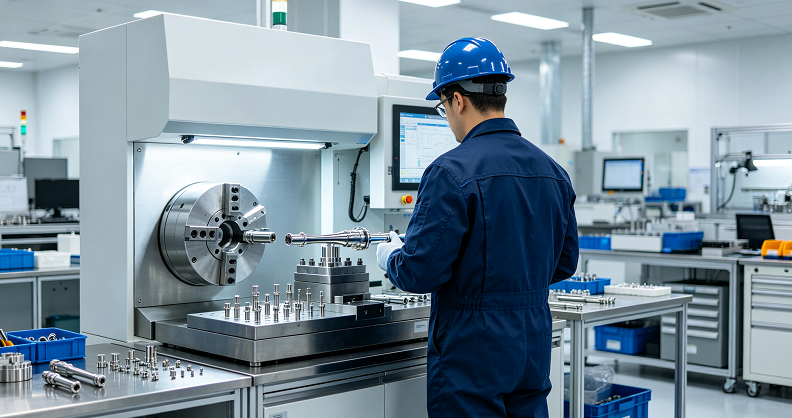
CNC machining is the workhorse for exoskeleton robot production. A computer controls the cutting tool. It shaves metal or plastic into the exact shape you need. CNC milling cuts flat surfaces, slots, and pockets. Turning shapes round parts like pins and bushings. Together, they handle most frame components.
The big win here is precision. CNC holds tolerances of plus or minus 0.02 mm as standard. Critical features can reach plus or minus 0.005 mm. That matters for bearing fits and press fits. You also get your first part in 5 to 7 days. No tooling needed. Design changes cost nothing beyond the next part. For prototypes and low volumes, this is hard to beat.
Investment and Die Casting
Casting pours molten metal into a mold. Investment casting handles complex shapes with fine detail. Die casting uses steel molds for high-volume runs. Both need tooling first. That adds cost and time.
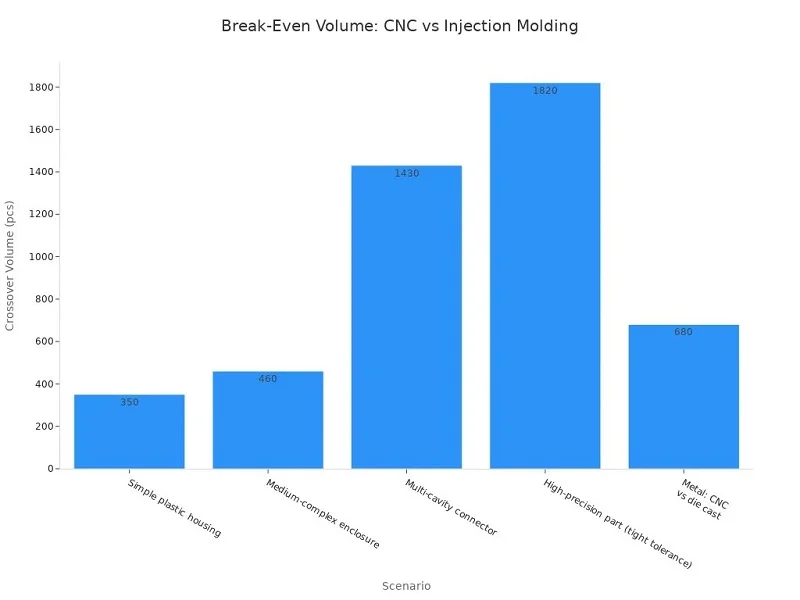
Look at the numbers. For 100 aluminum brackets, CNC costs about $2,500. Die casting runs $15,300 because of the mold ($15,000 for tooling plus $300 for manufacturing). At 1,000 units, CNC hits $25,000 while die casting drops to $18,000. The crossover for many metal parts occurs around 680 units. Die casting requires several weeks for mold fabrication, typically 3–6 weeks, plus additional time for sampling and testing. CNC machining can start in 5 to 7 days. So if you need parts fast, CNC wins. If you need thousands and the design is frozen, casting pays off.
Injection Molding and Composite Layup
Injection Molding for Plastics
Injection molding shoots melted plastic into a steel mold. It’s the cheapest way to make plastic exoskeleton structural parts at volume. But the mold costs money. Tooling runs from $3,000 to $50,000 or more. Unit cost drops fast once you’re running.
Here’s a real example. A medium-complex enclosure has a $20,000 mold. Molded parts cost $1.50 each. CNC parts cost $45 each. The crossover is about 460 pieces. At 3,000 pieces, injection molding saves $96,600 compared to CNC. The catch? Design changes mean modifying or remaking the mold. That can cost $2,000 to $20,000 per revision. So freeze your design first.
| Factor | CNC Machining | Paghubog ng Injection |
| Gastos sa Tooling | Wala | $3,000–$50,000+ |
| Yunit ng Gastos | Katamtaman | Very Low (High Volume) |
| Mga Pagbabago sa Disenyo | Madali at Mababang Gastos | Mahal |
| Pinakamahusay na Dami | 1–1,000 unit | 5,000+ unit |
Layup, Compression Molding, and Resin Transfer Molding
Composites need a different approach. Layup stacks carbon or glass fiber sheets by hand or machine. Compression molding presses them in a heated mold. Resin transfer molding injects resin into a closed mold around dry fibers. All three create strong, light exoskeleton structural parts. The key is fiber alignment. Wrinkled or misaligned fibers kill strength. These methods suit large frame sections where weight matters most.
3D Printing and Custom Machined Exoskeleton Robots
FDM, SLS, and SLM
Additive manufacturing builds parts layer by layer. FDM extrudes plastic filament. It’s cheap and fast for brackets and covers. SLS sinters nylon powder into strong, complex shapes. SLM melts metal powder for load-bearing parts. Custom machined exoskeleton robots often mix CNC and additive. You print a complex joint housing, then machine the bearing bores to final size. That combo handles geometries no single process can.
Post-Processing and Accuracy
Printed parts rarely come out ready to use. FDM needs support removal and sanding. SLS needs bead blasting. SLM needs stress relief and heat treatment. Machining after printing locks in dimensional accuracy. It also fixes surfaces where tight tolerances matter. Without post-processing, layer lines and warping hurt fit and fatigue life.
Process choice comes down to three things. Production volume decides cost. Part complexity decides feasibility. Material requirements decide performance. For prototypes, CNC and FDM win. For thousands of units, injection molding and die casting take over. For metal exoskeleton structural parts needing precision manufacturing, CNC remains the safe bet. A full-service manufacturing partner can offer the full mix, handling CNC, casting, molding, and additive work under one roof. That helps clients move from prototype to mass production without juggling vendors.
Design Considerations for Exoskeleton Structural Parts
Good exoskeleton design is more than just choosing materials and processes. You also need to think about weight, durability, cost, and fit. These things decide whether your device works in the real world. Let’s look at the main engineering considerations.
Weight Reduction and Strength-to-Weight Ratio
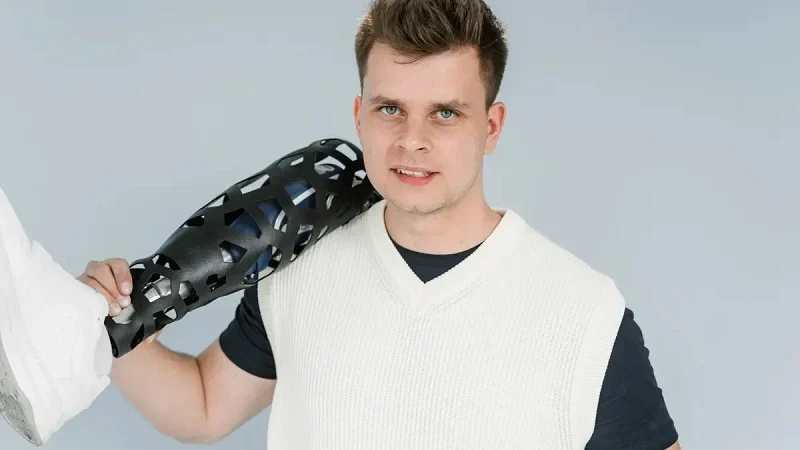
Topology Optimization and Lattices
Every gram matters in a wearable device. Topology optimization uses software to remove material from places with low stress. The result is an organic shape that keeps strength where you need it. Lattice structures go even further. They replace solid sections with repeating patterns. This cuts weight while keeping stiffness. Exoskeleton robots used in aerospace assembly must reduce worker fatigue, prevent injuries, and improve precision. Lightweight frames directly help reach those goals.
Material Thickness and Rib Design
Thin walls save weight but can buckle. Ribs add stiffness without adding much mass. Place ribs along load paths for the best effect. The design trade-offs here are real. A frame that’s too thin bends under load. One that’s too thick tires the user. Finding the balance requires analysis of actual forces during use.
Durability, Fatigue, and Safety
Cyclic Loading at Stress Concentrations
An exoskeleton goes through thousands of cycles per shift. Each step or lift puts stress on the frame. Stress concentrations at holes, corners, and sharp transitions become crack starters. Round your internal corners. Add fillets where loads change direction. These small changes extend fatigue life a lot.
Skelex exoskeletons use dynamic balancing to make arms feel weightless. This approach affects structural design because the frame must handle constant spring forces. The mechanism stores and releases energy with every movement. That means the structure sees continuous cyclic loads.
Failure Modes and Redundant Load Paths
What happens when a part breaks? For medical and industrial applications, failure can hurt the user. Redundant load paths provide backup. If one member fails, another carries the load. This adds weight and complexity. But safety often justifies the cost. Test methods for industrial exoskeletons have evolved to include simulated laboratory and field environments. These tests reveal failure modes before real-world use.
Cost, Scalability, and Customization
Tooling Costs and Production Volume
Tooling drives cost at low volumes. CNC machining needs no tooling. Injection molding and die casting need expensive molds. The crossover point depends on your numbers. For hundreds of units, machining wins. For thousands, molding pays off. Plan your production volume before you commit to a process.
Modular Design for Custom Fit
Every body is different. Anthropometric customization ensures the device fits the user. Modular designs let you swap frame sections, straps, and cuffs. This supports customization without new tooling. Adjustable lengths and widths handle most fit issues. For medical applications, custom-fit interfaces improve comfort and compliance. Application-specific geometries can be added through modular attachments. This keeps the core frame standard while adapting to different tasks.
Balancing performance with manufacturability is the central challenge. Precision tolerances matter for joints and interfaces. But tight tolerances cost more. Know where you need precision and where you don’t.
NOBLE: Exoskeleton Structural Parts Manufacturing Partner
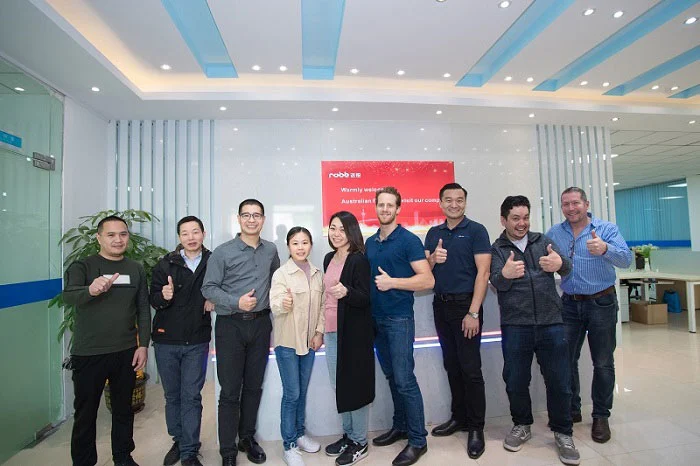
Picking the right manufacturing partner can decide if your project succeeds or fails. A full-service provider for exoskeleton structural parts offers both metal and plastic work in one place. That reduces the need to manage multiple vendors. Whether you need one prototype or thousands of units, a comprehensive partner handles the whole workflow.
Kadalubhasaan sa Pagproseso ng Metal at Plastik
Such a partner typically runs CNC machining centers that hold tight tolerances for key features. Their casting lines perform both investment and die casting for complex metal shapes. Injection molding presses make plastic parts in high volume. This mix lets you choose the right process for each component. A load-bearing bracket might come from CNC. A housing cover might come from molding. The team helps match process to part.
Composite and Additive Manufacturing
Composite layup and resin transfer molding create lightweight frame sections. Additive manufacturing fills the gaps for custom machined exoskeleton robots. You can print a complex joint housing, then machine the bearing bores to final size. This hybrid approach solves geometry challenges that no single process can handle. Experienced engineers know when to print and when to cut.
Mga Sertipikasyon at Pamantayan sa Kalidad
Quality management certifications are important for both general manufacturing and medical devices. These certifications build trust with clients in healthcare and industry. They ensure documented processes and consistent output.
Quality Control at Traceability
Every batch should go through inspection at multiple stages. Material lots and process parameters are tracked. If a problem appears, it can be traced back to the source. This level of control supports precision manufacturing for safety-critical parts. Inspection reports accompany each shipment.
Suporta sa Buong Serbisyo mula Disenyo hanggang Pag-assemble
Design for Manufacturing and Prototyping
Engineers review your design before production starts. They flag features that drive up cost or cause defects. This feedback saves time and money. Prototyping services let you test fit and function early. You can iterate quickly without committing to expensive tooling.
Assembly, Testing, and Volume Production
The partner handles assembly, testing, and final inspection. This full-service approach simplifies your supply chain. For exoskeleton robot production, you get a partner who understands the whole system. Volume production scales smoothly from pilot runs to full output.
From a practical perspective, combining metal and plastic expertise with a complete service range is valuable. Quality systems support both industrial and medical work. If you need exoskeleton robots built with precision and care, a reliable partner reduces risk and speeds up development. Customization options and modular design support also help adapt to different user needs.
You’ve now seen the main exoskeleton structural parts: frames, joints, linkages, actuators, and body interfaces. Each one needs the right material and process. Aluminum works well for machined brackets. Carbon fiber is best for lightweight frames. CNC is good for prototypes, while molding and casting work for high volumes.
Balancing performance with manufacturability is still the real challenge. Tight tolerances help joints, but they raise costs. Use this guidance when you design or source your next exoskeleton. A partner like NOBLE brings metal and plastic expertise together. That cuts risk and speeds up development from prototype to production.
FAQ of Exoskeleton Structural Parts
What are the main exoskeleton structural parts?
These key exoskeleton structural parts are the rigid frame, joints, linkages, actuators, and attachment points. The frame supports the weight. Joints and linkages let parts move. Actuators push the system. Straps and cuffs attach it to you. Passive and active systems both use these same pieces.
Which material works best for a lightweight frame?
It depends on your budget and how many you plan to make. Aluminum 6061 is cheap and simple to machine. Carbon fiber gives the best strength for its weight but costs more. Titanium falls in between. Pick the material that fits your load path and quantity.
When should I choose CNC machining over casting?
CNC is best for prototypes and small batches. No tooling is needed, and you get parts in a few days. Casting becomes worth it after about 680 units, because the mold cost gets spread over many exoskeleton structural parts. Make sure your design is final before you pay for a mold.
Can 3D printing handle load-bearing exoskeleton parts?
Yes, if you use the right process. SLM prints metal parts that are strong enough for structural use. FDM and SLS work well for brackets and covers. Most printed parts still need extra work, like machining the bearing holes, to reach the final accuracy.
How do I reduce weight without losing strength?
Topology optimization removes material from areas with low stress. Lattice structures replace solid sections with repeating patterns. Ribs add stiffness along load paths. These methods cut weight while keeping the frame strong enough for everyday use.
What causes early failure in these parts?
Stress concentrations at holes, corners, and sharp changes start cracks. Repeated loading then makes them grow. Round your inside corners, add fillets, and choose materials with good fatigue strength. Having backup load paths adds safety for medical and industrial uses.
Why does biocompatibility matter for medical exoskeletons?
Materials that touch the skin must follow strict biocompatibility standards. Industrial units do not need this. Medical devices need safe interfaces because users may have sensitive skin. Choosing the right material early prevents redesigns later. These points affect both cost and schedule.
How do I pick a manufacturing exoskeleton structural parts partner?
Look for a partner that handles both metal and plastic work in one place. Check for relevant quality management certifications. Ask about help with design for manufacturing, prototyping, and assembly. A full-service partner lowers risk and speeds up development.