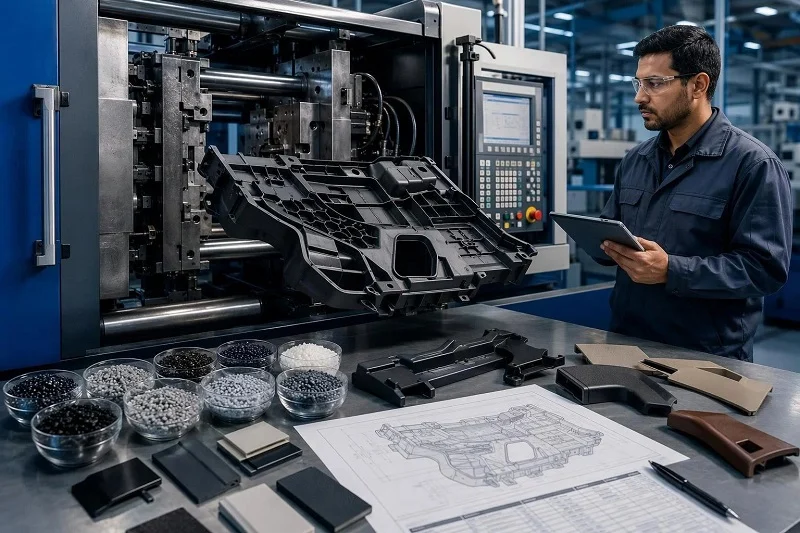
When a customer calls to ask for a quote, what is the first thing a reputable machine shop asks for? A drawing. This happens every day in CNC machining. Some customers think the shop is being difficult, but that is not the case at all. Without a proper machining drawing, no professional shop can give you an accurate quote. This is not an obstacle — it is professionalism. This article explains why drawings matter so much: how they affect cost, quality, and lead time. Understand this, and you will get faster, more accurate, and more cost-effective quotes.
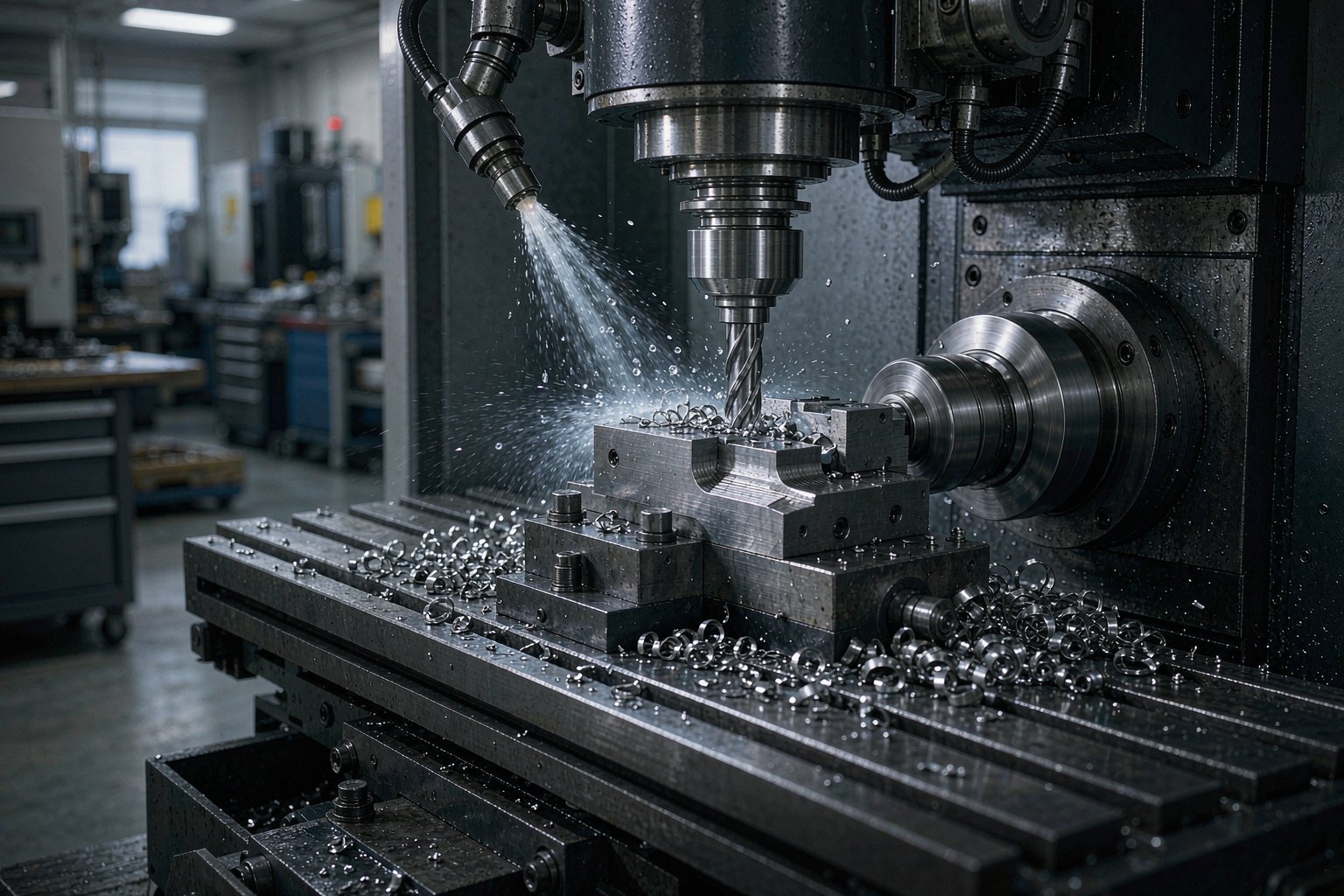
A Machining Drawing Is the “Contract” for All Key Information
Think of a machining drawing as the “contract” between the designer and the manufacturer. It defines the shape, the dimensions, how smooth the surface must be, and how much error is allowed. Without these details, the shop is just guessing. In actual cutting, every number on the drawing matters. Tight tolerances require toolpath changes; high surface-finish requirements require adjusted feeds; geometry determines which machine tool is used. That is why a shop must see the drawing before quoting — otherwise the difficulty of the job simply cannot be judged.
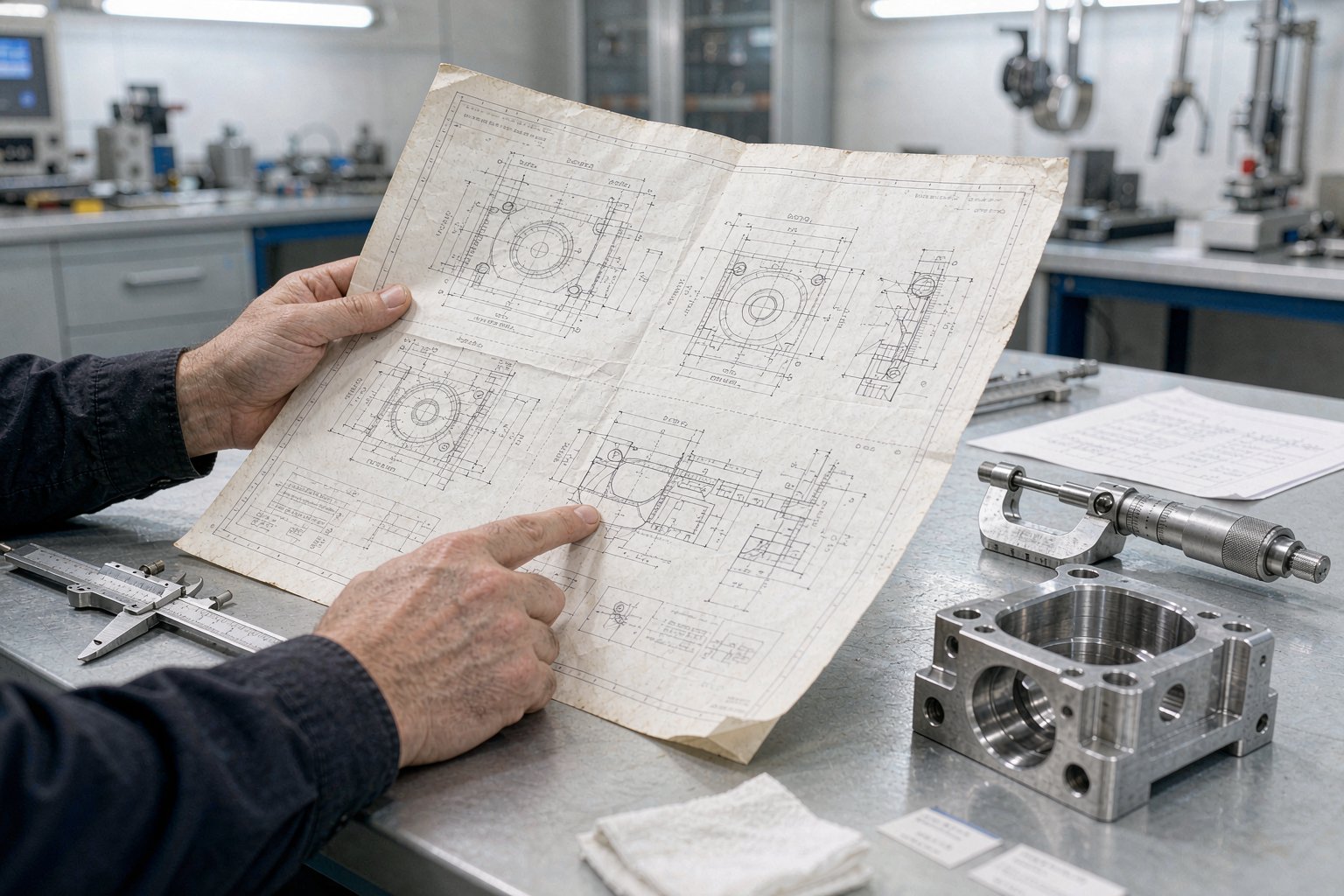
What Key Information Does a Drawing Provide?
A complete machining drawing contains a great deal of information. When quoting, a shop focuses mainly on the following:
- Dimensional tolerances. The tighter the tolerance, the more precise the tooling and the more inspection steps are required — both time and cost go up. This is the biggest cost driver. A part at ±0.1 mm is easy to make; a part at ±0.01 mm is hard. The tighter the tolerance, the slower the cutting speed.
- Geometric dimensioning and tolerancing (GD&T). Many people overlook this, which only hurts themselves. Flatness, perpendicularity, concentricity, and position — every symbol adds complexity. A hole that must be perfectly perpendicular to a surface is far harder to machine than one that can be slightly off. It is all marked on the drawing.
- Surface roughness. The smoother the surface, the more polishing, the more refined the toolpath, and sometimes extra processes — all of which cost money. A rough surface is fast and cheap; a mirror finish is slow and expensive. The Ra value is marked on the drawing: the smaller the number, the more polishing is required.
- Material grade. Aluminum and stainless steel cut differently; stainless steel and PEEK plastic are different again. Tool wear rates differ, spindle speeds and feeds differ, and so do costs. The drawing must specify the exact material. Saying only “metal” or “plastic” gives the shop nothing to work with.
Without this information, a shop cannot tell whether a part is simple or complex, and naturally cannot give you an accurate price.
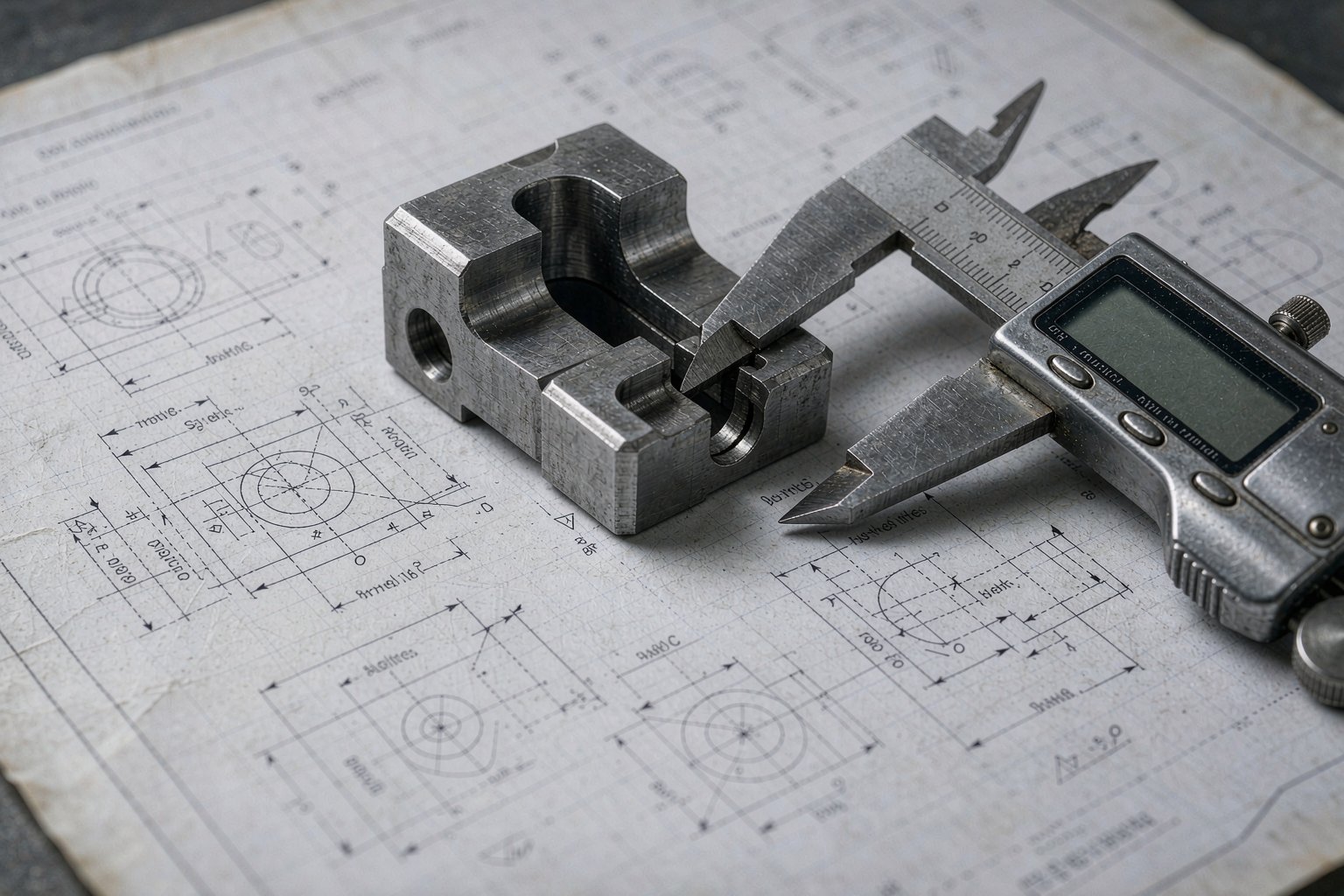
The Machining Process Determines the Quote
Different shapes mean different prices. A simple block with a few holes is cheap; a part with curved surfaces and tight tolerances is expensive. The drawing tells the shop what it is dealing with. Complex work may require multi-axis machining, special tooling, or multiple setups — clamp, cut, release, and clamp again. All of this consumes machine time and drives up cost. The drawing lets the engineer judge which process is needed: milling, turning, drilling, or grinding — each priced differently. These process choices are the core of every accurate quote. Without a drawing, you do not know the process; without the process, you cannot quote a real number.
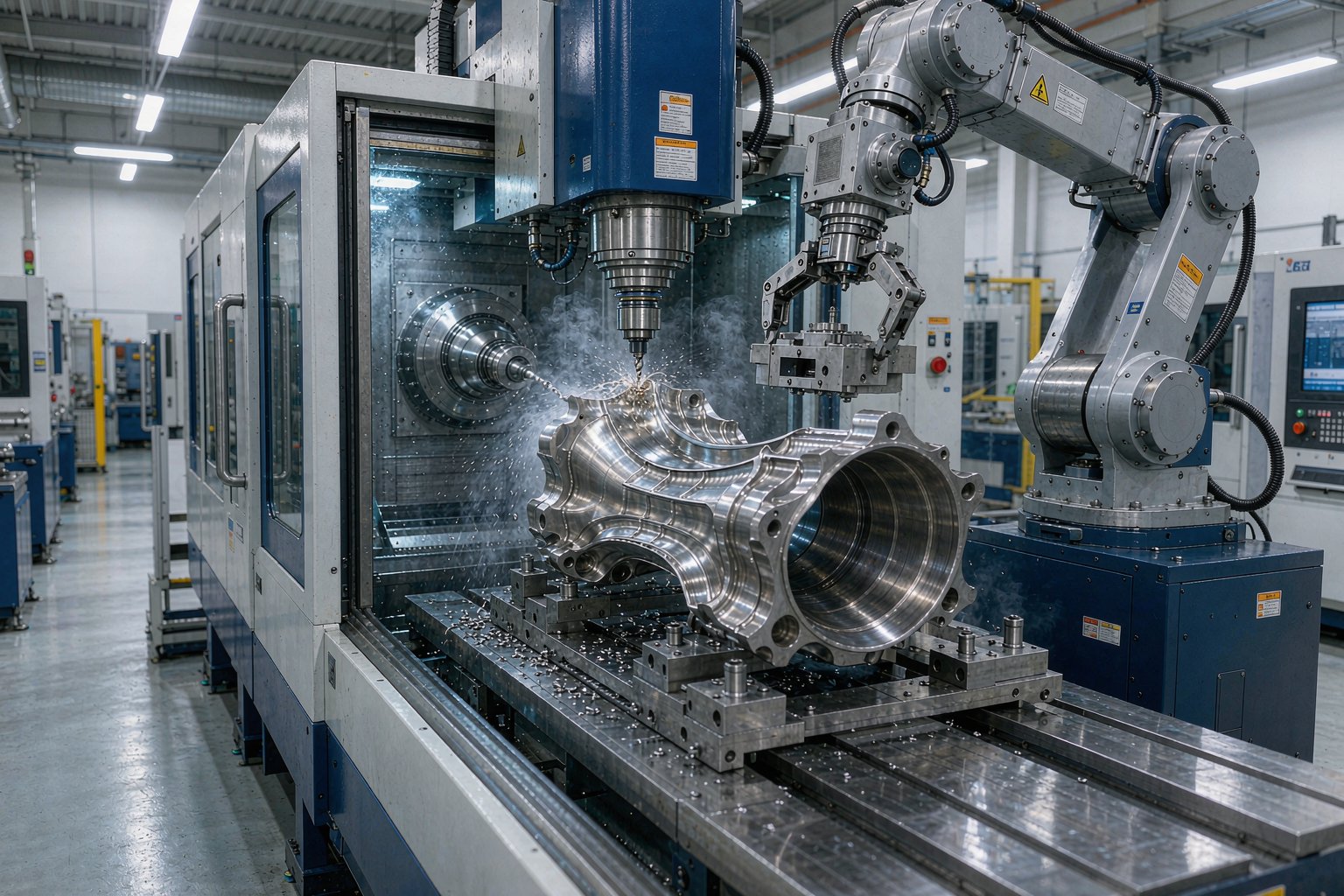
Example: How Process Choice Affects Price
Some parts also need secondary operations:
- Heat treatment makes a part harder and more wear-resistant, but adds days to the lead time and raises cost — running the furnace is not free.
- Surface finishing — anodizing, electroplating, powder coating — each adds material cost and labor. The drawing must state which finish is required, otherwise the shop cannot quote.
- Inspection and reporting. Some customers require a full dimensional report, CMM measurement, and traceable documentation. This takes a technician’s time, and time is money. Parts that need reports cost more than those that do not.
All of these factors are written on the machining drawing. An experienced engineer reads the drawing once and the whole production path becomes clear: material, tolerances, features, and secondary operations. Without a drawing, any quote is a guess.
How Is Material Cost Calculated?
A reputable shop does not guess material costs. The engineer reads the drawing, sees which alloy is specified, and calculates from there. Raw material price is one part; machining difficulty is another — both affect the final quote. Different materials have different machining parameters: feeds, speeds, tool selection, coolant requirements, and tool wear rates. One material may wear out a tool after twenty parts, while another lets a single tool run all day — the machining cost is obviously different. The drawing tells the shop which case it faces.
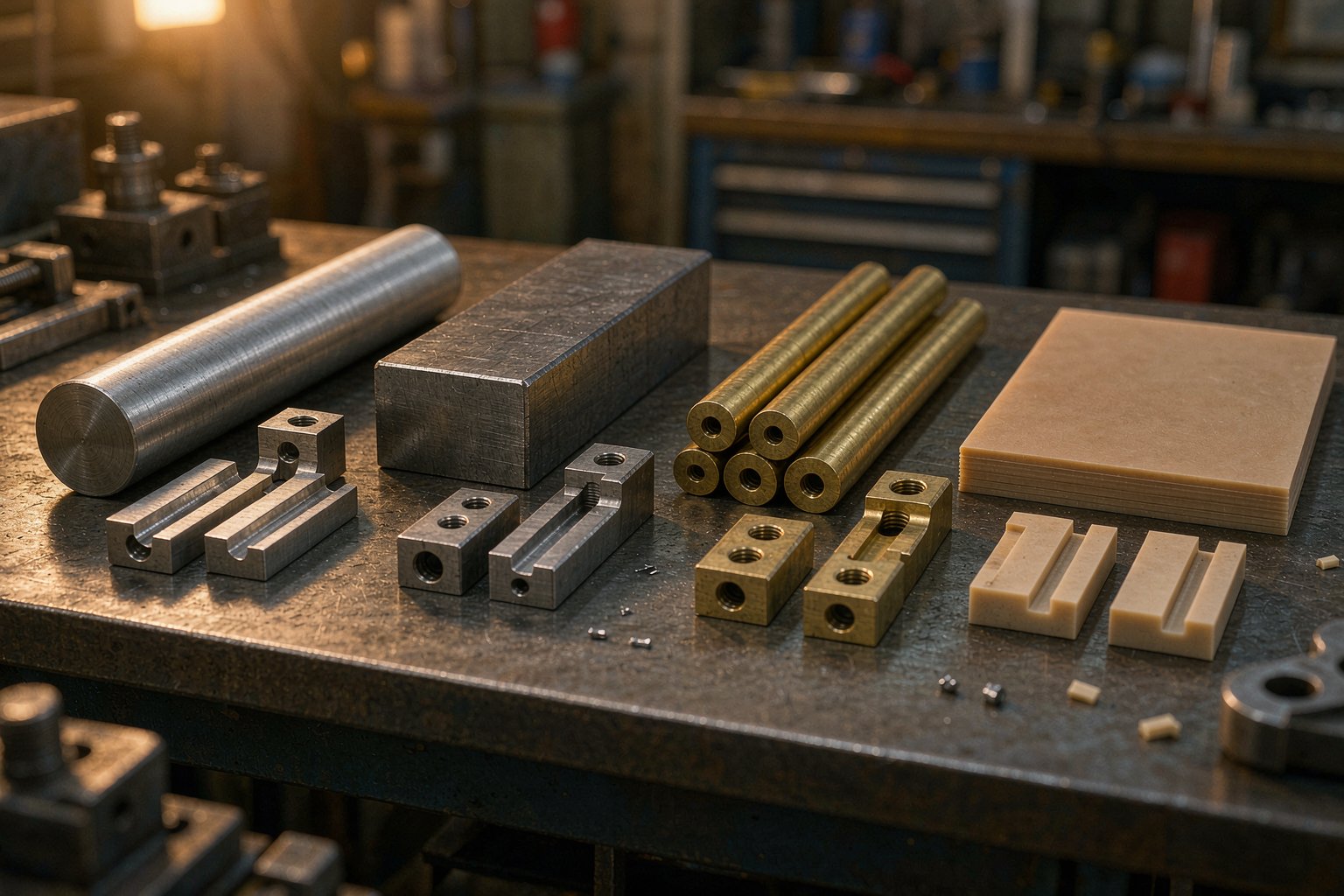
Precision and Tolerances
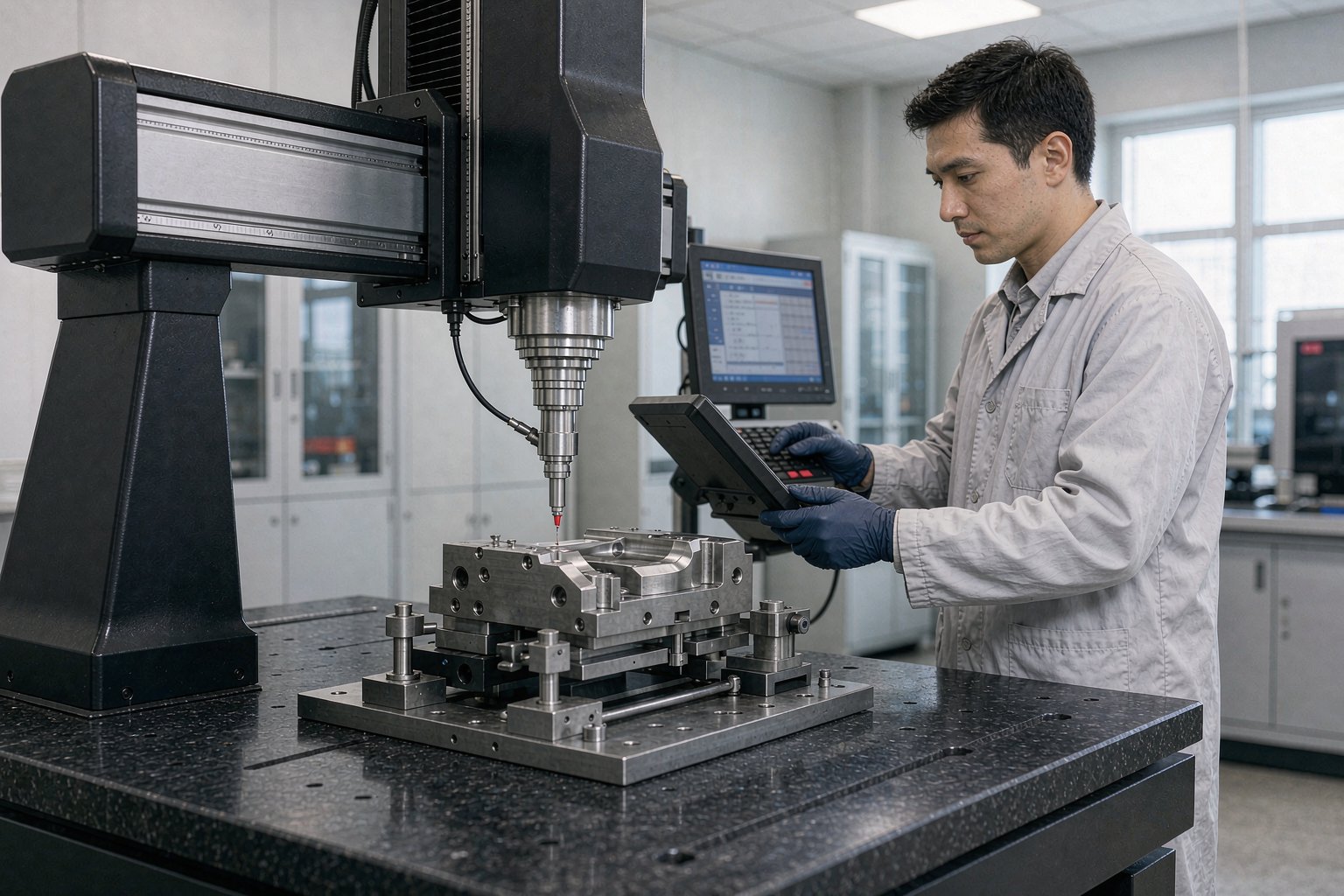
The dimensional and geometric tolerances marked on a drawing are key indicators in CNC machining. The higher the precision required, the more precise the equipment needed, the stricter the quality control, and often the lower the machining efficiency. A professional shop must allocate resources based on these requirements to ensure the finished part fully conforms to the drawing.
The Relationship Between Quantity and Efficiency
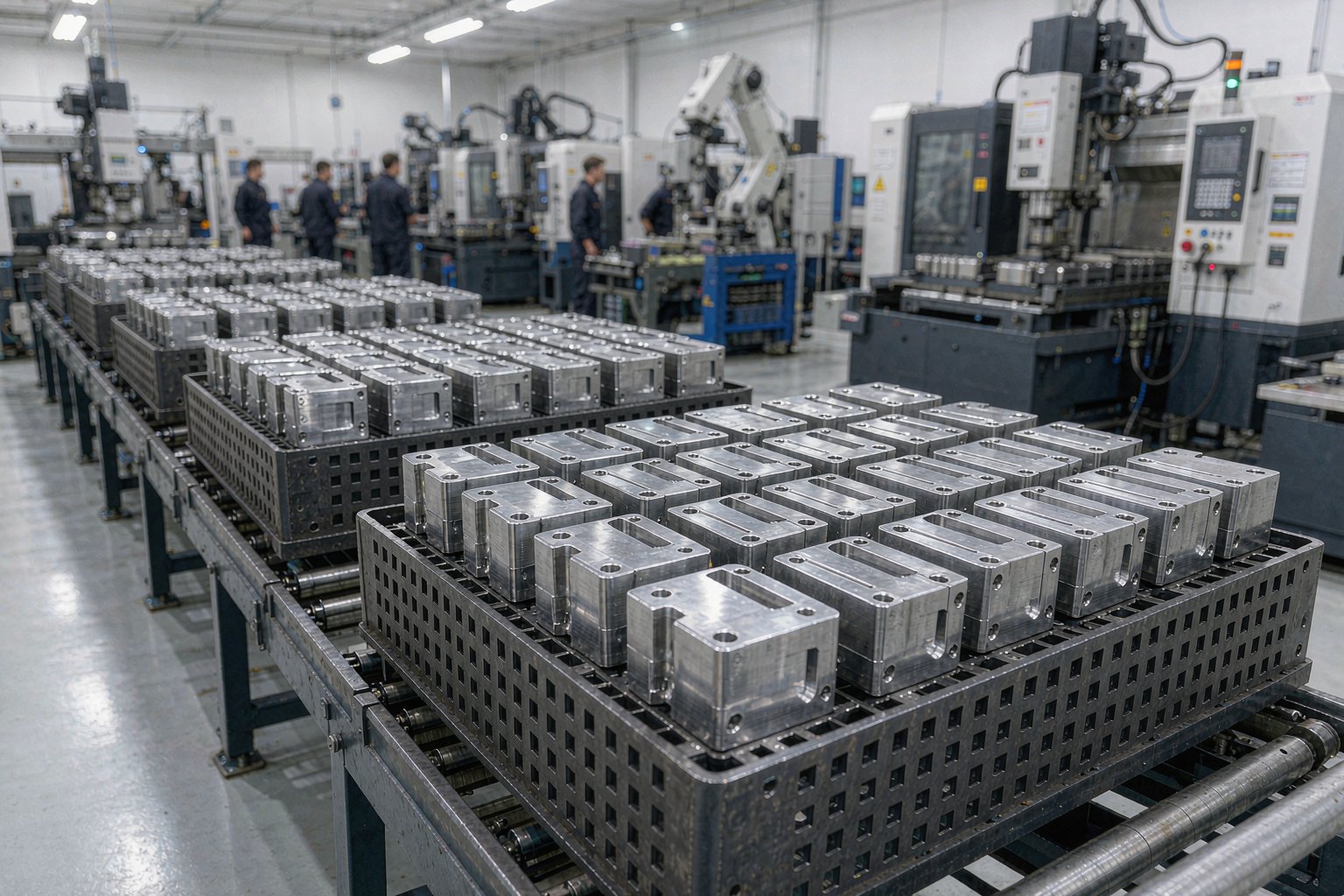
Batch size directly affects unit price. A single part costs more than one of a thousand. The drawing tells the shop how to plan.
- Small batches: setup time makes up the bulk of the cost. Programming, fixturing, and tool setting — these tasks take hours. Spread over five parts, each one carries a share, so the unit price is naturally high.
- Large batches: with 100 parts, the same setup cost is spread much thinner. The shop may make simple fixtures and optimize toolpaths, so the unit price drops. At 1,000 parts, the shop starts thinking about automation — dedicated fixtures and multi-station setups. The drawing tells the shop whether the part geometry allows this. Simple parts scale easily; complex ones do not. Without a drawing, no one can judge the difference. The quote becomes a guess, and guesses lead to mistakes.
Avoiding Potential Technical Risks
Requiring a drawing before quoting is not only about pricing — it is also about avoiding problems. A reputable shop reviews the drawing and catches issues before the part ever reaches the machine.
- Deep, narrow, tight-tolerance holes: small, deep holes with tight tolerances require long tools, and long tools deflect and break. Cutting speed drops to a crawl, so the quote will be high. A professional shop will suggest making the hole larger, shallower, or loosening the tolerance.
- Sharp internal corners: standard end mills are round and leave a radius. Some drawings call for sharp internal corners that ordinary CNC simply cannot produce. The shop would have to use EDM or another process, and the cost jumps. A better solution is to add a small relief groove or enlarge the corner radius to match a standard tool.
- Tight tolerances on non-critical areas: some drawings mark ±0.01 mm on every dimension, even on surfaces that do not affect function. A shop can tell immediately that this inflates cost for no reason. Ask and you will often find that ±0.1 mm is sufficient. Revise the drawing and the quote comes down.
- Incomplete or missing dimensions: a drawing may specify the material but not its hardness, or the surface treatment but not the Ra value. The shop cannot quote accurately. Rather than guess and make a wrong part, it is better to ask up front. Early drawing review is risk control: the shop finds problems early, the customer can change the design or accept the cost, the project runs smoothly with no surprises and no scrap, the quote reflects reality, and the final part meets expectations.