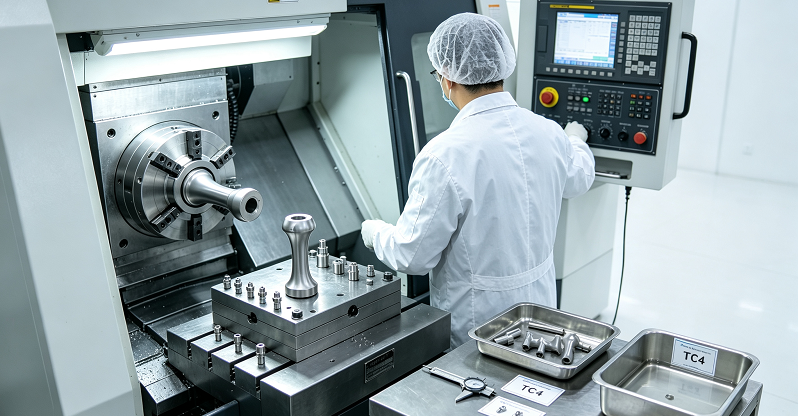
Pemesinan CNC, as the mainstream manufacturing method for forming TC4 titanium alloy medical parts, is applied in the high-end medical field. In medical scenarios, TC4 components not only need to achieve mechanical machining and forming of complex anatomical surfaces and tiny precision threads, but also must take into account medical device compliance requirements such as biocompatibility, sterilability, and complete material traceability.
The following text will systematically disassemble the basic understanding of TC4 titanium alloy medical parts from the perspectives of material definition, grade classification, application scenarios, and compliance requirements.
Basic Overview and Material Selection Comparison of TC4 Titanium Alloy Medical Parts
What is TC4 medical titanium alloy?
TC4 titanium alloy, also known as Ti-6Al-4V, is an α+β duplex titanium alloy and is widely used in the medical industry. It serves as the core metal substrate for orthopedic implants, surgical instruments, and minimally invasive medical components.
For medical implant scenarios, TC4-ELI ultra-low gap grades (ASTM F136, ISO5832-3) are preferred to reduce the content of oxygen and iron impurities, enhance the material’s toughness and fatigue resistance, and meet the biosafety requirements for long-term human implants.
TC4 titanium alloy has long occupied the high-end metal medical components market due to its core advantages such as excellent resistance to body fluid corrosion, good bone bonding ability, and the ability to be repeatedly sterilized at high temperatures.
TC4 has irreplaceable advantages in high-load and high-intensity working conditions, but at the same time, the material is difficult to machine, and the machining cost is high, which poses strict requirements for CNC.
Mainstream application scenarios of TC4 titanium alloy medical parts
TC4 medical components are divided into two major categories: those for long-term implantation in the human body and those for short-term contact with surgical instruments. Different categories have significant differences in raw materials, machining tolerances, surface quality, cleaning, and testing standards.
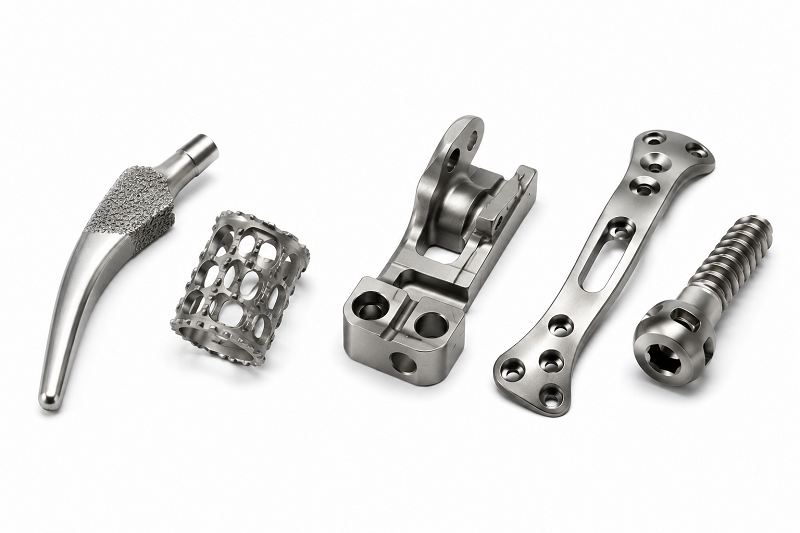
1) Orthopedic implant parts: bone plates, fracture screws, spinal nail and rod systems, etc.
For such parts that are implanted in the human body for a long time, the materials must have complete material traceability and biocompatibility reports, and comply with ISO10993 and YY/T 0640 general standards for surgical implants. The requirements for dimensional tolerances, surface roughness, and no burrs are the highest.
2) Minimally invasive surgical instruments: Puncture cannulas, surgical operation handles, instrument connectors, and other instruments bear high-intensity forces and require repeated high-temperature and high-pressure sterilization, taking into account both structural strength and lightweight.
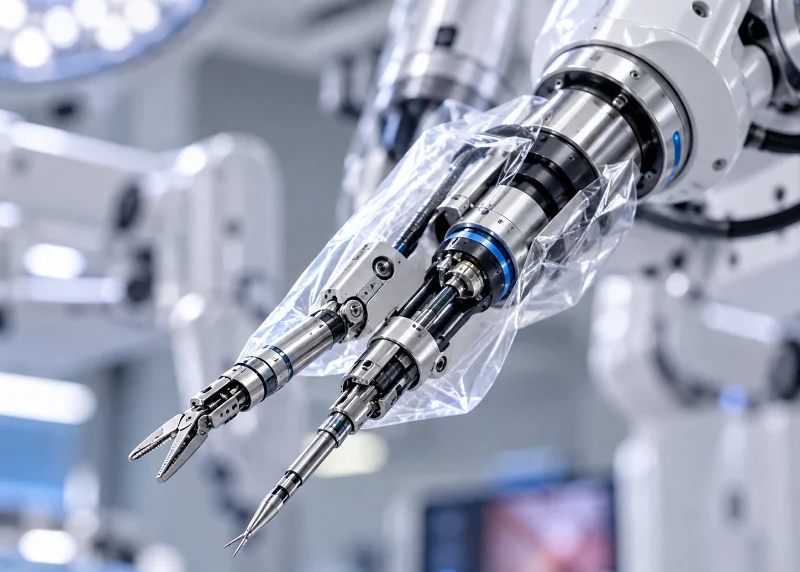
3) Load-bearing structure of rehabilitation and medical equipment: High-strength brackets for portable medical equipment and parts of the executive mechanism of surgical robots mainly bear mechanical loads and are not implanted in the human body.
Comparison of the material selection boundaries between TC4 titanium alloy, PEEK, and medical POM
Combined with the material properties, the material selection boundaries for CNC-machined parts can be clearly demarcated.
| Bahan | Kelebihan | Kelemahan | Typical applicable medical scenarios |
| Medical TC4 titanium alloy | High strength, fatigue resistance, high load-bearing capacity, and strong osseointegration ability | High density, high machining difficulty, presence of MRI metal artifacts, and high cost | High-load-bearing orthopedic implants, high-intensity surgical locking screws, high-pressure pressure-bearing valve bodies |
| Implant-grade PEEK | The elastic modulus is close to that of human bone, there are no artifacts on MRI, and it is lightweight | The mechanical strength is lower than that of titanium alloys, and it is prone to failure under ultra-high loads | Spinal fusion device, craniofacial repair plate (non-ultra-high load-bearing). |
| Medical-grade POM | High cost performance, self-lubricating and wear-resistant | Limited temperature resistance, not implantable, and not resistant to irradiation sterilization | The gears of the drug delivery device and the sliders of the IVD transmission are the only non-implanted moving parts |
Technical difficulties in CNC machining of TC4 titanium alloy medical parts
Poor Thermal Conductivity in Cutting Causes Heat Concentration and Rapid Tool Wear
The thermal conductivity of TC4 titanium alloy is extremely low, only about one fourth of that of ordinary carbon steel. The vast majority of the heat generated during cutting cannot be carried away by the workpiece, and all accumulates at the tool tip. The temperature in the cutting area can instantly reach over 800℃, directly causing rapid wear and chipping of the tool edge and significantly shortening the tool life.
High-temperature Chemical Activity, Tool Adhesion and Built-up Edge
In high-temperature environments, titanium alloys have strong chemical reactivity and will undergo affinity reactions with the hard alloy materials of cutting tools. The chips will firmly adhere to the cutting edge, forming a built-up edge.
The shedding of the built-up edge can tear the surface of the workpiece, causing scratches and burrs. Tiny scratches on the surface of implanted parts can hide bacteria, and even after sterilization, there are still biological safety risks. At the same time, it will cause dimensional drift of parts and an increase in the scrap rate.
Low Elastic Modulus, Machining Spring-back and Thin-wall Clamping Deformation
The elastic modulus of TC4 is approximately 110GPa, which is much lower than that of steel.
When thin-walled parts and thin bone plate structures are clamped, slight deformation will occur due to the clamping of the fixture. After the machining is completed and the fixture is released, the material will rebound, and the actual size will deviate from the tolerance of the drawing.
CNC machining process plan and process route for TC4 medical parts
Standard machining technology flow
Raw material bar/plate re-inspection after warehousing → Rough blanking → rough machining → vacuum stress relief annealing treatment → five-axis CNC semi-finishing → low-temperature static release of residual stress → finishing, micro-hole and thread machining → deburring → ultrasonic cleaning → passivation/electrolytic polishing surface treatment → final inspection in a clean environment → dust-free independent sealed packaging.
Strategi pemilihan alat
- Give priority to using TiAlN/AlTIPVD-coated cemented carbide tools. The cutting edge should be slightly passivated. If the cutting edge is too sharp, it is prone to chipping; if it is too blunt, it will accelerate friction hardening.
- In milling operations, a short tool holder with good rigidity is preferred to reduce tool overhang, suppress vibration, and minimize tool marks.
- It is prohibited to process medical TC4 with ordinary uncoated hard alloy cutting tools, as it is very likely to cause tool sticking.
PCD diamond tools have good finishing effects, but they are expensive and are mostly used in the finishing process of high-value-added implants.
Parameter pemotongan dan skema penyejukan
TC4 cannot pursue high cutting speeds; it requires low linear speeds, reasonable feed per tooth, and small depth-of-cut strategies.
- The milling linear speed control is 30-60m/min. The single cutting depth should not be too large, and layer-by-layer cutting is adopted.
- For cooling, high-pressure and high-flow special titanium alloy cutting fluid without chlorine should be preferred. The pressure should be no less than 70bar. Chloride ions can cause pitting corrosion of titanium alloys. Chlorine-containing cutting media are strictly prohibited for implants. For a small portion of medical clean conditions, low-temperature cold air dry cutting can be adopted to prevent residual cutting fluid from contaminating the parts.
- It is essential to ensure smooth chip removal to prevent secondary scraping of the workpiece surface by chips, which may cause surface damage.
Tooling clamping solution, reducing clamping deformation
For medical thin-walled TC4 parts, flexible fixtures, vacuum fixtures, and multi-point dispersed clamping with dispersed clamping force should be given priority.
The clamping force during rough machining can be relatively large, and the clamping pressure should be reduced during the finishing machining stage to minimize rebound deformation to the greatest extent.
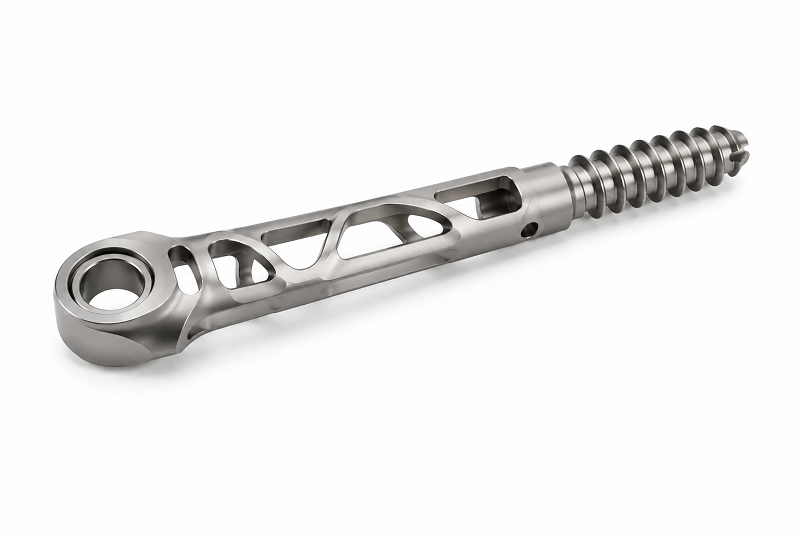
The five-axis linkage machining center can complete the machining of all curved surfaces, holes, and threads in one clamping, eliminating the positioning errors of multiple clamping. It is the preferred equipment configuration for orthopedic irregular parts.
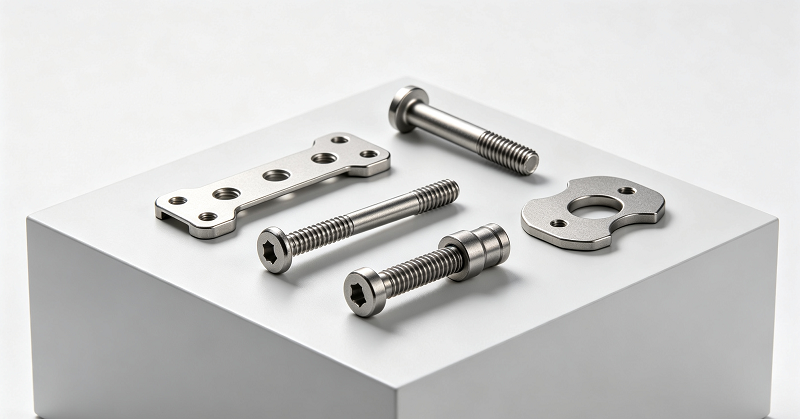
Selepas pemesinan cleaning and surface treatment of TC4 medical parts
Deburring treatment
When machining threaded holes, cross holes, and edges with TC4, tiny burrs will be produced, which are difficult to distinguish with the naked eye.
The implant must not have any burrs left. If burrs fall off during the operation, they will become metal debris in the body.
For tiny cross holes, electrochemical deburring should be given priority to avoid mechanical grinding from damaging the original dimensional accuracy of the parts.
Selection of polishing process
The roughness requirements for different medical parts are completely different:
- Joint friction moving parts: electrolytic polishing, Ra < 0.2- 0.4 μm, reducing friction and wear;
- Osseointegration implant surface: It is necessary to control the appropriate roughness Ra 1- 4 μm to facilitate the growth of osteocytes and avoid excessive mirror polishing;
- Surgical instrument handles: balancing wear resistance and hand feel, Ra 0.8- 1.6 μm range.
Rawatan pasif
After polishing, nitric acid passivation treatment is carried out to regenerate a dense TiO₂ oxide protective layer on the surface of the titanium alloy, enhancing its resistance to corrosion by human body fluids and inhibiting the precipitation of metal ions. This is a mandatory process for implants.
Multi-level cleaning and clean control
Complete cleaning process: degreasing cleaning → alkaline degreasing → multiple rinsing with pure water → ultrasonic cleaning → dehydration and dust-free hot air drying.
All cleaning processes need to be completed in a clean workshop to remove residual cutting fluid and metal micro-particles.
Implantable parts also need to control bacterial endotoxins and comply with the ISO19227 medical device cleaning standard. After cleaning, it must be independently sealed and dust-free to prevent secondary pollution.
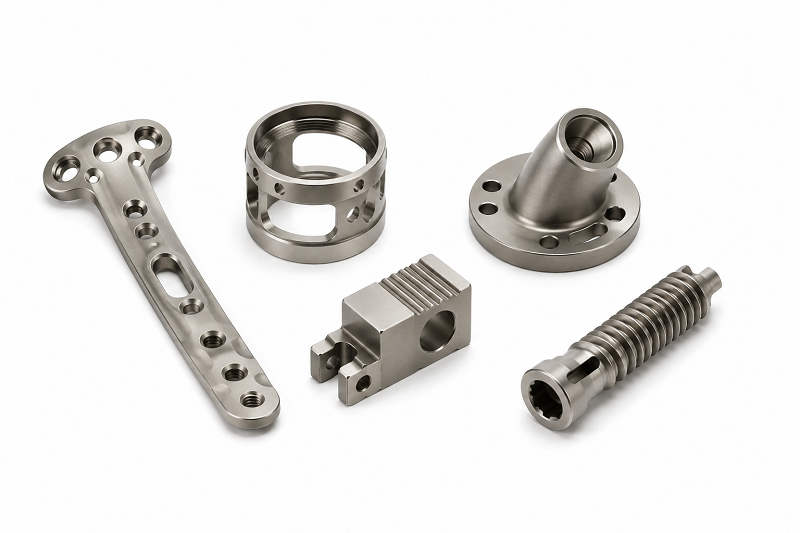
Key Points for Quality Inspection and Compliance Control of TC4 Medical CNC parts
Dimensional geometric accuracy detection
- First Article FAI First Article inspection: Every new product must complete the full-size inspection of the first article.
- Ketepatan kedudukan permukaan melengkung kompleks dan kedudukan lubang diukur menggunakan CMM tiga koordinat.
Special gauges are used for threads and small hole diameters.
- Critical dimensions are subject to Cp/Cpk control during the execution process, not just random inspection of finished products, but also monitoring of machining stability during the process.
Pemeriksaan kualiti permukaan
Examine the surface under a microscope to confirm that there are no scratches, cracks, or burrs. The surface machining deterioration layer of the implant needs to be inspected, and metallographic testing is necessary.
Material and process traceability management
The ISO13485 system requires that each batch of parts be fully recorded: raw material furnace number, heat treatment record, cutting process parameters, cleaning record, passivation report, inspection report, forming a complete equipment history record DHR. During the medical device registration review, the complete set of materials will be retrieved. Parts without a traceability report cannot be used for the registration of Class II and Class III medical devices.
Sterilization adaptation verification
TC4 titanium alloy is compatible with all mainstream medical sterilization methods, which gives it a significant advantage over medical-grade POM.
However, the surface condition of the parts after machining will affect the sterilization effect. If not cleaned thoroughly, it will cause the sterilization to fail.
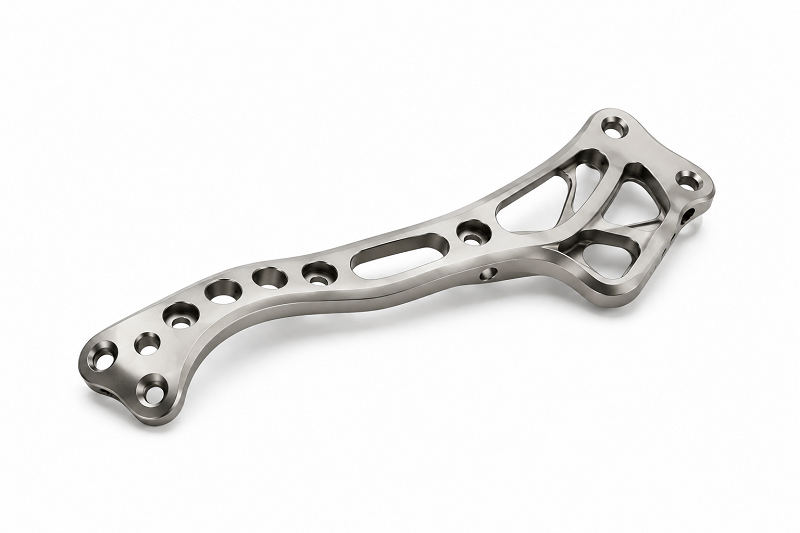
Cost control of TC4 titanium alloy medical CNC machining
The DFM design optimization of the drawings reduces the scrap rate
- The thin-walled structure avoids being too thin, and the process fillets are reasonably increased to reduce machining vibration and chipping.
- For non-critical dimensions, the tolerances should be reasonably relaxed. Only the implanted mating surfaces, threaded holes, and positioning holes should be set with high-precision tolerances. The higher the tolerance requirement, the more the machining time and scrapping cost will increase exponentially.
- For complex and irregular-shaped parts, priority should be given to five-axis machining structures to reduce multiple tooling operations and lower the risk of scrapping caused by clamping errors.
Grade and select raw materials to avoid over-selection
Distinguish implantable TC4-ELI from ordinary TC4 grades: only long-term implantable human body parts use high-cost TC4-ELI grades;
For in vitro surgical instruments and non-implantable device parts, the compliant common TC4 grade should be selected under the premise of meeting biocompatibility requirements to control raw material costs.
Orders are planned in stages
During the R&D stage, small-batch sampling is carried out, with priority given to the cutting of standard bars to reduce the cost of custom blanks.
After the product is finalized, it is mass-produced. A framework order is signed, and the raw materials and machining are quoted in steps. The fixed costs of heat treatment, cleaning, and testing are shared among batches.
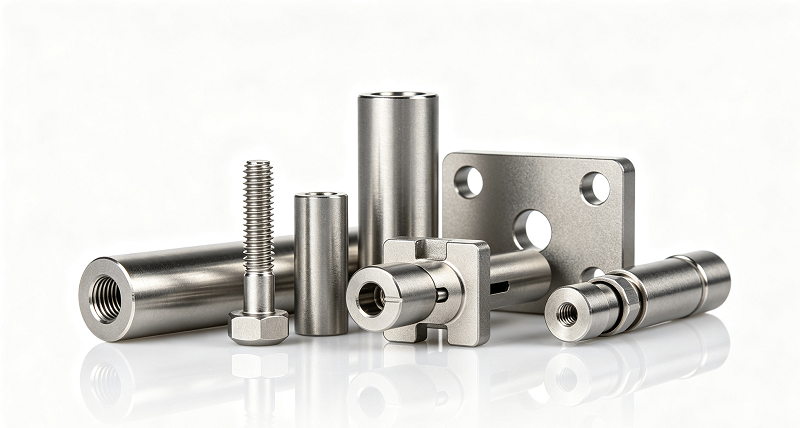
Mengapa memilih NOBLE sebagai anda medikal ppengeluar seni
NOBLE ialah usaha sama Sino-British yang dianugerahkan oleh kerajaan sebagai "Perusahaan Berteknologi Tinggi Kebangsaan". Kami mempunyai dua hala tuju perniagaan utama: "Pembuatan Pintar" dan "Produk Penjagaan". Perniagaan "Pembuatan Pintar" mengkhusus dalam menyediakan perkhidmatan sokongan projek kepada pelanggan, termasuk pemesinan dan pembuatan alat ganti.
Lebih daripada 10 tahun pengalaman pembuatan profesional dan prototaip pantas. Pasukan kami yang cekap menyediakan sokongan yang kukuh untuk projek baharu anda bagi mencapai 100% keperluan anda; Pengurusan piawai membawa kawalan kualiti yang ketat terhadap alat ganti & produk; aliran kerja yang munasabah mencapai kos yang lebih rendah dengan kualiti yang sama.
Selepas bertahun-tahun kerja keras dan pembangunan, NOBLE secara beransur-ansur berubah daripada perusahaan pemesinan dan pembuatan bahagian jitu dengan keupayaan perkhidmatan sokongan rantaian perindustrian yang lengkap kepada perusahaan berorientasikan perkhidmatan yang menyediakan sokongan penuh untuk keseluruhan projek pelanggan.
NOBLE ialah penyelesaian pembuatan tersuai sehenti yang dipercayai, daripada reka bentuk prototaip hingga pembuatan, melalui sumber pembuatan yang besar, teknologi yang sesuai, proses yang diperkemas, panduan pakar dan proses pemeriksaan kualiti yang sempurna untuk menjadikan idea anda kenyataan.
NOBLE mempunyai sijil kelayakan berikut:
ISO 9001: 2015 – Pengurusan kualiti yang mantap untuk pembuatan am. Proses yang konsisten. Kawalan yang didokumenkan. Pemeriksaan yang boleh dikesan.
ISO 13485: 2016 – Piawaian kualiti yang lebih ketat untuk bahagian peranti perubatan. Pengesahan proses yang ketat. Kebolehkesanan penuh. Diperlukan untuk bahagian yang boleh diimplan dan pembedahan.
Kesimpulan
TC4 titanium alloy, with its high specific strength, excellent resistance to fluid corrosion, and bone bonding performance, is an irreplaceable metal substrate for high-load-bearing orthopedic implants and high-strength surgical instruments. Even though PEEK polymer materials are developing rapidly, they still cannot completely replace them in high-load working conditions.
When medical device enterprises are developing TC4 titanium alloy CNC components, they should give priority to suppliers with complete ISO13485 medical machining capabilities rather than simply comparing machining quotations.
Pada masa hadapan, pihak pemesinan CNC ketepatan of TC4 titanium alloy will continue to evolve. Five-axis precision machining and automated clean post-treatment processes will further enhance the consistency of medical parts and promote the upgrading of the high-end domestic medical device component industry.
Soalan Lazim
1. What surface treatment should be selected for TC4 medical parts that need antibacterial properties?
Ion implantation or micro-arc oxidation can be adopted to form an antibacterial coating on the TC4 surface, which is suitable for implant parts requiring antibacterial performance.
2. What risks will magnetic particle inspection bring to TC4 implant-grade parts?
Magnetic particle inspection leaves residual magnetic particles, so it is not allowed for implant grade TC4 parts; ultrasonic testing is recommended instead.
3. Can TC4-ELI medical blanks be welded after CNC machining?
Welding is not recommended for finished implant-grade TC4-ELI parts. Weld zones will degrade fatigue performance and fail biocompatibility verification.
4. What is the storage requirement for finished TC4 medical implant components?
Store in dry, dust-proof sealed packaging, avoid direct contact with metal tools, and prevent surface scratches and contamination.
5、Can secondary CNC rework be performed on passivated TC4 medical implant parts?
If re-CNC machining is needed, passivation and full cleaning procedures must be re-executed after rework.