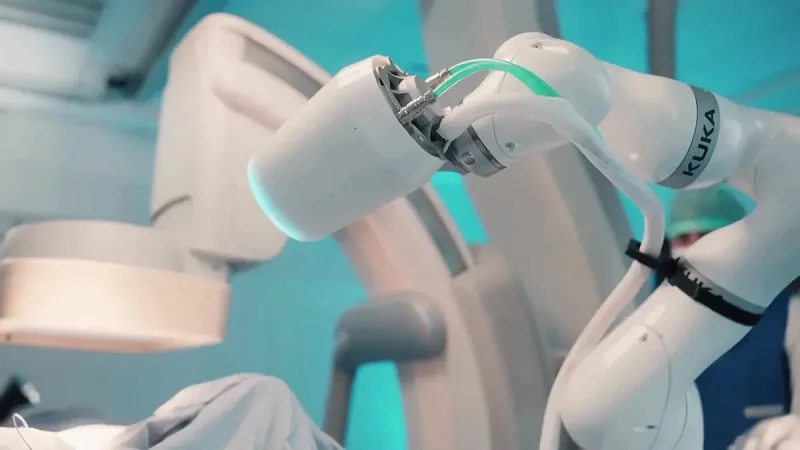
Hospital robots need parts that work right every time. A tiny flaw in a surgical arm can cause big problems. That’s why hospital robot cnc machining is so important. It gives these machines the precision and reliability they need. So how do you take a surgical robot design from a prototype to a production-ready part? You have to hold tight tolerances, keep costs under control, and choose the right materials. Medical robots leave no room for mistakes. Good cnc machining solves that. It takes skill and the right partner. NOBLE, a leading manufacturing company in China, helps clients go from prototyping to mass production. Our team knows hospital robot CNC machining very well. This article guides you through design, material, precision, and partner choices.
Foundation of Hospital Robot CNC Machining
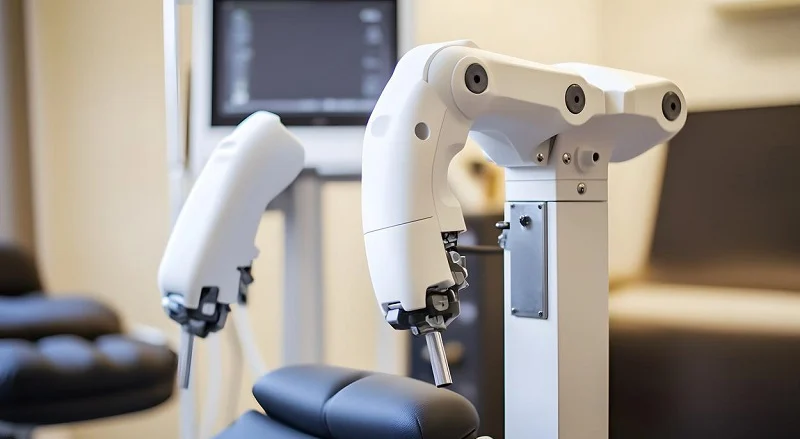
Hospital robot CNC machining technology is the main support of today’s medical robotics. Each surgical robot part must have exact measurements. The human body cannot handle any mistakes. That is why precision manufacturing technology is so important here. Medical robots need parts that fit perfectly every time.
Role of CNC Machining Technology in Medical Robotics
Surgical robot parts such as end-effectors and drive systems need extreme care. The chassis that holds everything also needs tight control. CNC machining technology does all these jobs with results that repeat.
Achieving Sub-Millimeter Tolerances
Picture a robotic arm holding a scalpel. It must move with accuracy down to tiny fractions of a millimeter. Swiss-style CNC turning with guide bushing support makes this work. It holds long slender parts close to the cutting tool. This stops deflection and keeps everything centered. Parts about 300mm long and 5mm wide can hold tolerances of plus or minus 0.005mm.
Material choice also affects precision. 17-4PH H900 stainless steel gives 40 to 45 HRC hardness for jaws and blades. 316L stainless steel fights pitting corrosion for valves and ports. Titanium Grade 5 works for high-strength biocompatible components. These materials hold their shape through repeated sterilization cycles. Using CNC machining here is critical for patient safety. CMM dimensional inspection checks every single part. This ensures the accuracy needed for clinical work. Advanced cnc machining technology also makes surfaces that resist bacteria growth.
Constantia per series productionis
One perfect part is never enough. Medical robotics requires that every part matches the last one. Consistency across batches comes from tightly controlled processes. Closed-loop feedback systems always watch performance. They adjust on their own to hold tolerances. This matters for surgical robots that go through many cycles without failure.
Automated operation gives very high and repeatable consistency. Manual work changes with each operator. The error rate for programmed automated tasks stays near-zero. Manufacturing precision depends on this repeatability. Quality comes from processes that do not rely on human judgment alone. Medical robots need this level of control to stay safe during procedures.
Advancing Surgical Robots Manufacturing with CNC
Integration of Automation and AI
Surgical robots manufacturing now uses AI to boost output. AI-driven process optimization studies past production data. It finds the best settings for each material and geometry. This gives superior results every time. AI-powered predictive quality moves from catching defects to stopping them. It studies CMM and vision data to find tiny deviations. Problems get caught before parts go out of spec.
Robotic arms handle loading and unloading of raw materials. This allows continuous lights-out operation. The machines run 24/7 with no human presence. This greatly increases output while keeping precision. Automated cells can be added or reprogrammed fast. Scaling up does not need hiring new people. Advanced technology and equipment makes these medical robots more affordable. Five-axis CNC machine tools cut complex shapes from many angles.
| AI / Automation Technology | An quid est | Impact in productione |
| Robotic load/unload | Handles material continuously | Enables 24/7 lights-out runs |
| Verus-vicis adipiscing | Tracks vibration and heat | Prevents tool wear damage |
| Predictive quality systems | Analyzes historical CMM data | Catches defects before they happen |
High-Speed Machining for Complex Geometries
Surgical robots manufacturing depends on high-speed machining for complex shapes. End-effectors have curved surfaces and internal features. High-speed machining removes material fast without losing accuracy. The precision of cnc machining technology allows for thin walls and sharp details. Parts come out right the first time. This cuts scrap and saves money. For medical robots, complex geometries mean fewer assembly steps. One machined part can replace several assembled pieces. This makes the whole manufacturing process cleaner and faster.
Enhancing Medical Robots with AI and Automation
The demand for medical robots keeps growing. Each medical robot needs hundreds of precision parts. These medical robots go through strict testing before reaching hospitals. AI and automation make this scale possible.
Robotic Load/Unload and Machine Tending
Robotic arms do the repetitive work. They load raw material and unload finished parts. Skilled machinists can focus on harder setup tasks. The robots never get tired. They work through the whole night. This shortens lead times for hospital robot cnc machining projects.
Automated machine tending also improves safety. Humans do not need to reach into moving machines. The risk of injury drops a lot. For production runs, this means faster turnaround. A prototype can become a production part in weeks instead of months. Medical robots benefit directly from this speed.
Real-time Processus Cras
Sensors on CNC machines track vibration, temperature, and sound. If a tool starts to wear, the system detects it right away. It changes the tool before the part gets damaged. This ensures superior surface finish and stops material warping.
Non-contact laser scanning captures millions of surface data points in seconds. It checks complex free-form geometries fast. In-process inspection with automated probes measures critical features inside the machine. Errors get caught mid-process. This saves time and material. The scrap rate drops greatly. For medical technology, this monitoring is essential. The same cnc machining approach also serves prostheses and implants. All medical robot components must be perfect when they leave the shop. This quality level defines modern medical robotics. Precision in machining keeps patients safe during every procedure. Medical robots are transforming surgery one part at a time.
Material Selection for Hospital Robot CNC Machining
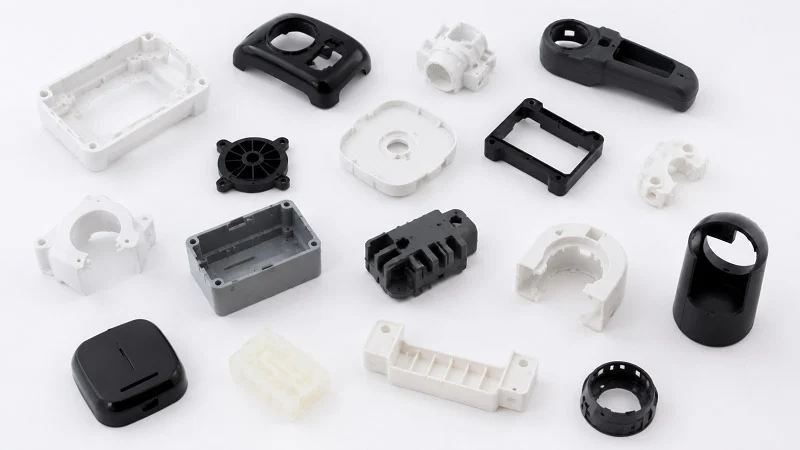
Choosing the right material is half the work in hospital robot cnc machining. A surgical arm must be stiff, light, and safe to sterilize. A housing must protect electronics without adding bulk. Every choice affects cost, cycle time, and regulatory approval. So how do you decide? You match the material to the job, then check it can survive the hospital environment.
Metals for Strength and Wear
Metals still do the heavy lifting in most medical robots. They hold threads, resist wear, and keep their shape after thousands of cycles.
Stainless Steels (303, 316, 17-4 PH)
303 stainless machines easily and works well for brackets and non-implant fixtures. 316L fights pitting corrosion, so it is a solid pick for valves and fluid ports that see repeated cleaning. 17-4 PH takes heat treatment to reach 40 to 45 HRC, so it suits jaws, blades, and other wear surfaces. These grades are common in surgical robot parts because they balance strength with cleanability.
Mixtiones Aluminii (6061-T6, 7075-T6)
Aluminum keeps weight down, and that matters for arms that move fast. 6061-T6 is the workhorse — easy to machine, weldable, and corrosion resistant. 7075-T6 is stronger but harder to weld, so it fits structural links and brackets where stiffness beats weldability. Neither grade is ideal for heavy wear surfaces, but both shine in chassis and frame components.
Plastics for Weight and Insulation
Plastics cut weight and add electrical insulation. They also open the door to parts that metals cannot easily match.
PEEK and its Chemical Resistance
PEEK is the star of high-end medical robotics. It handles repeated steam sterilization above 130°C without losing mechanical integrity. It also handles gamma radiation and ethylene oxide treatment. That flexibility matters because hospitals use different sterilization methods. PEEK resists acids, bases, and hydrocarbons, and it shows strong hydrolysis resistance. High-pressure steam and water do not break it down over long periods. It is biocompatible and can endure hundreds of sterilization cycles without degrading. For surgical robot parts that must survive autoclaving, PEEK is often the first choice.
Polycarbonate and Acetal for Housings
Polycarbonate brings impact strength and clarity, so it works for covers and guards. Acetal offers good stiffness and low friction, which suits gears and sliding components. Neither matches PEEK for sterilization toughness, but both keep costs down for non-critical housings.
Matching Materials to Machining Processes
Material choice changes how a part gets made. It also changes what certifications the final part needs.
Machinability Impact on Cycle Time
Aluminum 6061-T6 is the benchmark for easy machining. It runs at 300–600 m/min, gets 60–120 minutes of tool life per edge, and dissipates heat fast. PEEK is a different story. It has very low thermal conductivity — about 0.25 W/(m·K), roughly 1/500 of aluminum. Heat builds at the tool tip and can cause melting, smearing, or dimensional instability. Tool life runs 120–180 minutes per edge, but speeds must stay conservative. The result is a relative machining time of 1.5–2.5x versus aluminum.
| Material | Machinability | Volo secantis | Instrumentum vitae | Scelerisque Moribus | Tempus Machinationis Relativum |
| Aluminium (VI)LXIII, t6061 | Excellent; industry benchmark | 300-600 m/min | 60–120 min per edge | Heat dissipates rapidly; low thermal deformation risk | 1.0x (initium) |
| Medical-gradus PEEK | Moderate; requires specialized processing | Not specified (must run conservative speeds) | 120–180 min per edge | Very low thermal conductivity (0.25 W/(m·K), ~1/500 of aluminum); heat accumulates at tool tip, causing melting, smearing, dimensional instability | 1.5–2.5x vs aluminum |
A part that takes 20 minutes in 6061 aluminum might take 35 minutes in 316L stainless and 50 minutes in PEEK. The reason is that machining parameters must be slowed down. Aluminum 6061 machines fast with aggressive feeds and speeds (300+ SFM with carbide), long tool life, and short cycle times. PEEK and other engineering plastics are soft but abrasive, and the real challenge is heat: plastics do not conduct heat away through the chip the way metals do, so heat stays in the part. If PEEK gets too hot, it can anneal and lose mechanical properties. As a result, conservative speeds, light finish passes, and careful coolant strategy are required. A complex PEEK part can easily take 3x the machine time of the same geometry in aluminum, and since most shops price by machine time, that 3x goes straight to the quote.
Biocompatibility Certification Requirements
Not every material needs implant-grade paperwork. But any part that touches tissue or sits in a sterile field needs documented biocompatibility. ISO 10993 covers the testing framework. The application of cnc machining does not change the material’s chemistry, but it can leave residues. Coolant, chips, and deburring media must be controlled. A shop that understands medical robotics will track lot numbers and provide material certs. That traceability supports regulatory submissions and keeps quality audits smooth.
Design Considerations for Hospital Robot CNC Machining
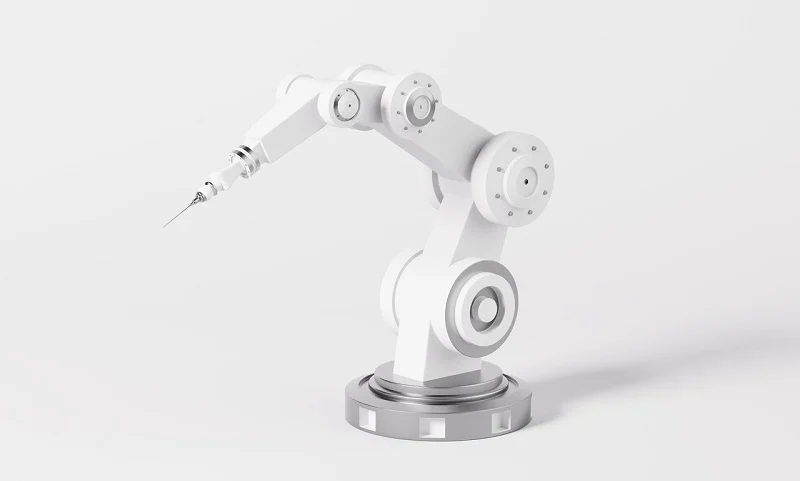
How you design a part sets its final price. Design for manufacturing (DFM) finds issues early. Smart making begins at the plan stage. Fixing a problem on paper costs zero dollars. Fixing it in metal costs a lot. For hospital robot CNC machining, good DFM means fewer test versions and lower build costs. Good CNC machining relies on smart design. Medical robots need this care.
Designing Surgical Robot Parts for Machining
Wall Thickness and Internal Features
Thin walls bend when being cut. Thick walls cost more. The best balance keeps the part strong. Deep pockets cause trouble. They need long tools that can bend. Avoid deep pockets and sharp internal corners to prevent need for tiny, fragile end-mills and extra operations. Standard hole sizes lower costs and boost quality. Using the same drill for the whole part means fewer tool swaps. That saves time and production cost. The CNC machining method you pick must fit the features of your surgical robot parts. Accuracy comes from this fit.
Anguli Delineationis et Radii Angulares
Sharp inside corners need very small end-mills. Those tools break quickly. Avoiding sharp internal corners by adding a reasonable radius lets you use a normal tool. This makes quality better and saves time. Draft angles help remove chips. They also get the part ready for injection molding later. Both features keep the making process smooth. Parts made this way cost less for each one.
Geometry Constraints for Sterilization
Smooth Surfaces and Crevice Reduction
Bacteria hide in rough surfaces. For surgical robot parts, a surface finish below Ra 0.4 μm stops proteins from sticking. The chromium oxide layer stays strong. Crevices matter just as much. Steam from sterilizing gets into tiny gaps. One real case showed tool joints failing after 50 clean cycles. Tapped holes had rough edges that trapped water. Switching to thread-milling and electropolishing made tool life last over 500 cycles. Passivation with nitric or citric acid restores the chromium oxide layer and removes free-iron contamination. Electropolishing electrochemically smooths microscopic peaks on complex internal channels, creating a bacteria-resistant surface. This CNC method works best for medical making. Medical robots depend on these surface standards.
Compatibilitas Materiae cum Agentibus Purgatoriis
Different cleaning fluids harm different materials. Stainless steel handles hospital disinfectants. But plastics need checking. PEEK resists most chemicals. Polycarbonate can crack with some solutions. Passivation per ASTM A967 removes loose iron from stainless parts. This step guards the oxide layer. Electropolishing smooths tiny bumps after machining. It only works when the starting finish is already good. These steps ensure quality across all medical robot parts. Every medical robot in use depends on this thinking.
Tolerance Stack-Up in Robotic Assemblies
Managing Cumulative Error
Every part has a tolerance. Put five parts together and the error adds up. A gap of 0.01 mm per part becomes 0.05 mm at the assembly level. That matters when a robot arm needs accuracy smaller than a grain of rice. Careful planning keeps the assembly within limits. The same care applies to prostheses and other medical parts. Medical robots need this focus on accuracy.
Functional vs. Capability-Based Tolerances
Not every size needs the tightest tolerance. Tolerances based on machine ability cost more. Running at ±0.005 mm every time needs slower speeds. Functional tolerances ask: what does this part do? A locating pin needs tight control. A cable clip does not. Only tighten what matters. That saves money without hurting performance. Good medical robotics uses this thinking.
From Prototype to Production for Hospital Robot CNC Machining
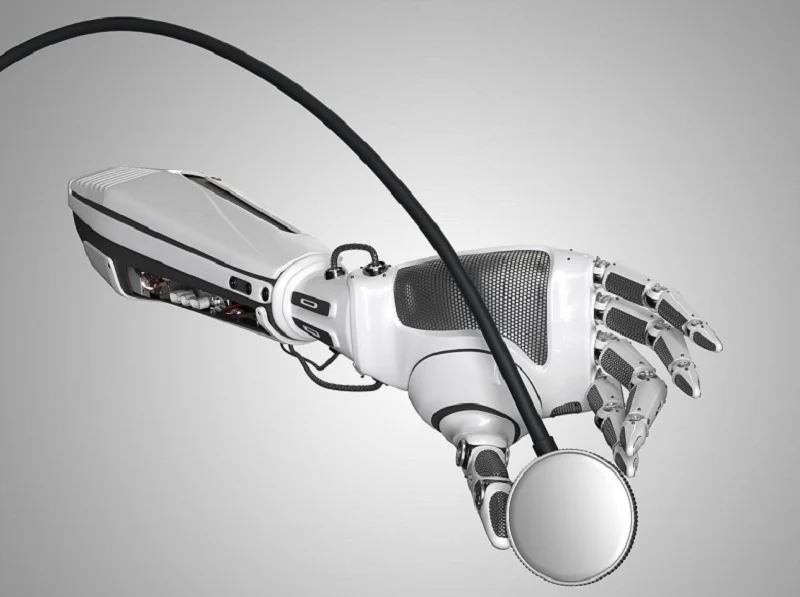
Turning a surgical robot from an idea into a real product takes patience. A prototype shows the idea works. But the step to making many parts is where teams often get stuck. Going from one part to thousands takes careful planning. Each stage brings its own problems. The right plan saves time and money. It also keeps quality the same every time.
Prototypa Celeris ad Validationem Designi
A prototype puts every idea to the test. Surgical robots do very delicate work. So you make one part first. You check how it fits and moves. Then you fix whatever is wrong.
Single-Unit Runs and Fast Turnaround
Making just one part still takes skill. Setup time can be as long as for a hundred parts. You need a shop that works fast. CNC machining technology cuts a single part from a solid block. No molds are needed. No waiting on tooling. A good shop finishes a prototype in days. That speed matters when you test a new design for medical robots. Multi-axis centers shape complex parts in one setup.
Circuitus Iterativi Retroactionis
You test the part. You find a problem. You fix the design. You machine a new part. For surgical robot parts, each round gets you closer to a perfect fit. CNC machining keeps this cycle short. Change the CAD file at night. Get a new part in the morning. This lowers risk. You catch problems before tooling is made. The precision from early prototypes tells you a lot. For medical robots, this back-and-forth approach is a must.
Scaling Medical Robots from Prototype to Production
Now you need hundreds of parts that are all the same. That changes how you think about manufacturing. The prototype process bends to fit each job. Production needs a set structure.
Jig and Fixture Design for Repeatability
A prototype can sit in a vise. Production needs fixtures built for the job. These jigs hold every part in the same spot. Good fixture design removes differences between parts. That builds a base of quality. For hospital robot CNC machining, doing the same thing every time is everything. Good fixture manufacturing makes it happen. The fixture controls how accurate every part is. The result is faster cycles and fewer mistakes.
Cellulae Productionis Automatae
One operator loads material into a robotic cell. The robot feeds the CNC machine all night long. Lights-out operation runs 24 hours a day. This raises output without adding labor costs. Automated cells make parts more consistent. The robot never gets tired. For medical robots, this steadiness is critical. Sensors watch the process. If a tool wears down, the system adjusts. Automated cells are how surgical robot parts get made at scale. This manufacturing approach depends on setups that repeat. These cells make complex parts with tight tolerances.
Cost Management and Production Efficiency
Moving to production changes how you think about cost. A prototype is a one-time expense. Production costs keep coming back.
Material Cost vs. Machining Cost
The price of raw material is only the start. Machining time often costs more. A block of PEEK might cost a lot. But machine time to cut it can be three times that. Can you change the design to cut machine time? Can you use a material that machines faster? These choices affect the final cost of each unit. A part taking 20 minutes in aluminum might take 35 minutes in 316L stainless. That adds up fast. The choice of material changes the whole manufacturing process. It also affects every single component.
Reducing Scrap Through Simulation
Scrap wastes both material and time. For titanium, scrap is costly. Simulation tools help you avoid it. Run the tool path in software first. The simulation catches crashes. It shows where the tool shakes. Fix problems on the computer. Not on the machine. The CNC machining process gains from this check.
One startup needed Ti-6Al-4V parts for a surgical robot. Their first vendor had a high rejection rate. Switching to single-setup 5-axis CNC and in-process CMM inspection every five parts reduced the defect rate drastically. They held tight tolerances across thousands of units. Lead time dropped significantly, with zero field returns and excellent process capability.
These plans work for any medical robot project. They keep parts the same. They also work for parts like prostheses. A good partner makes this change smooth. NOBLE, as a leading manufacturing company in China, supports the full lifecycle from early prototypes to high-volume production.
Precision in Hospital Robot CNC Machining
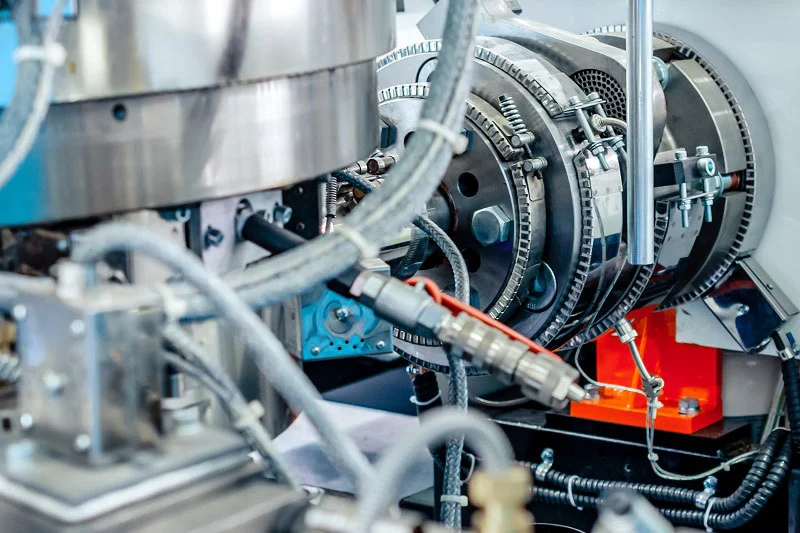
Precision is more than just a word here. It decides if a robot helps or hurts. Each cut, measure, and finish counts. So how exact must hospital robot CNC machining be? More exact than most shops can manage.
Defining Precision for Surgical Robot Parts
GD&T and True Position Tolerances
Linear tolerances let a part drift diagonally. A hole at X=2.000″, Y=1.500″ with ±0.005″ linear tolerance sits inside a square zone. That square’s diagonal is about 0.014″. A part can be 0.007″ off true center and still pass. True Position fixes this problem. It uses a round zone instead. The same 0.007″ error passes, but the zone fits a round pin. For round parts that mate, True Position ensures they fit where linear tolerances might not.
Datum references tie everything together. When dowel pins and bearing bores on different faces must align, a common datum frame keeps them on the same origin. MMC gives machinists bonus tolerance as holes get larger. RFS holds tolerance constant for press fits. These choices affect cost and function.
Typical Ranges (±0.005 mm)
Surgical robot parts need very high accuracy. Using Swiss-style CNC turning, tolerances of ±0.005 mm are achievable. For some critical features, even tighter tolerances may be required. A surgical robot arm joint often needs ±0.005 mm to avoid looseness during fine work.
Surface Finish for Cleanability
Ra Values Below 0.4 µm
Surface finish decides how clean a part can be. For surgical robot joint components, the surface finish must be smooth enough (typically Ra < 0.4 μm) that proteins cannot easily adhere and the chromium oxide layer remains unbroken. Crevice-free design is equally critical: during autoclaving, steam can penetrate the tiniest gaps between a screw head and a joint housing, so CNC milling must produce perfectly flat mating surfaces to prevent moisture entrapment and internal rusting.
Deburring et Edge Finishing
Multi-stage deburring using centrifugal barrel finishing and ultrasonic deburring removes microscopic burrs from effector jaws and pulleys. Edges are inspected under 50x magnification and radiused to prevent detached material inside the body. Electropolishing electrochemically smooths microscopic peaks on complex internal channels, creating a bacteria-resistant surface.
In-Process Inspection and Quality Control
CMM and Laser Scanning Verification
Coordinate measuring machines check true position as distance from true center. Laser scanning captures millions of surface points in seconds. It checks complex free-form geometries fast. In-process probes measure key features inside the machine. Errors get caught mid-process. Scrap goes down. Quality stays high.
Articuli recognitionis primum (FAI)
First Article Inspection confirms the process before full production starts. It checks every dimension against the drawing. It verifies material certs and surface finish. For hospital robot CNC machining, FAI finds problems early. The same method applies to prostheses and other medical parts. A solid FAI means the production run begins correctly.
Partnering with NOBLE for Hospital Robot CNC Machining

Picking the right partner can make or break your hospital robot CNC machining project. NOBLE is a top manufacturing company in China. They work with both metal and plastic. That dual skill matters when your robot needs titanium brackets and PEEK housings in the same build.
Precision Machining of Metal and Plastic Parts
High-Strength Alloys and Medical Polymers
NOBLE machines the alloys that medical robots need. Titanium Grade 5, 17-4 PH stainless, and 316L all go through their shop. These materials stand up to repeated sterilization. For plastics, they work with PEEK, polycarbonate, and acetal. PEEK parts survive steam autoclaving above 130°C. Polycarbonate covers protect electronics without adding bulk. This range means you get one partner for every material on your drawing.
Swiss Machining and Multi-Axis Centers
Swiss-style turning with guide bushing support holds long, slender parts close to the cutting tool. That stops deflection and keeps everything centered. NOBLE also runs multi-axis centers that shape complex geometries in one setup. Fewer setups mean tighter tolerances and faster cycle times. For surgical robot parts like drive shafts and end-effector linkages, this equipment makes the difference between a part that works and one that fails inspection.
Certifications: Rigorous Quality Control and Traceability
NOBLE holds certifications for quality management that ensure controlled machining processes, validated production parameters, supplier audits, and complete Device History Records (DHR). This shows that a CNC partner keeps a quality management system capable of consistent, traceable, and validated manufacturing. That is the global baseline medical robot OEMs expect.
The right supplier brings validated processes, documented process controls, lot-level traceability systems tied to serialized components, and a quality culture built around quality management and FDA registration. With regulations aligning expectations, the CNC partner must keep audit-ready documentation and traceability infrastructure to keep patients safe and devices on the market.
Every part NOBLE ships comes with material certs and inspection reports. Lot numbers tie back to the raw stock. That traceability supports your regulatory submissions. When an auditor asks for process validation records, you have them. This documentation keeps your device on the market and your patients safe.
Full-Service: From Design to Assembly
Engineering Support for Prototype Iterations
NOBLE does not just cut metal. Their engineers review your CAD files and flag DFM issues early. Thin walls, deep pockets, and sharp corners all get attention before chips fly. That feedback loop shortens prototype cycles. You change the design on paper, not on the machine. The result is fewer iterations and lower development costs.
Assembly and Kitting for Production-Ready Parts
Once your design is locked, NOBLE can assemble sub-components and kit them for your production line. That means you receive a ready-to-install unit, not a box of loose parts. This service cuts your incoming inspection time and reduces handling damage. From first prototype to full production, NOBLE supports the entire lifecycle. Their advanced technology and equipment keep production efficiency high while maintaining the precision your medical robots require.
Teams that plan ahead do better when moving from a prototype to full production. DFM finds thin walls and deep pockets while still on paper. Picking materials like PEEK or 17-4 PH sets cycle time and how long parts survive sterilization. Tight precision keeps assemblies from coming loose. A partner with quality management for medical devices keeps quality written down and easy to trace. NOBLE handles all four, from Swiss turning to final kitting.
The future looks exciting. AI-driven kinematics keep TCP accuracy very high, and adaptive control reduces cycle times significantly. Lights-out cells already make many parts in one night. As cnc machining keeps changing, medical robots will only get smarter and safer.
FAQ of Hospital Robot CNC Machining
What tolerances can hospital robot CNC machining really hold?
Using techniques like Swiss-style CNC turning, surgical robot parts can hold ±0.005 mm tolerances. Surgical robot parts need very high accuracy. The main thing is to match the tolerance to what the part really does.
Which material works best for parts that face steam sterilization?
PEEK takes repeated steam autoclaving above 130°C without losing strength. It also stands up to gamma radiation and ethylene oxide. Stainless steels like 316L and 17-4 PH hold up well too. Your choice depends on whether you need insulation, less weight, or wear resistance.
How long does it take to go from a prototype to full production?
It depends on part complexity and material. One surgical robot startup significantly cut lead time after switching to single-setup 5-axis CNC and in-process CMM inspection. Rapid prototyping itself takes days, not weeks, because no tooling is needed.
What surface finish do surgical robot parts need?
For surgical robot joint components, the surface finish must be smooth enough (typically Ra < 0.4 μm) that proteins cannot easily adhere and the chromium oxide layer remains unbroken. Deburring removes tiny burrs that could scratch tissue or trap bacteria.
Why does tolerance stack-up matter in robotic assemblies?
Every part carries its own tolerance. Stack five parts together and the errors add up. That matters when a robot arm needs high accuracy. Functional tolerances keep costs down without hurting performance.
What certifications should a hospital robot CNC machining partner hold?
Look for certifications for quality management, especially one built for medical work that covers controlled processes, validated parameters, supplier audits, and Device History Records. That traceability supports your regulatory submissions and keeps quality audits smooth.
How does material choice affect the cost of hospital robot CNC machining?
Machining time often costs more than the raw stock. A part that takes 20 minutes in aluminum might take 35 minutes in 316L stainless and 50 minutes in PEEK. PEEK’s low thermal conductivity forces conservative speeds. That extra machine time goes straight to the quote.