What really makes a hospital bed “smart”? It comes down to a few main parts: the frame, actuators and motors, sensor systems, the control unit, the mattress, safety rails, and extras like trapeze bars. Each part has its own job. The frame holds the weight, actuators create movement, and sensors check for things like falls or pressure changes. Control units connect everything, often linking to iot-based smart mattresses and other connected devices. Knowing how these smart medical bed parts are made is important. It explains why smart medical beds, smart nursing beds, and smart care beds cost what they do. Precision and material choices affect safety features, patient comfort, and how long a hospital bed lasts. The same is true for hospital beds used in home care. So let’s look at the details.
Structural Frame of Smart Medical Bed Parts
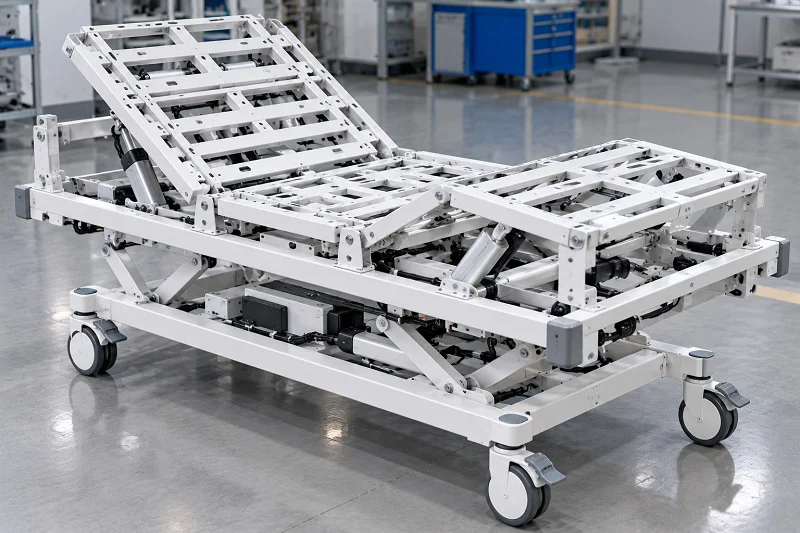
The frame is the main support of any hospital bed. It holds up the adjustable head and foot sections. It also carries the patient’s weight and the push from motors and moving parts. A weak frame means a weak bed. So hospital bed manufacturing starts here.
Manufacturing Process
Welding robotic
Robotic welders make even, strong seams on the main structures of medical bed frames. Skilled manual welders handle complex joints and custom details. This mixed approach keeps the whole frame strong and stable. Grace Medy says robotic welding creates precise and secure joints in hospital bed frames. This removes weak points. The automated process gives the same quality across all units. That boosts strength and makes the bed last longer.
| ratio | Quomodo adiuvat? |
| integritatem compagem | Robotic and manual welding ensure even penetration and strength at stress-bearing joints. |
| quality Assurance | Every frame goes through stress testing and weld joint checks, following ISO and CE standards. |
| diuturnitatem | Robotic welding plus post-weld stress testing checks every joint. |
CNC milling
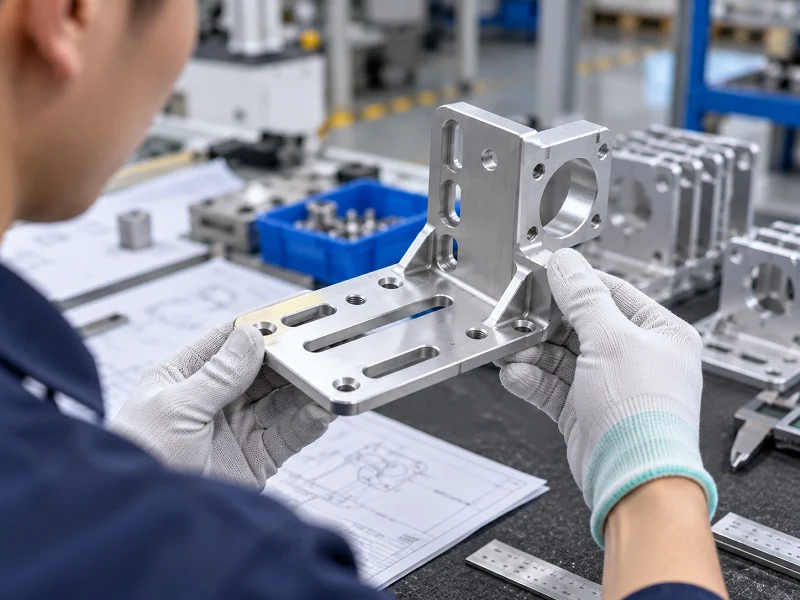
CNC milling cuts mounting points for actuators, sensors, and rails. These cuts must be exact. A small error can cause misalignment. That leads to noise, wear, or failure. Precision engineering keeps every smart medical bed part fitting correctly.
Subtilitas Requisita
Load-Bearing Tolerances
Millimeter accuracy matters for stability. The frame must hold weight without bending or twisting. Tolerances are tight because hospital beds move and adjust all the time. A frame that bends under load puts patients at risk. So manufacturers test every batch.
materies
Chalybs contra Aluminium
Powder-coated steel gives strength and antimicrobial protection. Aluminum alloys weigh less and resist rust. Both are strong materials for hospital beds. The choice depends on what the bed is for. Smart nursing beds often use aluminum for easier movement. Steel frames work best for heavy-duty use.
It is worth noting that infection control starts with the frame’s surface. Powder coating seals the metal. It makes a smooth finish that resists bacteria. That matters for hospital beds in patient rooms.
From a practical view, NOBLE is a leading manufacturing company in China. They offer great service capabilities and professional machining expertise. Clients can finish prototyping and mass production efficiently. Their team handles metal and plastic components for hospital beds. So the frame, actuators, and rails all come together under one roof.
Actuators and Motors in Smart Medical Bed Parts

Actuators act like the muscles of a hospital bed. They allow the bed to move with a motor. They also control automatic adjustments for the head, foot, and height. Without them, a smart bed is just a heavy frame. These smart medical bed parts turn electrical signals into smooth, quiet motion. That motion has to work every single time.
Manufacturing Process
Motor Winding
Motor winding is a careful job. Machines wind copper wire into tight coils. The number of coils and wire tightness affect motor power and heat. A loose winding wastes energy and shortens motor life. So hospital bed manufacturing depends on machine winding for consistency. Hand winding only happens for custom or small runs.
Gearbox Assembly
Gearbox assembly comes after the motor. Technicians stack gears, bearings, and shafts inside a housing. Each part must sit at the exact depth. A gear pressed too deep jams the motor. A gear pressed too shallow slips under weight. Assembly lines use presses with force sensors to catch these mistakes. This step is key for any automated multifunction-integrated motion bed.
Subtilitas Requisita
Linear Motion Accuracy
Backlash is the enemy of smooth motion. Backlash is the gap between gear teeth. A big gap causes jerky starts and stops. It also makes the bed drift after the motor stops. Manufacturers cut backlash by grinding gear teeth to tight tolerances. They also preload bearings during assembly. The result is linear motion that feels solid and controlled. Patients notice this difference right away.
materies
Hardened Steel Gears
Hardened steel gears handle high torque without wearing down. The hardening process treats the surface while keeping the core tough. This balance stops cracks under repeated stress. Aluminum housings keep the weight down. They also pull heat away from the motor. Together, these materials give actuators a long service life. That matters for hospital beds in constant use.
It is worth noting that smart nursing beds often use multiple actuators. Each one controls a different section. So the failure of one motor can leave a patient stuck. That is why testing every unit matters. Manufacturers run each actuator through thousands of cycles before shipping. They check speed, noise, and current draw. Any unit that fails goes back for rework.
From a practical view, these components work as a team. The motor spins, the gearbox reduces speed, and the actuator extends or retracts. This chain delivers the quiet, strong motion that defines a modern hospital bed. Get one link wrong, and the whole system suffers.
Sensor Systems in Smart Medical Bed Parts
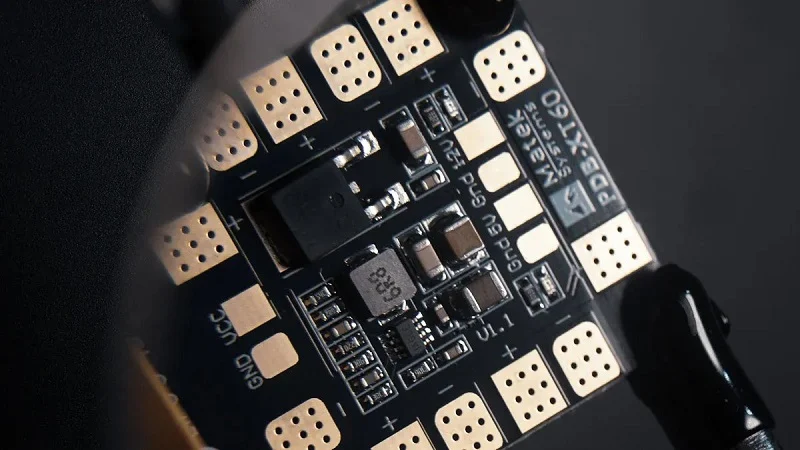
Sensors make a simple bed become a bed that responds. They find when someone falls, watch for pressure spots, and track heart rate and breathing. These sensors are like the bed’s eyes and ears. Without them, there is no data and no automation. So making these parts needs great care. These smart medical bed parts must work every time in every hospital bed. [smart medical bed parts: 1, hospital bed: 1]
Manufacturing Process
Conventus PCB
Every sensor begins on a circuit board. Makers use Surface Mount Technology to put small parts. Robots pick up resistors, capacitors, and microchips. They place them with very high accuracy. Then the board goes into a reflow oven. Heat melts the solder and attaches the parts to the board. X-ray machines check each joint after that. A bad joint gives bad data. So this step is important for any hospital bed. [hospital bed: 2]
Cleanroom Calibration
After assembly, each sensor board must be calibrated. This step happens in a cleanroom. Dust and static can change what a sensor reads. So the room stays very clean. Workers connect each board to a standard for comparison. They send signals they know through the circuit. Then they adjust the board’s response. This process directly affects the accuracy of vital signs measurement. [accuracy of vital signs measurement: 1] It also helps measure a bedridden patient’s body weight. [measuring a bedridden patient’s body weight: 1] Calibration makes today’s hospital bed trustworthy. [hospital bed: 3]
Subtilitas Requisita
Signum Integritatis
Sensor signals are very small. A change of a few microvolts can change what the heart rate shows. Noise from motors or wires can ruin the data. So keeping the signal clean is most important. Makers use shielding and filters to protect the signal as it travels.
The product documentation for the LSM-800-T smart sleep monitoring module says an anti-interference signal-to-noise ratio of SNR > 65 dB is needed for reliable heart rate monitoring. That standard sets the bar for premium designs.
This clear signal allows features that watch health in real time. [real-time health monitoring features: 1] It also helps measure weight while the patient is in bed. [in-bed weight measurement: 1] Without clean signals, the hospital bed cannot track changes the right way. [hospital bed: 4]
materies
Medical-Gradus Silicone
After calibration, the sensors need protection. Medical-grade silicone potting covers the electronics. This material stops moisture and bacteria. It also stops short circuits. The silicone stays flexible, which is important because the bed moves. This coating helps the sensors last longer. It also makes cleaning easier for hospital beds everywhere. [hospital beds: 1]
In practical terms, sensors work best inside smart mattresses that use IoT. [iot-based smart mattresses: 1] They sit close to the patient and get cleaner data. Smart nursing beds use these sensors to find problems early. [smart nursing beds: 1] They combine sensors that stop bedsores with sensors for vital signs. [sensors to prevent bedsores: 1, sensors for vitals: 1] The result is a bed that responds to what the patient needs.
These safety features need quality parts. [safety features: 1] A cheap sensor gets worse over time. A good one keeps working for years. Health monitoring depends on reliable sensor systems. [health monitoring: 1]
Control Unit and Connectivity in Hospital Beds

The control unit works like the brain of a modern hospital bed. It communicates with the sensors, operates the motors, and sends information to nurses or doctors. It also hooks up to the internet so it can be watched from far away. Without this part, a smart bed cannot share health data or respond to voice commands. So the control unit brings all the other smart medical bed parts together into one system.
Manufacturing Process
iniectio CUMATIUM
Injection molding shapes the plastic shell that holds the control unit. Melted plastic is forced into a steel mold under high pressure. The mold cools down, and the plastic hardens into the exact shape needed. This process makes sealed openings that keep out dust and fluids. A good seal is important because hospital beds get cleaned often. The shell also keeps buttons, screens, and ports in place.
Electronics Integration
Once the shell is ready, workers put in the electronics. Circuit boards, wires, and connectors go inside the housing. Robots place tiny parts on the board with great speed and accuracy. Then the board is soldered and tested. This step brings together all the electronic parts that make the bed work. The control unit also gets a wireless module so it can connect. That module links to iot-based smart mattresses and other devices.
Subtilitas Requisita
Circuit Board Tolerances
Circuit boards for hospital beds use fine-pitch components. These parts sit very close together. A tiny shift can cause a short circuit or a bad connection. So placement machines must hold tight tolerances. Even a small error can stop the bed from working. That is why makers test each board before assembly. They check for solder bridges, missing parts, and weak joints.
materies
Flame-Retardant Polymers
Safety comes first in any hospital bed. The plastic housing must resist fire. So makers use flame-retardant polymers like ABS. These plastics meet strict safety standards. They also hold up to repeated cleaning and impact. Copper traces inside the board carry signals and power. The mix of tough plastics and copper gives the control unit a long life.
It is worth noting that smart nursing beds depend on this unit for fall alerts and bed exit alarms. These safety features rely on fast data flow. A slow or broken control unit puts patients at risk. So manufacturing quality here is not a choice. It is a must.
From a practical view, hospital beds in home care also use these control units. They connect to apps and alert family members. The same precision and materials apply. Good design keeps patients safe in any setting.
Mattress and Surface of Smart Medical Bed Parts

The mattress does more than just make patients comfortable. It spreads out pressure to help stop bedsores. The surface must keep fluids out and be easy to clean. These smart medical bed parts touch the patient directly. So quality matters here more than anywhere else.
Manufacturing Process
Foam Molding
High-pressure foam injection shapes the mattress core. Liquid foam is poured into a steel mold. It grows and fills every corner. The mold controls how dense the foam is across the whole piece. This gives even support with no soft spots. Each batch is tested for the same thickness throughout.
RF Welding
RF welding seals the outer cover. Radio frequency energy bonds fabrics at a molecular level. No needle holes means no way for fluids to get inside. The seam comes out smooth and easy to wipe down.
| Constructio Methodi | How the Seam Is Formed | Effect on Fluid Ingress |
| Traditional stitching | Needle punches thousands of holes through the fabric along every seam | Holes create openings that allow fluid to permeate the interior components |
| M. glutino | Radio frequency permanently bonds the material at a molecular level, with no holes | No holes means fluid intrusion is prevented |
The smooth seam helps keep things sterile. That matters for infection control. RF welding makes a stronger bond than sewing or gluing. It holds up to repeated cleaning and stress.
Subtilitas Requisita
Pressura distributio
Density and thickness control make pressure distribution work well. The mattress must spread weight evenly across the surface. Engineers use pressure mapping mats to check this. High readings in one spot mean the foam mix needs a change. Good distribution helps prevent pressure ulcers. A properly made hospital bed mattress cuts down on patient turning. Every hospital bed in a busy ward needs this level of precision. Some smart nursing beds include an automatic lateral repositioning function. This shifts the patient slightly to change pressure points. The mattress must support that motion without bunching up. The hospital bed frame and mattress work together as a system. These smart medical bed parts rely on exact manufacturing to work correctly.
materies
Memory Foam and TPU
Memory foam molds to body shape. It spreads weight over a larger area. This reduces pressure on bony parts like heels and hips. The foam returns to shape after each use. On top goes a breathable waterproof layer. TPU is a common choice. It blocks liquids but lets vapor pass through. A TPU-coated fabric can reach a vapor transmission rate of about 10000 g/m²/24h. Sweat escapes instead of pooling on the surface. The patient stays drier and more comfortable. The hospital bed mattress uses this material stack for long life.
Modern medical beds and mattresses use this combination. It balances comfort with easy cleaning. A good mattress means less nurse work too. Fewer bedsores mean less time turning patients. Hospital beds with RF-welded covers last longer between replacements.
From a practical view, iot-based smart mattresses take this further. Built-in sensors track pressure and temperature. They alert staff when someone needs repositioning. The mattress itself becomes part of the monitoring system. That raises the bar for both comfort and safety in hospital beds.
Safety Rails and Accessories for Hospital Beds

Safety rails, assist rails, overbed tables, and trapeze bars are the parts that patients touch the most. They help people move themselves and get in and out of bed without falling. A trapeze bar gives a patient something to grab and pull against. Assist rails offer a steady hand for standing up. These smart medical bed parts are not extra. They are important for patient movement and stopping falls.
Manufacturing Process
tendentes tube
Mandrel bending shapes the aluminum tubes for rails and trapeze bars. A mandrel is a steel rod that goes inside the tube during bending. It stops the tube from flattening or bending too much at the curve. The result is a smooth, even bend with an even wall thickness. That matters because a crushed tube creates a weak point. A weak point can break under a patient’s full weight.
pulveris coating
After bending, each rail gets powder coating. Spray guns spray a dry powder onto the metal. Then the part goes into an oven. The heat melts the powder into a hard layer. This finish stops scratches, chemicals, and repeated cleaning. It also gives the rail a smooth surface that helps stop infections in patient rooms.
Subtilitas Requisita
Locking Mechanism Fit
Locking mechanisms must fit without any shaking. A loose rail moves and feels unsafe. Patients lose trust in a bed that wobbles. So makers keep very exact measurements on the latch and the mounting bracket. Each rail gets tested by workers before it ships. It must snap into place and stay there. No movement, no noise, no surprises.
materies
Aluminum and Plastics
Aluminum keeps rails light enough for one nurse to move. High-impact plastics handle the knobs, grips, and end caps. These plastics often carry additives that fight germs. Inorganic options include silver ions, copper ions, and zinc ions. Organic options include quaternary ammonium compounds, triclosan, and isothiazolinones. These additives slow bacterial growth on surfaces. That is a real safety win for any hospital bed.
Note that smart nursing beds use the same rail designs. The frame, actuators, and rails all have to work as one system. A hospital bed in home care needs the same strength as one in a busy ward. So manufacturers test every rail for weight and wear.
In practice, accessories are often forgotten when buying. But a trapeze bar or a well-fitted assist rail makes a patient’s day better. It turns a hospital bed into a tool for recovery. Good hospital beds treat these smart medical bed parts as important parts, not afterthoughts.
Rules and Testing for Smart Medical Bed Parts

Rules are important when making medical devices. They keep patients safe and make sure every part works the same way. Without these rules, a hospital bed could break when someone needs it most. So makers follow strict rules at every step.
Following Rules and Testing
ISO 13485 and FDA
ISO 13485 sets the rules for medical device quality systems. It covers design, production, and final checks. The FDA adds its own rules for devices sold in the United States. Together, they shape how hospital bed manufacturing works. Every smart medical bed part must pass tough testing before it reaches a patient.
Testing covers strength, electrical safety, and software performance. Actuators run through thousands of cycles. Frames get loaded past their rated weight. Control units face power surges and wireless interference. Sensors get checked against known standards. These tests prove the bed will work in real conditions. They also catch problems before shipment.
novum trends
3D Printing and IoT
3D printing is changing how makers build custom parts. A hospital bed for a bariatric patient needs a wider frame. A pediatric bed needs different rail heights. 3D printing makes these one-off parts without new molds. That saves time and money. It also lets designers test ideas fast.
IoT integration is another big shift. Machines on the factory floor now send data to a central system. That system spots problems before they stop the line. It also tracks every part from raw material to finished bed. So a recall becomes faster and more precise. These tools help makers meet regulatory standards with less guesswork.
It is worth noting that iot-based smart mattresses collect data during use. That data can feed back to designers. They learn how parts wear over time. Then they improve the next version. This loop makes hospital beds safer and longer lasting.
From a practical view, infection control depends on these rules too. A bed that fails cleaning tests cannot ship. So makers test surfaces against hospital-grade cleaners. They check seams, coatings, and plastics. Every smart medical bed part must hold up.
The future points to more connected hospital beds. Safety features will get smarter. Fall detection will get faster. But the base stays the same. Good rules, good testing, and good materials make a bed you can trust.
NOBLE: Manufacturing Smart Medical Bed Parts

Finding a partner to make smart medical bed parts is hard. You need a team that knows about tight tolerances, medical rules, and patient safety. NOBLE is that partner. They are a top manufacturing company in China. They have great service and skilled machining. Clients can finish prototyping and mass production quickly. Their team works with metal and plastic parts for hospital beds. So the frame, actuators, and rails all are made in one place.
Capabilities comprehensive
Machinatio Metallorum et Plasticorum
NOBLE makes both metal and plastic parts for smart medical bed parts. That range is important because a hospital bed uses different materials. The frame needs steel or aluminum. The control unit housing needs flame-retardant polymers. The rails need aluminum tubes and high-impact plastic grips. One shop that makes all of these saves time and stops blame between vendors.
Note that NOBLE’s metal machining reaches tolerances that regular shops cannot match. Here is how they compare:
| Manufacturer: | Tolerantia |
| Water jet job shops (general) | .005 +/- |
| MetPlas | +/- .002 inches (depending on material) |
| Dix Metals, Inc. | .001 T.I.R |
| Hennig Gasket & Seals, Inc. | +/- .005″ |
Offers ultraprecision machining of parts and components involving tight tolerances and intricate shapes. Capabilities include laser cutting, electrical discharge machining, micromachining, plating and coating, and finishing. Contract Manufacturing Precision Machining Services THE FINEST CONTRACT MANUFACTURING SERVICES FROM THE LEADER IN MICRO PRECISION MACHINING NORMAN NOBLE, INC.
That level of precision makes every smart medical bed part fit right. A mounting hole off by a few thousandths can cause noise, wear, or failure. So tight machining protects the whole hospital bed.
Certified Quality Assurance
ISO 9001:2015 et ISO 13485:2016
NOBLE has ISO 9001:2015 and ISO 13485:2016 certifications. ISO 9001 covers general quality management. ISO 13485 sets the standard for medical devices. Together, they show NOBLE meets rules for medical equipment. That matters because hospital beds go through strict testing before use.
These certifications are not just documents. They guide how each job runs. Design reviews, traceability, and final inspections all follow written steps. So a client can trust each batch matches the last one. That consistency is important for hospital beds used all the time.
Finis-ad-finem Service
Design to Assembly
NOBLE does more than just make parts. They offer services from design to assembly. That means a client can bring a rough idea and leave with a finished smart medical bed part. The team helps with prototyping, then moves to mass production. They also handle assembly and finishing.
From a practical view, this end-to-end approach saves months. A client does not need to manage five vendors. One partner handles the whole process. That speed helps get new hospital beds to market faster. It also keeps quality high because one team controls the result. And for iot-based smart mattresses, that integrated approach means sensors, housings, and frames all fit together from day one.
A smart hospital bed works as one system. The frame holds the weight, actuators make movement, and sensors check for falls or pressure changes. The control unit connects everything together. The mattress spreads out pressure, and the rails keep patients safe. Each smart medical bed part needs the others to work.
Precision manufacturing and the right materials make this happen. Tight tolerances and medical-grade plastics protect patients and make devices last longer. Hospital beds in any setting need this level of care.
The future points to more connected hospital beds. iot-based smart mattresses will send data back to designers. Partners like NOBLE will help turn those ideas into safe, reliable products.
FAQs of Smart Medical Bed Parts
What care do smart medical bed parts need?
Wipe frames and rails each week with hospital-grade cleaner. Check cables every month. Sensors and motors are sealed, so they need little care. Good care keeps all parts working together for years in modern hospital beds.
How long do actuators and motors usually last?
Most actuators run through thousands of cycles before performance drops. That equals years of daily use. Hardened steel gears and aluminum housings help them handle constant motion.
Can bed sensors lose accuracy over time?
Yes, but very slowly. Medical-grade silicone potting shields the electronics from moisture and shock. Calibration drift stays very small for years. A smart bed still tracks vitals reliably over its lifespan.
Are bed frames interchangeable between different brands?
Rarely. Each maker uses different mounting points for actuators, rails, and control units. Swapping just the frame with another brand’s model rarely fits without major changes. Stay with the same manufacturer for replacements.
Do smart beds work during a power outage?
The control unit stops, but the bed stays flat. Manual cranks let staff adjust head and foot sections. Battery backup options exist for critical care beds. Standard models need full power for motorized movement.
What makes a mattress compatible with smart bed sensors?
The mattress must let sensor signals pass through clearly. It needs RF-welded seams for fluid resistance and even foam density so pressure mapping works right. Memory foam and TPU covers are common choices.
How do manufacturers test safety rails before shipping?
Each rail gets locked and unlocked hundreds of times. Load tests confirm the latch holds without any rattling movement. Any wobble means the part goes back for adjustment. Zero-play fit is the final standard.
What really makes a hospital bed “smart”? It comes down to a few main parts: the frame, actuators and motors, sensor systems, the control unit, the mattress, safety rails, and extras like trapeze bars. Each part has its own job. The frame holds the weight, actuators create movement, and sensors check for things like falls or pressure changes. Control units connect everything, often linking to iot-based smart mattresses and other connected devices. Knowing how these smart medical bed parts are made is important. It explains why smart medical beds, smart nursing beds, and smart care beds cost what they do. Precision and material choices affect safety features, patient comfort, and how long a hospital bed lasts. The same is true for hospital beds used in home care. So let’s look at the details.
Structural Frame of Smart Medical Bed Parts
The frame is the main support of any hospital bed. It holds up the adjustable head and foot sections. It also carries the patient’s weight and the push from motors and moving parts. A weak frame means a weak bed. So hospital bed manufacturing starts here.
Manufacturing Process
Welding robotic
Robotic welders make even, strong seams on the main structures of medical bed frames. Skilled manual welders handle complex joints and custom details. This mixed approach keeps the whole frame strong and stable. Grace Medy says robotic welding creates precise and secure joints in hospital bed frames. This removes weak points. The automated process gives the same quality across all units. That boosts strength and makes the bed last longer.
| ratio | Quomodo adiuvat? |
| integritatem compagem | Robotic and manual welding ensure even penetration and strength at stress-bearing joints. |
| quality Assurance | Every frame goes through stress testing and weld joint checks, following ISO and CE standards. |
| diuturnitatem | Robotic welding plus post-weld stress testing checks every joint. |
CNC milling
CNC milling cuts mounting points for actuators, sensors, and rails. These cuts must be exact. A small error can cause misalignment. That leads to noise, wear, or failure. Precision engineering keeps every smart medical bed part fitting correctly.
Subtilitas Requisita
Load-Bearing Tolerances
Millimeter accuracy matters for stability. The frame must hold weight without bending or twisting. Tolerances are tight because hospital beds move and adjust all the time. A frame that bends under load puts patients at risk. So manufacturers test every batch.
materies
Chalybs contra Aluminium
Powder-coated steel gives strength and antimicrobial protection. Aluminum alloys weigh less and resist rust. Both are strong materials for hospital beds. The choice depends on what the bed is for. Smart nursing beds often use aluminum for easier movement. Steel frames work best for heavy-duty use.
It is worth noting that infection control starts with the frame’s surface. Powder coating seals the metal. It makes a smooth finish that resists bacteria. That matters for hospital beds in patient rooms.
From a practical view, NOBLE is a leading manufacturing company in China. They offer great service capabilities and professional machining expertise. Clients can finish prototyping and mass production efficiently. Their team handles metal and plastic components for hospital beds. So the frame, actuators, and rails all come together under one roof.
Actuators and Motors in Smart Medical Bed Parts
Actuators act like the muscles of a hospital bed. They allow the bed to move with a motor. They also control automatic adjustments for the head, foot, and height. Without them, a smart bed is just a heavy frame. These smart medical bed parts turn electrical signals into smooth, quiet motion. That motion has to work every single time.
Manufacturing Process
Motor Winding
Motor winding is a careful job. Machines wind copper wire into tight coils. The number of coils and wire tightness affect motor power and heat. A loose winding wastes energy and shortens motor life. So hospital bed manufacturing depends on machine winding for consistency. Hand winding only happens for custom or small runs.
Gearbox Assembly
Gearbox assembly comes after the motor. Technicians stack gears, bearings, and shafts inside a housing. Each part must sit at the exact depth. A gear pressed too deep jams the motor. A gear pressed too shallow slips under weight. Assembly lines use presses with force sensors to catch these mistakes. This step is key for any automated multifunction-integrated motion bed.
Subtilitas Requisita
Linear Motion Accuracy
Backlash is the enemy of smooth motion. Backlash is the gap between gear teeth. A big gap causes jerky starts and stops. It also makes the bed drift after the motor stops. Manufacturers cut backlash by grinding gear teeth to tight tolerances. They also preload bearings during assembly. The result is linear motion that feels solid and controlled. Patients notice this difference right away.
materies
Hardened Steel Gears
Hardened steel gears handle high torque without wearing down. The hardening process treats the surface while keeping the core tough. This balance stops cracks under repeated stress. Aluminum housings keep the weight down. They also pull heat away from the motor. Together, these materials give actuators a long service life. That matters for hospital beds in constant use.
It is worth noting that smart nursing beds often use multiple actuators. Each one controls a different section. So the failure of one motor can leave a patient stuck. That is why testing every unit matters. Manufacturers run each actuator through thousands of cycles before shipping. They check speed, noise, and current draw. Any unit that fails goes back for rework.
From a practical view, these components work as a team. The motor spins, the gearbox reduces speed, and the actuator extends or retracts. This chain delivers the quiet, strong motion that defines a modern hospital bed. Get one link wrong, and the whole system suffers.
Sensor Systems in Smart Medical Bed Parts
Sensors make a simple bed become a bed that responds. They find when someone falls, watch for pressure spots, and track heart rate and breathing. These sensors are like the bed’s eyes and ears. Without them, there is no data and no automation. So making these parts needs great care. These smart medical bed parts must work every time in every hospital bed. [smart medical bed parts: 1, hospital bed: 1]
Manufacturing Process
Conventus PCB
Every sensor begins on a circuit board. Makers use Surface Mount Technology to put small parts. Robots pick up resistors, capacitors, and microchips. They place them with very high accuracy. Then the board goes into a reflow oven. Heat melts the solder and attaches the parts to the board. X-ray machines check each joint after that. A bad joint gives bad data. So this step is important for any hospital bed. [hospital bed: 2]
Cleanroom Calibration
After assembly, each sensor board must be calibrated. This step happens in a cleanroom. Dust and static can change what a sensor reads. So the room stays very clean. Workers connect each board to a standard for comparison. They send signals they know through the circuit. Then they adjust the board’s response. This process directly affects the accuracy of vital signs measurement. [accuracy of vital signs measurement: 1] It also helps measure a bedridden patient’s body weight. [measuring a bedridden patient’s body weight: 1] Calibration makes today’s hospital bed trustworthy. [hospital bed: 3]
Subtilitas Requisita
Signum Integritatis
Sensor signals are very small. A change of a few microvolts can change what the heart rate shows. Noise from motors or wires can ruin the data. So keeping the signal clean is most important. Makers use shielding and filters to protect the signal as it travels.
The product documentation for the LSM-800-T smart sleep monitoring module says an anti-interference signal-to-noise ratio of SNR > 65 dB is needed for reliable heart rate monitoring. That standard sets the bar for premium designs.
This clear signal allows features that watch health in real time. [real-time health monitoring features: 1] It also helps measure weight while the patient is in bed. [in-bed weight measurement: 1] Without clean signals, the hospital bed cannot track changes the right way. [hospital bed: 4]
materies
Medical-Gradus Silicone
After calibration, the sensors need protection. Medical-grade silicone potting covers the electronics. This material stops moisture and bacteria. It also stops short circuits. The silicone stays flexible, which is important because the bed moves. This coating helps the sensors last longer. It also makes cleaning easier for hospital beds everywhere. [hospital beds: 1]
In practical terms, sensors work best inside smart mattresses that use IoT. [iot-based smart mattresses: 1] They sit close to the patient and get cleaner data. Smart nursing beds use these sensors to find problems early. [smart nursing beds: 1] They combine sensors that stop bedsores with sensors for vital signs. [sensors to prevent bedsores: 1, sensors for vitals: 1] The result is a bed that responds to what the patient needs.
These safety features need quality parts. [safety features: 1] A cheap sensor gets worse over time. A good one keeps working for years. Health monitoring depends on reliable sensor systems. [health monitoring: 1]
Control Unit and Connectivity in Hospital Beds
Image Source: pexels
The control unit works like the brain of a modern hospital bed. It communicates with the sensors, operates the motors, and sends information to nurses or doctors. It also hooks up to the internet so it can be watched from far away. Without this part, a smart bed cannot share health data or respond to voice commands. So the control unit brings all the other smart medical bed parts together into one system.
Manufacturing Process
iniectio CUMATIUM
Injection molding shapes the plastic shell that holds the control unit. Melted plastic is forced into a steel mold under high pressure. The mold cools down, and the plastic hardens into the exact shape needed. This process makes sealed openings that keep out dust and fluids. A good seal is important because hospital beds get cleaned often. The shell also keeps buttons, screens, and ports in place.
Electronics Integration
Once the shell is ready, workers put in the electronics. Circuit boards, wires, and connectors go inside the housing. Robots place tiny parts on the board with great speed and accuracy. Then the board is soldered and tested. This step brings together all the electronic parts that make the bed work. The control unit also gets a wireless module so it can connect. That module links to iot-based smart mattresses and other devices.
Subtilitas Requisita
Circuit Board Tolerances
Circuit boards for hospital beds use fine-pitch components. These parts sit very close together. A tiny shift can cause a short circuit or a bad connection. So placement machines must hold tight tolerances. Even a small error can stop the bed from working. That is why makers test each board before assembly. They check for solder bridges, missing parts, and weak joints.
materies
Flame-Retardant Polymers
Safety comes first in any hospital bed. The plastic housing must resist fire. So makers use flame-retardant polymers like ABS. These plastics meet strict safety standards. They also hold up to repeated cleaning and impact. Copper traces inside the board carry signals and power. The mix of tough plastics and copper gives the control unit a long life.
It is worth noting that smart nursing beds depend on this unit for fall alerts and bed exit alarms. These safety features rely on fast data flow. A slow or broken control unit puts patients at risk. So manufacturing quality here is not a choice. It is a must.
From a practical view, hospital beds in home care also use these control units. They connect to apps and alert family members. The same precision and materials apply. Good design keeps patients safe in any setting.
Mattress and Surface of Smart Medical Bed Parts
The mattress does more than just make patients comfortable. It spreads out pressure to help stop bedsores. The surface must keep fluids out and be easy to clean. These smart medical bed parts touch the patient directly. So quality matters here more than anywhere else.
Manufacturing Process
Foam Molding
High-pressure foam injection shapes the mattress core. Liquid foam is poured into a steel mold. It grows and fills every corner. The mold controls how dense the foam is across the whole piece. This gives even support with no soft spots. Each batch is tested for the same thickness throughout.
RF Welding
RF welding seals the outer cover. Radio frequency energy bonds fabrics at a molecular level. No needle holes means no way for fluids to get inside. The seam comes out smooth and easy to wipe down.
| Constructio Methodi | How the Seam Is Formed | Effect on Fluid Ingress |
| Traditional stitching | Needle punches thousands of holes through the fabric along every seam | Holes create openings that allow fluid to permeate the interior components |
| M. glutino | Radio frequency permanently bonds the material at a molecular level, with no holes | No holes means fluid intrusion is prevented |
The smooth seam helps keep things sterile. That matters for infection control. RF welding makes a stronger bond than sewing or gluing. It holds up to repeated cleaning and stress.
Subtilitas Requisita
Pressura distributio
Density and thickness control make pressure distribution work well. The mattress must spread weight evenly across the surface. Engineers use pressure mapping mats to check this. High readings in one spot mean the foam mix needs a change. Good distribution helps prevent pressure ulcers. A properly made hospital bed mattress cuts down on patient turning. Every hospital bed in a busy ward needs this level of precision. Some smart nursing beds include an automatic lateral repositioning function. This shifts the patient slightly to change pressure points. The mattress must support that motion without bunching up. The hospital bed frame and mattress work together as a system. These smart medical bed parts rely on exact manufacturing to work correctly.
materies
Memory Foam and TPU
Memory foam molds to body shape. It spreads weight over a larger area. This reduces pressure on bony parts like heels and hips. The foam returns to shape after each use. On top goes a breathable waterproof layer. TPU is a common choice. It blocks liquids but lets vapor pass through. A TPU-coated fabric can reach a vapor transmission rate of about 10000 g/m²/24h. Sweat escapes instead of pooling on the surface. The patient stays drier and more comfortable. The hospital bed mattress uses this material stack for long life.
Modern medical beds and mattresses use this combination. It balances comfort with easy cleaning. A good mattress means less nurse work too. Fewer bedsores mean less time turning patients. Hospital beds with RF-welded covers last longer between replacements.
From a practical view, iot-based smart mattresses take this further. Built-in sensors track pressure and temperature. They alert staff when someone needs repositioning. The mattress itself becomes part of the monitoring system. That raises the bar for both comfort and safety in hospital beds.
Safety Rails and Accessories for Hospital Beds
Image Source: pexels
Safety rails, assist rails, overbed tables, and trapeze bars are the parts that patients touch the most. They help people move themselves and get in and out of bed without falling. A trapeze bar gives a patient something to grab and pull against. Assist rails offer a steady hand for standing up. These smart medical bed parts are not extra. They are important for patient movement and stopping falls.
Manufacturing Process
tendentes tube
Mandrel bending shapes the aluminum tubes for rails and trapeze bars. A mandrel is a steel rod that goes inside the tube during bending. It stops the tube from flattening or bending too much at the curve. The result is a smooth, even bend with an even wall thickness. That matters because a crushed tube creates a weak point. A weak point can break under a patient’s full weight.
pulveris coating
After bending, each rail gets powder coating. Spray guns spray a dry powder onto the metal. Then the part goes into an oven. The heat melts the powder into a hard layer. This finish stops scratches, chemicals, and repeated cleaning. It also gives the rail a smooth surface that helps stop infections in patient rooms.
Subtilitas Requisita
Locking Mechanism Fit
Locking mechanisms must fit without any shaking. A loose rail moves and feels unsafe. Patients lose trust in a bed that wobbles. So makers keep very exact measurements on the latch and the mounting bracket. Each rail gets tested by workers before it ships. It must snap into place and stay there. No movement, no noise, no surprises.
materies
Aluminum and Plastics
Aluminum keeps rails light enough for one nurse to move. High-impact plastics handle the knobs, grips, and end caps. These plastics often carry additives that fight germs. Inorganic options include silver ions, copper ions, and zinc ions. Organic options include quaternary ammonium compounds, triclosan, and isothiazolinones. These additives slow bacterial growth on surfaces. That is a real safety win for any hospital bed.
Note that smart nursing beds use the same rail designs. The frame, actuators, and rails all have to work as one system. A hospital bed in home care needs the same strength as one in a busy ward. So manufacturers test every rail for weight and wear.
In practice, accessories are often forgotten when buying. But a trapeze bar or a well-fitted assist rail makes a patient’s day better. It turns a hospital bed into a tool for recovery. Good hospital beds treat these smart medical bed parts as important parts, not afterthoughts.
Rules and Testing for Smart Medical Bed Parts
Rules are important when making medical devices. They keep patients safe and make sure every part works the same way. Without these rules, a hospital bed could break when someone needs it most. So makers follow strict rules at every step.
Following Rules and Testing
ISO 13485 and FDA
ISO 13485 sets the rules for medical device quality systems. It covers design, production, and final checks. The FDA adds its own rules for devices sold in the United States. Together, they shape how hospital bed manufacturing works. Every smart medical bed part must pass tough testing before it reaches a patient.
Testing covers strength, electrical safety, and software performance. Actuators run through thousands of cycles. Frames get loaded past their rated weight. Control units face power surges and wireless interference. Sensors get checked against known standards. These tests prove the bed will work in real conditions. They also catch problems before shipment.
novum trends
3D Printing and IoT
3D printing is changing how makers build custom parts. A hospital bed for a bariatric patient needs a wider frame. A pediatric bed needs different rail heights. 3D printing makes these one-off parts without new molds. That saves time and money. It also lets designers test ideas fast.
IoT integration is another big shift. Machines on the factory floor now send data to a central system. That system spots problems before they stop the line. It also tracks every part from raw material to finished bed. So a recall becomes faster and more precise. These tools help makers meet regulatory standards with less guesswork.
It is worth noting that iot-based smart mattresses collect data during use. That data can feed back to designers. They learn how parts wear over time. Then they improve the next version. This loop makes hospital beds safer and longer lasting.
From a practical view, infection control depends on these rules too. A bed that fails cleaning tests cannot ship. So makers test surfaces against hospital-grade cleaners. They check seams, coatings, and plastics. Every smart medical bed part must hold up.
The future points to more connected hospital beds. Safety features will get smarter. Fall detection will get faster. But the base stays the same. Good rules, good testing, and good materials make a bed you can trust.
NOBLE: Manufacturing Smart Medical Bed Parts
Finding a partner to make smart medical bed parts is hard. You need a team that knows about tight tolerances, medical rules, and patient safety. NOBLE is that partner. They are a top manufacturing company in China. They have great service and skilled machining. Clients can finish prototyping and mass production quickly. Their team works with metal and plastic parts for hospital beds. So the frame, actuators, and rails all are made in one place.
Capabilities comprehensive
Machinatio Metallorum et Plasticorum
NOBLE makes both metal and plastic parts for smart medical bed parts. That range is important because a hospital bed uses different materials. The frame needs steel or aluminum. The control unit housing needs flame-retardant polymers. The rails need aluminum tubes and high-impact plastic grips. One shop that makes all of these saves time and stops blame between vendors.
Note that NOBLE’s metal machining reaches tolerances that regular shops cannot match. Here is how they compare:
| Manufacturer: | Tolerantia |
| Water jet job shops (general) | .005 +/- |
| MetPlas | +/- .002 inches (depending on material) |
| Dix Metals, Inc. | .001 T.I.R |
| Hennig Gasket & Seals, Inc. | +/- .005″ |
Offers ultraprecision machining of parts and components involving tight tolerances and intricate shapes. Capabilities include laser cutting, electrical discharge machining, micromachining, plating and coating, and finishing. Contract Manufacturing Precision Machining Services THE FINEST CONTRACT MANUFACTURING SERVICES FROM THE LEADER IN MICRO PRECISION MACHINING NORMAN NOBLE, INC.
That level of precision makes every smart medical bed part fit right. A mounting hole off by a few thousandths can cause noise, wear, or failure. So tight machining protects the whole hospital bed.
Certified Quality Assurance
ISO 9001:2015 et ISO 13485:2016
NOBLE has ISO 9001:2015 and ISO 13485:2016 certifications. ISO 9001 covers general quality management. ISO 13485 sets the standard for medical devices. Together, they show NOBLE meets rules for medical equipment. That matters because hospital beds go through strict testing before use.
These certifications are not just documents. They guide how each job runs. Design reviews, traceability, and final inspections all follow written steps. So a client can trust each batch matches the last one. That consistency is important for hospital beds used all the time.
Finis-ad-finem Service
Design to Assembly
NOBLE does more than just make parts. They offer services from design to assembly. That means a client can bring a rough idea and leave with a finished smart medical bed part. The team helps with prototyping, then moves to mass production. They also handle assembly and finishing.
From a practical view, this end-to-end approach saves months. A client does not need to manage five vendors. One partner handles the whole process. That speed helps get new hospital beds to market faster. It also keeps quality high because one team controls the result. And for iot-based smart mattresses, that integrated approach means sensors, housings, and frames all fit together from day one.
A smart hospital bed works as one system. The frame holds the weight, actuators make movement, and sensors check for falls or pressure changes. The control unit connects everything together. The mattress spreads out pressure, and the rails keep patients safe. Each smart medical bed part needs the others to work.
Precision manufacturing and the right materials make this happen. Tight tolerances and medical-grade plastics protect patients and make devices last longer. Hospital beds in any setting need this level of care.
The future points to more connected hospital beds. iot-based smart mattresses will send data back to designers. Partners like NOBLE will help turn those ideas into safe, reliable products.
FAQs of Smart Medical Bed Parts
What care do smart medical bed parts need?
Wipe frames and rails each week with hospital-grade cleaner. Check cables every month. Sensors and motors are sealed, so they need little care. Good care keeps all parts working together for years in modern hospital beds.
How long do actuators and motors usually last?
Most actuators run through thousands of cycles before performance drops. That equals years of daily use. Hardened steel gears and aluminum housings help them handle constant motion.
Can bed sensors lose accuracy over time?
Yes, but very slowly. Medical-grade silicone potting shields the electronics from moisture and shock. Calibration drift stays very small for years. A smart bed still tracks vitals reliably over its lifespan.
Are bed frames interchangeable between different brands?
Rarely. Each maker uses different mounting points for actuators, rails, and control units. Swapping just the frame with another brand’s model rarely fits without major changes. Stay with the same manufacturer for replacements.
Do smart beds work during a power outage?
The control unit stops, but the bed stays flat. Manual cranks let staff adjust head and foot sections. Battery backup options exist for critical care beds. Standard models need full power for motorized movement.
What makes a mattress compatible with smart bed sensors?
The mattress must let sensor signals pass through clearly. It needs RF-welded seams for fluid resistance and even foam density so pressure mapping works right. Memory foam and TPU covers are common choices.
How do manufacturers test safety rails before shipping?
Each rail gets locked and unlocked hundreds of times. Load tests confirm the latch holds without any rattling movement. Any wobble means the part goes back for adjustment. Zero-play fit is the final standard.