Introduction (Paragraph)
Which process is better for producing dozens of plastic parts? 3D printing? No, it’s too slow unless there are enough machines. Injection moulding is better suited to orders of hundreds of parts. The answer is vacuum casting. It fills that gap. It’s fast enough. It’s cheap enough, too. It is good enough for real-world use.
Many people ask where this process actually works. Vacuum casting applications span from concept cars to surgical tools. Here is where it works best for prototyping and small batch production.
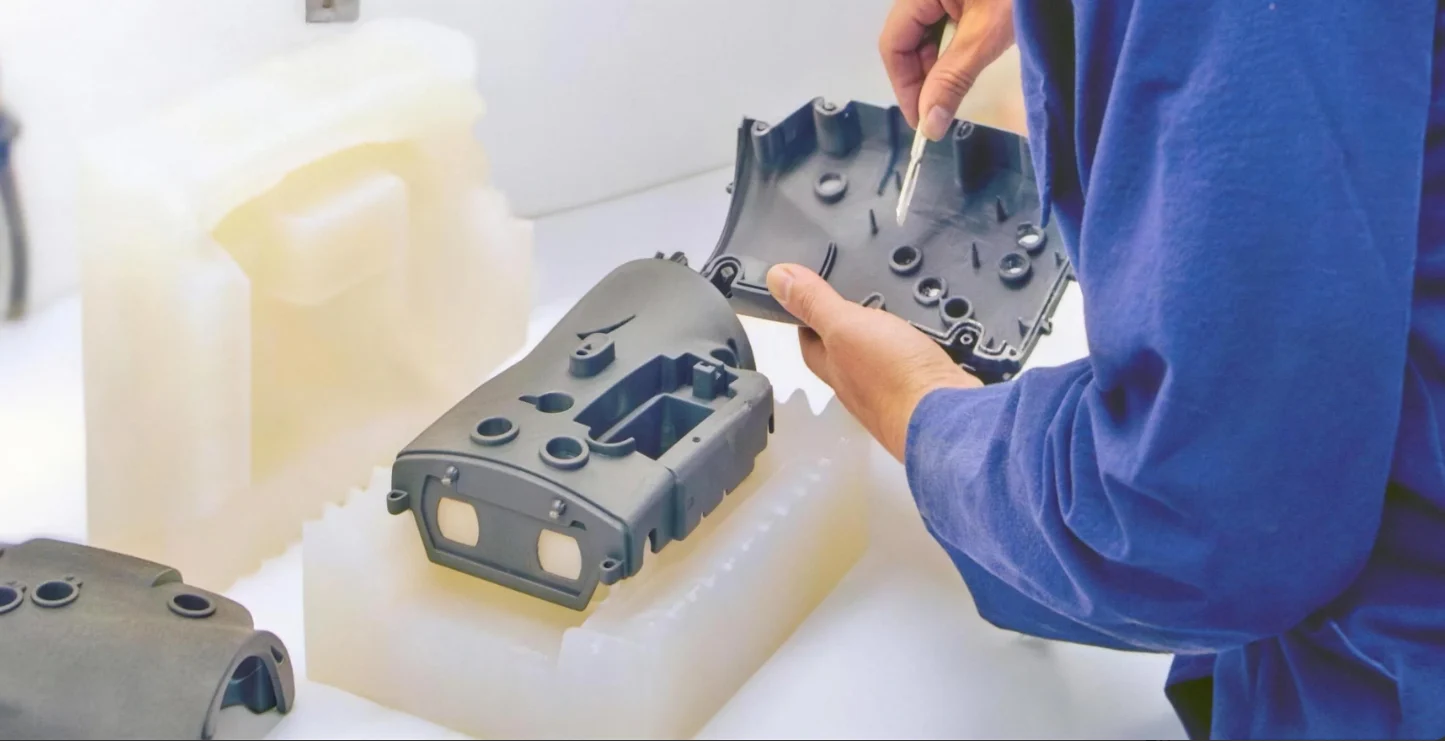
Automotive Industry
Automobile manufacturers need to use vacuum casting in their designs. It is also used as a functional component for testing the engine compartment. For concept or racing cars, the output is too low, and the processing cost with hard moulds would be much higher.

Interior & Exterior Prototypes
People judge a car by its interior before they even start the engine. This means that dashboard panels need to have the right texture and grain. Vent louvers must also move smoothly. Control knobs should have a satisfying detent feel. ABS-like resins in vacuum casting can deliver this. The parts look and feel just like production injection-moulded plastic.
Headlight lenses and taillight covers require optical clarity. UV-stable clear resins are ideal for this purpose. Designers can now cast five or ten lens prototypes for photometric testing without having to wait months for a mould.
Functional Under-Hood Testing
The engine bay is a harsh environment. There are heat cycles, vibrations, and chemical exposure. Prototypes need to withstand real conditions. High-temperature resins for vacuum casting can withstand these conditions. Brackets, fluid reservoirs, and air intake components are cast from materials that can withstand under-hood temperatures. The data from these tests informs the final production tooling.
Custom & Low-Volume Vehicles
Concept cars are unique statements. In contrast, race teams build twenty identical cars for a season. Classic car restorers need parts that the original manufacturers stopped producing decades ago. None of these scenarios justifies the use of steel injection moulds. The volume is too low.
Vacuum casting solves this problem. People can make ten to fifty units directly from silicone moulds. The parts fit. They perform well. And the tooling cost is a fraction of what production moulds would require. For prototyping and small-batch production in the automotive industry, this is often the only practical option.
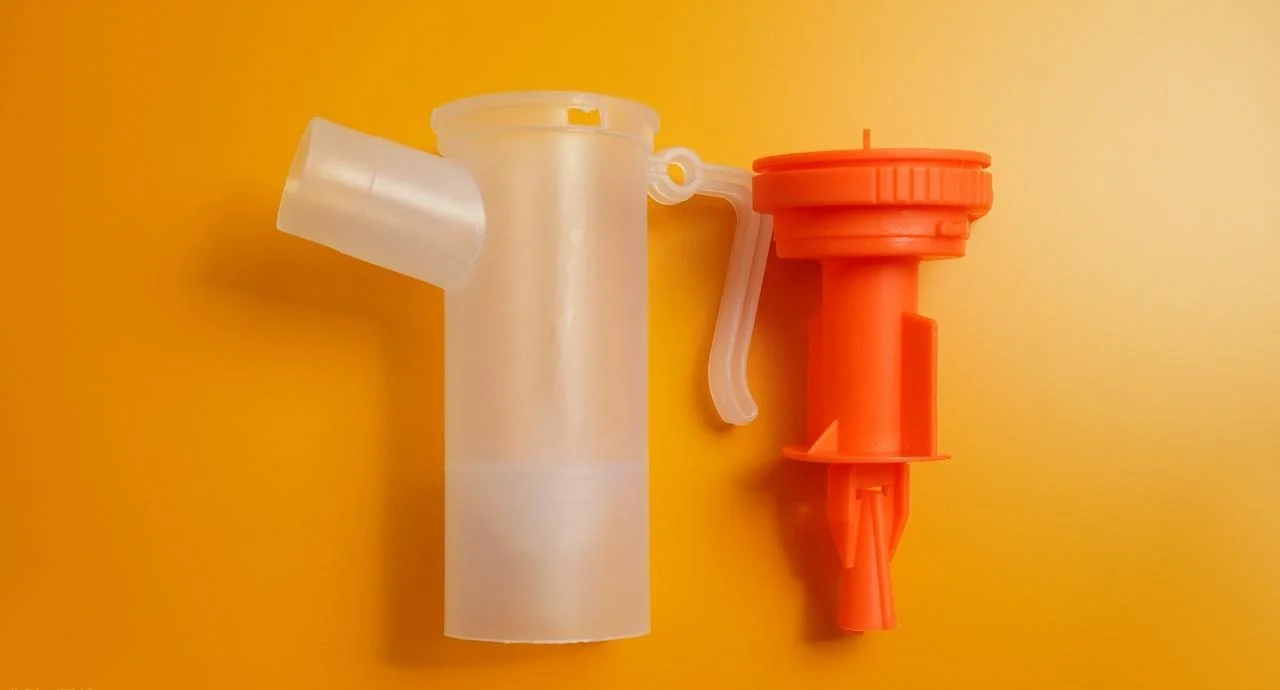
Medical & Healthcare
The rules of medical device development are different. Patient safety is non-negotiable—regulatory pathways demand documentation. Development cycles also require functional parts for testing before production tooling is committed to. Vacuum casting is well-suited to this industry for non-implantable applications.
Custom Patient-Specific Devices
Every patient is different. Orthotics must match the shape of an individual’s foot. Prosthetic sockets require precise contouring to ensure a good fit for the residual limb. Dental models require exact tooth geometry for aligner design.
Mass production tooling is not suitable here. Each part is unique. Vacuum casting combined with patient-specific 3D-printed masters solves this problem. First, a clinic scans the patient’s anatomy. A technician then prints a master pattern. A silicone mould captures that geometry. The result is a custom device that is produced as efficiently as possible. For production runs of one to five patient-matched devices, this is often the only manufacturing method that is economically viable.
Soft Medical Components
Not all medical parts are rigid. For example, seals for fluid handling need to be flexible. Gaskets for instrument housings need to be resistant to compression set. Soft-touch grips on surgical instruments require a comfortable, non-slip surface.
Shore A rubber formulation is ideal for vacuum casting applications such as these. Soft components can be cast directly into silicone moulds. The durometer ranges from very soft, gel-like materials to firmer rubber textures. There is no need for a secondary overmoulding setup. There is no need for complex two-shot tooling. You just get a single cast part with the right material properties.
Again, the warning applies. Soft medical components cast in this way are not automatically suitable for implantation or long-term contact with the body. Full certification, material testing, and regulatory approval are required for any implantable or critical use. However, for prototyping and small-batch production of non-critical medical parts, vacuum casting is a proven and reliable method.

Consumer Electronics
The consumer electronics industry moves fast. The product lifecycle is measured in months, not years. Designers need physical parts for user testing, drop testing, and creating marketing samples. Steel tooling takes too long. Printing each part individually using 3D printing is too expensive. Vacuum casting strikes the right balance for prototyping and small-batch production in this industry.
Wearables & Handhelds
People expect wearables to fit comfortably against the skin. A watch case needs smooth edges. An earbud housing must match the contour of an ear canal. A phone case requires precise cutouts for buttons and cameras.
Vacuum casting produces these enclosures in ten to fifty units. ABS-like resins give the right stiffness and impact resistance. The surface finish matches injection-molded production parts. Designers put cast prototypes into user studies. Testers wear them for a week. Feedback comes back. Changes go into the next design iteration.
Overmolding for soft-touch finishes is another application. People cast rigid housings with integrated rubberized grips in a single operation. The silicone mold holds the rigid insert while the soft material casts around it. No two-shot injection molding machine required. For low-volume production of premium accessories, this approach works well.
Drones & Robotics
People produce five or ten complete drone frames in a single batch. They then assemble the electronics. They then fly the prototype into a wall on purpose to see what breaks. The data from these destructive tests informs the final production design.
A common visual comparison shows a cast drone frame alongside an injection-moulded final part. The two parts look nearly identical. However, the cast part may have slightly lower impact strength. However, the moulded part is more cost-effective for high-volume production. For the prototyping and small-batch production of drone components, the casting process provides functional test data weeks or months before hard tooling is ready.
Peripherals & Chargers
Launch editions of keyboards require custom enclosures. Vacuum casting is used to produce these enclosures in small batches. Twenty units were cast for a crowdfunding campaign. Another hundred were made for early reviewer samples. These parts function identically to the final production pieces. The difference lies in the tooling cost: a few thousand dollars for silicone moulds versus tens of thousands for steel injection moulds.
For consumer electronics start-ups and established brands launching limited editions, this process offers a practical route from CAD to physical product. There is no need for a massive upfront investment. You just get functional parts ready for testing and early production.
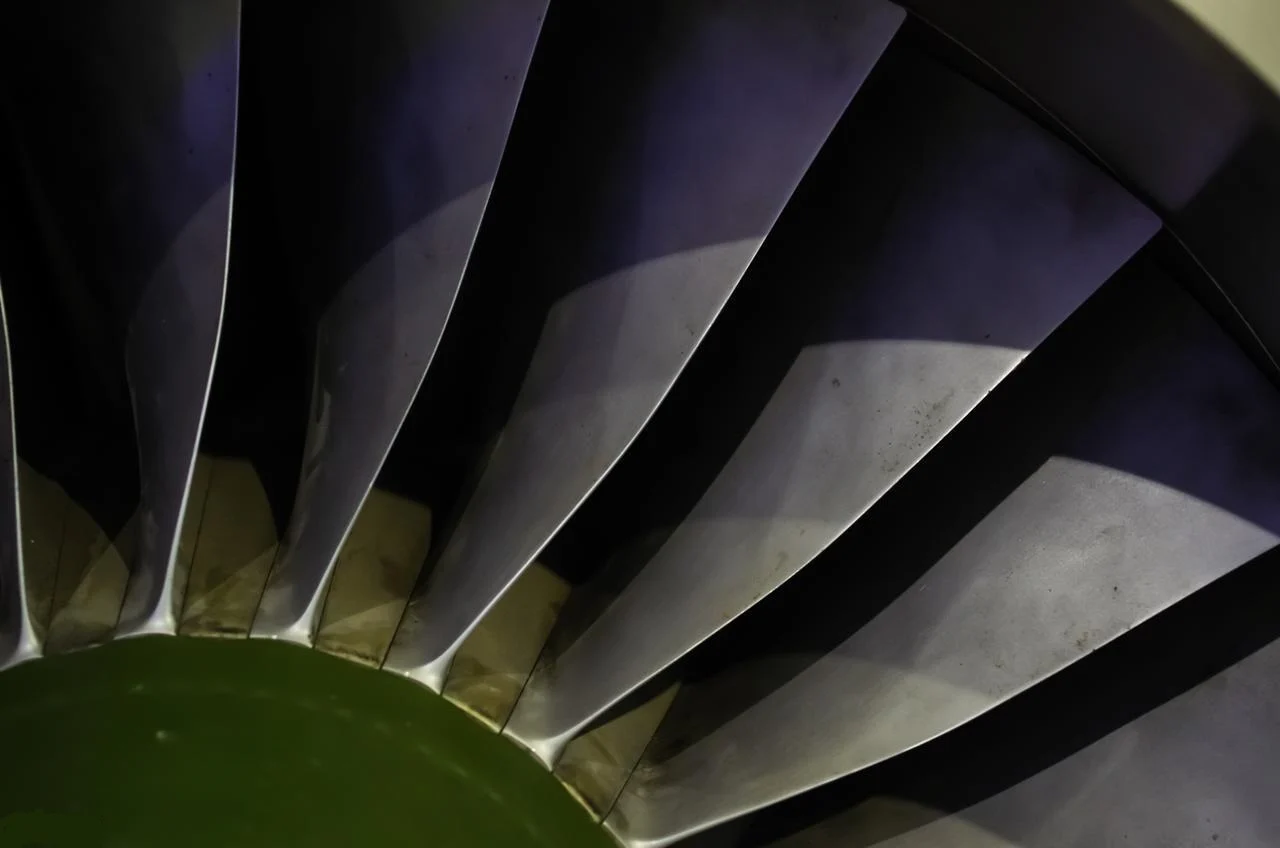
Aerospace
Aerospace is a different world. Regulations are strict. Volumes are low. People in this industry need manufacturing methods that work for small batches and meet rigorous safety standards.
Interior Cabin Components
Seat armrests get used a lot. Latch covers get opened and closed thousands of times. These parts have to be able to stand up to wear and tear. Even more importantly, they mustn’t burn or release toxic smoke in a fire.
There are fire-retardant resins that meet the FAA’s standards for vacuum casting. The material passes vertical burn tests. It meets the required smoke density. When it comes to making small amounts of non-structural cabin hardware, this process means you don’t have to pay for the kind of tooling used in aerospace.
Cockpit Mockups & Testing
Before anyone starts cutting metal for a new cockpit layout, designers need to test ergonomics. Bezels on displays should be easy to read from different angles. Control panels need to be accessible with your fingers, even when wearing gloves.
Vacuum casting is a great way to make these mockup components quickly. The switch panels are made from black ABS-like resin. You can get display bezels in matte or textured finishes. The parts just slot onto the structural frames. Pilots interact with them. Engineers watch and measure.
UAV & Drone Parts
Drones used by the military and for surveys don’t usually cost thousands. It’s pretty normal to make fifty or a hundred of them. Every airframe needs mounts for the sensors, battery housings, and avionics enclosures.
Impact-resistant and lightweight resins for vacuum casting are perfect for this job. People cast complete airframe components in ten to twenty units per batch. The parts are strong enough for flight testing. They’re light enough to stay within payload limits. When you’re producing a small number of unmanned aerial vehicles, this approach is often quicker and cheaper than machining each component from billet or waiting months for production tooling.
Legacy Aircraft Spares
This is a painful problem. Aircraft typically fly for thirty or forty years. The original manufacturer stopped producing spare parts fifteen years ago. A latch breaks. A panel cracks. The operator needs one replacement part. Not a thousand. Not even fifty. Just one.
Vacuum casting solves this problem. There is no minimum order quantity. There are no NREs for production moulds. For the on-demand replacement of out-of-production components, this is a practical solution. It enables operators to return their aircraft to service without resorting to expensive reverse engineering or custom machining.
Industrial Equipment & Robotics
The production line has broken down. Someone needs a replacement part by tomorrow. A new robotic cell has been designed. The team requires functional grippers within a week. Those in the industrial sector are familiar with this kind of pressure. Vacuum casting is ideal for their prototyping and small-batch production of non-structural components.
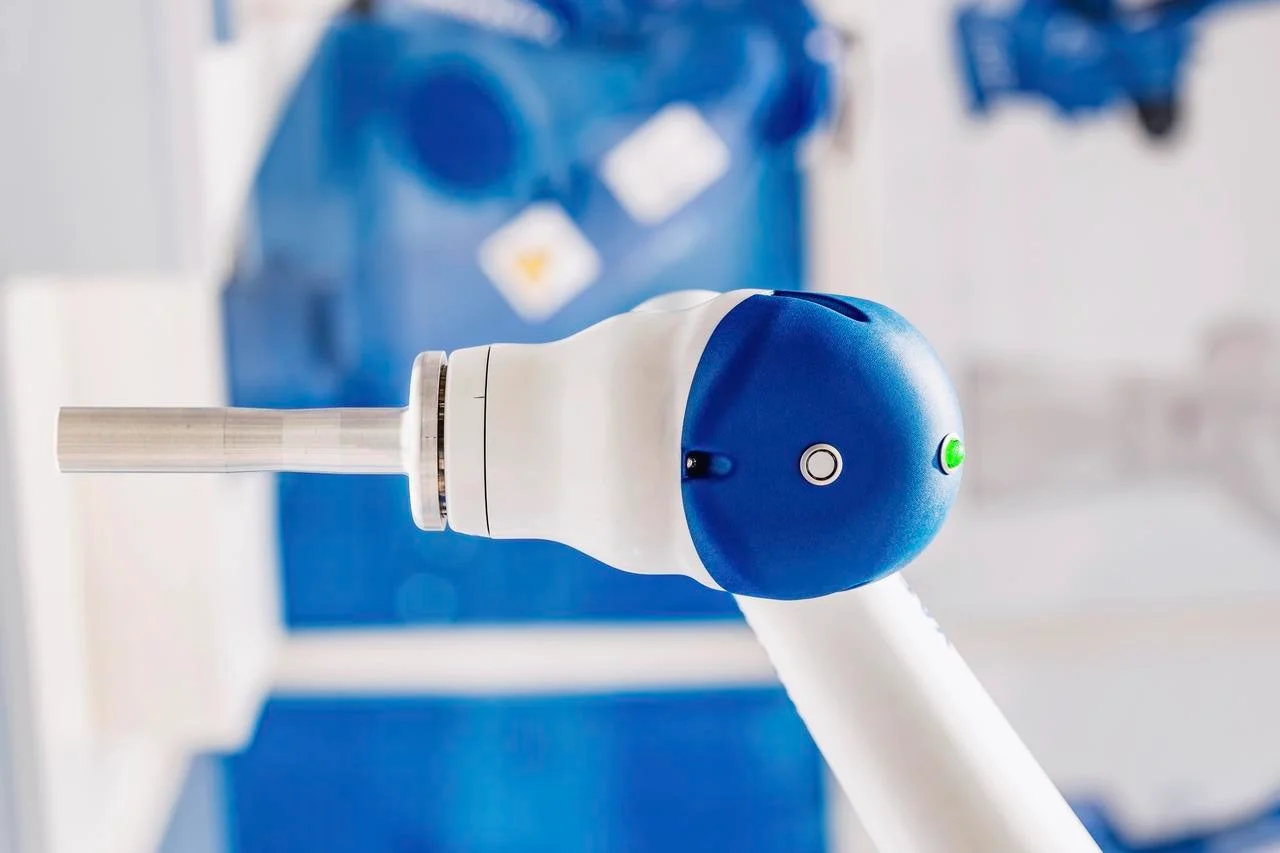
Robotic End Effectors
Collaborative robots, or cobots, work alongside people. Their grippers must be firm enough to hold a part, yet soft enough to avoid crushing it or injuring a human hand. Rigid metal jaws are not suitable for this purpose.
Rubber-like polyurethanes for vacuum casting solve this problem. People can cast flexible grippers with custom durometers. This material has high tear strength and good abrasion resistance. These grippers are then attached to a cobot and undergo weeks of factory testing. Design changes are fed back into the next mould revision. There is no waiting for injection tooling. There is no need for an expensive overmoulding setup.
Sensor & Camera Housings
Factory automation relies on a variety of sensors and cameras. These require protection from dust, coolant spray, and accidental impact. The dimensions and connector locations of each sensor differ. Off-the-shelf enclosures, therefore, rarely fit.
Vacuum casting is therefore used to produce custom protective housings for low-volume automation projects. These enclosures can be cast with integrated mounting flanges, cable strain relief features, and clear windows for optical sensors. For batches of between five and twenty sensor housings, this approach provides functional hardware without the need for CNC machining of each one from solid stock.
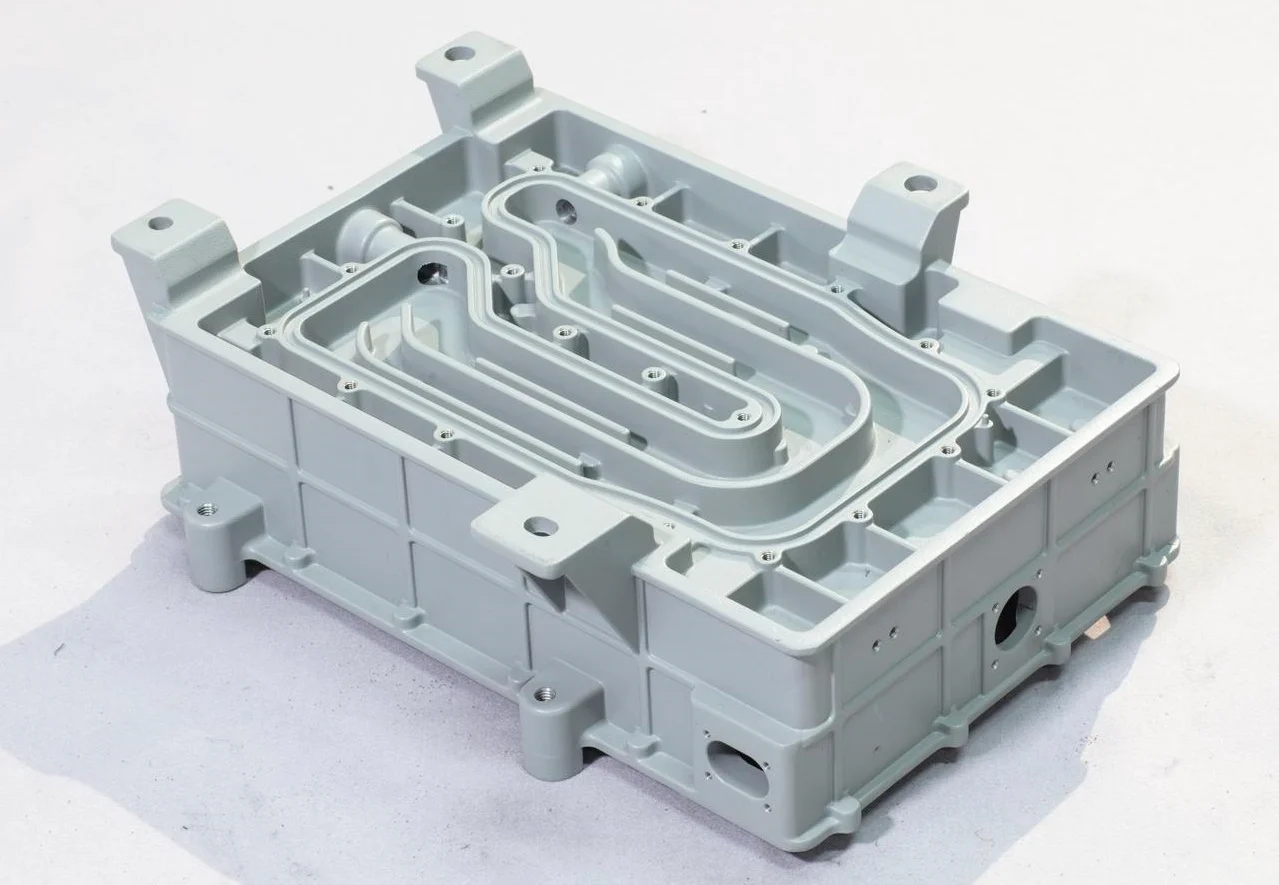
Consumer Goods, Appliances & Design
Engineers cannot make decisions based solely on screen renderings. They need to be able to feel the surface texture and test how the clips fit together. Vacuum casting is ideal for prototyping and small-batch production.
Small Appliance Housings
The blender housing should fit snugly around the motor. The button panel should be aligned with the switches underneath. The lid latch should click into place satisfactorily.
Designers produce CAD models and send them for prototyping. Vacuum casting creates complete appliance housings in ABS- or polycarbonate-like resins. A team then assembles a functional prototype incorporating the actual motor, circuit board, and wiring. They then test the assembly sequence.
For coffee machine panels, the surface finish is important. A glossy front panel shows every fingerprint. A textured panel hides them. Vacuum casting faithfully replicates both finishes from the master pattern. The appearance and texture are evaluated on a fully assembled mock-up. Any changes are then fed back into the CAD system. Another casting batch is produced within days.
Sporting Goods & Toys
Helmet visors require optical clarity and impact resistance. Goggle frames must be flexible enough to fit different face shapes while holding the lenses securely in place. Action figures require precise detailing of faces and accessories.
Vacuum casting can handle these diverse requirements. Clear polyurethanes for visors transmit light without distortion. Flexible formulations provide the right tension for goggle frames. Rigid, high-detail resins capture the fine features of collectible action figures.
Architectural & Art Models
Architects need to be able to scale building components for client presentations. A custom lampshade design might only sell fifty units. A sculptor may want to produce a limited edition of a piece.
Vacuum casting is ideal for all of these projects. A master pattern is printed from CAD or an original sculpture is scanned. A silicone mould captures every surface detail. The cast parts are identical to the master. Multiple copies can then be sent to clients, galleries, or retailers.
When NOT to Use Vacuum Casting
Vacuum casting is a useful technique. However, it is not suitable for every job. Understanding its limitations can prevent costly mistakes and missed deadlines. This is where the process fails.
Automotive: More Than 10,000 Parts
Car door handles sell in the millions across vehicle platforms. A dashboard panel sells in the hundreds of thousands each year. Vacuum casting cannot produce these volumes. A silicone mould can produce between ten and fifty parts before it degrades. The process per part is slow. The material cost per pound is also higher than that of commodity thermoplastics.
The correct approach is injection moulding. However, the upfront tooling cost is high. However, the per-part price at scale is just a few pennies. Those who attempt vacuum casting for high-volume automotive parts find that they burn through dozens of silicone moulds and end up paying more per piece than they would for steel tooling. The maths simply does not add up.
Medical: Permanent Implants
A hip replacement lasts for decades. A spinal fusion cage must retain its structural integrity when subjected to repeated loading. Patient safety should never be compromised by using a cast polyurethane part. The material properties are well documented. However, the long-term creep and fatigue behaviour are not the same as those of implant-grade PEEK or titanium.
The standard here is CNC machining of medical-grade metals or approved thermoplastics. Vacuum casting is not suitable for permanent, load-bearing or long-term implantable devices. Those who request cast implants demonstrate a misunderstanding of both material science and the regulatory pathway. Regulatory bodies will not approve them. Engineers should not propose it.
Aerospace: Primary Structural Spars
The weight of an aircraft is carried by its wing spar during flight. Landing gear components endure extreme stress with every take-off and landing. Cast polyurethanes are not structural materials. They deform under sustained load. They soften at moderate temperatures. They also lack the fatigue resistance of aircraft-grade aluminium, titanium, and carbon composites.
The correct choices for landing gear components are metal machining, composite layup, or forged components. Vacuum casting has no place in primary airframe structures. This is understood by people in the aerospace industry.
Consumer Electronics: Millions of Units
Smartphone cases sell in their tens of millions. The housing for a popular charger runs into the high six figures. Vacuum casting for these quantities is impractical.
Injection moulding is the only economical option at scale. The steel tool might cost fifty thousand dollars. However, the amortised cost over a million units would be just five cents per part. Vacuum casting at high volumes costs dollars per part. The difference is enormous.

Choose NOBLE for Best Vacuum Casting Manufacturing
NOBLE is a fully integrated metal and plastic processing plant that specialises in low-to-mid volume production. We bridge the gap between prototypes and mass production by offering in-house CNC machining and injection moulding capabilities, backed by rigorous quality management systems.
Our Core Processing Capabilities
We do not just cast prototypes; we finish the job. Our plant handles the entire manufacturing chain:
| Process | Materials | Typical Applications |
| Injection Molding | ABS, PC, Nylon, PEEK, Acetal | High-volume production runs |
| CNC Machining | Aluminum, Brass, Stainless Steel, Titanium | Precision brackets, housings, and functional metal parts |
| Vacuum Casting | Polyurethanes, Silicones, ABS-like resins | 10–100 unit prototypes, bridge tooling |
| Surface Finishing | Painting, plating, anodizing, texturing | Cosmetic-grade consumer and automotive parts |
| Assembly | Heat staking, ultrasonic welding, and manual assembly | Ready-to-ship components |
Our Certifications
We operate under internationally recognized quality standards to serve demanding industries like medical devices, automotive, and aerospace.
- ISO 9001:2015 (Quality Management): Certified for consistent design, production, and delivery of metal and plastic components across all industries.
- ISO 13485:2016 (Medical Devices): Certified for manufacturing components used in surgical instruments, diagnostic equipment, and Class I/II medical devices (excluding implantables unless specified).
FAQ
Can vacuum casting replace injection molding?
No, vacuum casting serves a different purpose. It produces between ten and fifty parts from a silicone mould. By contrast, injection moulding can produce thousands or even millions of parts from a steel tool. The upfront cost and lead time for injection moulding are much higher. However, the per-part cost at scale is much lower. Vacuum casting fills the low-volume gap. It is not intended for high-volume production.
How many parts can one silicone mold make?
About twenty to thirty parts. This depends on the geometry of the parts and the resin used. Simple shapes with no undercuts might yield up to forty parts. Complex shapes with sharp corners or thin walls may crack the mould after fifteen shots. The mould degrades gradually. The surface finish deteriorates first. Dimensional accuracy follows.
Is vacuum casting suitable for clear parts?
Yes, but with limitations. The clarity of the finished product depends on the surface finish of the master pattern. A polished master pattern produces a clear part. However, a rough master pattern yields a cloudy part. Also, any bubbles in the resin are clearly visible in the transparent parts. Proper degassing is therefore critical. The results are excellent for clear cosmetic parts such as showroom display models. However, for optical-grade lenses that require a precise refractive index, injection-moulded optical plastics or machined glass are preferable.