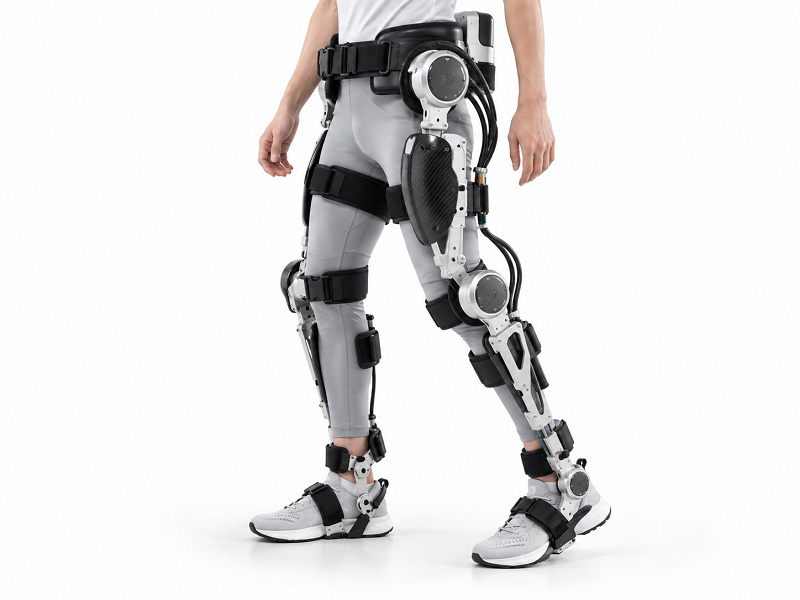
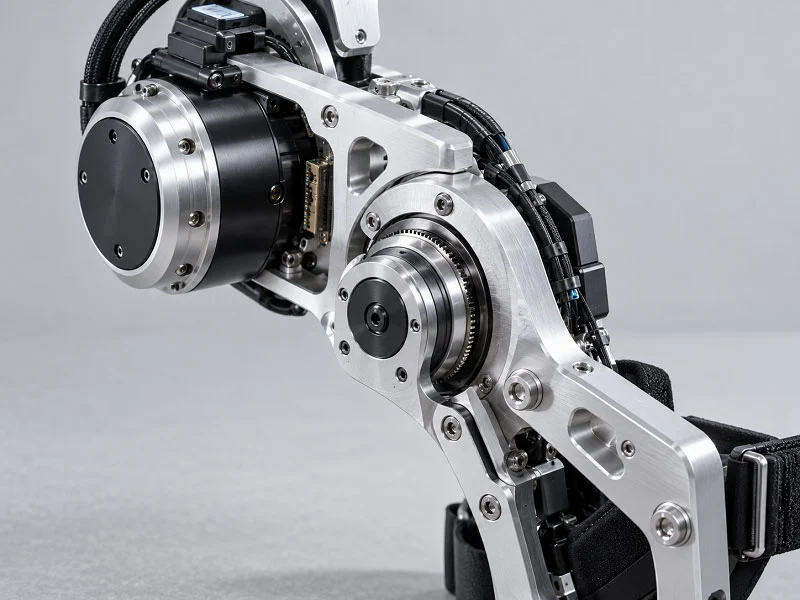
 An exoskeleton joint housing usually has several main parts: the main housing shell, bearing seats, actuator and motor mounts, sensor brackets, sealing and retention components, and fastener interfaces. This outer frame holds actuators, motors, and transmission systems, and it handles load transfer and motion control. The global exoskeleton market is expected to grow from $850 million in 2025 to $2.2 billion by 2030, so the precision and materials of these parts directly affect performance. The manufacturing process, precision requirements, and material choices for each component are critical to achieving the reliability and durability required in modern exoskeletons. Understanding these factors is key to producing effective joints.
Main Housing Shell in an Exoskeleton Joint Housing

The main housing shell is the main load-bearing structure of an exoskeleton joint housing. It wraps around the actuator, motor, and transmission system, so it takes the brunt of every load the joint sees. Think of it as the skeleton’s skeleton. If this shell flexes or deforms, the whole joint loses alignment, and the wear parts inside pay the price.
Manufacturing Processes for the Main Shell
การขึ้นรูปด้วยเครื่อง CNC จากแท่งโลหะ
CNC machining from billet is the top choice for high-precision shells. A solid block of AL6061-T6 aluminum gets carved down into the final shape. This alloy shows up often in exoskeleton housing work because it machines cleanly and holds tight tolerances. The workflow usually follows a set order:
- Select the material — AL6061-T6 aluminum is a common starting point for exoskeleton housing applications.
- Control dimensional tolerances during machining, especially at attachment points and interfaces with other modules, so everything lines up during assembly.
- Preserve structural integrity around thin-walled areas and intricate features to prevent deformation or weakening.
- Finish the surface — clean the part first, then sandblast and anodize it. Sandblasting removes tool paths and step marks for a matte, uniform look. Anodizing adds corrosion resistance, a hard scratch-resistant surface, and a better appearance.
การหล่อแบบแม่พิมพ์และการหล่อแบบแม่พิมพ์หล่อ
Die casting and investment casting are also used for the main shell. Die casting works well for higher volumes where cost per part matters. Investment casting handles complex internal geometry. Both routes cut machining time, but they trade away some precision compared to billet work.
Additive Manufacturing for Prototypes
Additive manufacturing, or 3D printing, shines during prototyping. Printing lets engineers test fit and form before committing to tooling. You can print a shell overnight, bolt it to a test rig, and learn something by morning. The trade-off is clear: printing offers speed and geometry freedom, but the mechanical properties of printed parts usually fall short of wrought metal.
Precision Requirements for the Main Shell
ความคลาดเคลื่อนของมิติและเรขาคณิต
Precision starts with the interface points. Bolt holes, bearing bores, and module mating faces all need tight control. A sloppy tolerance at one interface cascades through the assembly. Geometric tolerancing covers flatness, perpendicularity, and position, and these callouts keep the shell from twisting out of shape.
ข้อมูลจำเพาะการตกแต่งพื้นผิว
Surface finish affects fatigue life and seal performance. Rough surfaces create stress risers where cracks begin. They also chew up O-rings and gaskets. Sandblasting and anodizing improve the surface, but the underlying machined finish still sets the baseline.
Materials for the Main Shell
Material choice drives weight, cost, and durability. Here is how the common options compare:
| วัสดุ | ลักษณะสำคัญ | การใช้งานทั่วไป |
| อลูมิเนียม | Cost-effective, easy to machine, good surface finishing, high-volume friendly | Mass-produced enclosures, cost-sensitive parts |
| ไทเทเนียมอัลลอย | High-temperature resistance, biocompatible, corrosion-resistant | สภาพแวดล้อมที่มีฤทธิ์กัดกร่อนหรืออุณหภูมิสูง |
| พอลิเมอร์เสริมใยคาร์บอน | Best strength-to-weight ratio, near-zero thermal expansion, high stiffness | Precision instrument housings, performance frames |
Aluminum Alloys 6061 and 7075
Aluminum 6061 and 7075 form the aluminum alloy base for most shells. The 6061 grade welds and machines well. The 7075 grade brings more strength but costs more and fights the cutter. For cost-sensitive, high-volume production, aluminum wins.
โลหะผสมไททาเนียม Ti-6Al-4V
Ti-6Al-4V handles heat and corrosion that aluminum cannot. It also carries biocompatibility, which matters for medical exoskeletons. The downside is price and machining difficulty.
Carbon-Fiber-Reinforced Polymers
CFRP delivers the best strength-to-weight ratio of the group. It also holds near-zero thermal expansion and high stiffness. Precision optical and measurement housings use it for exactly these reasons. The upfront price is the highest, though maintenance costs stay low.
No single material wins everywhere. The right pick depends on operating conditions, volume, and budget. Engineers often run FEM analysis to compare stress paths across candidate designs, and FEM analysis also validates whether a shell meets its strength targets before any metal gets cut. Lighter materials like ABS appear more in prototype brackets than in load-bearing shells, since their strength cannot match metal. From a practical view, the manufacturing route and the material choice lock together — you cannot separate one from the other.
Bearing Seats and Bores in an Exoskeleton Joint Housing
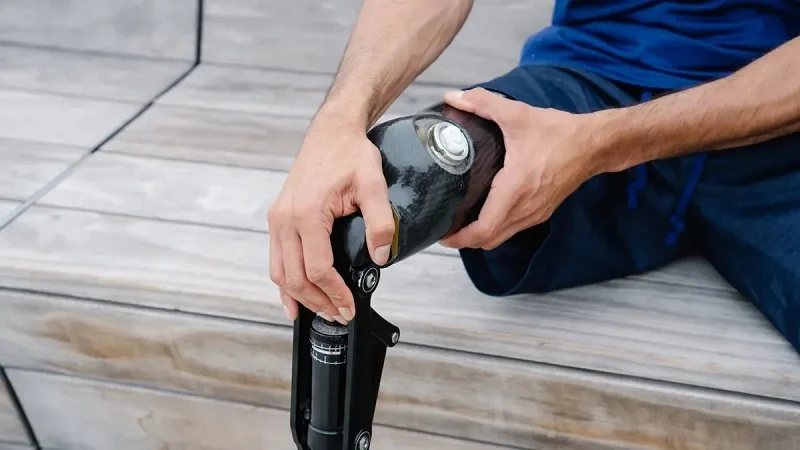
Bearing seats and bores are at the center of every exoskeleton joint housing. They hold the bearings that let the joint turn smoothly. If these seats are wrong, the joint wastes energy and wears out quickly. The fit between the bore and the bearing changes joint efficiency and wear resistance. A loose bore lets the bearing spin in place. A tight bore crushes the bearing race. Either way, the joint breaks down.
Manufacturing Processes for Bearing Seats
Precision Boring and Reaming
Precision boring cuts the bore to a close size. A single-point tool spins inside the hole and shaves off material. The operator can adjust the cut in tiny steps. This control makes boring perfect for tight-tolerance work. Reaming comes after boring when the hole needs a smoother finish. A multi-edge reamer removes a thin layer of material and leaves a clean, round bore. Together, these two steps build the foundation for a proper bearing seat.
การเจียรและการลับคม
Grinding takes over when the bore needs an even finer finish. An abrasive wheel spins against the bore surface and removes small amounts of material. The result is a very smooth surface with tight dimensional control. Honing goes one step further. A honing tool uses abrasive stones to polish the bore and fix small shape errors. This process improves roundness and straightness. For an exoskeleton joint housing that sees constant motion, these steps matter. They cut friction and make bearing life longer.
Precision Requirements for Bearing Seats
Bore Diameter and Roundness
Bore diameter tolerance decides how the bearing fits. Too much clearance and the bearing rattles. Too little and it binds. Roundness keeps the bearing race from deforming under load. An out-of-round bore squeezes the bearing at certain points. That uneven pressure causes early failure. The precision needed here is among the tightest in the whole housing.
Coaxiality and Perpendicularity
Coaxiality makes sure two or more bores share the same centerline. In a joint with bearings on both sides, misalignment forces the shaft to bend. That bending loads the bearings unevenly. Perpendicularity keeps the bore square to the mounting face. If the bore tilts, the bearing carries an axial load it was not designed for. Both callouts protect the bearing and the shaft. They also keep the joint running true over thousands of cycles.
Materials for Bearing Seats
Material choice for bearing seats depends on load, speed, and lubrication. Here is how common options compare:
| วัสดุ | คุณสมบัติ | อุณหภูมิบริการสูงสุด |
| PTFE บริสุทธิ์ | High chemical resistance and operation efficiency | ℃ 200 |
| HYPATITE® PTFE | Lower monomer permeability and higher resistance to compression and creeping than other PTFE materials | 260 ℃ / 270 ℃ |
| PTFE เติมคาร์บอน | Excellent heat and abrasion resistance | 260 ℃ / 270 ℃ |
| FILLTITE® | Highest heat resistance among PTFE-based materials | ℃ 300 |
| กราไฟท์ | Excellent for high temperature service | ℃ 500 |
| ห้องปฏิบัติการ | Excellent for high temperature and abrasive service | 500 ℃ / 525 ℃ |
| PEEK | Higher heat resistance and mechanical strength | ℃ 270 |
| Glass fiber filled PTFE with MoS2 | Higher abrasion resistance and operation efficiency | ℃ 230 |
| Nylon with MoS2 | ความแข็งแรงเชิงกลที่สูงขึ้น | ℃ 140 |
เม็ดมีดเหล็กกล้าชุบแข็ง
Hardened steel inserts handle the heaviest loads. They resist wear and hold their shape under pressure. When you manufacture a bearing seat from hardened steel, the bore stays true even after millions of cycles. These inserts press into the housing or get bolted in place. The housing material can then be lighter and cheaper. This split design saves weight without giving up strength.
Bronze and Brass Alloys
Bronze and brass alloys offer good bearing behavior. They work well for moving contact. Bushings, sleeves, wear plates, and sliding parts often rely on these grades. C93200 bronze is a common pick for this kind of work. It has good bearing behavior and handles moving contact well. These alloys also resist corrosion better than steel in some environments. They cost less than hardened steel and machine easily.
Engineering Plastics PEEK and PTFE
PEEK and its filled compounds, especially those containing PTFE, carbon fiber, or bronze fillers, have low friction and good wear resistance. They do not need the lubrication that metal-on-metal contact requires. This makes PEEK a common replacement for bronze, brass, and hardened steel in bushings, bearings, gears, and wear plates. It works well where lubrication is impractical, prohibited, or poses contamination risks. Bearing-grade PEEK compounds filled with PTFE and graphite or carbon fiber run dry against metal shafts. Their friction and wear performance is comparable to bronze bushings. They also avoid bronze’s corrosion and lubricant-retention issues in washdown or chemical-exposure environments. For an exoskeleton joint housing used in clean rooms or medical settings, this matters a lot. The mechanical properties of PEEK hold up well under repeated motion. PTFE brings even lower friction but less strength. Engineers often pair the two to balance performance.
From a practical view, the bearing seat sets the joint’s character. A well-made seat with the right material keeps an exoskeleton joint housing running smooth for years. A poor one fails early and takes the bearing with it. The bearing inside depends on this seat for alignment and support. Get the bore right, and the bearings do their job. Get it wrong, and no amount of precision elsewhere saves the joint. The same logic applies to every bearing in the assembly. Each one needs a seat that matches its tolerance and load profile. That is why bearing seat work deserves as much attention as the main shell.
Actuator and Motor Mounts in an Exoskeleton Joint Housing
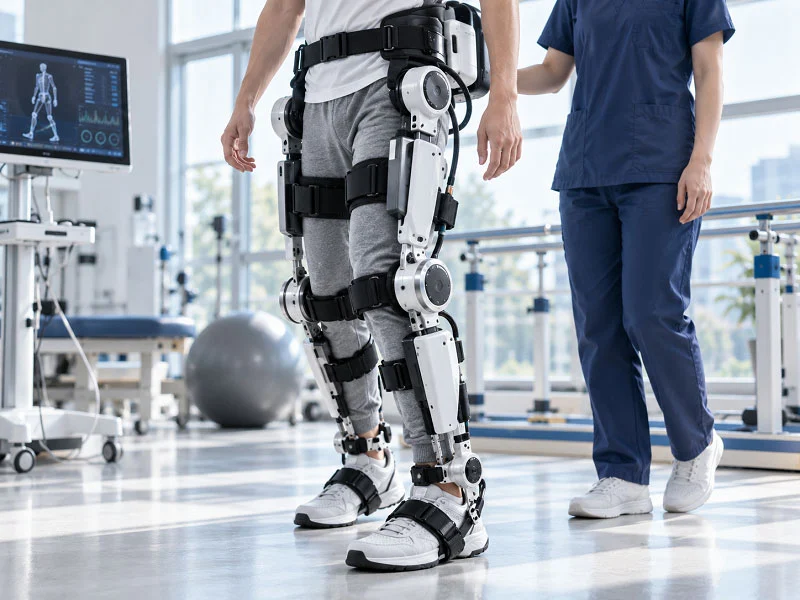
Lower-limb exoskeleton joints fit different motor types inside the exoskeleton joint housing. Frameless BLDC motors appear in elbow, knee, and wrist joints. Engineers also use motors with gear reducers, motors with Bowden cables, pneumatic actuators, and Series Elastic Actuators. High-Torque Planetary Gear Motors, Quasi-Direct Drives, and High-Ratio Drives with harmonic gears complete the list. Every actuator type needs a mount that lines up the rotor exactly with the drivetrain. A mount that is not aligned wastes power and wears parts out fast.
Manufacturing Processes for Actuator Mounts
การกัดและการเจาะด้วยเครื่อง CNC
CNC machining takes care of the actuator plates. Four separate plates are machined on the CNC. The steel motor-gearbox coupler is turned and faced on the lathe, then drilled and counter-bored on the mill. The encoder shaft goes through the same steps — turned down on the lathe, drilled on the mill. Actuator-leg-linkage couplers are made from aluminum, turned on the lathe and drilled on the mill. These operations control how bolt holes line up with the bore center.
การผลิตและการเชื่อมโลหะแผ่น
Sheet metal lowers cost for frame pieces that do not carry heavy loads. Most pieces are thin aluminum sheet metal. The work comes down to cutting or drilling the sheet. For the critical encoder shaft part, a lathe works best. High-resolution 3D printing also works for prototypes. Welding joins the pieces into a sub-frame that bolts to the housing.
Precision Requirements for Actuator Mounts
ความคลาดเคลื่อนของตำแหน่งรู
Motor mounts need controlled hole position in the bolt pattern. True position tolerances stop the bolts from pulling the motor off-center. A CMM or pin check makes sure the holes line up. Assembly success depends on GD&T applied to these features. Always put flatness, perpendicularity, and true position on actuator mount drawings. Without these callouts, the mount causes vibration from day one.
Flatness and Angular Alignment
Flatness of the mounting face stops the motor from tilting. The pilot bore and bolt pattern are checked against the same datum face. That check catches tilt before the motor gets bolted down.
Hole position alone does not promise angular alignment. A small perpendicularity error at the base of the mount grows into a larger shift at the motor’s working height. Perpendicularity and true position tolerances tied to functional datums control that alignment closely. Dowel pins or machined pilots give the high precision needed. Clearance holes cannot handle dynamic loads from a running motor.
Materials for Actuator Mounts
Picking materials depends on load, weight, and environment.
เหล็กกล้าไร้สนิม
Stainless steel brings corrosion resistance and strength. It handles higher loads from powerful actuators. The trade-off is weight. For a lower-limb joint where durability beats weight, stainless works well.
โลหะผสมอลูมิเนียม
Aluminum alloys balance strength and weight. They machine fast and cost less than stainless. For mounts carrying moderate loads, aluminum is the standard. The same alloys used in the main shell — 6061 and 7075 — work here. Their properties fit the load range.
ไนลอนที่เติมแก้ว
Glass-filled nylon gives good mechanical properties at lower weight than metal. It handles moderate loads and resists creep under repeated stress. The material works well for lighter joints where every gram counts. Injection molding makes production fast.
Precision holds the whole mount together. An off-center motor vibrates, wears bearings, and drains power. The mount faces the same demands as the main shell: hold position, resist loads, survive thousands of cycles. Some advanced designs add plates that connect with the drivetrain, making mount alignment even more critical. The mount must keep the motor and drivetrain axes aligned. Engineers run FEM analysis on the mount design to check stress paths and confirm stiffness. The strength of the mount depends on material, geometry, and how the welds or fasteners tie into the rest of the assembly. That capacity decides whether the mount survives peak conditions and thousands of cycles.
Sensor Brackets in an Exoskeleton Joint Housing
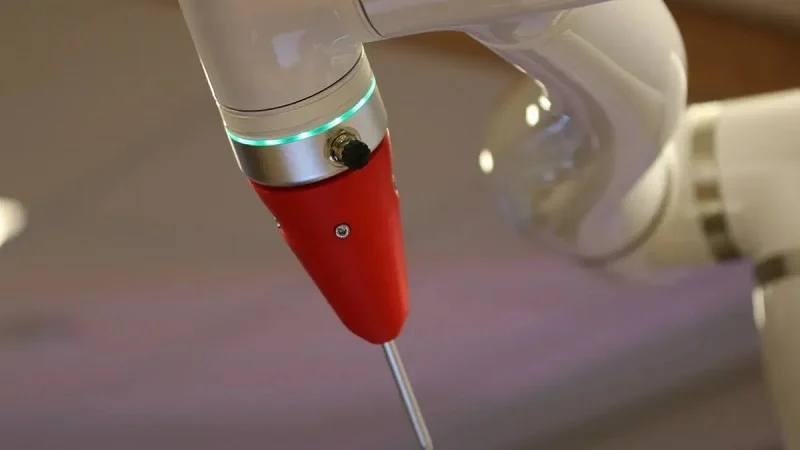
Sensor brackets and encoder mounts inside an exoskeleton joint housing need high repeatability and thermal stability. Why? Mounting tolerance decides how much of an encoder’s specified resolution stays usable after installation. If mounting is not repeatable, lower resolution bits can become unstable. Engineers then fix this with shimming, micro-alignment, recalibration, or filtering. Thermal stability matters just as much. Different materials expand at different rates, so the sensing target, stator, housing, or shaft can shift relative to one another. Even tiny movement hurts signal quality. This problem is worst in hollow-shaft, low-profile, or frameless encoder designs where the rotor-stator relationship depends on the mechanical stack. A system aligned at room temperature may lose proper signal geometry after thermal expansion, bearing preload changes, or structural deflection.
Manufacturing Processes for Sensor Brackets
CNC Machining for Small Features
CNC machining handles the tiny features that sensor brackets need. Small pockets, slots, and mounting holes need sharp tools and light cuts. A machinist can hold tight position on these features without special tooling. For low and medium volumes, this route gives the best precision. Stress-relieved aluminum is a common starting stock because it stays stable after machining.
Injection Molding for High Volume
Injection molding takes over when production scales up. A steel mold forms the bracket in one shot, and cycle times drop to seconds. The trade-off is upfront tooling cost. Printing also works for prototypes, letting engineers test fit before committing to a mold. For high-volume runs, molding wins on cost per part.
Precision Requirements for Sensor Brackets
Mounting hole placement must be tight to ensure repeatability. Sensor orientation and surface flatness must be controlled within close tolerances to maintain signal quality. Repeatability of dimensions ensures that mounting remains consistent after removal and reinstallation. Thermal stability keeps the sensor aligned as the joint heats up. A bracket that grows or twists with temperature throws off the reading. Material choice and geometry both play a role here.
Materials for Sensor Brackets
Material selection balances weight, strength, and cost. Common options include stress-relieved aluminum for precision and stability, as well as other metals and polymers for weight-optimized applications. Die casting materials such as aluminum and magnesium alloys are used for lightweight metal parts. Injection molding materials include engineering plastics.
โลหะผสมอลูมิเนียมและแมกนีเซียม
Aluminum and magnesium alloys bring good mechanical properties at low weight. Magnesium is lighter, but it corrodes more easily. Aluminum offers a better balance for most brackets.
ABS และโพลีคาร์บอเนต
ABS and polycarbonate work well for molded brackets. ABS gives good impact resistance at low cost. Polycarbonate adds strength and clarity. Both suit moderate loads.
PEEK for High Temperatures
PEEK handles high temperatures where other plastics fail. It keeps its strength and stiffness when the joint runs hot. The cost is higher, so it fits demanding applications.
Sealing and Retention in an Exoskeleton Joint Housing
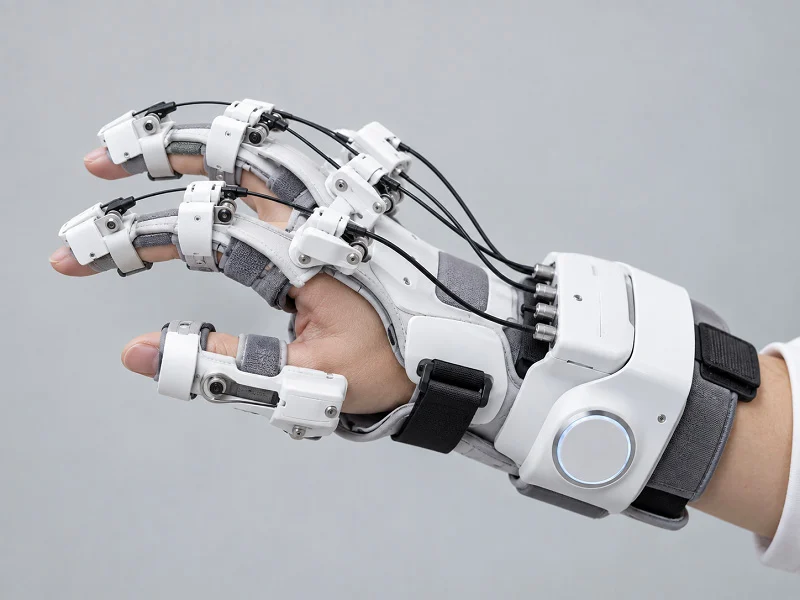
Seals and retainers work like the immune system of an exoskeleton joint housing. They stop dust, water, and dirt from getting inside. Without them, bearings rust, sensors lose accuracy, and actuators fail early. A good seal also keeps lubricant in place. Retention parts keep everything held together. They stop seals from popping out and bearings from moving out of place.
Manufacturing Processes for Seals and Retainers
Seals and retainers are produced through molding or machining processes, depending on material and volume. Compression molding is common for elastomeric seals, while CNC turning is used for retaining rings.
Compression Molding for Elastomeric Seals
Compression molding shapes rubber seals using heat and pressure. A rubber piece is placed in a heated mold. The mold closes, and the rubber spreads to fill the shape. After hardening, the seal has the correct shape. This process works for O-rings, gaskets, and custom lip seals. It handles high volumes well and keeps tool costs reasonable.
CNC Turning for Retaining Rings
CNC turning makes retaining rings from metal or plastic stock. A lathe cuts the ring shape, grooves, and edges in one step. For snap rings and spiral rings, turning creates the basic shape. Extra steps cut the gap or slot. Turning gives tight control over ring thickness and diameter. That control is important when the ring snaps into a groove with the correct force.
Precision Requirements for Seals and Retainers
Groove Dimensions and Surface Finish
Groove dimensions decide how well a seal works. A groove that is too deep lets the seal move. A groove that is too shallow squeezes the seal too hard. Both problems cause leaks. Surface finish inside the groove also matters. A rough groove damages the seal lip during installation. A smooth groove lets the seal slide into place without damage. The same logic applies to retaining ring grooves. A rough groove can cause stress that cracks the ring.
Interference Fit Tolerances
Interference fits hold retainers and seals in place without screws or bolts. The outer part is slightly larger than the inner part. Pressing them together creates a grip. Too much interference cracks the housing. Too little lets the part fall out. Engineers calculate the right amount based on materials and load. For an exoskeleton joint housing, vibration makes this fit even more important. A loose retainer can rattle out during walking.
Materials for Seals and Retainers
Material choice balances flexibility, chemical resistance, and strength. Common materials for seals include elastomers; retainers often use metals or plastics.
Nitrile Rubber and Viton
Nitrile rubber works well with oil and grease. It costs less than Viton. Viton can handle higher heat and stronger chemicals. For a joint exposed to cleaners or very hot conditions, Viton is safer. The trade-off is price.
Stainless Steel Retaining Rings
Stainless steel rings have high strength and resist corrosion. They hold up under vibration and repeated assembly. The material keeps its shape better than plastic rings. For heavy loads, stainless is the standard choice.
PTFE and UHMWPE
PTFE has low friction and resists chemicals. UHMWPE has high wear resistance. Both work well as backup rings or wear parts. They protect the main seal from being forced out or damaged. In an exoskeleton joint housing, these materials make the joint last longer. Engineers often run FEM analysis to check how seals and retainers behave under load. The strength of the retention system depends on material, shape, and fit. A weak retainer fails before the seal does. That failure lets dirt in and destroys the bearings as well. The same applies to every bearing in the assembly. Each one needs a seal and retainer that match its tolerance and load profile. In practice, sealing and retention deserve as much focus as the main shell. A cheap seal can ruin an expensive joint.
Machining for an Exoskeleton Joint Housing
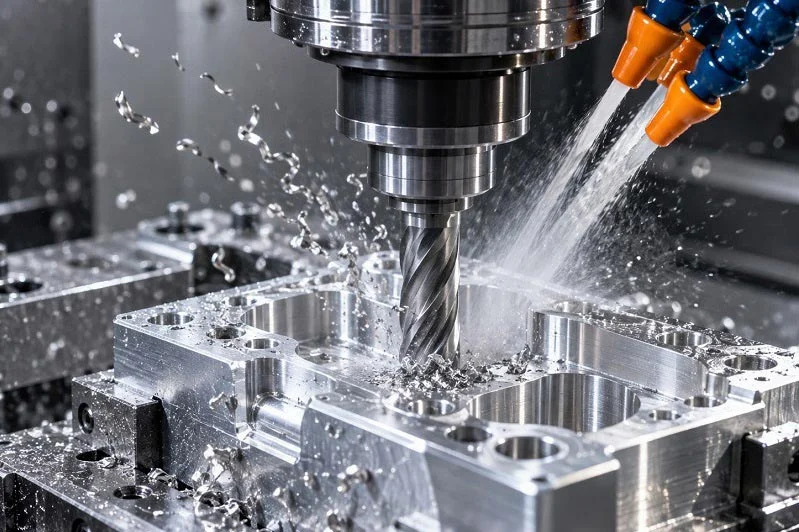
There are many ways to make an exoskeleton joint housing. You can use regular CNC machining and injection molding. You can also use additive manufacturing. Each method gives you different levels of precision and shape options. The best choice depends on how many you need, your budget, and what performance you want. Companies like NOBLE, a top manufacturing company in China, offer all these options in one place. Their machining skills help clients go from a prototype to full production without changing suppliers.
กระบวนการลบออก
งานกัดซีเอ็นซี 3 แกน และ 5 แกน
Three-axis CNC machining makes basic shapes. The tool moves in X, Y, and Z while the part stays still. It works well for simple brackets and flat surfaces. Five-axis machining adds two turning axes. The tool can reach undercuts and angled surfaces in one setup. This helps a lot for an exoskeleton joint housing with complex curves. Fewer setups mean better accuracy. Five-axis milling is a common pick for custom aluminum joint housings. Dynamic milling plans help with thin-wall machining by stopping thin sections from shaking during the cut.
Turning and Turn-Mill Operations
Turning cuts round features on a lathe. Bearing seats, shaft bores, and retaining ring grooves all depend on turning. The part spins while the tool moves along its length. Turn-mill operations mix turning and milling in one machine. This cuts handling time and makes round and flat features line up better. Precision turning gives the tight roundness that bearing seats need.
Additive and 3D Printing Technology
การผลิตสารเติมแต่งโลหะ
Metal additive manufacturing builds parts from metal powder. A laser melts each layer and fuses it to the layer below. The result is a fully dense metal part. This technology works well for complex internal channels you cannot machine. The trade-off is surface finish. Printed surfaces need post-machining for bearing seats and seal grooves.
การสะสมพลังงานกำกับ
Directed energy deposition feeds metal powder or wire into a laser beam. The material melts when it touches the part. DED works best for adding features or fixing worn areas. It is less common for complete housings but useful for hybrid manufacturing. You machine a basic shell and add printed features on top.
Fused deposition modeling also plays a role, especially early in development. FDM builds parts from melted filament in layers. These 3D-printed elements work well for prototypes and low-stress parts. FDM gives engineers a fast way to check fit and form. These load-bearing 3D-printed elements from FDM serve as functional test pieces. They let you check clearance and assembly before cutting metal. Fused deposition modeling offers a reliable way to try out designs without waiting for tooling.
กระบวนการขึ้นรูปและการหล่อ
หล่อการลงทุน
Investment casting starts with a wax pattern. The pattern gets coated in ceramic. After the ceramic hardens, the wax melts out. Metal fills the empty space left behind. This process handles complex internal shapes that machining cannot reach. The surface finish and precision fall between printing and casting.
สายการผลิตผลิตภัณฑ์ฉีดขึ้นรูป
Injection molding forces molten plastic into a steel mold. It runs fast, with cycle times under a minute. The upfront tooling cost is high, but the cost per part drops with volume. For a high-volume exoskeleton joint housing, molding wins. The process gives consistent dimensions across thousands of parts. NOBLE brings all these methods to a single supplier. That means you can prototype with printing, validate with casting, and scale with molding or machining.
Design Considerations for an Exoskeleton Joint Housing
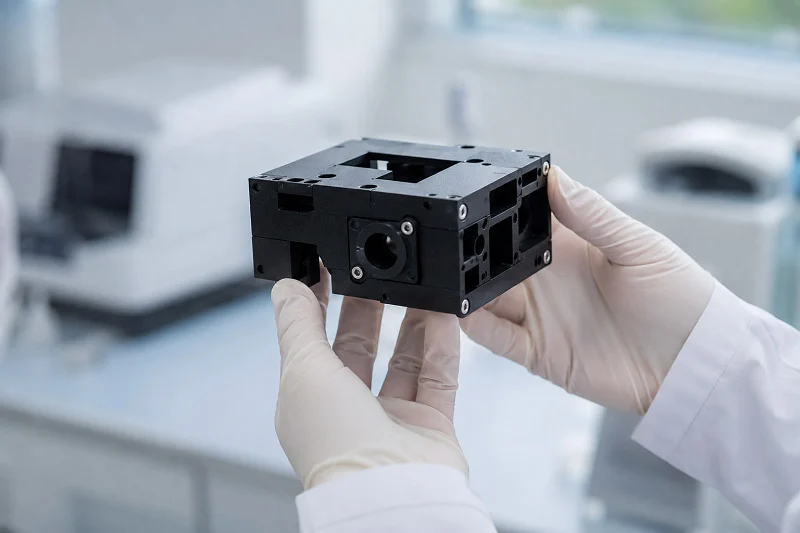
An exoskeleton joint housing must carry loads without bending. It also needs to stay light. Every extra gram means the motors work harder. Engineers balance these two demands at every step.
ความสมบูรณ์ของโครงสร้างและการเพิ่มประสิทธิภาพน้ำหนัก
Topology Optimization and Ribbing
Topology optimization finds where material is needed most. The software starts with a block of material. It removes everything that does not carry stress. What remains looks like a natural structure, thin and efficient. Ribbing adds stiffness to thin walls. Ribs placed along load paths stop the walls from buckling. A good rib pattern can significantly increase the stiffness of a shell. The strength of the whole housing depends on how ribs connect to bearing seats and mount pads.
Finite Element Analysis Validation
Finite element analysis checks the design before cutting metal. Engineers create a mesh of small elements on the part. They apply loads and constraints. The software calculates stress and deflection at every point. It finds weak areas early. For carbon-fiber parts, engineers use an orthotropic material model that accounts for different stiffness values in different directions. The finite element method helps compare options. Running the same analysis on aluminum, titanium, and carbon fiber shows which material handles the load best. The finite element method also validates the rib placement. The FEM analysis results guide the final shape and material choice.
Thermal Management and Wear Resistance
Heat Dissipation Paths
Heat comes from several sources inside the housing. Actuators and motors generate heat during use. Electronics inside add more warmth. The user’s body heat makes it worse. Joint contact points run hot from friction and stress. Limited ventilation around the joint traps that heat. Insulating layers in padding block heat removal. Moisture from sweat reduces cooling and causes skin irritation. Dynamic operation creates variable thermal loads. Engineers design paths for heat to flow out. They use fins, conductive pads, and airflow channels to move heat away from sensitive parts.
การรักษาพื้นผิวและการเคลือบ
Outer shells use ABS plastic, carbon fiber, or aluminum alloys. Each material conducts and insulates heat differently. Inner contact layers use memory foam and mesh. These materials protect the user but also trap heat. Organic polymers with fabrics raise thermal insulation. That increased insulation changes the thermal response of the whole joint. Coatings like hard anodizing on aluminum add a wear-resistant layer. They improve corrosion resistance for medical or outdoor use.
Assembly and Maintenance Accessibility
Modular Design for Field Replacement
Modular design lets a technician swap a damaged shell fast. Standard fasteners and connectors cut downtime. The modular joint must match the original design in strength. Tests prove the connection holds up under repeated loads. This approach also supports upgrades. A newer actuator can fit the same housing.
Tolerance Stack-Up Management
Tolerances add up across the assembly. A shaft bore at its high limit with a bearing at its low limit creates a loose fit. That loose fit causes vibration and noise. Tolerance stack-up analysis predicts the worst gap. Engineers adjust individual tolerances to keep the final assembly in spec. The precision of the final joint depends on managing these stacks. The strength of bolted joints relies on correct preload. A loose bolt reduces connection strength. A tight bolt strips threads. Good stack management keeps every fastener working right.
Commonly Used Materials for an Exoskeleton Joint Housing
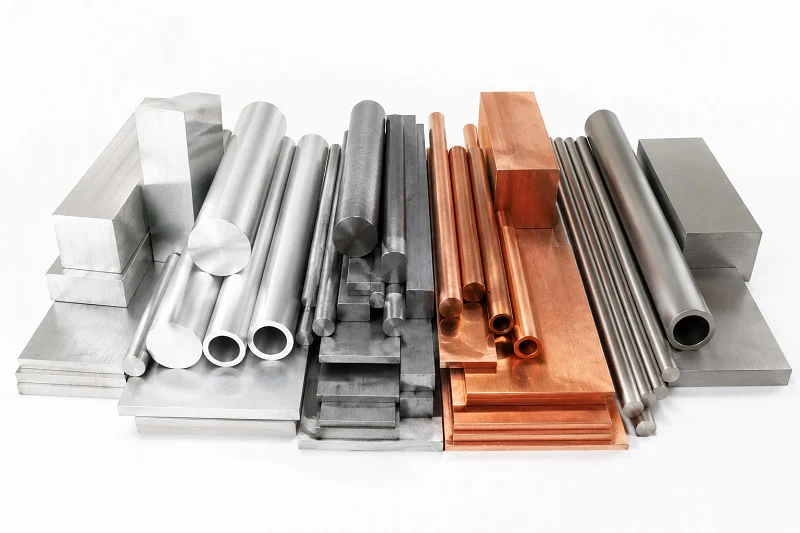
The materials in an exoskeleton joint housing cover a broad range. Common picks include aluminum alloys and steel for their high strength-to-weight ratio and fatigue resistance. Polymers like ABS also show up, mostly for 3D‑printed prototypes. Each material brings different trade-offs.
โลหะมีค่า
Aluminum 6061-T6 and 7075-T6
Aluminum 6061-T6 and 7075-T6 are two of the most common alloys for joint housings. They machine well and offer good strength. But they differ in key ways. Here is a comparison:
| อสังหาริมทรัพย์ | 6061-T6 | 7075‑T6 / 7075‑T651 |
| ความต้านทานแรงดึง | 276 MPa | 503 MPa |
| ความเมื่อยล้า | 96 MPa | 160 MPa |
| โมดูลัสยืดหยุ่น | เกรดเฉลี่ย 71.0 | เกรดเฉลี่ย 71.7 |
| ความต้านทานการกัดกร่อน | Self‑passivating Al₂O₃ oxide film (stable) | Contains 1.2–2.0% copper; requires coating |
| ความต้องการการเคลือบ | None for harsh environments | ต้องผ่านกระบวนการทำให้เกิดชั้นป้องกันหรือเคลือบผิว |
Switching from 6061 to 7075 cuts cross‑sectional area by about 45% for the same tensile load. Stiffness stays nearly the same though. If buckling controls the design, 7075 offers no benefit. For high‑cycle use, 7075 or carbon fiber is the better pick. Advanced thermoset or anodized multi‑layer coatings seal micro‑porosities on 7075‑T6. Those coatings stop moisture‑driven stress corrosion cracking under high‑frequency cyclic loading beyond 10 million gait cycles. Sealed hard‑anodized surfaces also withstand over 2,000 hours of salt spray testing without pitting.
ไทเทเนียม Ti-6Al-4V
Titanium Ti‑6Al‑4V is stronger than both aluminum alloys and lighter than steel. It handles heat and corrosion well. Medical exoskeletons often use it because it works with the human body. The trade‑off is cost and machining difficulty. Titanium fights the cutter and costs more per pound. But for uses where weight and corrosion resistance matter most, it fills a gap aluminum cannot.
สแตนเลส 17-4 PH
Stainless steel 17‑4 PH shows up in high‑wear joint housing parts. Bearing housings, joint pins, and pivot points all use it. It is heavy but tough and cheap. Some passive exoskeletons use spring steel for elastic energy storage. Specialty alloys handle extreme cyclic loads. Steel is not the first pick for weight‑critical designs, but for durability it holds its ground.
พอลิเมอร์และวัสดุผสม
PEEK และ PEI
PEEK and PEI (sold as Ultem) are engineering plastics used for joint bushings and bearing surfaces. They resist wear without grease. That cuts weight and cost. They can also be molded into shapes that would be expensive to machine from aluminum. For an exoskeleton joint housing, these plastics work well where lubrication is not practical.
Carbon-Fiber and Glass-Fiber Composites
Carbon fiber reinforced polymers have excellent strength‑to‑weight ratios. But they are brittle. They take impact damage easily. The matrix materials break down under UV light, temperature changes, and moisture. That causes delamination and loss of strength. Glass‑fiber composites cost less but weigh more. Both need careful design to avoid sudden failure.
PLA and ABS for 3D-Printed Prototypes
For early‑stage prototypes, ABS and PLA are common. Engineers use fused deposition modeling (FDM) to print these parts fast. The polymer filament feeds through a heated nozzle and builds up in layers. These load‑bearing 3D‑printed elements work well for checking fit and clearance. They are not meant for final production. But fused deposition modeling gives a quick way to test shapes. Engineers rely on printing for speed and low cost. The material properties of these printed parts are good enough for prototyping. That is why printing with ABS is so common early on.
Selection Criteria and Strength Trade-Offs
อัตราส่วนความแข็งแรงต่อน้ำหนัก
A basic trade‑off exists between strength, weight, and durability. Aluminum alloys are lightweight but tend to fail under repeated loads. Steel offers better strength but adds weight that cuts battery life and user comfort. Carbon fiber composites have great strength‑to‑weight ratios but fail in ways that are hard to predict.
ต้นทุนและความสามารถในการแปรรูป
Cost and production volume drive the choice of materials. 6061 is cheap and easy to get. Carbon fiber is costly and slow to produce. Low‑volume builds favor machined metal. High‑volume production justifies injection‑molded plastic. Machinability also matters. Aluminum cuts fast. Titanium wears out tools.
ความต้านทานการกัดกร่อนและความเมื่อยล้า
Corrosion resistance keeps the joint working in harsh conditions. Aluminum 6061 forms a stable oxide layer on its own. 7075 needs coating because of its copper content. Fatigue resistance is just as critical. Aluminum 6061‑T6 has a fatigue strength of 96 MPa. 7075‑T6 reaches 160 MPa. For high‑cycle use, 7075 or carbon fiber wins. Joint mechanisms themselves are often the failure point. Normal ball bearings and bushings wear quickly under high‑frequency loading. A bearing inside the housing faces the same needs. The bearings must handle repeated cycles without wearing out. The lack of effective self‑lubricating materials raises maintenance needs. Engineers look at mechanical properties like fatigue strength when picking a material. The strength of the whole assembly depends on the right pick. They also run finite element method analysis to check behavior under load. The material properties guide every decision. Getting it right decides between a joint that lasts and one that fails early.
NOBLE’s Expertise in Exoskeleton Joint Housing
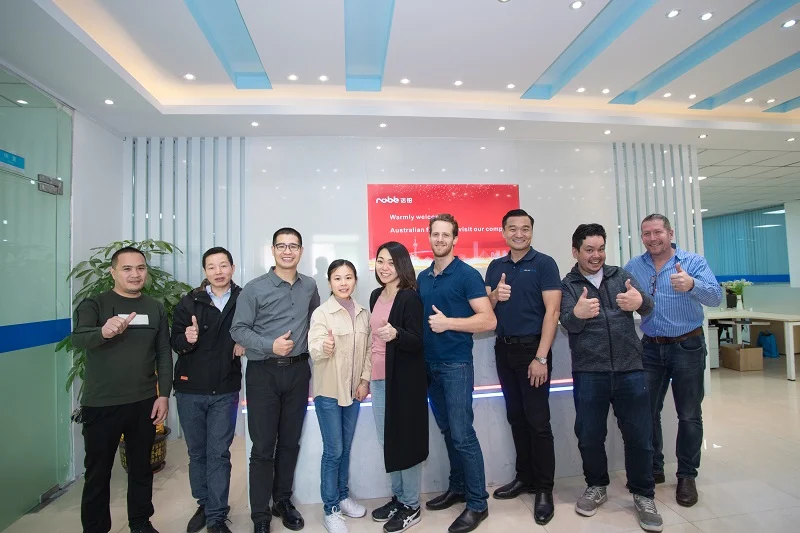
NOBLE is a manufacturing partner that works with metal and plastic. We make exoskeleton joint housing parts for teams that need tight tolerances and steady quality. Our shop handles both metal and plastic work. That mix matters, because a joint housing rarely uses just one material.
ความสามารถในการแปรรูปโลหะและพลาสติก
CNC Machining, Casting, and Injection Molding
We do CNC machining, casting, and injection molding all in one place. That means a machined aluminum shell, a cast actuator mount, and a molded sensor bracket can all come from us. You avoid the blame game that happens when three vendors point fingers at each other. For plastic parts, we mold ABS and other engineering grades. We also support printing for early fits and fixtures. If you need a quick prototype before tooling, printing gets you a part fast.
Design, Prototyping, and Assembly Services
Our team helps with design, prototyping, and assembly. We look over your drawings, point out features that are hard to machine, and suggest changes that cut cost. Prototypes come next, then full assembly. We press in bearing seats, install retaining rings, and check fits before anything ships. The strength of the final unit depends on these steps, so we treat assembly as part of production, not something we add later.
การรับรองและการประกันคุณภาพ
We hold relevant quality management certifications, including those for medical devices. These certifications are not just wall decorations. They shape how we document work, train staff, and handle change orders.
Full Traceability and Inspection Protocols
Every lot can be traced back to its material cert and machine log. We inspect incoming stock, in-process features, and finished parts. CMM checks confirm bore diameter, hole position, and flatness. If a dimension drifts, we catch it before it becomes a stack-up problem. That discipline protects the strength of each joint and the strength of your schedule.
ตั้งแต่การออกแบบจนถึงการประกอบ
การสนับสนุนด้านวิศวกรรมแบบร่วมมือ
We work as an extension of your engineering team. Send us a model, and we will tell you what machines it, what it costs, and where it might fail. This back-and-forth saves revision cycles.
End-to-End Production and Testing
From first article to full production, we handle machining, molding, finishing, and testing. You get one partner, one quality system, and one point of contact. That is the whole idea behind NOBLE.
Every exoskeleton joint housing comes down to the same core parts: the main shell, bearing seats, actuator and motor mounts, sensor brackets, and sealing and retention components. Each one has its own manufacturing process, precision targets, and material options. Those choices must match the load, weight, and environment the joint will face.
Machining, casting, molding, and 3D printing all play a role here. So does material selection, which balances strength, weight, cost, and corrosion resistance. Get the housing right, and the joint performs.
FAQs of Exoskeleton Joint Housing
What is an exoskeleton joint housing made of?
Exoskeleton joint housings are often made from aluminum alloys such as 6061‑T6. Titanium Ti‑6Al‑4V is used in medical or corrosive environments. Carbon‑fiber‑reinforced polymers give the best strength‑to‑weight ratio. PEEK works for bushings and bearing surfaces. The choice depends on load, weight, and surroundings.
Why does bearing seat precision matter so much?
If the bore is loose, the bearing can spin in place. If it is too tight, the race gets crushed. In both cases, the joint wastes energy and wears out quickly. Bore diameter, roundness, coaxiality, and perpendicularity protect the bearing. Get these right, and the joint runs smoothly for thousands of cycles.
Can you 3D print an exoskeleton joint housing?
You can print prototypes, but printed parts are not as strong as wrought metal. Fused deposition modeling (FDM) is great for early checks of fit and clearance. Metal additive manufacturing makes dense metal parts with complex internal channels. These parts still need machining after printing for bearing seats and seal grooves.
What tolerances do sensor brackets need?
Mounting hole placement, sensor orientation, surface flatness, and repeatability must be tightly controlled. Thermal stability also matters because materials expand at different rates.
How do seals and retainers protect the joint?
Seals keep dust, water, and dirt out. They also keep lubricant in. Retainers stop seals from coming out and bearings from moving. Seal materials are chosen based on the environment; metal rings hold up well under vibration and repeated assembly.
What is topology optimization in housing design?
Topology optimization begins with a solid block of material. Software removes all material that does not carry stress. The result is a thin, efficient shape that looks natural. Ribbing makes thin walls stiffer. A good rib pattern can significantly increase the stiffness of a shell.
Why does 7075 aluminum need a coating?
Aluminum 7075 contains copper, which stops the natural oxide layer from forming. Without this layer, moisture can cause stress corrosion cracking. A passivated or anodized coating seals the surface. Sealed hard‑anodized surfaces can last over 2,000 hours of salt spray testing without pitting.
When should you choose titanium over aluminum?
Titanium Ti‑6Al‑4V can handle heat and corrosion that aluminum cannot. It is also biocompatible, which matters for medical exoskeletons. The downsides are cost and difficulty in machining. For weight‑critical joints in harsh or medical settings, titanium works where aluminum does not.