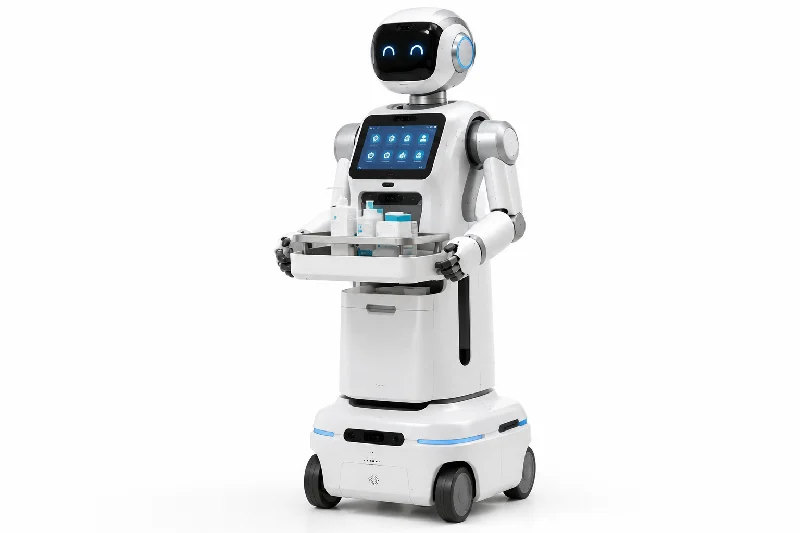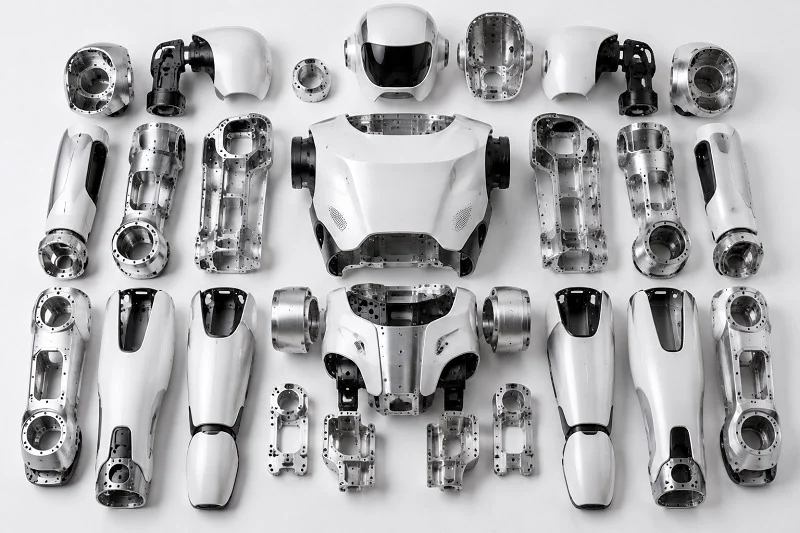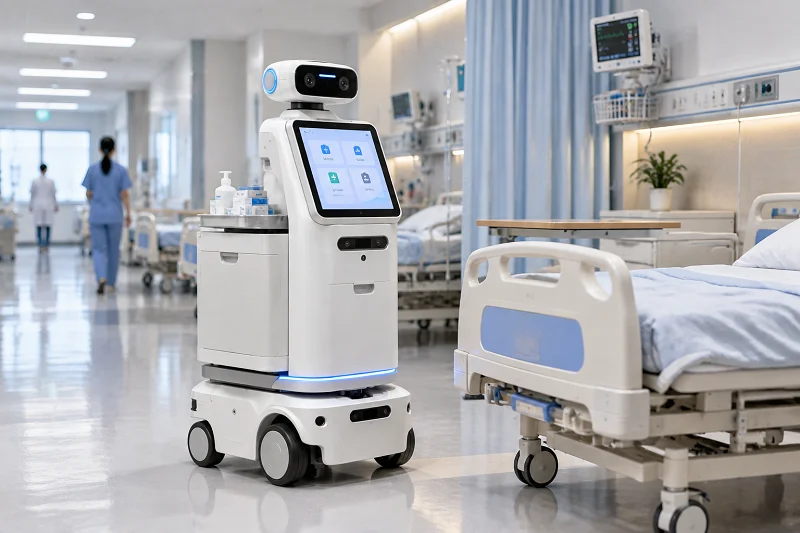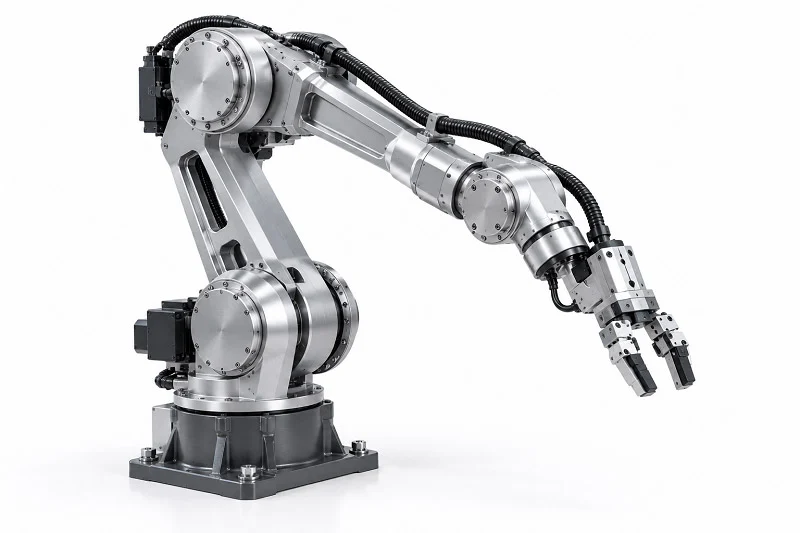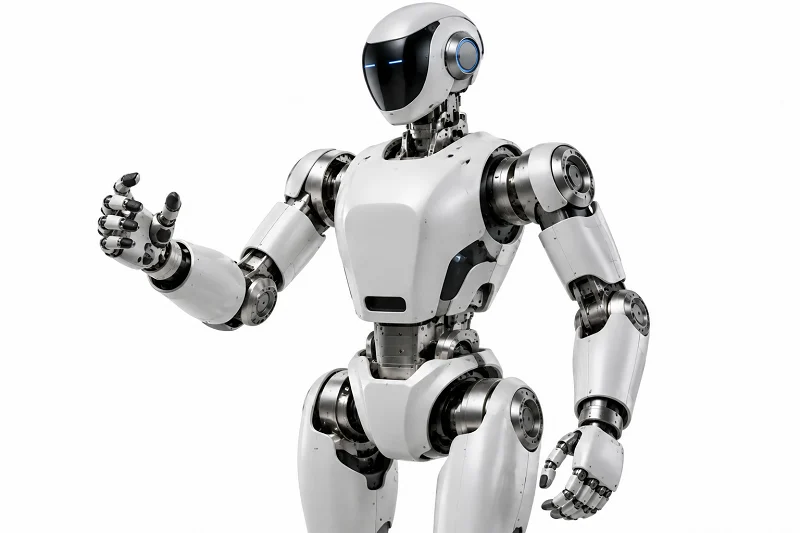
Autonomous robots depend on a group of common parts. These include actuators, joints, arms, housings, gearboxes, motors, controllers, sensors, and end effectors. But these autonomous robot components only work well when you choose the right manufacturing process, precision level, and material together. That is the main point. From components to manufacturing, every choice changes the result. Small errors in machining can cause big problems in movement or sensing. So process and material matter just as much as the component itself. In this post, we will look at how each part’s design connects directly to how it is made and what it is made of. The goal is to make clear the links between process, precision, and material for reliable autonomous robot components.
Core Autonomous Robot Components
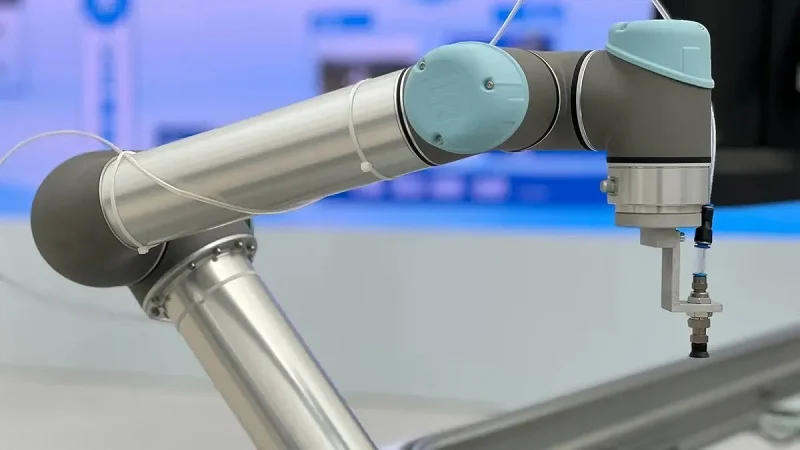
Robot designs are not all the same. An articulated robot has turning joints and a long reach. A SCARA robot moves quickly on a flat surface. A cartesian robot uses straight sliding tracks. A delta robot has a light, spider-like arm. A cylindrical robot works inside a round space. Articulated robots lead the market. In 2025 they held about 67.7% of the market. SCARA robots held 14.2%. Cartesian or gantry robots held 9.1%. Delta and cylindrical robots fill smaller roles. Each kind needs a different set of robot parts. The mechanical frame changes with the robot’s task.
Mechanical and Structural Parts
This group has the arm, the base, and the housing. These parts make up the skeleton. They must be stiff enough to resist bending under load. They must be light enough to keep energy use low. Aluminum alloys work well here. They give strength near 275 MPa yield with low weight. Stainless steel like 17-4 PH gives higher strength near 1,000 MPa. That matters for heavy payloads. Engineering plastics like polycarbonate work for outer covers. They resist impact and cut weight.
Surface treatments add durability. Hard anodizing protects aluminum from wear. Vapor smoothing makes a smooth surface on plastic housings. That helps dynamic seals work better. The housing does more than protect. It holds bearings, reducers, and motors. So it needs tight tolerances. A poorly machined housing causes misalignment. That leads to vibration and poor accuracy.
Drive, Actuation, and Transmission
This group makes the robot move. Actuators turn energy into motion. Joints link the arm segments. Precision reducers and precision gearboxes sit between the motor and the load. They boost torque and lower speed. A precision reducer is key for robots that need repeatable motion. Without it the arm cannot hold position under load.
Servo motors drive these systems. They give precise speed and position control. Servo motors work with encoders to give feedback. The controller reads the signal and adjusts the motor. This loop keeps the arm on path. Many robots use servo motors in each joint. So a six-axis robot runs six servo motors at once.
The right precision gearbox depends on the robot’s job. Harmonic drives offer zero backlash. That matters for assembly or surgery. Cycloidal drives handle higher shock loads. Some robots use both types in different joints.
Electrical, Sensing, and End Effectors
The electrical layer ties everything together. Motors need power supplies. Controllers run the logic. Sensors give feedback about position, force, and proximity. Common types include encoders, torque sensors, and lidar. These are common autonomous robot components in nearly every design.
End effectors act as the robot’s hands. They can be grippers, welding torches, or cameras. A pick-and-place robot might use a vacuum gripper. A welding robot uses a torch with wire feed. All these autonomous robot components must work together. The precision of the gearbox affects the end effector’s position. The sensor accuracy limits how well the controller corrects errors. So every part matters.
Manufacturing Processes for Autonomous Robot Components
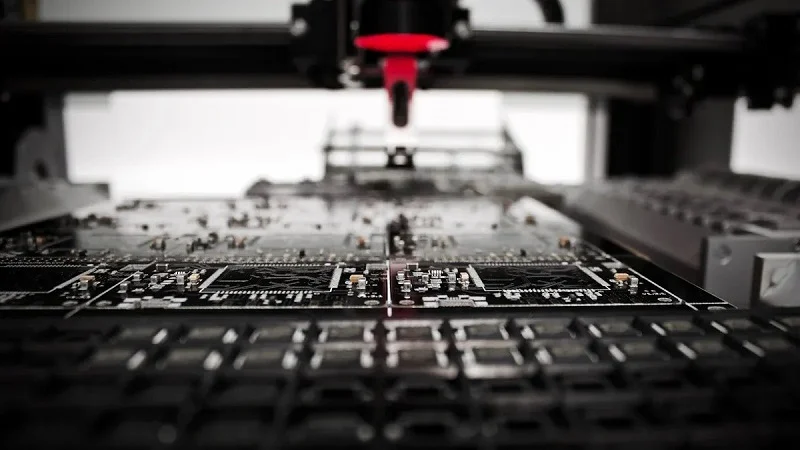
Every robot part begins with a choice about how to make it. You cannot separate a part’s shape from the way it is built. A joint housing with deep pockets needs one method. A smooth gear blank needs a different one. The manufacturing processes you choose set the tolerance, the surface finish, and the final cost. So let’s go through the main options and see where each one fits.
Machinatio CNC et Fabricatio Praecisa
CNC machining is the workhorse of precision manufacturing. A spinning tool cuts metal or plastic into a shape close to final. The machine follows a digital file, so every part turns out the same. This matters when you need hundreds of identical brackets or joint plates.
Tolerance is where CNC shines. A good shop holds tight limits on critical features like bearing bores and mounting holes. Surface finish also comes out smooth enough for seals and sliding contact. That level of control is why high-precision machining serves gearbox housings, actuator mounts, and sensor brackets so well.
It is worth noting that not every shop delivers the same result. Companies like NOBLE, a leading manufacturing firm in China, pair precision CNC machining with full-service support. They handle prototyping and mass production for autonomous robot components, from first article to full run. That kind of partner matters when your design has tricky geometry.
From a practical perspective, precision machining covers the parts that carry loads or hold alignment. Think of a precision reducer housing. Its bore must sit true to the motor shaft. Any drift there shows up as backlash at the end effector. So this process protects the whole motion chain.
Casting, Forging, and Injection Molding
Not every part should be cut from a solid block. Casting pours molten metal into a mold. It suits complex shapes like robot base plates and arm segments. The trade-off is looser tolerance than CNC. You often need a second machining pass on critical faces.
Forging works the metal under pressure. The grain structure gets denser and stronger. That helps parts that see shock loads, such as wrist links or heavy-duty joints. Again, finish machining follows to hit final dimensions.
Injection molding takes the same idea into plastics. Pellets melt and fill a steel mold. You get covers, housings, and small clips fast and cheap at volume. The mold cost is high up front. So this route pays off only when you need many copies.
Sheet metal fabrication supports all of this. Bending and stamping make brackets, panels, and mounting plates. It is a fast, low-cost way to build the frame around your electronics.
DMLS and Additive Methods
Direct metal laser sintering, or DMLS, builds parts layer by layer from metal powder. It changes what designers can attempt. You are no longer stuck with shapes a cutting tool can reach.
The benefits for robot parts manufacturing are real:
- DMLS enables the printing of complex geometric autonomous robot components for robotic applications.
- These parts can incorporate internal cooling channels.
- They feature lightweight lattice structures that reduce overall weight.
- They achieve high stiffness-to-weight ratios, benefiting robotic end effectors.
That last point matters a lot. A lighter end effector lets servo motors move faster with less torque. Internal channels keep heat away from sensitive spots. Lattice cores cut mass without giving up rigidity.
The catch is finish and tolerance. As-built DMLS surfaces are rougher than machined ones. Critical faces usually need a light machining pass afterward. So additive and subtractive methods often work as a team.
From a practical perspective, manufacturing processes for robotic subsystems rarely stand alone. A single arm might combine a cast base, a forged link, a DMLS end effector, and CNC-finished bores. Each method earns its place. The skill lies in matching the process to the geometry, the load, and the volume you need.
Materials for Autonomous Robot Components
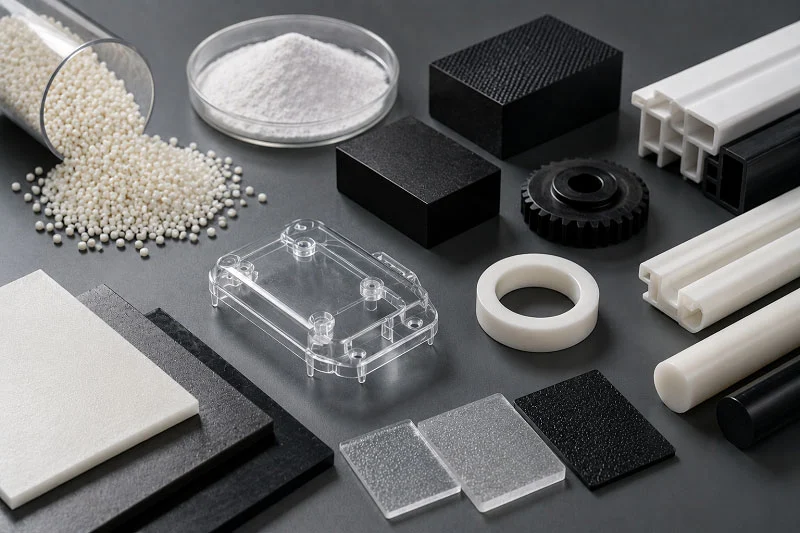
Choosing a material for a robot part means finding a balance. You compare four things: weight, strength, rust resistance, and cost. When you change one, the others change too. A lighter arm moves faster, but it might bend under a load. A stronger alloy keeps its shape, but it costs more and takes longer to machine. So the best choice depends on what the part really does.
Aluminium et Alloys
Aluminum is the go-to choice for arms, brackets, and housings. It is light, simple to machine, and resists rust once anodized. Grade 6061-T6 is often used in robot arms. It welds well and costs a moderate amount. Grade 7075-T6 is stronger but harder to weld. The fatigue numbers show the difference.
| Admisce | Lassitudo fortitudo | circuitus |
| 6061 T6, | 14,000 psi (96 MPa) | 5×10^ 8 |
| 7075 T6, | 23,000 psi (159 MPa) | 5×10^ 8 |
7075-T6 gives about 1.6 times better fatigue performance. That makes it a good fit for parts under repeated loads, like high-performance vehicle components. For a robot arm that changes direction thousands of times a day, that gap is important.
Chalybs Inoxidabilis et Titanium
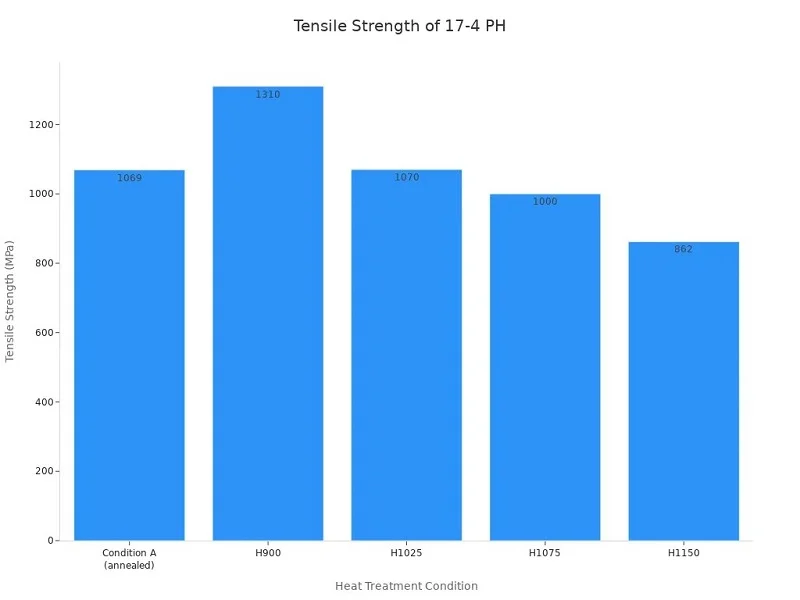
Stainless steel offers rust resistance and high strength. Grade 17-4 PH is a top pick for autonomous robot components that face stress and moisture. It can be heat treated to reach an ultimate tensile strength near 1,300 MPa (190,000 psi). Its modulus of elasticity is about 197 GPa. The heat treatment condition changes the result, as the chart below shows.
Titanium, especially Ti-6Al-4V, works well for demanding robotics applications. It combines high strength with low density and excellent rust resistance. The downside is cost and how hard it is to machine. You use it when saving weight is worth the price.
Plastica et Composita Ingeniaria
Plastics lower weight and cost. Polycarbonate covers stand up to impact. Acetal and nylon work for gears and bushings that slide or rotate. They need no lubrication in some designs. Carbon-fiber composites go even further. They give high stiffness at low mass, which helps fast-moving arms. The catch is cost and the difficulty of joining them. You cannot weld them like metal. So you design around fasteners or adhesives.
Precision Manufacturing Connects Every Autonomous Robot Component
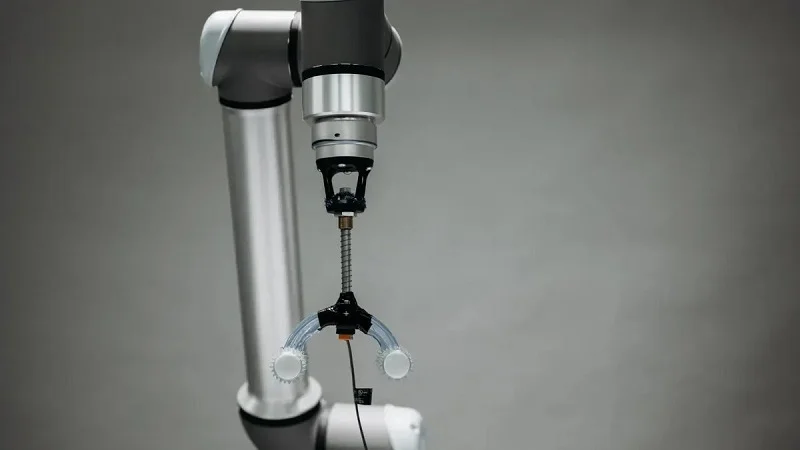
A robot is a system, not just a pile of parts. The arm, the gearbox, the motor, and the sensor only work well when they line up as one unit. That is where precision manufacturing comes in. It is the thread that ties mechanical, drive, and electrical pieces into one working machine. When you get it right, the robot moves smoothly. When you get it wrong, every error shows up at the tool tip.
Tolerantiae et Dimensional Sagaciter
Tolerance stack-up is the quiet problem in every joint assembly. A robot never sees dimensions one at a time. The motor pilot, bearing bore, gearbox mounting face, shaft centerline, and locating holes all interact. Each feature can pass inspection on its own. But their combined variations still push the final assembly away from where it should sit. That shift cuts positioning accuracy, even when the robot repeats the same wrong spot every cycle. Repeatability and accuracy are not the same thing, and this is exactly why.
The numbers back this up. In a published industrial-robot experiment, NIST researchers cut median positioning error by 97%, down to 0.3 mm, through better localization and calibration. That is a huge gain. But calibration should never excuse a mechanical alignment problem you could have avoided. Before production, review the datum structure, the tolerance chain, the mating autonomous robot components, the inspection method, and machining stability. Otherwise a perfectly machined motor mount becomes a poorly aligned robot joint.
This is how precision manufacturing connects every component. Tight dimensional tolerances on bearing journals, cross-roller races, and harmonic reducer mounting faces keep the motion chain honest. Common practice lands those features in the ISO H6/h6 range, ensuring clearances that keep the motion chain accurate. Planetary gear center distances are likewise held to tight tolerances. Motor stator pilots are specified to ISO h6 limits. Those are not vanity numbers. They decide whether your precision reducer holds position or drifts under load.
Surface Finish and Fit
Fit follows finish. A bearing pressed into a rough bore never seats the way the drawing intends. Gear teeth tell the same story. High-precision gears maintain strict profile and pitch tolerances appropriate for their grade, with surface roughness kept low to support reliable motion. ISO 1328 sorts gear accuracy into grades that cover pitch, tooth thickness, profile, runout, and backlash. Each one feeds directly into motion accuracy and repeatability.
Think about what backlash does to a precision gearbox. A tiny clearance at the reducer becomes a visible wobble at the end effector. Sensor alignment suffers too. An encoder that reads a shaft with runout reports a position the arm never reached. So surface finish and fit are not cosmetic details. They are the physical basis for how autonomous robot components work together.
Inspection, Testing, and Standards
You cannot claim precision you cannot measure. Coordinate measuring machines have changed this side of manufacturing robot parts. Here is what they bring to the floor:
- CMMs remove human error from measurement by standardizing inspection with micron-level precision, which cuts false rejections and unnoticed defects.
- They catch deviations early through real-time checks, so you can correct a process before a whole batch goes bad.
- They handle complex geometry by capturing thousands of data points across intricate surfaces.
- They improve process control by tracking tool wear trends and optimizing machining parameters.
- They generate detailed reports that support quality compliance and reduce rejection risk during client inspection.
Modern CMM platforms add open architecture under the I++DME specification, multi-sensor capability with vision, structured light, and ultrasonic options, and 5-axis positioning that speeds inspection dramatically over traditional 3-axis work. Hardened shop-floor units close the feedback loop between measurement and machining.
Standards give all of this a shared language. ISO 1328 governs gear accuracy. ISO H6 and h6 fit classes govern bores and shafts. Together with disciplined inspection, they turn precision-engineered autonomous robot components manufactured to consistently tight tolerances into a system you can trust. That trust shows up in accuracy, repeatability, payload capacity, and service life. Precision-engineered components and precision autonomous robot components only matter when the whole chain holds. So treat machining accuracy, inspection, and assembly as one continuous process. That is how autonomous robot components become a robot.
Design Considerations for Manufacturing for Autonomous Robot Components
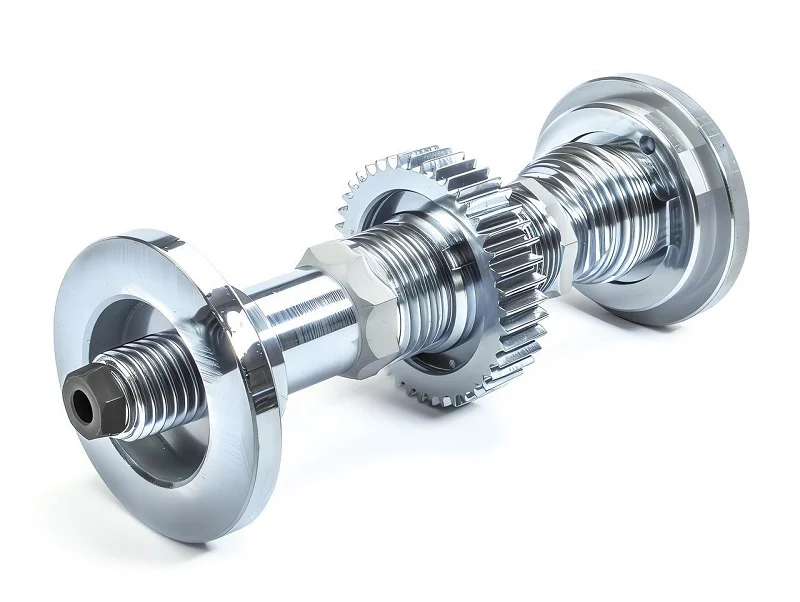
Every design choice you make closes some doors and opens others. Choose a thin wall and sand casting is no longer an option. Choose a deep pocket and simple molding is out. So design and manufacturing processes go together. You cannot pull them apart.
Weight, Strength, and Balance
Light parts move faster. That is the simple truth behind most robot design. But light parts also bend more. So you need to find the right balance. Topology optimization helps with this. One study reported a significant reduction in mass while maintaining strength and precision. Another study cut mass by a notable margin while preserving stiffness. So you can remove weight without losing stiffness. You just need the right method.
Balance matters too. A heavy end effector forces bigger servo motors. Bigger servo motors add more weight. That loop never ends well. So keep mass close to the base when you can.
Factores Thermici et Ambientales
Heat changes dimensions. A part that fits at room temperature may stick at 60°C. Hard coatings help control this. Hard chrome plating or hard-anodizing provides surface hardness (min. 30Rc) to prevent seals from abrading aluminum or polymer shafts. Thin dense chrome coatings can be deposited precisely, helping to manage thermal expansion.
Vibration is the other quiet killer. A custom damping wrist targets critical vibration frequencies. Passive damping significantly reduced vibration in testing. Passive dampers beat active ones here. They add little weight, bulk, or energy draw. Active systems risk instability and take up space. So for many robot arms, passive is the smarter choice.
Designatio ad Fabricabilitatem et Assemblationem
Design for manufacturability starts with the process in mind. A part meant for CNC machining needs tool access. A part meant for molding needs draft angles and uniform walls. Skip these rules and you pay more. You also wait longer.
Design for manufacturability also covers assembly. Fewer parts mean fewer joints. Fewer joints mean less tolerance stack-up. So group features into one machined block when you can. Use self-locating features. Standardize fasteners across the build. These choices speed up robot parts manufacturing and cut error sources. Good design for manufacturability and assembly is not extra work. It is the work.
Custom vs. Standard Autonomous Robot Components
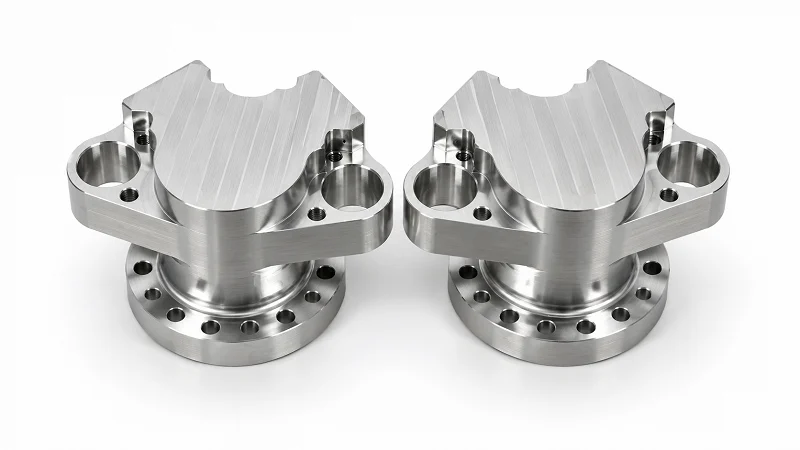
Every robot build comes to the same choice. Do you buy a part that is already made, or do you have one made just for you? Your answer changes your cost, your lead time, and how well it works. It also changes how the rest of the system fits together.
When Standard Parts Fit
Standard parts win on cost and speed. A catalog gripper or a stock gearbox ships in days, not weeks. The tooling is already there. So the price per unit stays low, even for small orders. For a cartesian robot moving boxes on a fixed grid, a standard gripper often works fine. The task repeats the same way. The parts are all the same. Nothing forces the design into a tight spot.
Standard parts also make maintenance easier. When a joint breaks, you swap in a new unit from stock. No drawings, no waiting on a machine shop. That matters for fleets of autonomous robot components spread across a warehouse floor. The tradeoff is fit. A stock part gives you the dimensions the maker picked, not the ones your design needs.
When Custom Manufacturing Adds Value
Custom work pays off when the task goes beyond what a catalog part can do. Take pick-and-place in surgical instrument handling. A benchmark gripper could not pick up a heavy stapler at all, a 0% success rate. A custom end effector hit 100% on the same task. It also placed instruments into racks perfectly, while the standard unit failed every attempt.
| sem | Custom End Effector | Standard Gripper |
| Picking heavy stapler | IV% success | IV% success |
| Placing instruments into rack | IV% success | IV% success |
| Axial translation tolerance | liberalis | Omnia |
| Transversal rotation tolerance | liberalis | Omnia |
The gap comes from design details. Two contact points spaced along the shaft spread the load and stop tilting. A non-covered linkage lets the instrument rotate on its own off-center mass, which allows vertical alignment in tight spaces. These are custom-manufactured autonomous robot components doing what no stock gripper can.
System-Level Tradeoffs
Integration choices affect the whole machine. Control architecture is a good example. Centralized control keeps one processor and one program, which suits simple machines. Field wiring on large systems can be a significant portion of installation cost. Distributed control cuts that wiring with local nodes on one network cable, but adds switches, patch panels, and fiber.
The selection threshold is fairly clear. Centralized control is often simpler for smaller systems, while distributed control becomes more economical as system size increases. Distributed systems also contain faults better, since one failure does not stop the whole line. They scale by adding a node, not by rewriting a monolithic program. The catch is skill. Troubleshooting a network demands staff who understand networking, not just ladder logic.
So the choice is never just about one part. It is about how that part, its process, and its control layer behave as one system.
NOBLE: Partner for Autonomous Robot Components

Good parts don’t just happen by chance. They come from a shop that knows how to cut metal and also how to build a whole system. NOBLE works on machining metal and plastic for robots. That focus matters when your design uses aluminum housings, steel shafts, and plastic covers all together.
Machinatio Metallorum et Plasticorum
NOBLE does precision machining for both metal and plastic. That range covers all kinds of robot parts. You can get aluminum arms, steel joints, and plastic bushings from one partner. Usually, changing materials in the middle of a project means changing shops. But here, it does not.
The shop combines precision manufacturing with full support. Both prototyping and mass production happen in one place. So your first part and your ten-thousandth part use the same process. That consistency is what high-quality robot parts need. It also reduces the time between design approval and first shipment.
Certificationes et Qualitas
Certification tells you a supplier has systems, not just machines. Certifications such as ISO 9001:2015 for general quality management and ISO 13485:2016 for medical devices are important for suppliers in robotics. NOBLE’s quality system aligns with these standards.
Auxilium a Designo ad Assemblationem
NOBLE does not just make parts. The team helps from design all the way to assembly. That means they give design-for-manufacturing advice before any machining starts. It means inspection data that helps improve the process. It means parts come ready to assemble, not needing extra work.
This is important for making robot parts. A gearbox housing with a wrong reference point can waste weeks. A partner who spots that risk early saves those weeks. In practice, making parts for robots rewards shops that think beyond just cutting. NOBLE puts that thinking into every quote.
Component choice, manufacturing process, precision, and material all connect closely. Change one, and the others change too. A lighter arm needs the right alloy. A tight joint needs the right tolerance. Precision manufacturing is the link that holds every autonomous robot component together as one reliable system. So look at your own designs with all of these in mind. Ask how each part will be made, how close it must hold, and what it is made of. Better manufacturing decisions lead to smoother motion, longer service life, and more capable autonomous systems in the future.
FAQs of Autonomous Robot Components
What are autonomous robot components?
They are the basic parts that every robot needs. Actuators, joints, arms, housings, gearboxes, motors, controllers, sensors, and end effectors all count. Each one only works well when its process, precision, and material fit the job.
Which material works best for a robot arm?
It depends on the load. Aluminum 6061-T6 is light and easy to machine. Aluminum 7075-T6 handles more fatigue. Stainless steel 17-4 PH gives high strength for heavy payloads. Titanium Ti-6Al-4V saves weight when cost is not the main concern.
How tight should robot part tolerances be?
Critical features need tight limits. Bearing journals and harmonic reducer mounting faces often land in the ISO H6/h6 range, ensuring precise fit. Planetary gear center distances similarly hold to tight tolerances. Loose tolerances cause backlash and drift.
Quando machinationem CNC prae fusione eligere debeo?
Pick CNC for load-bearing parts and tight alignment. It holds tolerance and surface finish well. Casting suits complex shapes like base plates, but it needs a second machining pass on critical faces. Forging works for parts that see shock loads.
What does DMLS add to robot part manufacturing?
DMLS builds metal parts layer by layer. It allows internal cooling channels and lightweight lattice structures. These cut mass while keeping stiffness high. As-built surfaces are rough, so critical faces usually need a light machining pass afterward.
Why does tolerance stack-up matter in a joint?
A robot never sees dimensions one at a time. The motor pilot, bearing bore, and gearbox face all interact. Each feature can pass inspection alone. Their combined variation still shifts the final assembly. That cuts positioning accuracy and repeatability.
When is a custom end effector worth it?
Custom work pays off when a stock part cannot do the task. In one benchmark, a standard gripper failed to pick a heavy stapler. A custom end effector hit 100% success on the same job. Design details made the difference.
What certifications should a robot component supplier hold?
Look for ISO 9001:2015 as the baseline quality standard. For medical device work, ISO 13485:2016 governs quality management. Reputable suppliers align with these standards.