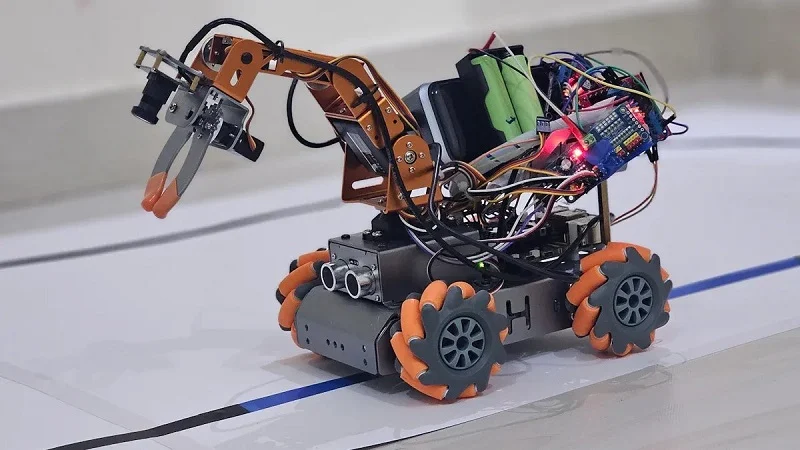
A robotics engineer has a CAD model and must decide how to make it into a real prototype. This means picking the material and the process. The main question is: which manufacturing processes and materials work best for ai robot prototype parts? And how do they affect design and production? This article covers material options, machining techniques, and system-level decisions. We focus on useful tips for choosing and building custom robotic systems. Strength, weight, and precision guide material choices. Timing and budget also matter. We skip background history and give practical advice for engineers and hobbyists. Real prototype examples from humanoid arms and mobile robots show these decisions in practice.
Design Considerations for AI Robot Prototype Parts
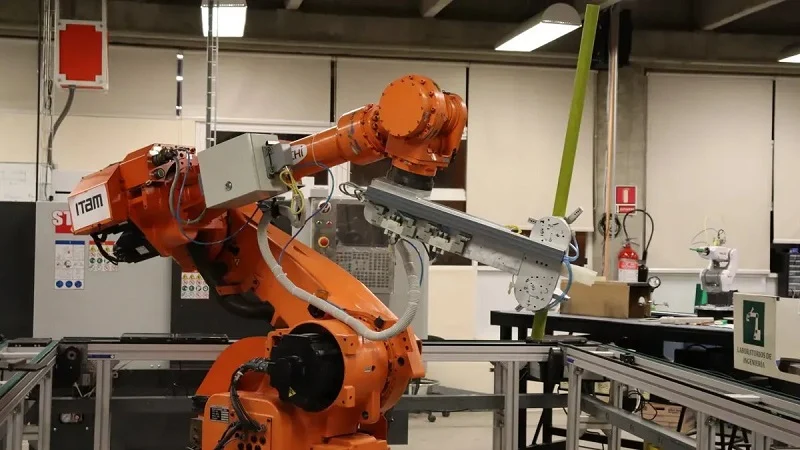
Every AI robot starts with five main systems: control, sensors, actuators, power supply, and the structural frame. In robotics, these systems all need different things from the parts they use. Decide on your choices early. They affect tolerances, assembly, and cost. Here’s what matters.
Strength, Weight, and Precision
Load-Bearing vs. Non-Load-Bearing Parts
Some parts carry real loads. Joints, links, and chassis members need high strength and stiffness. Aluminum alloys are popular here. They balance weight with rigidity quite well. Covers and body panels face much less stress. Plastics handle those roles fine. Sort out these functions early when you plan. That choice affects everything later on.
Caoinfhulaingt agus Críochnú Dromchla
Accuracy starts with the right tolerances. Precision matters most at interfaces. Bearing seats and rail mounts need tolerances within ±0.01 to ±0.05 mm. Components like tool changers and grippers require repeatability in the 0.015 to 0.02 mm range for reliable handling. But watch for tolerance stack-up. When many parts mate, tiny errors add up. A ±0.02 mm spec might cause binding joints. Only tighten tolerances where function demands it. Going from 0.5 mm to 0.02 mm doubles your manufacturing cost. Pushing to 0.01 mm triples it.
Tolerance directly affects robot accuracy. If brackets are off, the end effector misses its target. Good design for manufacturability means thinking about fit early. Smart design decisions affect cost and quality. The same logic applies to all manufacturing processes. Ask yourself: does every surface need tight control, or just the critical ones?
Fachtóirí Comhshaoil agus Teirmeacha
Teocht agus Nochtadh Ceimiceach
Where does your robot work? Factories get hot. Outdoor robots face chemicals. Standard plastics like ABS and HDPE fail above 100°C. You need PTFE or PEEK instead. PEEK handles continuous heat up to 260°C. For chemical exposure, PTFE, PEEK, and polypropylene resist harsh solvents. Titanium and stainless steel 316 are the best metals for corrosive settings. These materials choices link directly to performance under stress.
Sealing technology for outdoor robots uses advanced elastomers. Fluoroprene XP and EPDM resist UV radiation and cleaning agents. Think about the environment when you make your selection.
Creathadh agus Friotaíocht Tionchair
Robots move fast and stop hard. Vibration loosens screws over time. Impact can crack brittle components. POM, glass-filled nylons, and other tough plastics handle repeated stress well. They absorb energy without breaking. Titanium offers high strength without extra weight, but costs more. Match material damping to your robotic systems. A custom mobile robot bumping into walls needs tougher pieces than a stationary arm on a factory floor.
Costas, Am Luaidhe, agus Inscálaitheacht
Prototype vs. Production Budget
A single prototype piece costs more per unit. The same component in volume gets cheaper. Plan ahead. CNC machining gives accuracy without tooling costs for early testing. High volume runs use injection molding to cut per-unit cost. Component selection depends on volume and budget goals. Custom robotic systems often start with machined pieces and move to molded ones.
Bridge Tooling and Low-Volume Runs
Bridge tooling fills the gap between a single prototype and full manufacturing processes for AI robot prototype parts. It uses temporary molds for low volumes. This lets you test prototype-like pieces and validate fit before investing in hard tooling. Urethane casting works well for 10 to 100 pieces. This approach validates your design and production early, saving money and time before scaling up.
Common Materials for AI Robot Prototype Parts
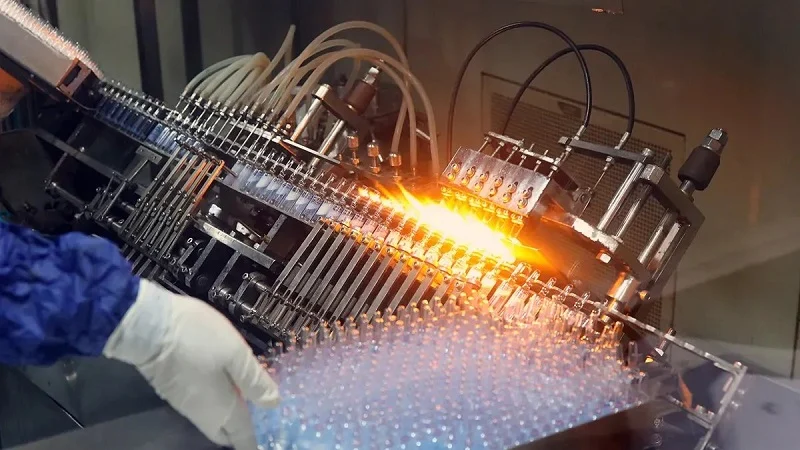
Choosing the right material is half the work. You want strength, low weight, and a price your finance team can accept. The choices come in three groups: metals, plastics, and composites. Each one has its own pros and cons. Let’s go through them.
Miotail
Metals are the top choice for structural work in robotics. They are stiff, strong, and predictable. But different metals act in different ways.
Aluminum Alloys for Lightweight Frames
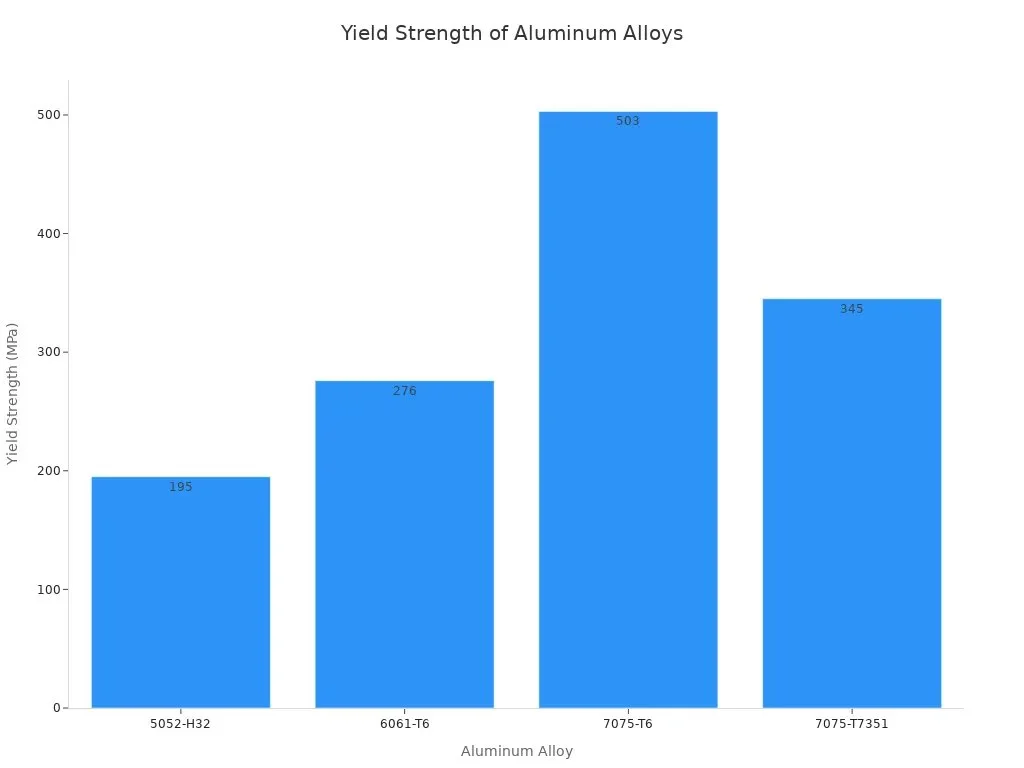
Aluminum is the first pick for most frames. Of all the grades, 6061-T6 is the standard choice for prototypes and general structural parts. It resists corrosion well, machines easily, and welds better than many stronger options. Its yield strength is 276 MPa. That is enough for machined brackets, plates, and structural links.
If you need more strength, 7075-T6 reaches 503 MPa. That makes it good for high-stress airframe work and premium drone arms. Here is a quick comparison of the common grades:
| Aluminum Alloy | Neart Táirgeachta (MPa) | Typical Use in Robotics/UAV Frames |
| 6061-T6 | 276 | General-purpose frames, robotic arms, FPV racing chassis |
| 7075-T6 | 503 | High-stress airframe, military UAV structures, premium drone arms |
| 5052-H32 | 195 | Sheet enclosures and battery housings |
| 7075-T7351 | 345 | Military, racing, or high-payload UAVs |
Stainless Steel 17-4 PH for Wear Parts
When you need strong wear resistance, 17-4 PH stainless steel gets the job done. In the H900 condition, its ultimate tensile strength reaches about 1,310 to 1,379 MPa. Yield strength falls between 1,172 and 1,276 MPa. Hardness reaches HRC 40 to 47. You can machine it with CNC or build it through DMLS. These numbers make it great for high-load shafts, pins, and structural fasteners. It also bends far less under load than aluminum, which matters for precision mounting plates.
Titanium Ti-6Al-4V for High-Strength Applications
Titanium alloy Ti-6Al-4V gives you high strength and low weight. Humanoid robot structural parts often mix aluminum, titanium, and steel. Titanium costs more, but it works best where every gram counts. Use it for critical links and joints that face heavy repeated loads.
Plaistigh
Plastics lower weight and cost. They also do jobs where metals would be too much.
ABS and PLA for Rapid Prototyping
ABS and PLA are the workhorses of FDM printing. They let you test fit and form quickly. Neither handles high heat well, so keep them away from motors and hot surfaces. For early-stage mockups, though, they are hard to beat.
POM and PEEK for Gears and Bearings
POM, often sold as Delrin, works great in gears and bearings. It has a low friction coefficient and excellent dimensional stability. Moisture absorption after 24 hours is only 0.25%, compared to 1.5–3.0% for nylon. That means less swelling and better precision over time. Delrin AF 100 handles high loads at high speeds with less wear. It has almost no slip-stick behavior because its static and dynamic friction coefficients are nearly equal. PEEK goes further, handling continuous heat up to 260°C. Both polymers resist chemicals well, making them solid picks for demanding applications.
Ábhair Chomhchodacha agus Speisialtachta
Composites give you the best strength-to-weight ratios. They are used in weight-critical or light-duty applications.
Polaiméirí Treisithe Snáithín Carbóin
CFRP changes the game for robotic arms. A T700S carbon fiber laminate weighs 1.55 g/cm³ versus 2.70 g/cm³ for 6061-T6 aluminum. That is about 43% lighter. Its specific stiffness reaches roughly 45 GPa·cm³/g, about 1.7 times that of aluminum. Research in IEEE Access reported a validated hybrid arm with a 24.32% mass reduction compared to an all-aluminum design. Every gram away from the joint cuts inertia, actuator torque, and energy use.
Glass-Filled Nylons and UHMW
Glass-filled nylons add stiffness to plastic parts without much cost. UHMW brings outstanding impact resistance and a low friction surface. These materials suit bumpers, guides, and wear strips. They absorb vibration and handle repeated stress without cracking.
Material selection ties directly into manufacturing processes and component selection. Get it right early, and your custom build stays on budget and on schedule.
Manufacturing Processes for AI Robot Prototype Parts
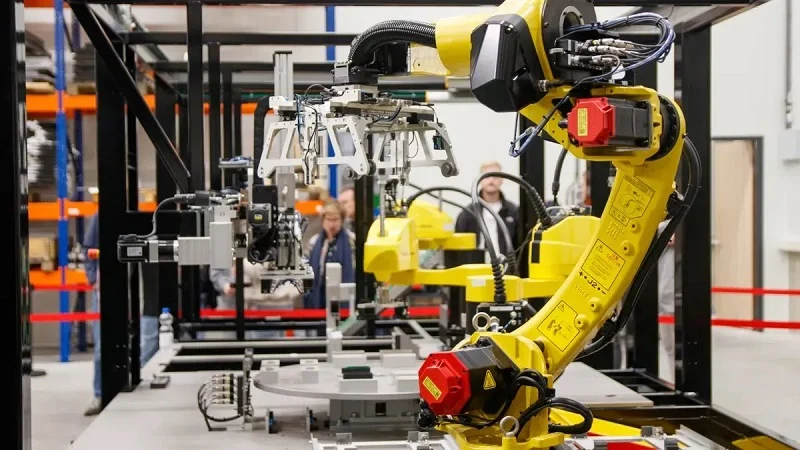
Common ways to make robot parts include cutting, injection molding, CNC machining, casting, and 3D printing. Each method fits different needs. Your choice depends on the part’s shape, how many you need, and your budget. Let’s look at the main options.
CNC Machining and Cutting
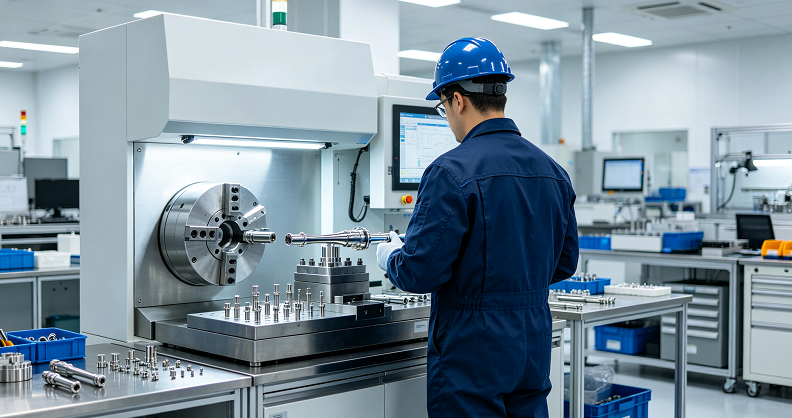
CNC machining gives you very precise and strong parts. It works on both metals and plastics. For AI robot prototype parts, this method is often used first.
Meaisínithe 3-Ais vs. Meaisínithe 5-Ais
Three-axis machines cut from one direction only. Five-axis machines move the tool and the part together. That extra movement really matters for complex shapes.
Five-axis machining is best when a part has slanted surfaces, deep pockets, or holes pointing in different directions. Robot joint housings have side holes, bearing holes, and reference faces. These features should be planned together. When you make precision holes on top, side, and slanted faces, each flip of the part adds small errors. These errors can be bigger than the machine’s normal accuracy. Five-axis machining keeps everything in one stable setup.
Consider hollow robotic joint housings. They have threaded holes around the outside and mounting bumps on curved surfaces. Three-axis work needs four to six manual re-clampings. This misaligns internal bearing holes with external motor surfaces. The first-pass success rate with 3-axis is only 59%. With five-axis single-setup, it jumps to 96%.
| Part situation | Recommended evaluation | Cúis |
| Side holes on a cylindrical part | 4-ais | Reduces manual flipping and re-datuming |
| Regular multi-face holes | 4-axis or 3+2 | Balances cost and setup stability |
| Angled sensor mounting faces | 5-ais | Reduces fixture changes and tool interference |
| Lightweight robot frames | 5-ais | Improves tool access to pockets and ribs |
| Thin-wall multi-face brackets | 5-axis with staged machining | Helps manage clamping and datum drift |
| Low-volume parts with repeat accuracy | 5-axis evaluation | First-article process can be repeated for the batch |
Feeds, Speeds, and Tool Selection
Feeds and speeds depend on your material. Aluminum cuts fast with high spindle speeds. Titanium needs slower speeds and more coolant. Tool choice matters too. Carbide tools handle most jobs. Diamond-coated tools work better for rough composites. A custom manufacturing partner like NOBLE can help you set these values for your specific design.
Sheet Metal Manufacturing for Robotics
Sheet metal is a fast way to make frames and enclosures. Manufacturing for robotics often starts here for chassis work.
Gearradh Léasair, Lúbadh, agus Táthú
Laser cutting makes flat patterns with clean edges. Bending forms the 3D shape. Welding joins the pieces together. This sequence works well for brackets, mounts, and base plates. Each step adds value without high tooling costs.
Frames and Chassis Fabrication
Mobile robot chassis need to be rigid but not heavy. Sheet metal gives you both. You can add ribs and gussets where stress is high. Cutouts remove material where it’s not needed. This approach keeps robotic systems light and stiff.
Injection Molding, Casting, and 3D Printing
These three methods cover everything from single prototypes to full production runs.
Injection Molding for Shells and Covers
Injection molding makes shells, covers, gloves, and outer body parts. It reduces weight, protects internal parts, and gives the robot its look. ABS is a common choice. The recommended wall thickness for ABS is between 1.14 and 3.56 mm. Walls thinner than 1 mm are hard to fill evenly. The mold tooling costs more at first, but the cost per part drops quickly when you make many.
Urethane Casting and Bridge Production
Urethane casting fills the gap between prototype and production. Silicone molds last for 10 to 100 parts. You get parts that feel like molded ones without spending on hard tooling. This bridge production lets you test fit and function before you buy steel molds.
FDM, SLA, and SLS for Complex Geometries
3D printing has changed how humanoid robots are made. It allows complex shapes and quick prototyping that older methods can’t match. FDM is good for quick mockups. SLA gives smooth surfaces for visual models. SLS makes strong nylon parts without support structures.
For SLS and MJF, plan for about ±0.3% dimensional accuracy. Machine or ream any bearing hole afterward. SLS nylon PA12 parts have a rough surface that needs sealing. Vapor smoothing improves surface finish as a batch step. TPM3D’s SLS solutions achieve about ±0.2 mm per 100 mm. That gives precise fit for end-effector prototypes.
These manufacturing processes for AI robot prototype parts each have their place. Choose based on your part’s shape, quantity, and performance needs.
Applications of AI Robot Prototype Parts
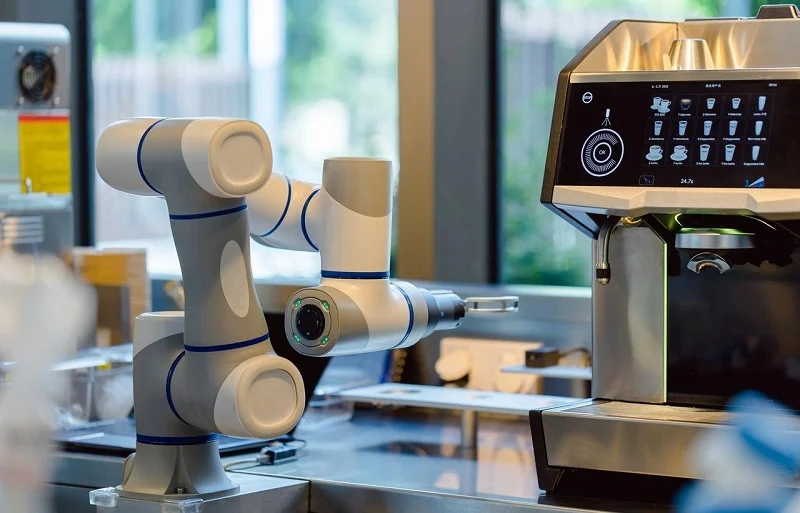
Real choices about materials and how to make parts appear in real builds. Here are three common uses and the reasons behind them.
Humanoid Robot Arm Prototype
The shoulder joint holds the whole arm. It must move without wobble. In a real prototype, the client required a tolerance of ±0.01 mm. Precision CNC machining met that for every bearing seat and motor mount.
Manufacturing design rules help here. Bearing holes get H7 tolerance with tight roundness. Minimum wall thickness is 1.8 mm. Inside corners are at least 1.5 mm. Undercut shapes let 5-axis tools reach. There are no closed pockets. Strengthened bosses hold threaded holes. Clamping lugs keep the part stable. Every edge has a small chamfer. Bearing systems and joint housings both benefit from these rules. This design for manufacturing approach ensures good robotic systems performance from the start. Picking the right parts means the prototype works on the first try.
Mobile Robot Chassis and Sensor Mounts
Aluminum 5052-H32 sheet is a common pick. It bends easily and fights rust. Thicker panels add stiffness where needed. Cutouts take out weight elsewhere. Sensor mounts use 6061-T6 for better accuracy. The total cost stays low because sheet metal tools are cheap. This works for custom robotic systems that need quick changes. Other uses include small delivery robots and warehouse platforms.
End-Effector and Gripper Prototypes
SLS nylon is strong for its weight. It can handle millions of uses. It prints without needing supports. Un-sintered powder holds the part while printing. This allows inside channels and lattice shapes to save weight.
Compliant mechanisms are a key use. These joints bend around objects without extra motors. Underactuation uses fewer motors for more joints. That saves weight and money. Bio-inspired shapes like human fingers are possible. For important mounting points, machined metal inserts give the needed accuracy. This mix combines the best of both worlds. Robotics engineers value this flexibility for custom precision parts in new designs.
These real-world uses show how theory meets practice across different robotic systems.
Future Trends in AI Robot Prototype Parts
Hybrid and Multi-Material Printing
Hybrid machines now combine additive and subtractive methods in one setup. They print a rough shape, then mill it to final sizes. This saves time on complex shapes. Multi-material printing takes it further. A single build can mix hard plastics with flexible parts. Conductive paths get built right into the housings. Smart materials like shape-memory alloys are also coming into use. These advances let you create sensor mounts and structure pieces as one unit. Fewer assembly steps lead to fewer failure points. This change in manufacturing for robotics shifts how engineers think about design.
AI-Driven DFM and Generative Design
AI tools now help engineers choose manufacturing steps automatically. The workflow follows a clear order. Engineers start by setting goals like “make it lighter” or “make it stronger.” The software then creates hundreds of possible designs. It tests each one under real-world forces. Weak designs get thrown out. The strongest, lightest options get improved for production limits.
The accuracy of these tests keeps getting better. Generative design cuts weight by 20–60% for CNC parts. For 3D-printed parts, the weight drop is 40–80%. Lighter robot arms run faster cycles.
Real-world uses confirm these results. Car grippers weigh 40% less after optimization. They still carry the same load with the same accuracy. Vacuum grippers for electronics making get 50% weight reduction. Food handling equipment benefits from smooth, curved surfaces that clean easily.
Different tools lead this area. nTopology cut 30% from a Ford brake caliper while keeping strength. Siemens NX trimmed 22% from an aerospace titanium bracket. Leo AI adds robotics-specific knowledge right into the design process. 3D printing makes the organic, shape-optimized designs that these tools create. The systems now suggest material and process mixes on their own. Custom work for robotic systems becomes faster and smarter. Engineers can now test custom designs without doing manual trials.
Ábhair Inbhuanaithe agus Athchúrsáil
Sustainability now guides material choices in the field. Recycled aluminum alloys work almost as well as new metal at a lower cost. Bio-based plastics offer an alternative to oil-based plastics for covers and housings. These choices lower harm to the environment without hurting performance.
End-of-life planning also matters. Modular builds let you replace worn parts instead of whole assemblies. Some makers run take-back programs for metal parts. These trends will grow as rules get tighter. Smart choices today make future rules easier to follow.
The future looks good. Hybrid tools, AI-driven methods, and sustainable approaches work together. Engineers who adopt these trends build better robots faster.
NOBLE: AI Robot Prototype Parts Partner
NOBLE is a maker that works with metal and plastic for ai robot prototype parts. The company helps engineers who need real parts, not just drawings. You get one partner for machining, molding, and printing. That saves time and keeps quality the same across every batch.
CNC Machining, Injection Molding, and Additive Manufacturing
NOBLE runs several processes in one place. CNC machining handles tight-tolerance metals and plastics. Injection molding takes care of shells, covers, and housings once your design is stable. Additive manufacturing fills the gap for complex shapes and fast turns. You pick the process that fits your part, and NOBLE does the rest.
Surface finishing is just as important as cutting. Sanding and polishing remove layer lines and tool marks, and they give ABS parts a smooth, glossy surface like machined parts. Vapor smoothing uses acetone vapor to partly dissolve the ABS surface layer, which erases layer lines fast and leaves an injection-molded look. Painting and coating add color, hide small flaws, and boost scratch or chemical resistance. Texturing copies an injection-molded feel, masks defects, and improves grip. Each option has trade-offs. Vapor smoothing can shift dimensions, so testing before production is smart. Solvent-based paints may corrode ABS, so compatibility checks are wise.
ISO 9001:2015 agus ISO 13485:2016
NOBLE holds ISO 9001:2015 and ISO 13485:2016 certifications. The first covers general quality management. The second applies to medical devices, and it matters when your robot touches patients or surgical tools. Under ISO 13485:2016, design and development controls govern every prototype iteration. Design verification confirms each component meets specs. Design validation confirms the assembled system performs safely in realistic scenarios. Undocumented design changes are blocked.
Risk management follows ISO 14971. Prototype parts get checked for possible failures like contamination or connector defects before they reach patients. Device identification and traceability let NOBLE rebuild product history from raw materials through distribution. If a supplier reports a defect, the team can trace the affected lots. Purchasing controls require certified suppliers to tell NOBLE about manufacturing changes that affect component characteristics. Production and process controls keep prototype batches consistent. Internal audits and corrective actions close the loop when something goes wrong.
DFM, Prototyping, Production, and Final Assembly
NOBLE does not stop at production. The team starts with design for manufacturability reviews. They flag features that drive up cost or cause tolerance stack-up. Then they build prototypes, run low-volume bridge batches, and scale to full production. Final assembly is part of the package. You get a finished subsystem, not a box of loose parts.
This full-range approach suits custom work. A custom gripper might need machined metal inserts and SLS nylon fingers. A custom chassis might mix sheet metal and molded covers. NOBLE coordinates those steps so the parts fit together. For engineers building custom robotic systems, that single point of contact removes a lot of friction. Custom manufacturing works best when one team owns the whole chain. NOBLE positions itself exactly there.
Begin with your design needs first. Pick how to make the part based on its shape and how many you need. Match materials to the forces and surroundings they will face. Think carefully about trade-offs across the whole system. AI robot prototype parts work best when custom builds treat production and design as one steady flow. Check strength, weight, precision, and cost for your robotics project. Custom robotic systems need this kind of early thinking about processes. Hybrid tools and AI-driven methods boost accuracy in every system. These trends make future prototyping easier. They cut errors faster and let engineers test hard ideas with fewer tries. Faster cycles bring better robots and lower costs. That makes the whole process work better. Talk to NOBLE for your next AI robot prototype project.
FAQ of AI Robot Prototype Parts
How do I pick the right material for my robot prototype?
Start with the job the part must do. Load-bearing pieces need metals like aluminum or steel. Covers and shells work fine in plastics. Check the environment too. Hot or chemical-heavy settings call for PEEK or titanium. Match the material to the forces and conditions it will face.
When should I choose 5-axis machining over 3-axis?
Pick 5-axis when your part has angled faces, deep pockets, or holes pointing in different directions. Robot joint housings often need this. One setup keeps everything aligned. The first-pass success rate jumps from 59% to 96% compared to multiple 3-axis setups.
What tolerance should I specify for bearing seats?
Bearing seats typically need tolerances within ±0.01 to ±0.05 mm. But don’t tighten every surface. Going from 0.5 mm to 0.02 mm doubles your cost. Pushing to 0.01 mm triples it. Only tighten tolerances where function demands it.
Is 3D printing good enough for functional robot parts?
Yes, for many applications. SLS nylon handles millions of cycles and works great for gripper fingers. It prints without supports, so internal channels and lattice shapes are possible. For critical mounting points, add machined metal inserts for accuracy. This mix gives you the best of both methods.
How many parts can urethane casting produce?
Silicone molds last for 10 to 100 parts. This bridge production lets you test fit and function before buying steel molds. It fills the gap between a single prototype and full injection molding. You get parts that feel like molded ones without the tooling investment.
What’s the difference between prototype and production budgeting?
A single prototype piece costs more per unit. The same component gets cheaper in volume. CNC machining gives accuracy without tooling costs for early testing. High volume runs use injection molding to cut per-unit cost. Plan your budget around your expected quantity.
Can I use ABS for robot parts near motors?
No. ABS and PLA don’t handle high heat well. Keep them away from motors and hot surfaces. For those areas, use PEEK instead. It handles continuous heat up to 260°C. POM also works for gears and bearings with low friction and good dimensional stability.
What makes carbon fiber good for robotic arms?
CFRP offers excellent strength-to-weight ratios. A T700S carbon fiber laminate weighs 1.55 g/cm³ versus 2.70 g/cm³ for aluminum. That’s about 43% lighter. Every gram away from the joint cuts inertia, actuator torque, and energy use. This matters a lot in robotics where speed and efficiency count.