Introduction: The Symbiosis of 5-Axis CNC Machining and Robotic Exoskeletons
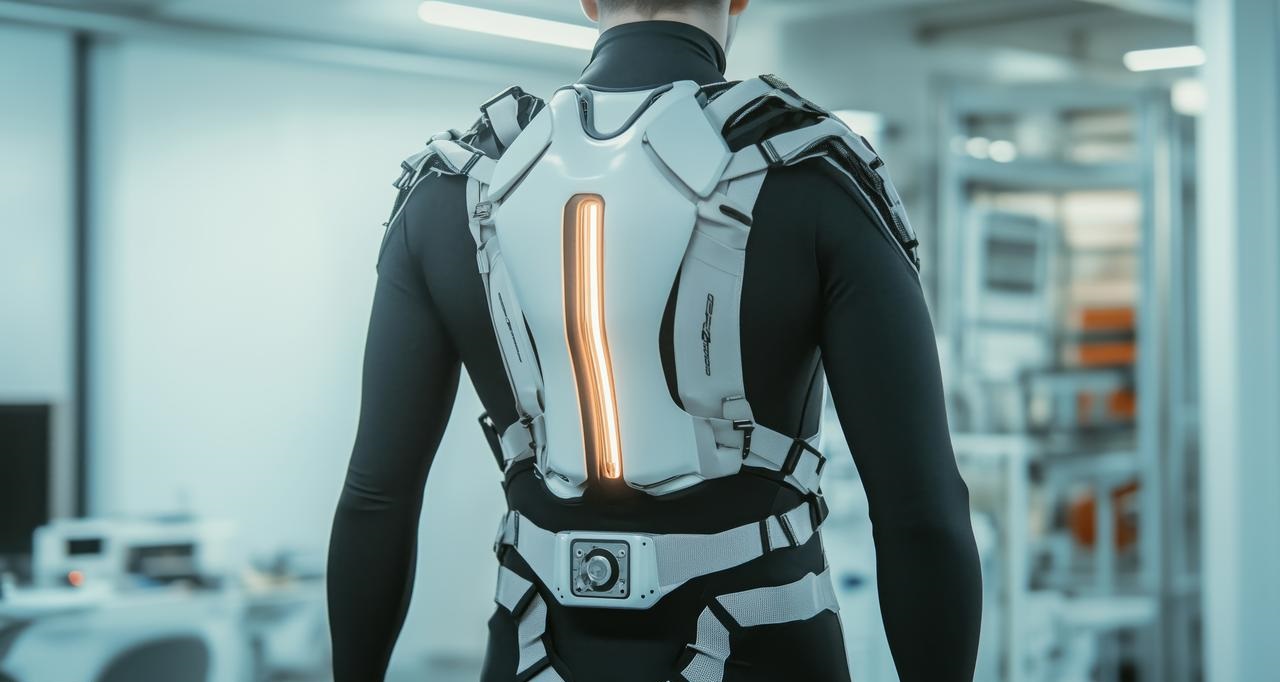
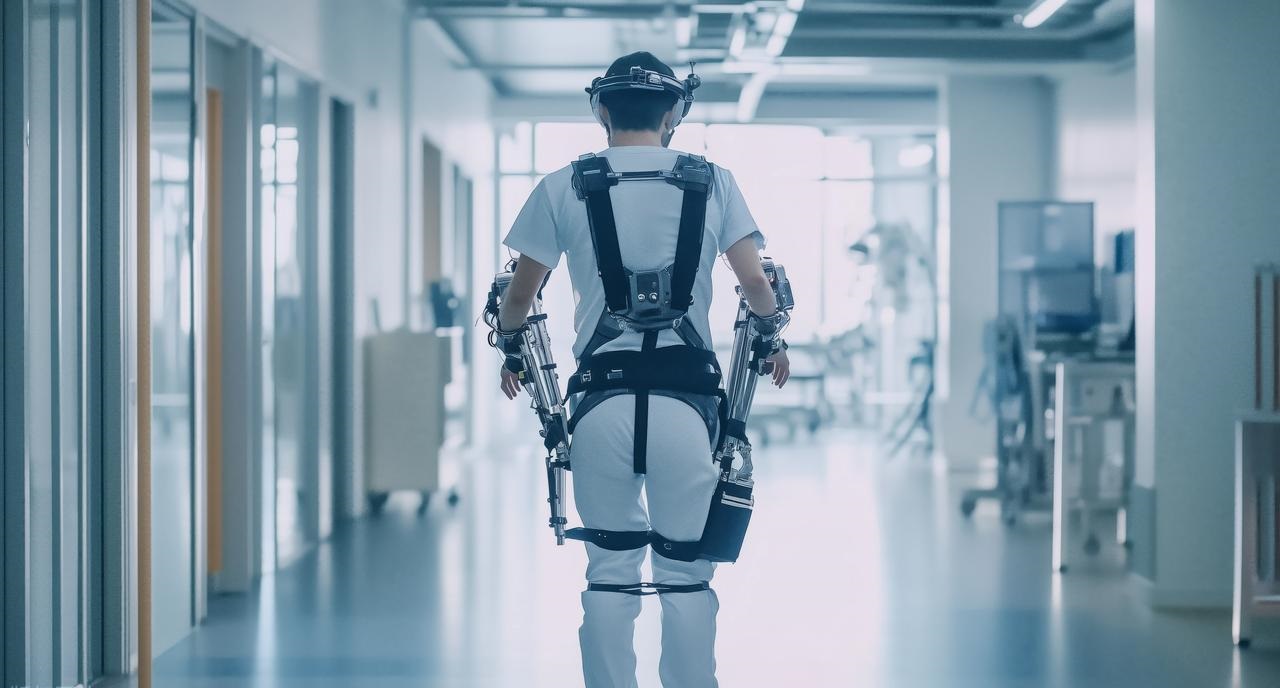
Picture this: a robotic exoskeleton that works in sync with your muscles. It’s not at all like the bulky stuff you see in sci-fi movies. It’s the perfect mix of machine and human movement, giving the wearer unparalleled strength and helping them to get back on their feet.
But making a robotic exoskeleton is really hard. The design of components needs to be really complex and involves copying human curves and lever mechanisms to a very precise degree. They’ve got to be super strong but still really light, so they’re not a hassle to carry. This is a big challenge for any factory.
Do you know how to build robotic exoskeletons? This is where a specific manufacturing method becomes a must. This article will show how 5-axis CNC machining has become the essential backbone for this work. This is the process that takes complex digital designs and turns them into the high-tech reality of modern robotic exoskeletons. I’ve always been fascinated by it too. So I went to learn, and now I’ll share what I’ve learned with you.
The Robotic Exoskeleton Engineering Challenge
The Design Imperative
The challenge is clear. You have to mimic human movement.
So, your robotic exoskeletons can’t just be simple blocks. They need organic, flowing shapes. Just think about a hip joint or a spinal support frame. These are complex 3D geometries.
Now, the requirements are tough. Every part has to be as light as possible. It also needs to be really strong to handle the force. It’s also got to be comfy for the person wearing it. All three conditions have to be met.
This is where traditional methods fall short. A basic 3-axis CNC machine can’t make these shapes easily. You’d have to stop, reposition the part, and set it up again. That’s really slow, and it messes up the accuracy. Other techniques, like casting, add too much weight. Welding can create weak points.
The design needs a more capable way to be built. A no-nonsense way of dealing with complexity.
The Material Puzzle
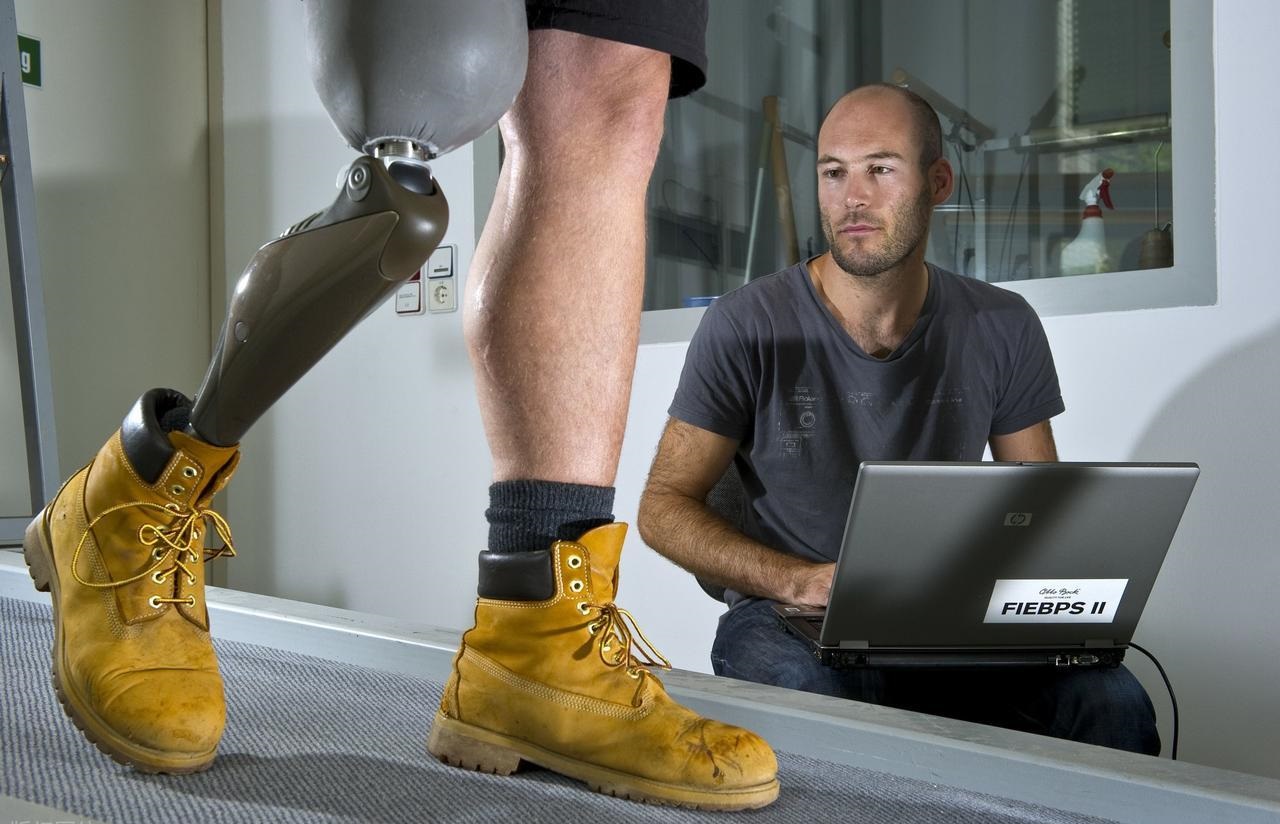
The next important decision is about choosing the materials. You’ve got the freedom to choose from multiple materials, each tailored for specific applications. The material you choose has a big impact on how the robotic exoskeleton parts are made and how well they work.
| Material | Advantages of Robotic
Exoskeletons |
5-Axis Machining Considerations | Common Applications |
| Aerospace Aluminum | Excellent strength-to-weight ratio, good corrosion resistance | Machines that easily work with sharp tools require proper chip evacuation | Structural frames, joint housings, mounting brackets |
| Titanium Alloys | Superior strength, biocompatibility, fatigue resistance | Requires lower cutting speeds and specialized tool coatings | Critical joint components, implants for medical robotic exoskeletons |
| Engineering Plastics (PEEK, UHMWPE) | Lightweight, vibration-damping, self-lubricating | Prone to thermal deformation, requires sharp tools and cooling | Bushings, bearing surfaces, comfort interfaces |
| Magnesium Alloys | Extremely lightweight, good vibration damping | Flammable chip risk requires special handling and needs corrosion protection | Ultra-light structural elements in portable systems |
| Carbon Fiber Composites | Exceptional stiffness-to-weight ratio, fatigue-resistant | Requires specialized tooling to prevent delamination, generates hazardous dust | High-performance structural elements in competitive/rehabilitative devices |
This precision is really important for factory production, and it also has a direct impact on how the robotic exoskeletons feel for the person wearing them. Picking the right materials and doing precise machining means the final weight is determined. It’s really important to be comfy, because that affects how long the device will last. But if you don’t use robotic exoskeletons properly, it’s just going to feel like a clunky and uncomfortable machine. The material and the manufacturing are locked together. You can’t have one without the other.
Demystifying 5-Axis CNC Machining of Robotic Exoskeletons
So, let’s take a look at 5-axis CNC machining. It’s actually pretty straightforward.
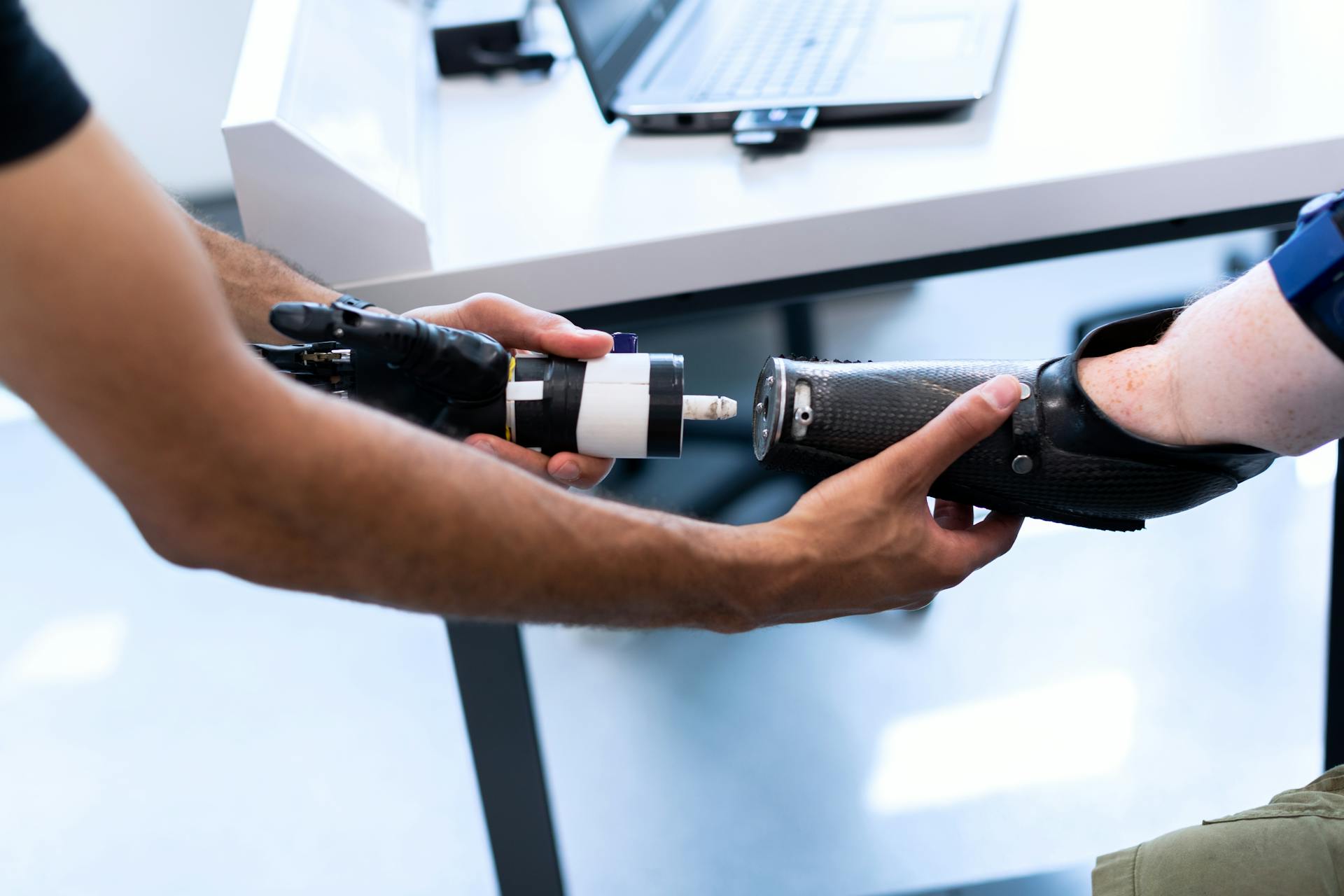
You know the three linear axes: left-right (X), forward-back (Y), and up-down (Z). A 5-axis machine has two more rotational axes on top of these. It’s usually the A-axis that tilts the part forward and back, and the B-axis that swivels it side to side. The cutting tool can now approach the workpiece from almost any angle.
The Key Advantage: Single-Setup Machining
This gives us a big advantage: single-setup machining. You just clamp the raw material once. That’s all there is to it. The machine does the rest.
Why is this important? Firstly, it gets rid of cumulative error. On a 3-axis machine tool, slight deviations are inevitably introduced each time the fixture is released and the workpiece is repositioned. However, a three-axis machine tool ensures that all parts are always in the same precise coordinate system. Those errors add up. One setup fixes that issue. Everything stays in one perfect coordinate system.
Secondly, it offers a wider machining range. The rotary table allows the cutting tool to machine complex angles and deep grooves that vertical cutting tools cannot reach. You can machine the back of a curve or the inside of a cavity in one go.
The result is pretty simple. You get unmatched precision because nothing moves between operations. Because shorter, stronger cutting tools can be used, and optimal cutting angles can be maintained, better surface finishes can be achieved. Furthermore, production speeds are faster because there is no need to spend time readjusting and recalibrating robotic exoskeleton parts. This is not just an upgrade, but a completely new way of working.
Key Applications in Robotic Exoskeletons
Articulating the Future: Complex Joint Mechanisms
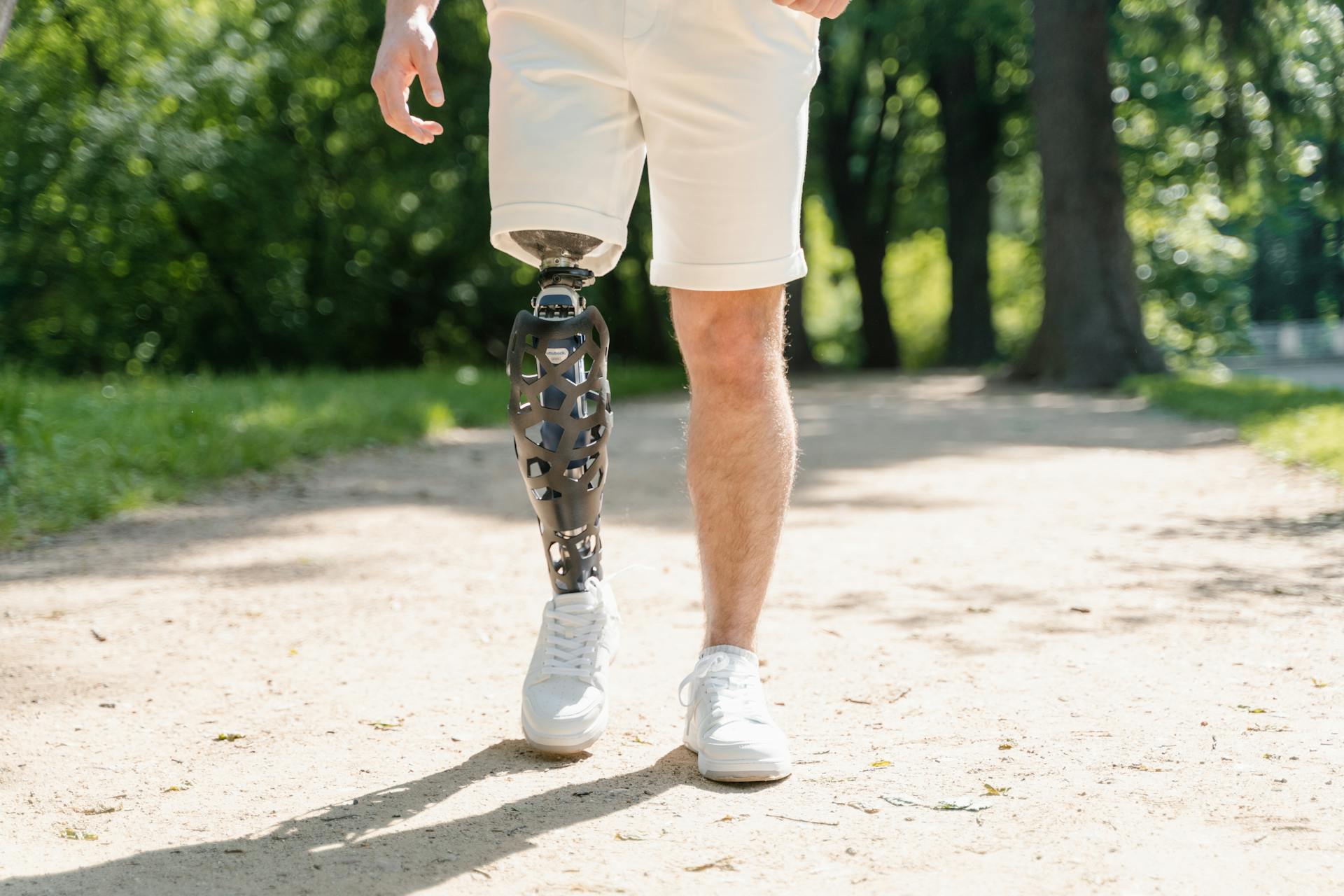
Think about a hip or knee joint. It’s not a simple hinge. It’s a pretty complex mechanism, with compound curves and all. These surfaces have to be perfectly machined to house the bearings and allow for movement in multiple directions. 5-axis CNC machining is how these organic, load-bearing shapes are made from a single block of metal. 5-axis CNC machining creates smooth contours and perfectly fitting surfaces.
The tolerances required here are extremely stringent. We’re talking about clearances and fits measured in hundredths of a millimetre — less than 0.1 millimetres. This level of precision is crucial. It determines whether the movements of the legs of your robotic exoskeleton are stiff and mechanical or fluid and natural. Any looseness or friction at the joints will affect both the exoskeleton’s appearance and its functionality. The machine can handle these tolerances across a complex curve, all in one go, which is what makes the joint work. It’s all about the future because it can create the geometry that natural movement needs.
The Strength of Bones: Lightweight, Topology-Optimized Structures
This is where the design really stands out. Have you ever thought about how bones are structured? They’re strong where they need to be and light everywhere else.
First, our engineers use software to run topology optimisation. The algorithm breaks down the design, working out where the material is vital for strength and where it’s just unnecessary. The result is an organic structure that looks almost like bone. But this shape is usually impossible to make with traditional tools.
That’s where 5-axis CNC machining comes in. CAM software translates complex computer-generated designs into precise toolpaths. It tells the machine exactly how to carve out that optimised shape.
The machine then carries out the process. It can cut incredibly thin walls for the outer shell. It can make internal lattices and deep cavities, leaving behind a webbed, skeletal interior. The plan is to cut all the excess material. It’s not just about making a part lighter; it’s about engineering its internal structure for maximum strength and minimum weight. The machine takes an algorithm and turns it into a real object, like a load-bearing component.
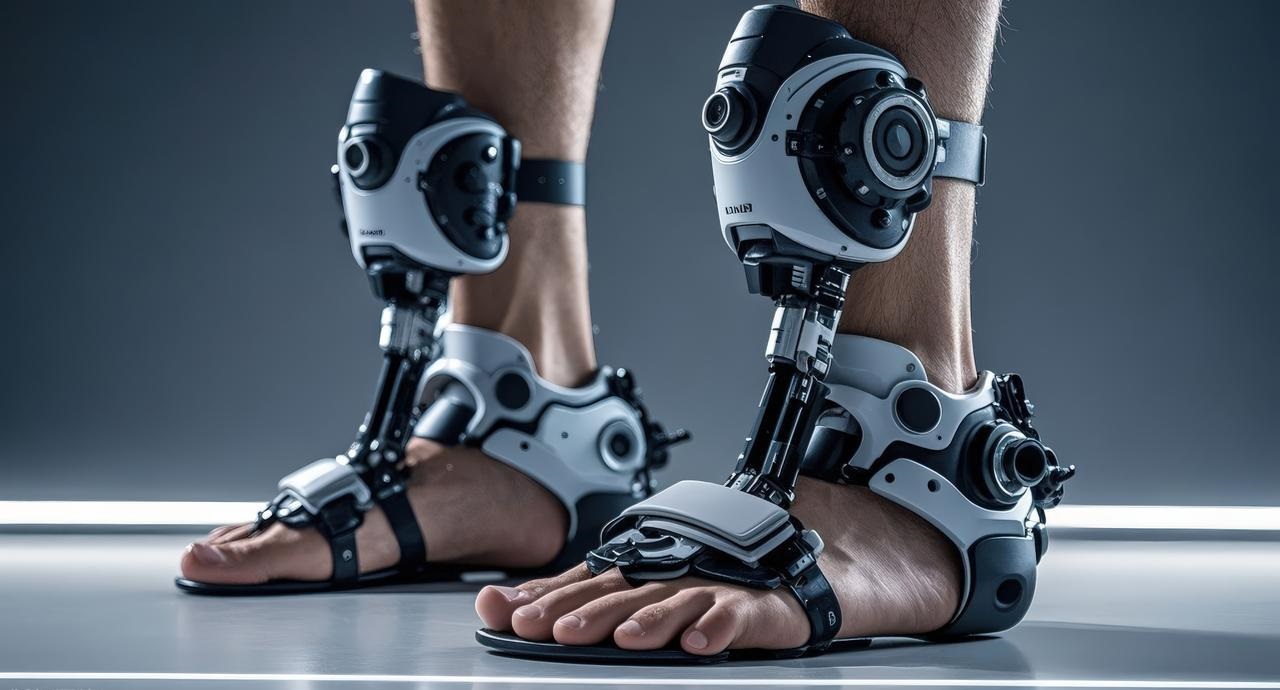
Housing the “Muscles”: Integrated Actuator and Sensor Components
The machine doesn’t just create a robotic skeleton. It also builds the housing for its own muscles and nerves.
Just think about the actuators for a minute – these are the motors, harmonic drives, and elastic components that provide the force. They need precise, secure mounts. A 5-axis machine can carve out these complex housings directly from the main structural piece. This makes sure the actuator fits perfectly and is nice and stiff. No play. Everything’s lined up just right. The power unit slots into the frame really easily.
But there’s more to it than that. All those components need power, data, and, sometimes, coolant. The machine can solve this inside the robotic skeleton itself. It’ll carve out channels and conduits as it works. These are then used for wiring, hydraulic lines, or pneumatic tubes. You won’t need to attach external hoses or drill separate holes later.
The result is a clean, integrated system. The channels are machined directly into the structure in one go. This protects delicate wiring, improves reliability, and gives the final product a sleek, self-contained design. The housing isn’t just a box; it’s a sophisticated part of the robotic exoskeletons.
From CAD to Finished Robotic Exoskeletons
Here’s how a digital design becomes a physical part. It’s a defined sequence.
- There’s the digital model. But a model isn’t enough. You run it through FEA, which stands for Finite Element Analysis. This software can do stress, heat, and force simulations. It shows you where the part will bend or fail.
- You’re moving on to CAM programming. The programmer takes the CAD model and develops toolpaths. This is really important for 5-axis CNC machining. So, programmers need to come up with efficient paths for the cutting tools, and make sure that the rotating cutting tools, tool holders, and the machine itself don’t collide with robotic exoskeletons, parts,s or fixtures.
- It’s on to fixturing. The material, which is often a block of an odd shape, needs to be kept absolutely still. For complex robotic exoskeletons, you design custom fixtures. These special clamps or bases grip the irregular shape tightly at the right angle, so the machine can access all the sides it needs to without anything getting in the way.
- The machining begins. It happens in stages.
- Roughing: A powerful cutter quickly removes large amounts of material, getting close to the final shape.
- Semi-finishing: When a finer tool takes over, leaving a small, uniform amount of material for the final pass.
- Precision finishing: The last tool (typically a small ball-nose end mill) makes the final cuts. At this stage, we will ensure the exact dimensions and surface finish are just right.
- The part isn’t finished when the machine stops. It goes to verification. A Coordinate Measuring Machine (CMM) uses a probe to check hundreds of points on the robotic exoskeletons, comparing them to the original CAD model. This confirms sub-millimetre tolerances.
- Then, the technicians will deburr the parts to get rid of any sharp edges or little bits of debris left over from cutting.
- Then, to protect them and make sure they work properly, the parts will undergo surface treatment, like anodizing, electroplating, or coating. You can’t start the assembly until all these steps are done.
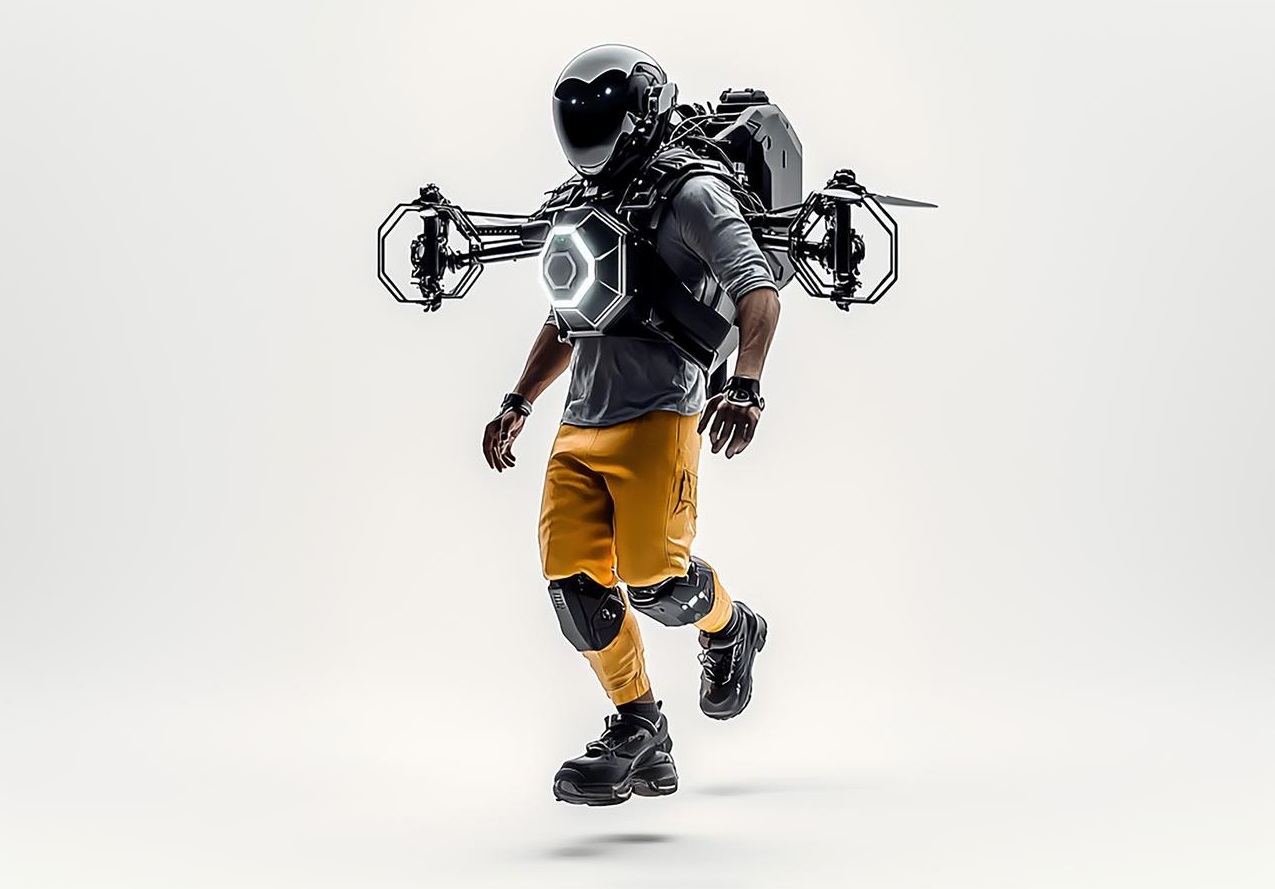
Robotic Exoskeletons Integrate Modern Technology
The Hybrid Approach
You could start with 3D printing. It’s perfect for creating near-net-shape parts, which are basically the basic shape of the part, especially for parts with complex internal structures. But the surface finish and precision just aren’t good enough for final use. That’s where the 5-axis CNC machine comes in. It can hold the printed blank in place and perform precision machining. It can machine critical bearing surfaces, fine threads, and precise mating features. This lets you combine the freedom of additive manufacturing with the precision of subtractive manufacturing.
The Smart Machine Shop
The shop itself is getting smarter. Great news – machines now have in-process probing! You could start with 3D printing. It’s perfect for making near-net-shape parts, meaning parts with a basic shape, especially for robotic exoskeleton parts with complex internal structures. This data means predictive maintenance is possible — fixing a worn bearing before it fails and ruins a part — and real-time optimisation of cutting speeds for efficiency.
The Digital Thread
It’s all connected by the digital thread. It can hold the printed blank in place and perform precision machining. It can machine critical bearing surfaces, fine threads, and precise mating features. This lets you combine the freedom of additive manufacturing with the precision of subtractive manufacturing.
Why 5-Axis CNC Machining is Critical for Robotic Exoskeletons
For Performance
When it comes to performance, the improvements are pretty clear. This approach really improves how well robotic exoskeletons work, making them stronger where needed, lighter overall, and more efficient.
For Innovation
It’s a real game-changer when it comes to innovation. If complex joint or frame prototypes can be finished in days instead of months, development cycles speed up. You can test out different ideas much more quickly. You might make more mistakes, but you’ll learn faster.
For Personalization
And then there’s personalisation. When it comes to medical devices, a one-size-fits-all approach just doesn’t work. This precision machining makes patient-specific robotic exoskeletons affordable. You can get a support frame to fit your body really easily and without spending a fortune.
For the Future
At the end of the day, it shows us the way forward. This is laying the foundation for the next generation of robotic exoskeletons. They’ll be more advanced in their function. They’ll be cheaper because they’ll be produced more efficiently. This makes them easier for the people who need them to access. The edge today builds the standard of tomorrow.

NOBLE: Your Partner in Robotic Exoskeleton Development
Bridging the Gap from Digital Design to Physical Reality
5-axis CNC machining technology is great, but you need a manufacturing partner who’s really good at engineering, has strict quality standards, and gets what the end product is actually for. Here at NOBLE, we’re all about being your go-to partner and turning your most complex ideas into top-notch components that meet the high standards of robotic exoskeletons.
NOBLE’s Advantage
We’re not just your basic machining crew; we’re like an extension of your engineering team. We’ve got a bunch of skills all rolled into one, and they’re designed to make your development safer and get you to market faster.
A team of professional engineers: We’ll take a look at your designs and suggest ways to make them stronger, lighter, easier to assemble, and cheaper. This means that your components will be easy to make and work perfectly in the end.
High-End Equipment Ecosystem: Our technology is what makes us tick. We’ve got some cutting-edge 5-axis CNC machining centres that can handle even the most complex organic geometries, all in one go.
Fast Turnaround Without Compromise: We’ll take a look at your robotic exoskeleton’s design and suggest ways to make it better, like making it stronger, lighter, easier to put together, and cheaper. This means your components will be easier to manufacture and ultimately function perfectly.
Efficient & Collaborative Communication: We really believe that transparency is the key to successful collaboration. You’ll be in regular contact with our engineering and project management teams, who’ll keep you updated on how the project’s progressing.
Exceptional Quality as a Foundation: At NOBLE, we not only conduct final inspections but also integrate quality control into every aspect of our work. We measure precisely to the micron level and rigorously control every step from raw material certification to finished product delivery.
Certified for Critical Applications: We are ISO 13485 and ISO 9001 certified. We consistently pursue excellence in quality and hold the corresponding certifications. They’re from top international bodies, so you can be sure they’re legit, especially for medical stuff.
Hey, want to see how we can help your robotic exoskeletons project with our top-notch engineering skills? Get in touch with us!
FAQ
Can you tell me why 5-axis CNC machining is better for robotic exoskeleton parts than 3-axis CNC or 3D printing?
5-axis CNC machining is perfect for the critical, load-bearing parts of an exoskeleton. It’s not like 3-axis CNC, where you have to set up a whole new machine for each task. This one can do complex curves and undercuts in just one setup, making sure the bearing surfaces and joints are perfectly lined up.
When it comes to prototyping, we usually suggest a hybrid approach: We can 3D print a shape quickly, then use our 5-axis machines to precision-finish critical interfaces.
My robotic exoskeleton design uses something called topology optimization, which results in very organic, complex shapes. Do you think you could make these with a machine?
Absolutely. This is where our 5-axis CNC machining capabilities and engineering partnership really shine. Our state-of-the-art CAM software can translate these designs into efficient toolpaths. We’re all about making those tricky lattice structures, thin walls, and complex contours that come out of topology optimisation, making sure the final part matches the digital design’s optimised strength-to-weight ratio.
We are developing a medical/rehabilitation robotic exoskeleton. Do you have experience with the necessary regulatory and quality standards?
Yeah, this is a key specialism at NOBLE. Our ISO 13485:2016 certification for medical devices is more than just a certificate—it defines how we do things. We can make parts with all the paperwork you need for your regulatory submissions.
What does your “fast turnaround” actually mean for prototyping a new robotic exoskeleton joint assembly?
For a standard prototype component, our fast prototyping process can often get you first-article parts in 1-2 weeks from approved design and material availability. Our speedy service is all down to our dedicated project management, on-site engineering, and machine capacity. We’re not the kind of company that cuts corners on quality or communication.
So, how do you work with us on machining parts?
You’ll be assigned your own Project Engineer to act as your main point of contact. We get projects going with a kick-off DFM review, give regular progress updates (often with photos/videos), and are right there to chat about any questions or changes. We’re like your team’s extension, making sure you always know what’s going on with your project.
We’ve got a finished CAD model. So, what do you need from us to get the ball rolling on a project and give you a quote?
To give you a detailed and accurate quote, we usually need:
- 3D CAD Model (STEP or SLDPRT preferred).
- 2D Engineering Drawings (with critical dimensions, tolerances, and material specifications).
- Application Context(e.g., “This is a knee joint actuator housing for a medical rehab device”).
- Target Volumes (prototype quantity and potential future annual production forecasts).
Just send us your files, and our engineering team will get back to you within 24 hours to go through the quote and make sure it’s the best way to make your product.